






When creative demand outpaces your team, hiring more people isn't always the answer, and 86% of creative leaders already say their team is at or over capacity. This guide lays out a five-part model: forecast demand, tier your requests, staff to baseline, protect 15 to 20% headroom and set trigger points for extra support. A worked example, a yearly planning cadence and a playbook for getting finance on board show how to put it into practice.
Every marketing team knows the symptoms: the creative queue is too long, the in-house team is stretched thin and important work gets stuck behind urgent requests.
We've covered these challenges in our guides to creative bottlenecks and capacity and bandwidth. On this page, the focus is on planning ahead before the pressure builds.
The need is clear. In a 2023 Association of National Advertisers (ANA) survey, 82% of marketers said they operated an in-house agency, up from 58% a decade earlier. Among respondents with in-house agencies, 88% reported increased workloads. Our own Breakpoint report found that about 86% of creative and marketing leaders say their team is either at or over capacity.
The ANA also found that 92% of respondents with in-house agencies work with external creative agencies. That support can be essential, but bringing in a partner only when your team is overwhelmed leaves you constantly reacting. Creative capacity planning helps you see the need for support before it arrives.
It shows you how much work is coming, whether your team has the time and skills to deliver it and where you'll need extra hands. With that information, you can make decisions before deadlines are at risk.
This guide shows you how to plan creative resources, forecast demand, organize work by complexity, size your core team for normal workloads and decide when to call on a trusted external partner.
I also asked Luly Gonzalez, Strategic Partnerships Lead at Superside, why teams get stuck in reactive mode and what fixes it. She started her career as a designer, moved into operations and has worked across creative operations and enterprise sales at Superside.
Capacity planning vs resource management
Before we get to the operating model, let's clarify the difference between resource management and capacity planning. The terms are often used interchangeably, but they serve different purposes:
| Resource management | Capacity planning | |
|---|---|---|
| Horizon | Days to weeks | Months to a year |
| Question | How do we allocate people this week? | Will we have enough people to cover creative demand next quarter? |
| Handles | Short-term resource allocation | Long-term shortfalls, upcoming constraints and strategic planning |
| Owner | Traffic or project lead | Creative leadership |
Good resource management is key to managing creative capacity. But without capacity planning, even well-organized teams take on more than they can deliver, which puts deadlines and quality at risk.
Capacity planning for creative teams also differs from almost every other business function, for two reasons:
- Creative demand is highly variable: A product launch, rebrand or seasonal peak like Black Friday can triple demand in a month.
- Effort is variable: No two briefs are the same, and it isn't always easy to predict how long an asset or project will take.

The model below factors in both points, along with a healthy dose of creative operations and DesignOps thinking.
Fixing creative team capacity planning: The five-part model
If every new creative request means reshuffling deadlines or asking your team to work late, it's time to plan differently. The five-part model below helps you get ahead of demand and gives your team room to do good work.
1. Forecast demand
You can't plan capacity if you don't know what demand will look like. Step one is to build that picture from the inputs you already have:
- The marketing calendar: What campaigns, launches and events do you expect over the next few months? What's the typical creative load from each?
- Historical data: What does demand usually look like for the upcoming month or quarter? Do you typically need extra support?
- Product and sales roadmaps: What new products or features are in the pipeline?
- Stakeholder plans: Do other departments have work planned that hasn't been briefed yet? What kinds of assets will they need?
How do you know your team needs a forecast? Luly says the clearest sign is a team that feels overwhelmed, whatever its size. The other sign is harder to miss once you look for it:
The other tell is when the crunch comes from work that was on the calendar all along. Big campaigns and launches shouldn't catch anyone off guard, but on high-volume teams they often do, because nobody turned the calendar into a workload estimate ahead of time.

You may not have a clear answer to every question, but even a rough estimate gives your team time to prepare. A solid creative briefing process clarifies requirements, while project management tools help you track requests and refine your forecast.
A forecast also helps you break out of reactive mode. Luly describes the trap most busy teams fall into:
It's a loop. Teams are reactive because they don't have time to plan, and they don't have time to plan because they're always reacting. But being reactive doesn't have to mean not thinking. You can respond fast and still plan ahead if you protect time for it.
A good forecast shows you the dips as well as the peaks. Use those quieter weeks to review past projects, tighten intake and build templates. Without a forecast, the dips pass unnoticed and fill up with whatever comes next.
2. Tier your request types
Not every piece of creative work is brand-defining. But almost every request gets briefed as though it is. A tier system helps your team decide what each request actually needs.
| Tier | Work type | Effort level | Handled by | Classification criteria |
|---|---|---|---|---|
| Tier 1 | Strategic, complex, brand-defining (e.g., flagship video, rebrands) | High, variable | Senior in-house creatives or a trusted partner | High brand risk or visibility, new audience or market, novel formats, C-suite approval required |
| Tier 2 | Standard production, well understood (e.g., sales decks, email campaigns, event collateral) | Medium, predictable | Core internal team or partner | Established formats and audience, covered in brand guidelines, existing examples |
| Tier 3 | Rapid, templated, repeatable (e.g., localizations, basic ad variants, format changes) | Low, highly predictable | Systematized or automated | Existing templates, fast turnaround, low brand risk, high volume |
Most teams are surprised by how much of their queue is actually tier three dressed up as tier one. Tiering helps you set realistic timelines by separating brand-critical assets that need multiple review rounds from routine tasks.
Why does routine work get treated as strategic in the first place? Luly puts it down to time:
When requests come in fast, nobody stops to compare a new one with work the team has already done, so every request gets handled as a one-off. Spotting routine work means looking back: which projects are basically the same, how long they actually took, how they were staffed.
That's where creative operations comes in. Find the patterns in routine work first and build efficiencies around them, so the team gets time back to decide what needs a strategic approach. Typeform's sustainable creative model is a useful example of this thinking in practice.
3. Staff to baseline, not to peak
If you size your team around peak demand, you'll carry idle capacity in quieter periods. The better approach is to size your core team to the baseline: your "steady state" level of creative demand. Then arrange extra support in advance to handle spikes.
That support could come from a traditional agency, freelancers or a creative partner who works as an extension of your team. Either way, keep things lean day to day and plan to scale design support when you need it.

4. Protect utilization headroom
A team at full capacity has no room for unexpected requests or delays. Aim to keep 15 to 20% of capacity free for unplanned work. The right amount depends on your context.
If you're not sure what output is reasonable to expect, benchmark your team against industry standards. Tools like IHAF's in-house agency assessment can help you set limits and performance standards.
5. Pre-determine your trigger points
Set clear thresholds for extra support. How much work can your team absorb, and at what point will you bring in an external partner? Common trigger points include:
- Expected workload exceeds your team's normal capacity by a set amount, such as 50%.
- Your team stays above its agreed workload limit for a set period.
- Creative assets take longer to complete than your agreed timelines allow.
- A planned launch, campaign or seasonal peak will create more work than your core team can handle.
- Tier-one work goes to whoever is available rather than someone with the right skills.
Pre-determining these limits gives you a playbook for when to add support. It also helps you avoid the common pitfalls of scaling creative work too fast.
Effective capacity planning: A worked example
What does the five-part model look like in practice? Let's use a hypothetical team to show how decisions made months before a busy period protect deadlines, creative quality and team morale.
Imagine a 10-person in-house team that handles 120 creative requests a month. Two predictable peaks, a September product launch and a Q4 retail push, will each double that workload.
Here's how the team could face those peaks with and without a capacity plan.
Without a plan: September arrives, 240 requests land and the team works weekends to stay on track. Tier-one strategic work goes to whoever has a free moment. Quality slips, the brand is put at risk and two burnt-out senior creatives start job hunting.
With a plan based on the five-part model:
- The team's forecast flags both peaks in January.
- Tiering shows 55% of the typical 120 monthly requests are tier three and can be automated or outsourced.
- The team is staffed to the 120-request baseline at 80% utilization, not to the 240 peak.
- A trigger fires in July because the forecast exceeds baseline by more than 50%.
- Extra support is pre-arranged, with tier-two and tier-three overflow going to a mix of automated systems and a trusted outside partner.
- The in-house team keeps the tier-one launch creative and puts its best people on critical assets.
- Quality and brand stay on track as internal and external team members get to work.
It's the same team and the same demand. The difference is that everything is handled upfront. No one panics, and high-quality, on-brand work ships.
Running the capacity planning process: The yearly cadence
Capacity planning shouldn't be a one-off. Throughout the year, your team should review projections and adjust them based on expected demand.
Luly says the payoff shows up fast once a team starts forecasting:
The first thing I notice is the mood. When people can see what's coming, they relax, and the quality of the work goes up with it. You'll notice it in fewer review rounds, usually before anyone says it out loud.
Here's how to map each stage.
Annually
Plan your year. Map known launches and seasonal peaks, and make headcount decisions based on your steady state. Set your utilization target (the share of available work hours you plan to allocate to creative projects) using industry research and benchmarks.
Use this stage to set up partnerships that give you extra support when you need it.
Quarterly
Compare your forecast against actual demand. Were your projections accurate? How have your tier mix and baseline shifted?
At this point, many teams discover their tier-three volume has grown faster than anything else. That's a sign you need to systematize creative production instead of hiring more people or partners. Consider integrating AI into your creative workflows to scale creative production.
Monthly
Check your triggers and compare your current utilization rate against your target. If a trigger has fired, put the overflow plan you set at the start of the year into action.
Key metrics for good capacity planning
To refine your capacity planning model, monitor these metrics:
| Metric | What it tells you | Watch for | How to fix it |
|---|---|---|---|
| Forecast accuracy | Whether your inputs are reliable | Chronic under-forecasting of stakeholder requests | Re-examine your inputs and get demand data from stakeholders earlier |
| Utilization vs target | Whether you've left enough headroom in your team | Sustained periods above your utilization target | Compare performance against benchmarks and adjust |
| Turnaround time by tier | Which tiers create bottlenecks in the queue | Tier-three turnaround creeping upward | Look at options for automation, scaling and outsourcing |
| Tier mix | How much work is truly strategic | Fewer tier-one tasks going to senior creatives | Re-evaluate where work goes and assign brand-critical tasks to senior team members |
| Rework and review rounds | Whether quality is holding under load | Rounds rising as volume rises | Build a systematic approach to creative quality control |
Treat the last row as your early warning system. Review rounds that climb alongside volume are the clearest signal that you're past sustainable capacity. It likely means it's time to look at a more scalable design approach.
Common capacity model mistakes
Even a detailed capacity plan can leave your team overstretched if it rests on the wrong assumptions. Watch out for these six common mistakes:
- Sizing your permanent team for peak demand: This leaves you with idle capacity in quieter periods, while unexpected surges or specialist requests may still need outside support.
- Leaving no room for the unexpected: A fully booked team may look efficient, but it has no room for unplanned requests or revisions. Even a small delay can put deadlines and quality at risk. Our guides to creative productivity and effective design teams offer practical ways to avoid this trap.
- Treating every request as tier one: Routine work shouldn't consume senior time. Identify and systematize repetitive tasks, especially those with low brand risk.
- Trying to tier everything on day one: An overly detailed system that nobody maintains soon stops matching the real work.
- No single intake point: Requests arriving through multiple channels make forecasting hard because you can't see overall demand. A solid creative operations layer and better cross-team collaboration can help.
- More output without enough process support: As volume grows, gaps in briefs, reviews and approvals put quality at risk. Our guide to scaling product design capacity explores a more sustainable approach.
Luly sees the fourth mistake often:
Teams new to tiering tend to map every request type up front, end up with a system too detailed for anyone to use, and then never go back to it. A tiering model that isn't maintained stops matching the real work within a few months, and from there it isn't honest anymore.
Start with the obvious split instead, such as big campaigns versus small requests or a handful of assets versus hundreds. Once the team is comfortable with that, look at the differences inside each group, and revisit your tiers every quarter.
How to get the plan approved
Once you've planned capacity and overflow within your team, you may still need sign-off from leadership and finance. Here's how to sell the approach.
1. Translate capacity into missed deadlines and poor quality
Connect your capacity plan to business problems, such as late campaigns, rushed creative and costly rework.
Other teams may not see the workload behind these problems, but they understand missed deadlines and delayed campaigns. Show how a budget for extra support reduces those risks, and finance will have a clearer reason to approve your plan.
2. Show the cost of different approaches
Full-time employees, freelancers and creative partners each come with different costs. Show how your chosen mix meets demand at a reasonable cost, and where it could save money.
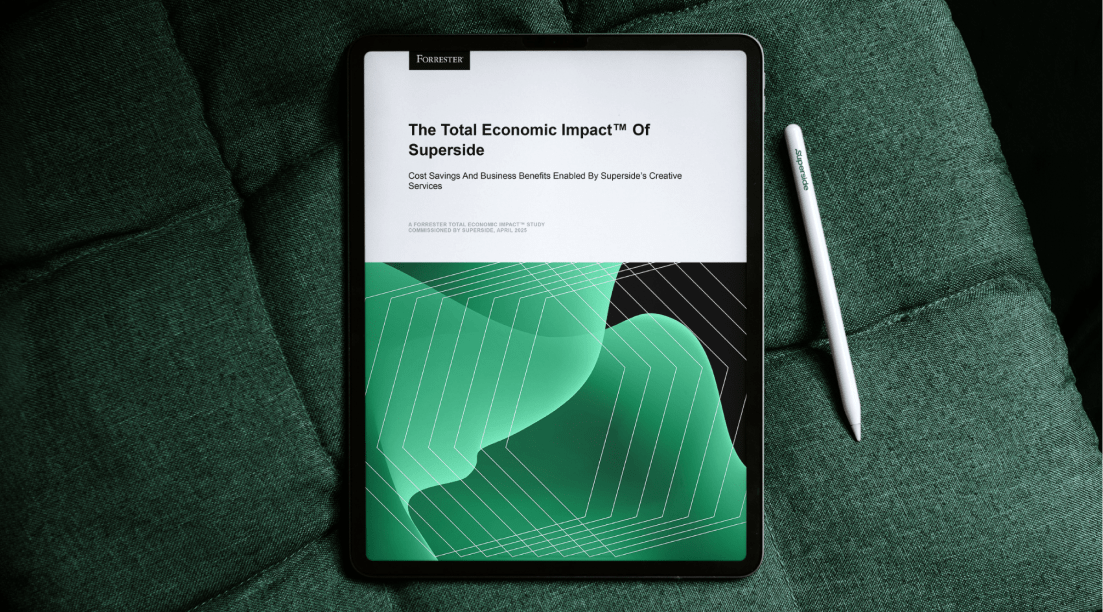
Evidence of financial returns strengthens your case. For example, the Forrester Total Economic Impact™ study commissioned by Superside found a 94% ROI and $4.16 million in benefits over three years (risk-adjusted present value) for a composite organization, with payback in under six months.
3. Show the forecast
Finance teams work with hard numbers. Show the mismatch between demand and capacity, along with the solutions you've identified and priced. This turns "my team is overworked" into a plan finance can approve or amend.
3 ways to add creative capacity
Now let's look at how to fill the gaps. You have three options: hire more team members, use freelancers or work with a creative agency partner.
Here's how they compare:
| Factor | Hiring | Freelancers | AI-native creative agency |
|---|---|---|---|
| Speed to add support | Slow | Fast | Fast |
| Flexibility | Low, fixed cost | High | High, scales up and down |
| Brand consistency | Highest over time | Variable | Built into AI systems and processes |
| Management overhead | Ongoing | High per person | Low |
| Best for | Durable baseline demand | Contained specialist bursts | Peaks and sustained volume |
Hiring is the right move if you need to build up your baseline. The trade-off is idle capacity during quiet periods. To avoid overhiring, establish your steady state demand and build a team around your core needs. Our guide to building a design team covers this in detail.
Freelancers add flexibility for specific skill gaps and short bursts. The trade-off is that you have to find, vet, onboard and manage every one of them.
An AI-native creative agency like Superside scales with your demand as it rises and falls. Support comes with established processes that help you maximize creative production while protecting quality and brand consistency. It combines the consistency of an in-house team with the flexibility of freelancers, which suits enterprise teams especially well.
Choose the support that fits your workload. Freelancers work for occasional overflow or smaller projects. If demand regularly exceeds your team by a wide margin, size your core team for normal workloads and use a creative partner for peaks.
How Superside fits into your capacity plan
A capacity plan only works if extra support is ready when demand rises. As the world's largest AI-native creative agency, we pair AI-native experts with AI systems, so you can scale up for peaks and specialist projects without the fixed cost of a larger permanent team. Unlike traditional agencies, we build tools and systems that help brands scale. Unlike tech platforms, we put real creatives behind every output.
Our support comes with the systems to keep work on track. Our platform brings briefs, feedback, approvals and budgets into one shared workspace. Brand Brain, your brand-trained AI, carries your guidelines, feedback and past work into every brief, checks deliverables and evolves with performance data. Every brief starts smarter than the last.
Our expertise spans a wide range of creative services, so you can access different skills through one partner.
For Bolt, we assembled 18 creatives to deliver a complex animated brand video in one month, helping the brand increase its creative output by 600% that month.
For Thomson Reuters, we managed a video project from concept through final production. The project lead estimated the cost at about 10% of the internal time and resources the work would otherwise have needed.
That's the role we play in your capacity plan: a creative team that knows your brand, adds specialist expertise and helps absorb demand beyond what your core team can sustainably deliver.
Plan capacity before demand hits
If your creative team can't keep up, more in-house roles may be part of the answer. A capacity plan helps you decide where those roles add value and where flexible support makes more sense.
Start with the five-part model: forecast demand, group requests by complexity, size your core team for normal workloads, leave room for the unexpected and set clear thresholds for extra support.
With a trusted creative partner in place before demand peaks, your team can face a busy quarter with a clear plan.
Ready to build that support into your capacity plan? Book a call with Superside.
FAQs





Stuck in AI testing mode?
Get a quick, practical checklist
for implementing AI across your team.

Creative teams are at a breaking point
The pressure is real, the opportunity is too.
Get insights from 300+ leaders on
beating burnout, using AI wisely
and navigating 2026’s inflection point.

The data speaks for itself
According to a Forrester Total Economic Impact™ study, Superside delivers a 94% ROI and pays for itself in six months.


Meet Customers Who’ve Experienced Exceptional ROI
Discover how Shopify got 4,375 assets in 12-24 hours or how Amazon saved 345 hours in three months.


Say yes to bigger campaigns
Our AI-native creative agency helps your team
take on more formats and markets with no new headcount.