



There's no standard price for creative work, so this guide breaks down what freelancers, agencies, in-house hires and creative subscriptions really cost in 2026, with benchmark ranges by asset type. It shows why fully loaded cost and cost per approved asset tell you more than any hourly rate, and why an $80,000 designer clears $120,000 in year one. It also publishes Superside's own numbers, because most of this category won't!
Ask "how much does creative cost?" and you'll usually hear "how long is a piece of string?"
It's a hard question to answer, because the price of creative depends on how you buy it, what you need, how much you need and who makes it.
Freelancers, agencies and creative subscription services price the same work differently because each runs a different pricing model. A social graphic built on stock photography takes far less work than an original animated brand film. Volume matters too, since cost per asset usually falls when you spread setup costs across a larger body of work. And rates shift with the experience and location of the people doing the work.
So what does design actually cost in 2026?
This guide breaks down the cost of creative services right now, comparing freelancers, agencies, in-house teams and creative subscriptions. We share benchmark ranges by asset type, expose the hidden costs nobody puts in a quote and show how to think about creative as a long-term investment.
Along the way, Liane Chetty, Creative Operations Manager at Superside, shares the operational friction she watches drain creative budgets from inside the workflow. Liane has led omnichannel campaigns for global brands and now focuses on making complex workflows clearer and operations more scalable.
Four ways to buy creative and what each really costs
Almost every creative dollar in the world runs through one of four operating models. The right one for your business depends on how much creative you need and how much you value speed, efficiency, consistency and scale.
1. Freelancers
Freelance creatives work well for one-off, well-defined projects or smaller jobs that need a specialist skill.
Freelance graphic designers typically charge $25 to $150 per hour, depending on experience and location. Project fees generally start around $200 but climb into the thousands as scope and complexity grow.
Freelancers offer flexibility and expertise, but the model gets hard to manage at enterprise scale. Availability and quality vary, and your team stays responsible for finding, briefing and managing every creative.
If this still sounds like your best option, our guide to working effectively with freelance designers is a good next read.
2. Traditional agencies
Agency prices vary widely based on the work involved, the skills required, the team size and the agency's location.
US agencies typically charge $100 to $149 per hour. Across design engagements reviewed on Clutch, the average project runs $56,303 over a typical 11-month timeline, or roughly $5,100 a month. Complex, long-term work costs considerably more.
Agency fees also reflect perceived value. Established firms with strong reputations, specialist expertise and proven results charge premium rates, and often earn them.
Leading agencies deliver high-quality work and valuable strategic input. The catch is that fixed contracts make it hard to adjust capacity as your needs change.

3. In-house creative teams
An in-house team gives you direct access to creatives who know your brand, your business and your internal processes.
Look only at salaries and this approach seems cost-effective. The US Bureau of Labor Statistics put the median annual pay for a graphic designer at $62,960 as of May 2025, roughly $5,250 a month.
But salary is only part of the cost. Recruitment, software, equipment, training and management time all add to the total, and we break the full picture down below.
One or two designers also won't cover every skill your business needs, from branding and illustration to motion and video. Capacity is fixed, too. When campaign season hits and you need more output, bottlenecks are close to guaranteed.
Our in-house vs. agency guide explores the trade-offs between models two and three in more detail.
4. Creative subscriptions
Creative subscriptions suit teams that need a steady flow of high-quality work. You pay a recurring fee for ongoing access to creative talent, with the option to adjust capacity as demand moves.
Creative-as-a-Service is one version of this model. It combines the range of a traditional agency, the flexibility of freelancers and the reliability of an in-house team, while making costs far easier to predict.
Superside helped define the CaaS model, and we've since taken it further. As the world's leading AI-first creative partner, we combine senior creative talent, AI excellence and our creative management platform, Superspace, to deliver high-quality work fast. Together those give customers a broad range of creative expertise, flexible capacity and reliable delivery.
Superside subscriptions start at a $15,000 monthly minimum on an annual term, which puts our model below most traditional agencies and above a single freelancer. The model gets more efficient as volume grows.
How the four models compare
| Model | Best for | Cost shape | Where it breaks down |
|---|---|---|---|
| Freelancers | One-off, well-defined projects | Hourly or per project | Managing many at once, variable quality |
| Traditional agencies | High-stakes strategic work | Retainer or project fee | Fixed contracts, resizing billed separately |
| In-house teams | Deep brand knowledge, daily needs | Fully loaded salary | Fixed capacity, finite skill range |
| Creative subscriptions | Ongoing, high-volume, multi-channel work | Predictable monthly fee | Needs real volume to pay off |
Plenty of companies land on a mix. They keep a core in-house team and add a creative subscription partner for extra capacity and specialist skills.
Creative pricing benchmarks for 2026
The same asset gets priced very differently depending on how many hours it takes and who's doing the work. The table below shows current market ranges for freelancers and traditional agencies, as reported by ManyPixels, Clutch, Vidico and Slidebean.
| Asset | Freelance pricing | Agency pricing |
|---|---|---|
| Logo | $200 to $800 | $5,000 to $50,000 |
| Full brand identity system | $1,000 to $3,000 | $40,000 to $100,000+ |
| Social media graphics (batch) | $50 to $650 | Included in retainer |
| Display or banner ad set | $250 to $1,500 | $800 to $4,000+ |
| Landing page design | $600 to $3,000 | Included in project or retainer |
| Short-form marketing video | $1,000 to $3,000 per finished minute | $5,000 to $20,000+ per finished minute |
| Pitch or investor deck | $1,500 to $5,000 | $3,000 to $20,000+, or $50 to $150 per slide |
| Motion graphics | Included or per project | $900 to $8,500 per minute |
| Web design | $1,500 to $5,000 | $10,000+ |
The true cost of an in-house designer

Salary alone makes hiring a designer look cheaper than it is. Here's the actual math.
A strong design lead might ask for at least $80,000 a year. That's the starting line, not the finish.
Benefits come first, and they're bigger than most budgets assume. The BLS Employer Costs for Employee Compensation release puts benefits at 30.0% of total compensation for private industry workers as of June 2026. Work backward from an $80,000 salary and the fully loaded compensation cost lands near $114,300.
Then add everything else. According to our article on the true cost of design talent, recruitment adds about $4,000, while essential tools such as Adobe Creative Cloud ($1,200), Figma ($900), Google Drive storage ($240) and Miro ($190) push software past $2,500 a year.
That takes first-year cost to roughly $120,800, or about 51% above the headline salary. And that's before management time, training, equipment and the cost of the work that doesn't get made while the role sits open.
Long before a budget line flags the problem, Liane Chetty sees it in the delivery dates.
The earliest sign is project lead times extending beyond what you expected. A project that generally takes two days suddenly has a four-day delivery time, and that warning gets missed when the schedule is relaxed.

One designer also has limited capacity and a finite set of skills. As the business grows, you'll need more designers or specialists, which multiplies recruitment, salary and software costs together. Even a substantial enterprise creative budget starts to feel stretched fast.
The second signal is quieter, and it shows up in how the team talks about the work.
The other big sign is when questions and creative discussions stop on big projects. A team with headroom will push the brief and explore what's possible. A burnt-out team executes without questions, just to tick it off the list.
Which is why adding headcount doesn't always fix the timeline.
It's when a new designer joins the team but delivery times don't speed up and projects still run late. That tells you the issue sits somewhere else in the process, and it isn't a capacity issue.
Whichever model you choose, interrogate the quotes you get. Most of them are quietly incomplete.
Watch for:
- Revision fees. Extra rounds often carry surcharges, and they add up fast on high-volume work. Confirm what to expect upfront.
- Scope creep. When a project isn't clearly defined, small extra requests turn into price increases. Ask exactly what the quote includes before work begins.
- The resizing and versioning multiplier. One concept becomes six or more billable assets once it's adapted for every channel and market. This is where budgets quietly blow up.
- Onboarding and setup. Every new freelancer or agency needs time to learn your brand, tools and processes. You pay for that time while your internal team also spends hours briefing and reviewing.
- Rush work. When demand spikes and your team can't keep up, you either wait or pay a premium. Creative bottlenecks get worse at scale, not better.
- The cost of slow creative. When work isn't ready on time, campaigns stall. The missed opportunity usually costs far more than the creative itself.
In Liane Chetty's experience, the most expensive line item on that list never appears on a quote at all, because it starts with the brief.
The one that catches people by surprise is rework, or additional rounds of revisions caused by weak briefs. The team receives a brief with little direction and no stakeholder input to shape the project, so the first draft doesn't meet expectations.
And the bill arrives twice.
You pay more for the original asset, and you pay again in rushed QC because the timeline was lost at the unclear start of the project.
These are exactly why comparing quoted prices tells you almost nothing, and why the number below matters so much more.
Cost per approved asset, the number that actually matters at scale
If your business needs hundreds of assets a month, hourly rates, salaries and retainers won't tell you which model delivers value. A better benchmark is cost per approved asset, meaning your total creative spend divided by the number of finished, signed-off assets you actually shipped.
Run each model through it and the picture changes:
- In-house looks efficient until demand dips, because the fully loaded cost keeps running. When demand spikes, fixed capacity either delays projects or forces you to outsource anyway.
- Freelancers with low hourly rates get expensive once you add briefing, management and revision time to the invoice.
- Agency retainers climb sharply when resizing and versioning are billed separately from the original concept.
- Creative subscriptions lower cost per asset at high volume by spreading a predictable fee across more output, with the flexibility to scale up and down.
Liane Chetty makes the case for keeping the internal team lean and buying capacity around the peaks.
It depends on the demand you have. Event launches and campaign work spike your workload and then settle down after the launch, and those projects often need extra skills you only need once.
Compare what each subscription plan includes, though, along with capacity limits, turnaround times and charges for additional work. Not all of them are built the same way.
The structure she recommends keeps brand ownership firmly inside the business.
The best setup is an internal team that owns your brand and can brief and creatively direct the outsourced creative team.
In a nutshell: cost per approved asset gives you a consistent way to track creative efficiency as demand and output move. It's also the only metric that reflects what you actually got, rather than what you were quoted.
How AI is reshaping creative costs in 2026
AI has changed the cost equation in two directions at once. It's lowered the cost of producing assets while raising expectations for how much teams should deliver. Our Breakpoint Report digs into that shift, and the numbers are blunt. Among the creative and marketing leaders we surveyed, 92% say executives now want higher quality and 94% want it faster, while 86% say their team is already at or over capacity.
Brand-trained AI models, generative features and AI-powered workflows now help enterprise teams produce variations and first drafts far faster than before. Our custom AI image models, on Superside's internal performance data, have made image production up to 10 times faster, cut production time per image by 75% and lowered cost per image by 85%.
Here's the part worth sitting with. AI lowers the cost of each asset without necessarily lowering your total creative spend, because the same budget now funds more work. The teams that come out ahead are the ones that use AI to meet the new volume expectation without growing spend at the same rate.
An enterprise budgeting framework
Marketing budgets are under real pressure. They flatlined at 7.7% of company revenue in 2025, with 59% of CMOs saying they lacked the budget to execute their strategy.
Creative takes a meaningful share of that, but how much you should spend depends on what creative is doing for you. Rather than picking an arbitrary percentage, base the budget on the volume, quality and speed you need, and on the business results you expect the work to support.
McKinsey's Business Value of Design research found that companies in the top quartile for design performance achieved 32 percentage points higher revenue growth and 56 percentage points higher shareholder returns over five years than their industry peers.
Which suggests cutting costs at the expense of quality, consistency or speed is a false economy. Weak, inconsistent or late creative shows up as missed opportunity, and that bill arrives later.
So work backward. Estimate the volume and mix of assets you need each month, calculate the fully loaded cost of producing them under each model, then compare cost per approved asset alongside turnaround times, available skills, capacity and the results the work supports.
The best-value model isn't the cheapest. It's the one that delivers the quality and volume you need, when you need it, at a total cost you can sustain.

Six filters for comparing creative quotes
Comparing quotes is a skill in itself. Six rules of thumb to guide you:
- Normalize to cost per approved asset and outcome. An hourly rate doesn't tell you how many finished, on-brand assets you'll actually receive.
- Ask what's in scope and what costs extra. Revisions, resizing, strategy, stock licensing and rush work may all be billed separately.
- Track the management cost. A cheaper supplier costs more overall if your team has to constantly brief them, review their work and chase deadlines.
- Factor in speed. A quote that's 20% cheaper is poor value if late delivery delays your next campaign.
- Compare total annual cost, not one project. Single-project comparisons make freelancers and in-house teams look cheaper than they are.
- Consider the risks. Compare each provider on brand consistency, governance, security and scale. A low quote is expensive if it leaves your brand or data exposed.
Run every quote through those six and the real number becomes clear.
How Superside prices enterprise creative work
In a category that hides its pricing, we publish our model and our costs.
Superside offers premium, subscription-based creative services covering everything from photography and illustration to video and motion design, at scale and with proven ROI. Our plans flex around how customers prefer to work:
- Flex plan. A consistent senior creative team that flexes with your workload, configured around the work you lead with, with unused budget rolling over for up to three months. Subscriptions start at a $15,000 monthly minimum on an annual term.
- Dedicated plan. The same AI-native team every month, configured around your use case and live in about three weeks. From $30,000 a month on a 12-month term.
- High-impact projects. Fixed-scope, fixed-timeline work for a specific moment, including explorations, custom AI builds and integrations. Project Boosters start at a $15,000 minimum on top of an existing subscription.
- Quick Start. A $20,000, three-week engagement where our AI implementation specialists configure and tune your Brand Brain to your briefing process, train your stakeholders and hand off a working playbook.
Whichever plan you choose, the promise is the same. Senior-level craft amplified by AI excellence.
Dedicated and Flex subscriptions include a monthly creative budget plus a $1,000 monthly software fee. The budget covers project work. The software fee covers access to Superspace, including Brand Brain, Agents, Core Workspace, in-platform image generation and our standard plugins and integrations, along with a Superads Pro subscription and AI generation costs on standard projects.
Being AI-first means AI isn't just powering individual tools. It's embedded across the entire creative model, from how teams are trained to how brand knowledge compounds over time. That's what makes Superside your creative team's creative team rather than another line item.
You don't have to take our word for the value. A Forrester Total Economic Impact study commissioned by Superside found that a composite enterprise organization achieved a 94% ROI, $4.16 million in total benefits and around $1.9 million in avoided agency fees, with payback in under six months. Those are three-year, risk-adjusted present value figures.
Customers report the same. Amazon saved 345 hours in three months with Superside across 1,092 delivered assets, while creative leaders at other major brands consistently say the volume and speed would be impossible to match with a couple of contractors.
Get more value from your enterprise creative budget
In 2026, budgets are tight and creative demand has never been higher.
Enterprise teams have to produce more assets for more channels, audiences and markets, usually without extra headcount or budget. That makes every creative investment harder to justify and more important to get right.
Time to make your money work harder? Book a Superside demo or explore our pricing page to find a plan that stretches every creative dollar further.
FAQs

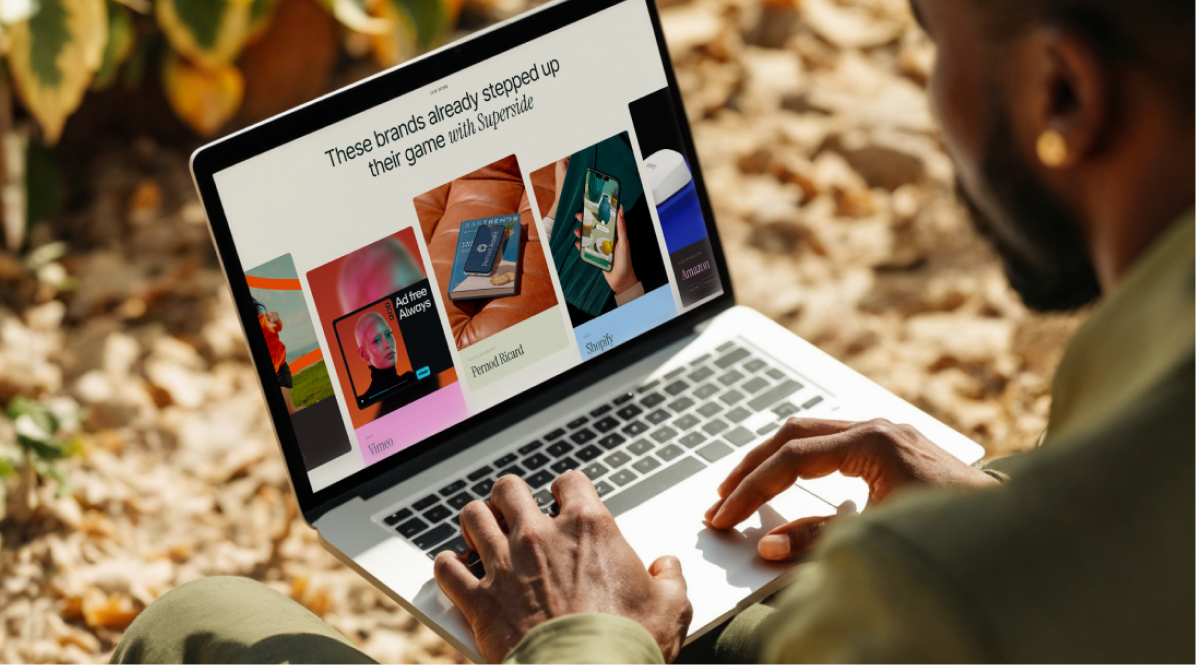
See how top brands do it
Looking for extra inspiration?
Check out more of Superside's brand projects.





Ready to see it in action?
The best way to understand it is to experience it.
Because once your creative system has memory,
you won’t want to go back to starting from scratch.

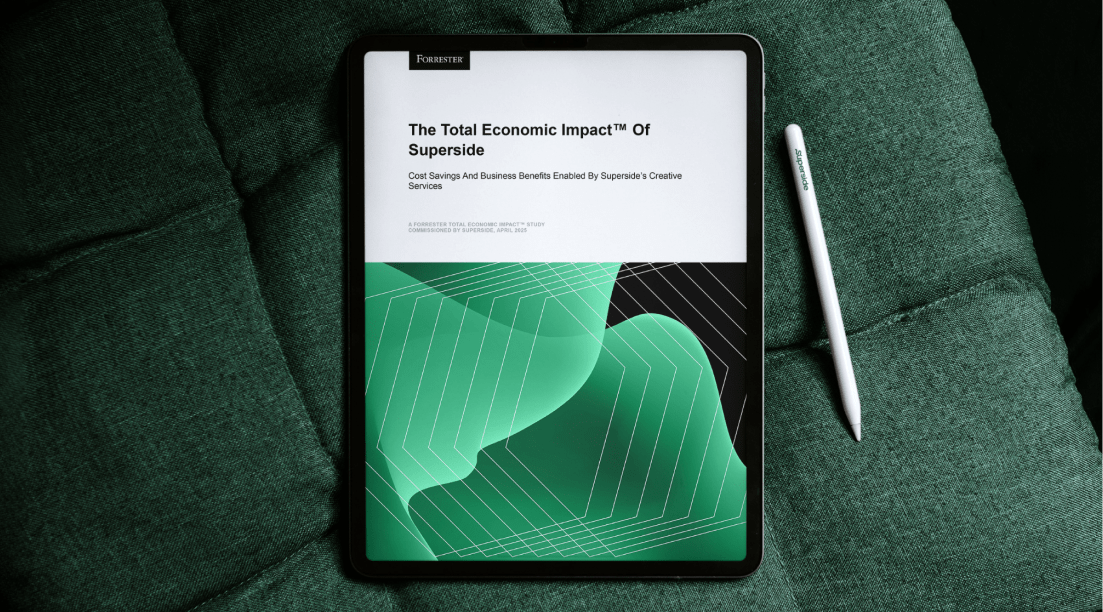
The data speaks for itself
According to a Forrester Total Economic Impact™ study, Superside delivers a 94% ROI and pays for itself in six months.


Your creative team's creative team
Choose the world's leading AI-powered creative service
and get high-performing ads, videos, experiences and
more at scale, on your schedule and to your standards.