



To scale creative production effectively with AI, enterprise teams need a system, not a stack of disconnected tools. This guide breaks down Superside’s six-step framework. From workflow audit and brand foundation to custom AI image models, automation, human-led decision points and feedback loops, you’ll see how Oyster, Toast and a fast-growing SaaS company applied it to hit gains like 70% higher productivity, 85% faster turnaround and 57% less production time.
Enterprises are producing more content than ever, yet almost none have enough people in their marketing department to handle it. More channels, formats, markets, campaign iterations, all with the same headcount or less.
The result is an all-too-familiar cycle: Timelines that get tighter, brand consistency and quality that suffer, and creative leaders are left trying to do more with a system that was never designed to handle the volume they’re now expected to produce.
Superside’s Breakpoint report shows that around four in five teams are already at or over capacity, and seven in ten creative leaders report burnout. At the same time, executives are pushing teams to adopt AI more quickly, while many still lack the skills and infrastructure to do so effectively.
The teams that win move beyond merely using AI tools to scale creative production in truly innovative ways. They build AI-powered creative production systems (or even full enterprise AI creative production environments) in which human creativity, custom AI image models, intelligent AI layers and automated workflows work together and get smarter with every project.
Could this be the solution your team needs? Then this framework for scaling creative production with AI, with real examples from Superside’s enterprise customers, is worth implementing.
Why traditional creative production breaks under modern demand
Right now, many enterprise teams struggle to keep up with demand. In our “Breakpoint” report, about 80% of leaders said the volume of requests their teams handle is higher than last year’s, with 32% saying it’s much higher.
Part of the problem is that most enterprises still operate on a linear model of creative production: Brief, design, review, revise and deliver.
This approach works when output is limited and timelines are predictable. But it falls apart when teams are expected to scale content production at warp speed, test variations and support ongoing content creation across multiple channels and audiences.
Teams end up spending too much time on repetitive tasks, work is duplicated across campaigns, and approval cycles slow down due to rushed, unclear briefs and constant revisions. Plus, teams are pushed to their limits, which doesn’t make for good quality or consistency.
Even with more resources, the system doesn’t hold. Hiring can’t keep up with spikes in demand, and traditional agencies and freelancers often add coordination overhead rather than reduce it.
What it means to scale with AI
Most teams that explore AI head straight to the tools. They open a browser, share a prompt and create AI-generated assets.
But most generic AI tools don’t retain structured, persistent context across workflows. They also don’t intrinsically understand brand voice or past campaign performance. Every output starts from scratch, which means teams need to reintroduce context and manually refine results every time. A massive waste of time.
In our experience, there’s only one way to effectively scale creative production with AI: Teams need to move beyond tools and build systems.
A true AI-powered creative production system connects what generic tools leave disconnected and brings together brand knowledge, production workflows and performance data in one place. Instead of isolated outputs, the system learns, adapts to the brand and improves creative quality over time.
This is the difference between “AI-powered” and “AI-first.” AI-powered approaches layer tools onto existing workflows. AI-first systems, like those used by Superside, rethink the entire process, creating a unified AI creative workflow that deeply integrates automation, data and human creativity.
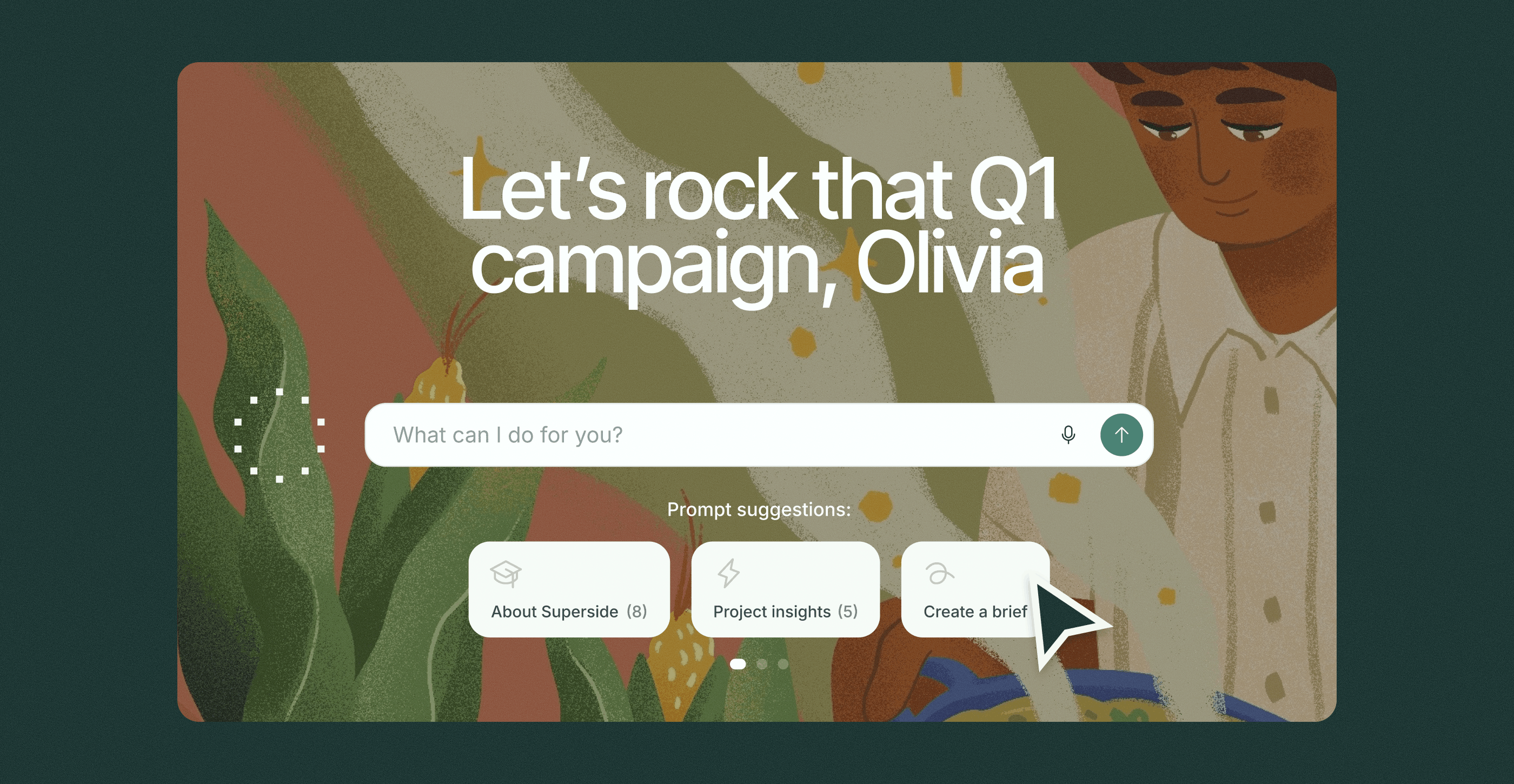
When you work with Superside, every brief, round of feedback and final asset lives inside Superspace, our creative collaboration platform.
This platform now includes a living layer of brand intelligence that captures every decision, asset and outcome. “Brand Brain” turns fragmented knowledge into actionable intelligence, helping creative teams effectively scale creative production while maintaining quality and brand consistency.
The result is a creative operation in which AI handles the high-volume design work, humans focus on judgment, strategy and creativity, and the system builds on what it learns with every project.
That’s what scaling creative production with AI should look like in 2026.
Six-step framework to scale creative production with AI
For most teams, the shift to effective AI-human collaboration doesn’t happen at once. It happens step by step by rebuilding the creative production process around how AI and humans work best together.
Through hundreds of enterprise implementations, we’ve discovered that the path to success tends to follow a consistent pattern. The six steps below break down that framework.
Step 1: Audit your creative production workflows before implementing AI
The most common mistake creative teams make is not using workflows as the starting point.
Teams sign up for new AI tools, test a few prompts and expect meaningful gains. But when those tools are simply tacked onto unclear or inefficient processes, they tend to amplify problems.
A better starting point is to understand where the creative production process typically breaks down, whether that’s time lost to repetitive work, unclear briefs or slow approval cycles.
To identify these and other bottlenecks at the start of any brand’s AI journey, Superside’s AI consulting team follows a diagnostic approach.
Here’s an example: When one of our customers, a global SaaS company, faced a 2–3x projected increase in creative demand, we set to work.
We began with a structured AI diagnostic, a workflow mapping exercise that identified 15 high-impact AI and creative production automation opportunities across copy, design and video production. We then conducted tailored Gen AI training workshops to equip the team with the necessary AI skills.
That same approach can be used inside your organization. Start by asking your team where they spend most of their time on tasks that feel mechanical rather than creative. The answers are usually consistent and actionable.
This is where your process should start.
Step 2: Build a brand knowledge foundation for consistency
In most organizations, brand knowledge exists, but is scattered. Brand guidelines live in static documents, past creative assets are buried in folders and feedback from previous campaigns is hidden away in email threads. This lack of alignment makes it difficult for both AI tools and human creatives to produce consistent, on-brand outputs.
To scale creative production effectively, your brand’s collective knowledge needs to be centralized and structured. When brand guidelines, audience insights, performance data, assets and more all live in one central hub, it becomes easy for everyone to access and use.
This is where Brand Brain plays a foundational role at Superside. This AI layer, which lives inside Superspace, captures our customers’ brand assets, preferences and decisions, then applies that context to every new project.
Through Brand Brain’s briefing agents, even rough requests are quickly transformed into structured, on-brand briefs that align teams from the start. The result is faster execution, fewer revisions and stronger brand consistency across all outputs.
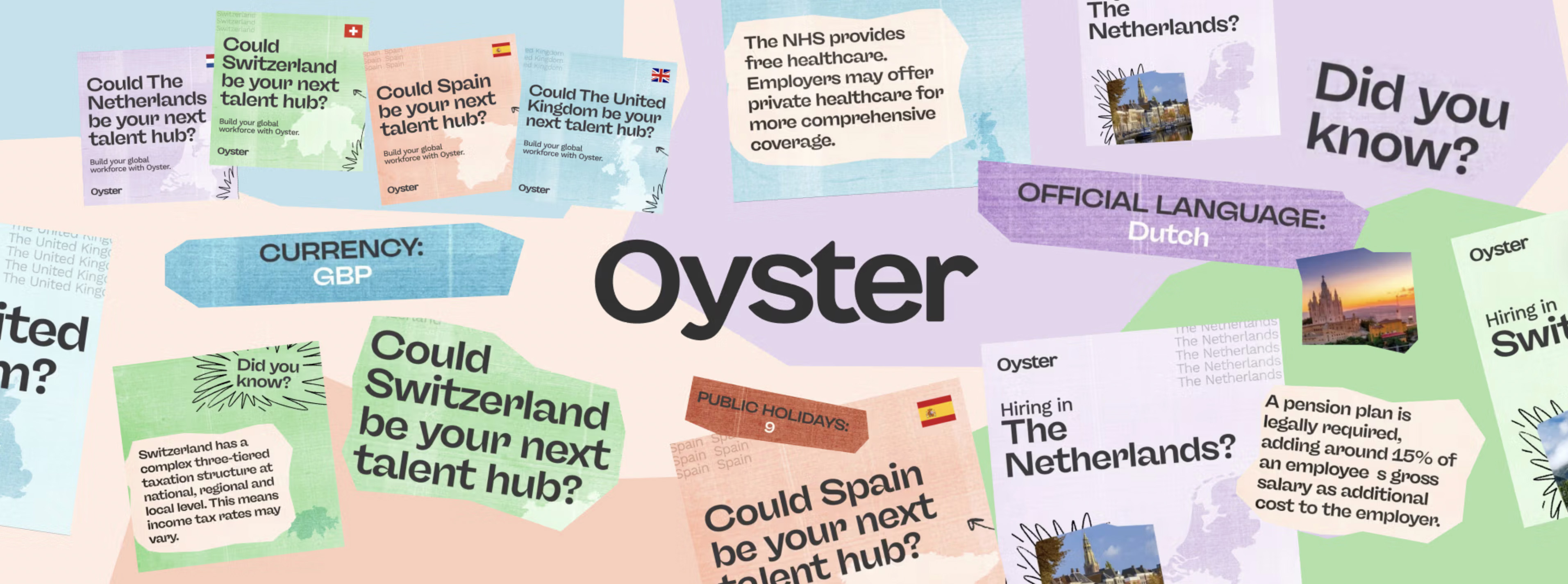
We applied this “brand foundation” approach to help Oyster, a global talent management platform, scale its social media content production across multiple markets. By centralizing brand knowledge before introducing AI, we could maintain a consistent global brand expression and increase creative output, which became the founding steps for Brand Brain later on.
Step 3: Train custom AI image models for on-brand creative generation
Once brand knowledge is structured, the next step is to convert it into a format that AI can use.
Generic AI tools reflect category norms rather than in-depth brand knowledge. They can quickly produce visually polished results, but lack the nuance that makes a brand distinctive. Custom AI image models solve this problem by learning directly from your brand’s visual language, guidelines, mood boards and creative history.
Superside typically builds 6-10 custom AI image models per brand, each tailored to specific needs, such as visual style, product imagery or campaign assets. These dramatically speed up production and lower design costs.
We applied this approach during our own 2025 rebrand. To save time and costs, we used brand assets from a foundational photoshoot to train our custom AI image models.
Superside also develops custom GPTs trained on each of our customers’ brand positioning, target audience and messaging. This ensures AI-generated content reflects the brand rather than generic outputs.
The best part is that our custom AI models improve over time. Each project refines them further, making outputs more accurate, on-brand and efficient to produce.
Step 4: Automate high-volume creative production workflows
With custom AI image models in place, the next step is to identify where automation can deliver the most value.
In most organizations, a significant portion of creative production effort is spent on necessary but time-consuming tasks. Teams adapt assets for different platforms, generate multiple variations for testing, localize content for use across various markets and make post-production adjustments.
These tasks are critical for scaling campaigns, but they don’t require deep creative thinking. This makes them ideal candidates for automation.

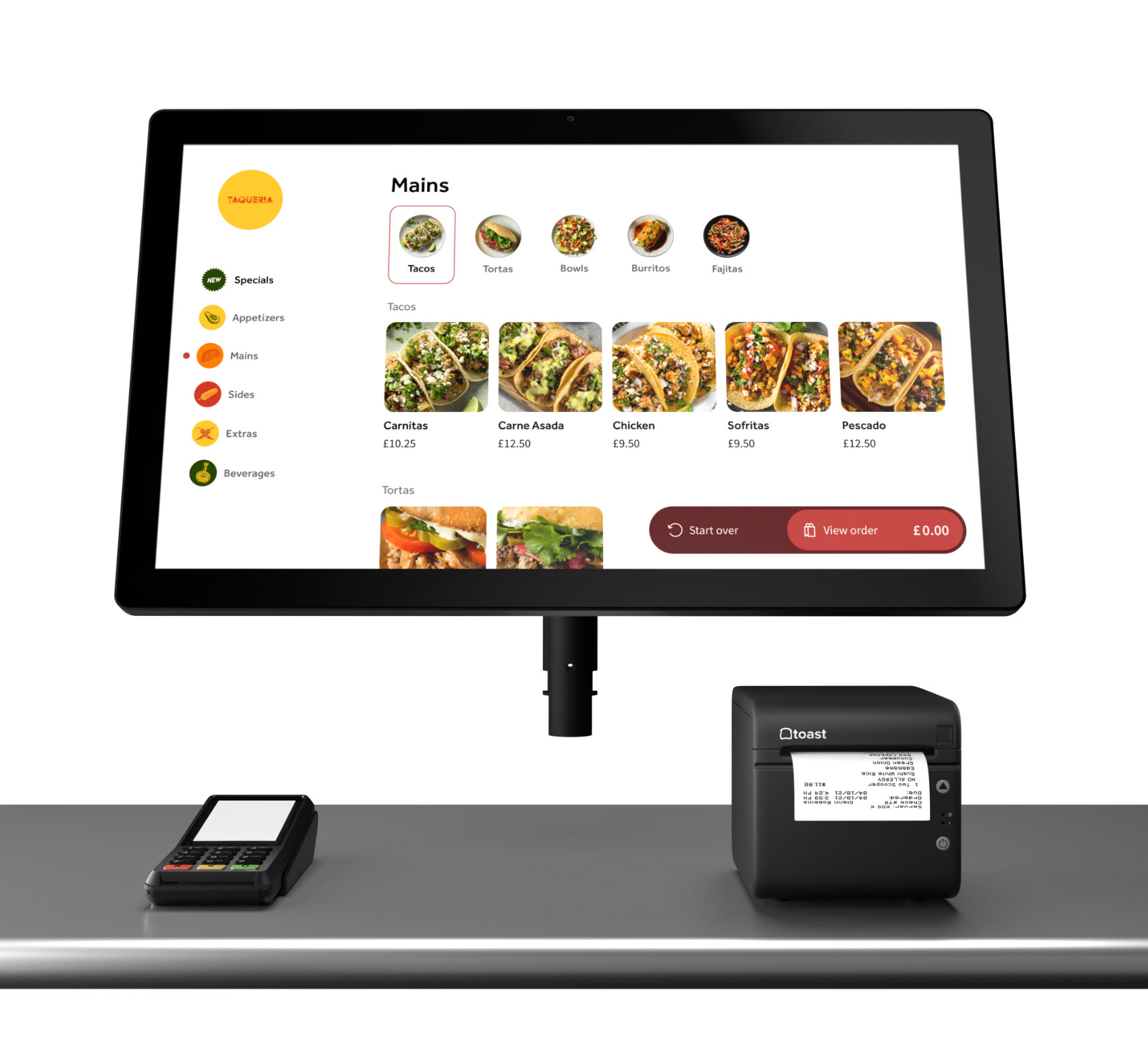
In one practical example, Superside worked with restaurant management software company Toast on AI-enhanced 3D and motion workflows. We helped the brand to reduce turnaround time by 85% and effortlessly scale high-quality creative across campaigns.
Superside also used AI-powered localization to help Oyster scale up their social media creative across regions. This helped them to maintain brand consistency, save time and stick to their campaign budget.
The principle is simple: Automate high-volume, low-judgment work first. Then use reclaimed time from resizing, localization and other tedious tasks for creative strategy and concept development.
Step 5: Keep human expertise at the center of the creative process
One of the most persistent misconceptions about AI in creative work is that it reduces the role of humans. In reality, the opposite is true. While AI can expand the volume of possibilities and speed up work, only humans can judge which ideas are worth pursuing. The key is to design systems in ways that bring out the best in both.
What has never disappeared, and I don't think it will, is the need for a good creative director or a good cinematographer. Someone who knows how to tell a story in an image sequence.

One of AI’s roles should be to generate creative options quickly. Human creatives can then apply judgment and strategic thinking to select and refine those options. Creative storytelling, the nuances of brand voice and a deep understanding of the audience are all elements that simply can’t be fully automated with AI.
In practice, this means structuring the creative process around key decision points where human oversight is essential. Team members should, for example, review and validate briefs before production begins, select the strongest concepts from AI-generated options and ensure final outputs meet brand safety and quality standards.
When AI handles the high-volume, repetitive work, it lightens the load on the 74% of creative professionals who report burnout and frees up time for the kind of creative, strategic work that sets brands apart.
Step 6: Build feedback loops using performance data and AI insights
An AI-powered creative production system should improve over time. This is where feedback loops become critical.
In many companies, creative outputs and performance data exist in separate streams and systems. Campaign results are analyzed independently of the creative process, which makes it difficult to apply those insights to future work. As a result, teams repeat the same patterns without fully understanding what’s driving success or failure.
Superside’s Superspace platform and Brand Brain AI layer were designed to solve exactly this. The platform brings briefs, feedback, assets and communication into one place, giving teams full visibility across creative production. And, as Brand Brain’s AI insights agents surface patterns and performance drivers in real time, teams don’t need to manually dig for results.
When every project feeds Brand Brain new context, from creative decisions to performance signals, future work starts more aligned, and AI outputs become progressively more accurate.
The results are game-changing: Teams spend less time reworking briefs, searching for prior insights or revisiting decisions. External collaborators or new recruits can also contribute immediately, operating with the same level of understanding as internal teams who’ve worked on the brand for years.
Over time, this creates a compounding effect. Each project strengthens the system and makes future work faster, more aligned and easier to execute at scale.
Plus, we’ve proven that partnering with Superside, which integrates AI in creative production and measures the impact on business results, makes perfect business sense.
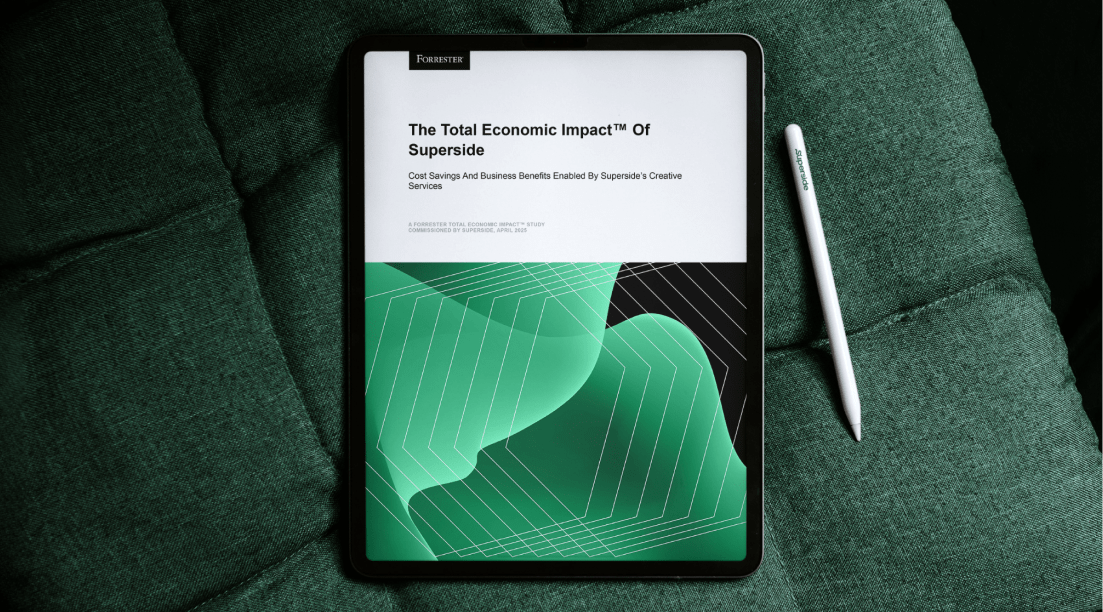
The Forrester TEI study on Superside reported that customers achieve a 94% return on investment over three years and recoup their investment within six months, with faster turnaround times enabling quicker speed to market and increased capacity for growth.
4 real examples of AI-scaled creative production
Real-world results bring this framework to life. Here’s how companies like Oyster, Toast and a fast-growing SaaS brand used Superside’s AI-first approach to scale creative production, boost efficiency and achieve standout results.
Oyster: scaling global content creation
Oyster faced a challenge that captures the scaling problem well: Relentless demand for social media content across multiple countries, at a pace a lean in-house team simply couldn’t sustain. Traditional agencies were too slow and too inflexible to support the dynamic needs of the fast-moving tech environment.
Superspace operated as Oyter’s creative hub for all requests, feedback and delivery. Our team used custom AI image models and automated localization workflows to produce consistent creative across markets at a speed the previous model couldn’t approach.
The result: We cut production time by 57% and strengthened brand consistency to help reinforce Oyster’s brand identity.
Global SaaS company: 70% productivity gain

Creative demand at a fast-growing B2B SaaS company was expected to nearly triple within a few months. The company’s small creative team had tried off-the-shelf AI tools and found they delivered less efficiency than expected. The team had no clear AI strategy or governance framework in place.
When Superside stepped in to assist, our consulting team ran an AI Diagnostic to identify high-impact AI and automation opportunities.
Ultimately, we delivered nine tailored training workshops across copy, concepting and image generation.
Subsequently, our team built a custom Figma plugin that allowed designers to produce fully branded assets in seconds.
The result: A 70% productivity gain and a clear foundation for continued AI adoption.
Toast: Scaling high-impact 3D creative production
As Toast’s brand evolved, the team needed to produce visually rich 3D renders and animations of their products at a pace traditional production workflows couldn’t support.
Superside partnered with Toast as its AI-first creative partner, integrating AI-enhanced 3D and motion workflows into its creative production process. By combining AI-powered tools with human creative direction, the team accelerated production without compromising quality or distinctiveness.
What's unique about Superside's 3D projects for Toast is the exceptional quality and realism of the product visualizations. We haven't done it in this capacity (with multiple products per project) for any other client.

The result: Turnaround time improved by 85%, but the impact went beyond speed. Toast unlocked the ability to scale high-quality 3D creative and maintain consistency across every asset. The process made visually rich storytelling a repeatable part of the brand’s creative strategy.
Superside’s own rebrand: Proof of the model
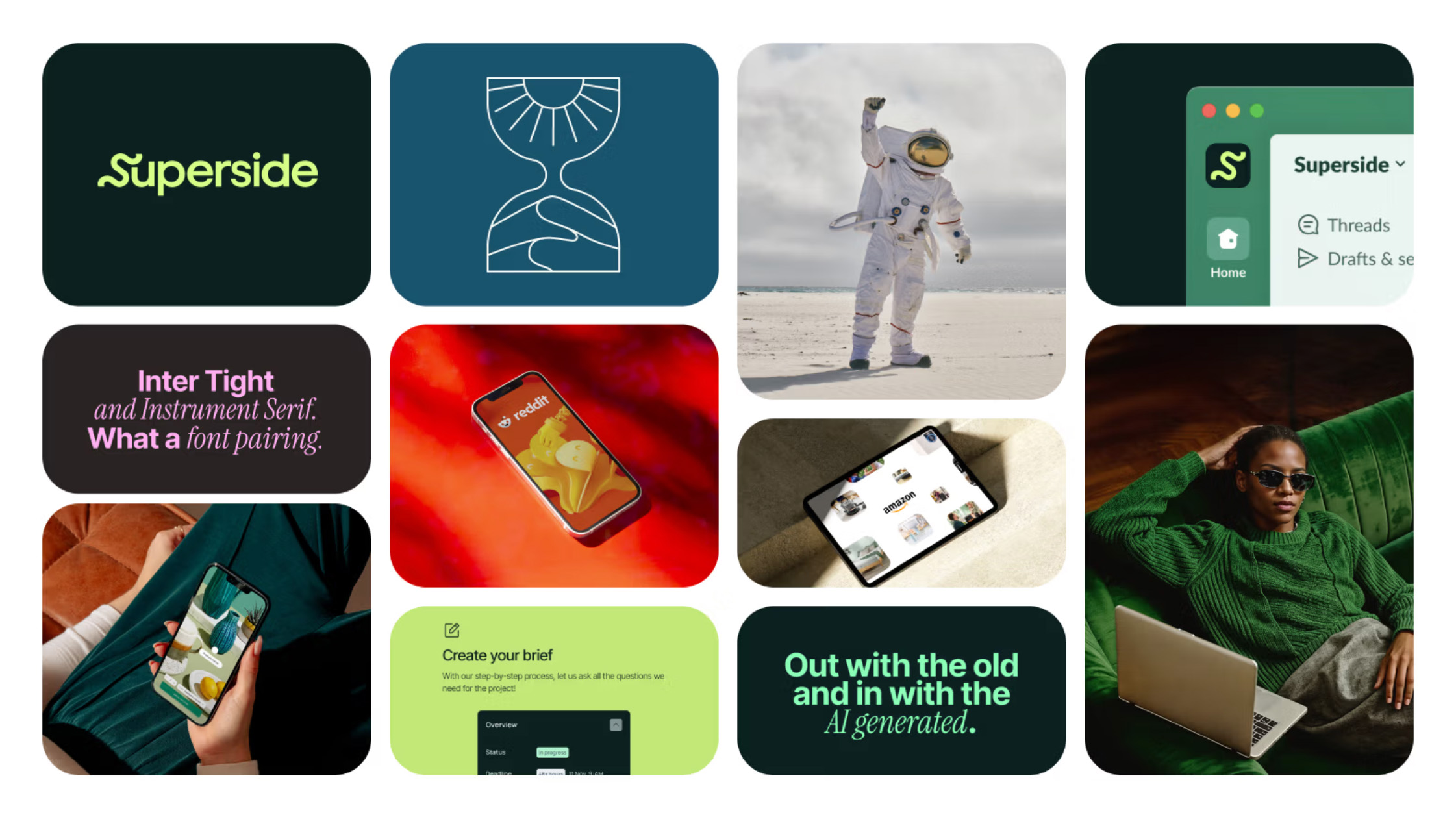
When Superside needed to rebrand to reflect our new positioning, we tapped into our own creative talent, AI-powered workflows and the Superspace platform to deliver the entire project.
The process began with customer interviews across more than 200 marketing, brand and creative leaders to understand brand perception and market needs. AI-assisted concepting allowed the team to move from mood boards to validated visual territories in record time.
And we built and deployed a brand-voice GPT across the organization to ensure that every team member communicated consistently.
We also used a foundational rebrand photoshoot to train a custom AI image model, powering scalable, on-brand visuals aligned with our shiny new identity.
This approach delivered the gains we hoped for: Up to 10x faster production, 75% less time spent designing visuals, and 85% lower design costs compared to traditional methods.
Build a system, not just more output
Scaling creative production with AI isn’t just about producing more assets faster. It’s about building a system that can handle sustained demand.
With the kind of centralized brand knowledge and custom AI models Superside uses, each project starts more aligned than the last.
The difference is also structural. While AI tools are easy to adopt, brand-trained creative systems are hard to replicate. Over time, your AI-powered creative production engine becomes a compounding advantage built on your own data, decisions and performance insights.
Superside has built and operationalized AI creative production at scale for many top enterprise customers. Why waste more time and lose out on opportunities when we can help you do the same?
Book a call to learn how we can help your brand grow creatove at scale today.
FAQs

Creative teams are at a breaking point
The pressure is real, the opportunity is too.
Get insights from 300+ leaders on
beating burnout, using AI wisely
and navigating 2026’s inflection point.


How 400+ brands get more work done, without doing more
They Superside it. Fast, high-quality creative from the
AI-powered creative service that handles it all.

The data speaks for itself
According to a Forrester Total Economic Impact™ study, Superside delivers a 94% ROI and pays for itself in six months.
Discover why the world’s biggest brands choose us