



Product teams hit capacity limits when roadmaps outgrow their resources. The result? Engineers stall on design decisions, inconsistencies multiply and UX debt builds. The fix isn’t hiring faster. It’s stronger design systems, sharper ops and flexible senior support. We break down what that looks like and how Superside slots into your existing sprint cycles to help you ship more, without adding headcount.
Why do even the most talented product design teams fail at some point? It’s rarely about talent, and almost always about capacity and structure.
When teams slip into reactive mode under pressure, they tend to firefight rather than build durable systems. Over time, inconsistencies creep in, patterns go off track and the product starts to behave differently across platforms, users and features.
This isn’t a problem you can solve by asking the team to work weekends. The real issue sits in the operational layer that most product design leaders underestimate, including how work gets requested, reviewed and signed off.
Teams that invest early in strong design practices and systems can avoid the product design debt that slows delivery later. Those that don’t eventually hit a capacity wall, leading to subpar work and mounting frustration.
If your product roadmap is moving faster than your team, now’s the time to rethink how you manage your product design function. Below, we unpack the specific failure modes product design teams experience, explain why hiring alone won’t fix them and show how Superside can help you add senior design capacity exactly when you need it.
Why product design teams hit the capacity wall (and what happens next)
Most product design teams are set up for steady-state delivery. They expect manageable iteration rates and enough time for foundational work. Unfortunately, this model flies out the window the moment a product starts to scale.
New platforms introduce new interface patterns, new user segments need tailored flows and new feature sets create entirely new layers of complexity. To meet this need, product leads typically set up multiple engineering squads, each working to its own rhythm and roadmap. Meanwhile, design work has to scale exponentially instead of linearly.
When product teams hit this point, the same three issues tend to appear:
1. Specialization gaps
As products grow, design work becomes more specialized. Suddenly, you need experts in design systems architecture, motion design for micro-interactions, accessibility audits and complex workflow prototypes. Your in-house graphic designers and production specialists are left spinning.
Most teams don’t have these skills in-house, and they’re difficult to hire for. Plus, in the middle of unexpected product growth, you don’t have six months to recruit and onboard a new senior specialist without creating an even longer backlog.
2. Accelerated sprint compression
Product and engineering teams run on fixed sprint cycles. When design falls behind, engineers no longer have finalized designs to work from. To keep things moving, they make best-guess UI/UX decisions or implement features without production-ready design files.
This approach can keep things afloat temporarily. But before long, unplanned work multiplies and bottlenecks occur. Both designers and engineers have to deal with mid-sprint design changes, uncovered edge cases and quick workarounds.
Over time, this pressure leads to technical debt, often expressed as cross-product design inconsistencies.
3. Operational overhead compounds
As the product grows, coordination often becomes a hidden roadblock. Product design teams lack sufficient time to focus on design work. Instead, they chase approvals, manage requests and spend time clarifying what’s required.
Well-organized DesignOps infrastructure and design systems become the only way out. In one Figma study, designers who worked with a design system completed tasks 34% faster than those without one. McKinsey’s Business Value of Design research found a similar pattern at the company level: top-quartile design performers outperformed industry peers on revenue growth by a factor of two.
But when teams race against the clock, pausing long enough to set up these systems becomes a tough ask.
The intuitive response is to hire more designers. But this is a slow, expensive process that doesn’t immediately ease bottlenecks. By the time the new designer is onboarded, the roadmap has evolved, and the team faces new challenges.
The better solution is to bring in outsourced specialist team members who can integrate into your project immediately. This gives you the agility to scale your design output and deliver high-quality designs that keep pace with your product’s growth.
What it actually looks like when squads are blocked by design capacity

Design capacity constraints don’t just affect the design team. The effects ripple right across the entire organization, and usually show up in four predictable ways.
Engineering teams wait for designs
When a feature is ready to build but the design isn’t finalized, engineers have three choices. They can wait, build from incomplete specs or make UI/UX decisions themselves.
None of these are good options. They slow projects down, introduce rework and inconsistencies and ultimately undermine both delivery speed and trust in the product roadmap.
From the outside (and to the C-suite), this often appears to be an execution problem. The real issue is the upstream design capacity bottleneck.
UX inconsistencies spread
When multiple teams design and launch features in parallel without strong design standards or with limited UX design capacity, small differences add up quickly.
One squad builds a modal dialog with a particular interaction pattern. Six weeks later, another team builds a similar dialog with a slightly different pattern, because they don’t know the first one exists.
Users experience this as confusingly inconsistent patterns. As the product grows, this becomes more than a minor annoyance. Missed user expectations start to directly affect product quality and trust.
UX debt compounds
Growing UX debt can be hard to spot because it’s invisible on a single-sprint timeline. Its impact becomes significant over time. Nielsen Norman Group defines it as the accumulation of design shortcuts and inconsistencies that compound across releases, much like technical debt.
As quick fixes, incomplete flows and duplications build up, the product becomes harder to fix. New features get built on existing pattern conflicts and divergent structures. Ultimately, this becomes almost impossible to clean up.
Strategic design work disappears
Finally, design teams run out of time for the work that prevents these problems in the first place. If the design team constantly races to catch up on delivery, there’s no capacity left for user research, design systems development, design strategizing or workflow improvements.
This creates a cycle in which the pressure to deliver leaves no time to fix the basics. And without the basics in place, the pressure just keeps building.
How to scale product design capacity without hiring more people

More in-house designers might ease the pressure briefly, but it doesn’t fix the underlying constraint: coordination and operational complexity.
As products scale, design teams don’t just face more work. They face more parallel streams, more stakeholders and more dependencies. If you add more in-house team members to an already strained system, you may inadvertently increase the workload rather than relieve it.
To scale effectively, three things need to be in place:
- A strong internal core team that owns product direction.
- Flexible access to specialized expertise when design spikes occur.
- Operational infrastructure that keeps work flowing across both.
The most effective model pairs a stable in-house team with senior external designers who plug directly into your existing workflows. They use the same tools, follow the same systems and deliver production-ready work indistinguishable from in-house output.
This approach also solves another challenge. As products grow, design needs become more diverse. Expecting generalist designers to cover every discipline, from product interaction design to prototyping, design systems and accessibility audits, slows teams down. Flexible access to external specialists ensures the right expertise is available at the right moment.
But that’s not where it stops. The right mix of talent won’t help you scale if you haven’t built the right systems. Clear briefs, centralized project management, structured feedback and well-defined handoffs are all required to keep work flowing between internal and external product designers.
When this model is in place, design debt stays under control and you can scale your design output predictably. It also means your core product design team can focus on research, systems thinking and long-term product improvement.
How Superside integrates with product design teams to add capacity without overhead

Superside is your AI-first creative partner, built to help product design teams scale quickly without adding headcount or extra operational complexity.
Partner with us, and we’ll become a seamless extension of your in-house product design team, not a replacement. You don’t have to outsource product ownership or add yet another vendor to the list. Thanks to our flexible subscription model, we simply add senior design capacity exactly when and where you need it most.
As your creative team’s creative team, we tap into the same tools as your in-house designers, follow the same design systems and participate in the same sprint cycles to help drive product growth.
The result is production-ready design work your engineering team can implement immediately.
Here’s how we address the specific pain points that typically create design bottlenecks in enterprise companies.
Sprint-ready UX and UI delivery
Superside supports product teams with web, UX and UI design delivery that matches your sprints.
We create developer-ready components, annotated specs, interaction states and responsive breakpoints that fit directly into your engineers’ workflows. Clean handoffs backed by structured processes and clear briefs mean design can keep pace with production.
Instead of handing off rough concepts that need more work, we focus on production-ready design and sprint support. That way, your teams can keep moving and you can stay focused on the bigger priorities.
Design systems and foundational infrastructure
Design systems are one of the most common gaps in organizations with growing products. It’s not that teams don’t know this work is important. Short-term delivery pressure just keeps pushing it aside.
Superside steps into this gap. We help teams build and evolve modular design systems that speed up production while product development continues. One team focuses on longer-term foundational work (component libraries, token structures, documentation and governance frameworks) while another supports short-term UX and UI design.
This approach keeps design efforts consistent and reduces per-feature design effort. Every future team can then build on a coherent system and a predefined set of rules.

Specialist expertise when and where it’s needed
Different product design challenges need different types of expertise. Interaction design, motion design for complex UI patterns and complex workflow prototyping all require specialized skills that most teams don’t already have in-house.
Even when this expertise exists, critical work often gets deprioritized under heavy delivery pressure.
The work that gets deprioritized is usually the work that prevents bigger problems later:
- High-fidelity prototypes help product and engineering teams align before development begins.
- Accessibility audits catch and resolve issues early, before they turn into compliance risks.
- UX debt remediation addresses inconsistencies and improves user flows before it affects the entire roadmap.
Superside brings these exact specializations into your team, without the hassle of recruitment.
Centralized collaboration through Superspace
Partner with us, and all collaboration happens through our AI-powered project management platform. Superspace centralizes briefs, feedback and asset delivery to keep coordination overhead to a minimum. Working inside it also means you don’t have to trawl Slack threads and email chains to track feedback and iterations.
Work requests follow structured briefs, all feedback is centralized in one place and final assets are delivered to the same environments that product teams already use (for example, Figma).
AI-powered workflows, human-led creative
Superside supports rapid concept exploration and variation at scale, thanks to our AI-powered workflows. All our work is led by senior human creatives, but we use AI to accelerate the repetitive, time-consuming steps. AI helps us generate multiple UI concepts, localized design alternatives for new markets and test component variations, so your in-house designers can focus on the decisions that only humans can make.
Being AI-first means AI isn’t just powering individual tools. It’s embedded across the entire creative model, from how teams are trained to how brand knowledge compounds over time.
Measurable impact
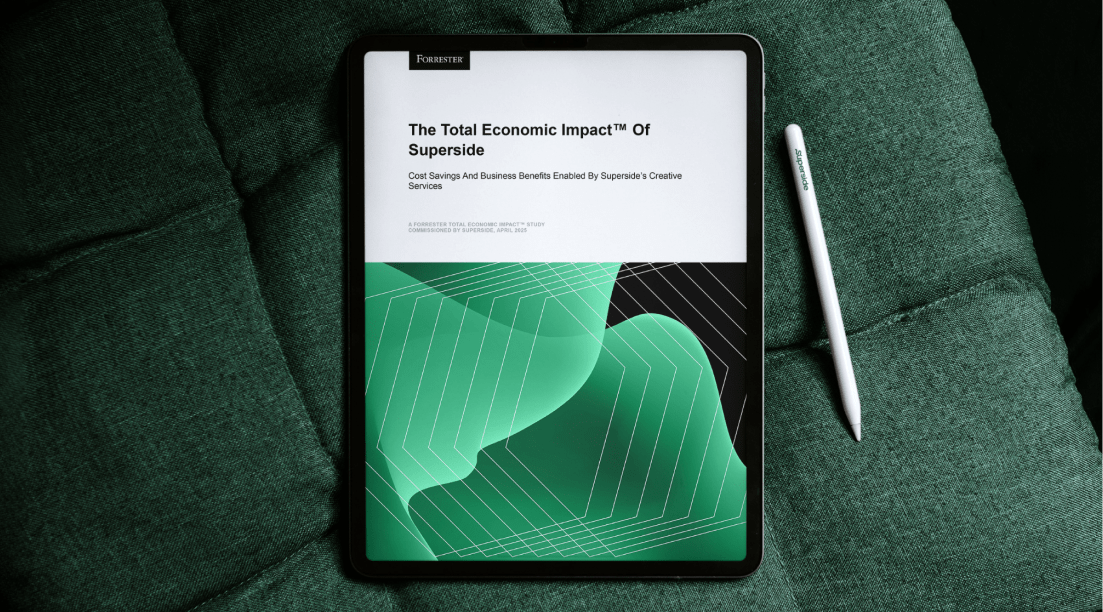
A recent Forrester Total Economic Impact study found that Superside delivers a 94% ROI over three years and that an investment in our services pays for itself within six months.
If your team struggles with UX design capacity, the benefits compound quickly: faster sprint velocity, reduced UX debt and cleaner engineering handoffs.
The alternative is far more expensive. Missed roadmap commitments, bigger technical debt and overcommitted, burned-out design teams.
Stop writing your roadmap around design capacity constraints
Your product roadmap should be driven by user needs, market opportunities and strategic priorities. It shouldn’t be shaped by how many designers you can squeeze into a single sprint.
When your design capacity scales alongside your product ambitions, you can launch products faster, keep things consistent and make sure your engineers don’t have to make UI decisions in a vacuum.
Instead of reacting to delivery pressure, your product design team can focus on the work that actually drives innovation and growth: discovery, building systems and doing the kind of user research that strengthens the team’s work over time.
If your roadmap has officially outpaced your design team, the good news is that you don’t have to call your recruitment agency. You can tap into a human-led, AI-powered solution in the form of Superside.
Ready to scale your design capacity and keep your product roadmap moving? Superside it.
FAQs
Discover why the world’s biggest brands choose us





Websites built to scale
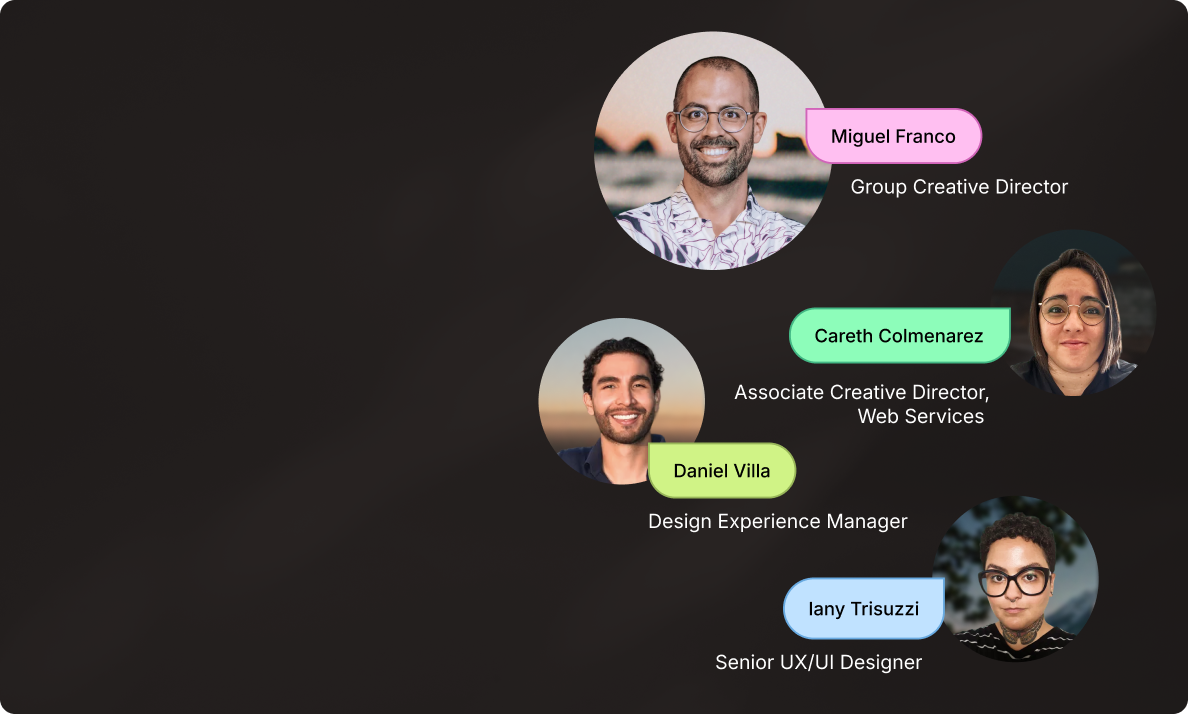
Meet the Superside Web Services Team.
Strategy, design and Webflow development
working as one.
“One great page doesn’t scale
a business. A connected digital
ecosystem does.” - Miguel Franco.

The data speaks for itself
According to a Forrester Total Economic Impact™ study, Superside delivers a 94% ROI and pays for itself in six months.

Design products people love
From UX flows to final UI, our Product Design
experts craft seamless experiences that drive
engagement and retention.