

Not all AI creative agencies are the same. Some bolt AI tools onto old workflows, while others rebuild the entire creative engine around it. This guide gives you a six-criteria rubric for telling the difference and ranks the 8 leading creative partners for 2026, each with an honest watch-out and the questions to bring to any sales call.
We know that choosing a creative agency has become much harder over the past few years. Almost every agency now claims to use artificial intelligence, but those claims reveal very little about how the work actually gets done.
If you're not sure how to distinguish partners who've genuinely rebuilt their operations around AI from those who've simply added AI tools to old ways of working, this guide is for you.
It provides a practical rubric for evaluating the difference and ranks the 8 leading creative partners for 2026. Superside takes the top spot as the world's largest AI-native creative agency, followed by a mix of AI-forward agencies, enterprise transformation firms and subscription design services.
Read on for the evaluation framework and buyer's checklist, or skip to the ranking if you already know the difference between AI-native partners and AI-powered agencies.
Throughout, Pedro Brasil, AI Creative Director at Superside, shares what human oversight actually looks like inside an AI-native workflow.
Why AI-native creative agencies are suddenly everywhere
There's a reason "AI-native" is showing up in so many agency pitch decks.
Content demand keeps climbing while budgets stay effectively flat. Gartner's 2026 CMO Spend Survey found marketing budgets rose only slightly, to 7.8% of company revenue, and 56% of CMOs say they lack the budget to deliver their 2026 strategy. The result is mounting pressure on internal teams.
Our own Breakpoint research shows 86% of teams are at or over capacity.
Pedro Brasil sees that pressure from inside the work, where AI has quietly moved the bottleneck somewhere new.
You notice the shift when the team can create, test and refine several directions faster than stakeholders can react to them. Creative teams have always worked under very tight deadlines, but AI has changed how much exploration can happen within that same amount of time.

Faced with an impossible amount of work, many enterprises turn to creative partners that know how to build creative scale with AI.
The challenge is that almost every agency claims to use AI, while far fewer have fundamentally changed how they operate. Where AI is simply bolted onto legacy workflows, the same stubborn bottlenecks remain.
The gap shows up inside enterprise teams too. The same Gartner survey found CMOs now allocate an average of 15.3% of marketing budgets to AI, yet only about 30% report mature AI readiness. Our research paints a similar picture: 52% of creative teams are still exploring or experimenting with AI, 30% use it regularly and only 2% have fully integrated it into their workflows.
That's why the distinction between AI-powered agencies and AI-native partners matters. It determines whether AI speeds up a few isolated tasks or genuinely changes what your creative operation can produce.
What makes an agency truly AI-native vs AI-powered

An AI-powered agency uses AI tools within a largely familiar delivery model. The team may execute certain tasks faster, but briefs, production, feedback and quality control still operate as before.
An AI-native agency makes AI part of the operating model. It uses AI to gather context, build briefs, produce assets, check quality and apply past learning to new projects. Effective AI-native delivery also depends on knowing where automation adds value and where human judgment has to stay.
Asked how you can tell that approvals rather than creative capacity are slowing a team down, Brasil describes the mismatch.
Creatives can now test more routes, compare ideas earlier and spend more time thinking like art directors. If feedback and approvals still move at the old pace, that becomes the bottleneck very quickly.
| Dimension | AI-powered agency | AI-native agency |
|---|---|---|
| Role of AI | Used within selected tasks | Embedded across the operating model |
| Brand context | Stored in guidelines, folders and people's heads | Captured and activated through connected systems |
| Human role | Individuals choose when to use AI | Humans design, supervise and improve AI-augmented workflows |
| Scale | Certain tasks become faster | Greater speed and volume across the delivery system |
| Quality | Depends heavily on the individual user | Human checkpoints and repeatable controls are built in |
| Proof | AI tools and feature lists | Documented business results |
None of that means AI belongs in every workflow. On when a traditional process is still the right call, Brasil points to control.
The most legitimate reason to keep a traditional workflow is when it requires a level of control that generative AI still can't reliably provide. This happens a lot in areas like 3D, where teams may need exact control over geometry, materials, lighting, camera or repeatability across many assets.
AI tools and AI agents are signals, not proof

If you're evaluating AI creative agencies, don't mistake a long list of AI tools for proof of AI maturity.
Access to image generators, machine learning platforms, AI agents and other generative tools doesn't create a competitive moat. Most agencies can access the same technology. What matters is how those tools connect to the work.
As you build your shortlist, ask what information each AI system receives, what decisions it can make and where human review takes place. Also ask how the agency prevents brand drift, protects quality and adapts campaigns based on feedback. If the answer stops at "our creatives use the latest AI tools," you're probably looking at an AI-powered traditional agency rather than an AI-native one.
Brand drift is the risk a good partner should be able to answer for. Brasil describes the earliest sign of it, well before a stakeholder formally flags anything.
I usually notice it when the work starts feeling generic, even if it still looks polished. Small choices begin to lose intention. The references become obvious, the lighting feels disconnected from the brand, the composition becomes predictable or the overall tone starts resembling what the model tends to produce by default.
How we evaluated the best AI-native creative agencies
To make this ranking useful, we assessed each partner against six criteria.
- AI in the operating model. Does AI support briefing, production, QA and optimization, or only isolated tasks?
- Proprietary systems and brand memory. Can the system retain and apply brand context as the relationship develops?
- Human-in-the-loop quality. Are experienced creatives responsible for direction, craft and final decisions?
- Proven enterprise outcomes. Can the partner show credible customer work and business results?
- Scale and speed. Can it handle high volume across markets, channels and formats, plus fluctuations in demand?
- Breadth of creative. Does it support multiple creative disciplines or specialize in a few?
No agency leads across all six. Larger firms typically offer greater scale and technical depth, while smaller partners may be easier to engage but have less capacity.
The third criterion is the one Brasil has seen matter most. He gives an example of the kind of problem human oversight catches and AI would have shipped.
I've worked on projects where the AI output was visually strong and technically usable, but the direction itself wasn't right for the brand. The problem wasn't necessarily a visible mistake. It was that the references, tone, composition or overall visual language were taking the work somewhere that didn't make sense for that client.
The 8 best AI creative agencies in 2026
1. Superside, best for enterprise creative scale
Superside is an AI-native creative agency built for enterprise marketing teams. We combine AI-native experts, strategic expertise and AI systems, so ambitious brands get standout creative that stays consistent at scale and measurably performs.
Unlike traditional agencies, we build tools and systems that help brands scale, and AI is our operating layer. All work runs through Superspace, where briefs, feedback, project history and delivery live in one connected environment. At the center sits Brand Brain, our AI context engine, which captures each customer's brand guidelines, tone, audience personas, previous assets, feedback and creative decisions.

Brand Brain supports structured briefing, on-brand asset generation and AI agents that apply accumulated creative knowledge to new projects. A human-in-the-loop process keeps strategic direction, craft, taste and final review firmly with AI-native experts. Being AI-native means AI isn't just powering individual tools. It's embedded across the entire creative model, from how teams are trained to how brand knowledge compounds over time.
The approach connects Brand Brain, over 40 proven AI workflows and a global bench of 500+ creatives in 67 countries, 90%+ of them AI-certified, so AI scales output without weakening brand consistency or quality.
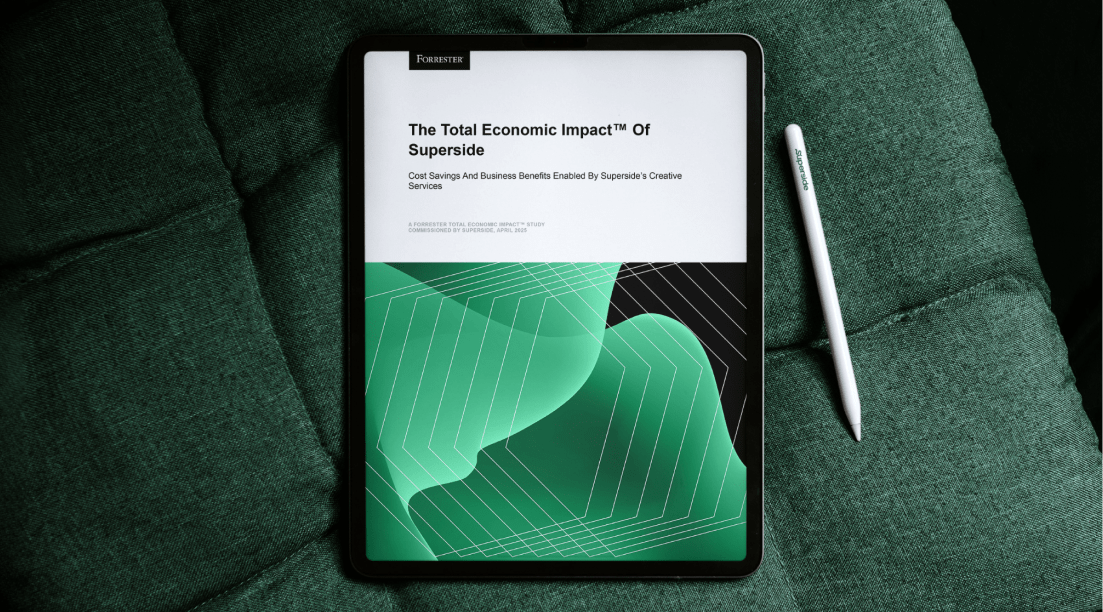
That scale translates into measurable outcomes. Superside helped D2L Brightspace produce 114 on-brand ad variations with 70% less design time, while Boomi tripled its creative output and reached a 24% LinkedIn engagement rate. A commissioned Forrester Total Economic Impact study (April 2025) found a composite Superside customer achieved 94% ROI, $4.16 million in business benefits over three years, payback in under six months and 60% fewer review rounds.
Superside also works behind the scenes for other agencies. Mekanism engaged our AI consulting practice to guide its AI transformation, and its Chief Creative Officer reports adoption reached 85% to 90% across the organization in under eight months.
- Best for: Enterprise and mid-market marketing teams with ongoing demand across several creative disciplines.
- Worth noting: We're designed for long-term creative partnerships rather than one-off projects.
2. Monks, best for AI-first marketing orchestration at global scale
Monks, the operating brand of Sir Martin Sorrell's S4 Capital, is one of the most recognized players in enterprise AI transformation in the agency world. Its proprietary Monks.Flow platform combines AI tools, automation and connected workflows across the campaign-building process.
- Best for: Large enterprises seeking AI orchestration across media, production and marketing technology at scale.
- Worth noting: Its size and technical depth make the offering more complex than most small and mid-market teams need.
3. DEPT, best for digital experience and AI transformation

DEPT is a global digital agency that pairs creativity with proprietary technology, data and machine learning. Its services span digital creative, engineering and AI transformation.
- Best for: Digital-first brands seeking an integrated creative and technology partner.
- Worth noting: As a large, full-service network, engagement models and pricing vary widely by region and team.
4. AKQA, best for technology-led brand and product experiences

AKQA is a long-standing innovation and experience agency with deep roots in emerging technology. Part of WPP, it now sits within the group's WPP Creative division following the February 2026 restructure, and it has produced some of the most awarded technology-driven creative work of the past decade.
- Best for: Enterprises developing ambitious digital products or technology-led brand experiences.
- Worth noting: Premium, project-led model. Not built for high-volume, always-on production.
5. Accenture Song, best for enterprise-wide transformation
Accenture Song is Accenture's creative and technology arm, and one of the largest such practices in the world. Trade press reported revenue of roughly $20 billion in fiscal 2025, driven partly by generative AI demand. It brings enterprise-scale AI, data and technology transformation together with creative, which suits organizations reshaping how they operate rather than only what they publish.
- Best for: Enterprise transformation programs where creative is part of a broader operating change.
- Worth noting: Consulting-led scale and pricing. Overkill for teams that just need creative throughput.
6. Punchcut, best for AI-native product design

Punchcut is a specialist in human-machine interaction and intelligent product experiences, with a dedicated AI design practice. It consistently appears on AI design shortlists for its work on AI-driven products.
- Best for: Product teams developing intelligent interfaces and connected experiences.
- Worth noting: Focused on product experience, not marketing creative.
7. NoGood, best for AI-augmented growth marketing

NoGood is a growth marketing agency that assembles bespoke squads for global brands and high-growth startups, with a dedicated AI Marketing Lab focused on generative AI use cases. Its human-led, AI-augmented model combines data, rapid experimentation and cross-channel strategy, including adapting content for AI search and changing discovery behavior.
- Best for: Growth-stage companies that prioritize acquisition, content strategy and performance marketing.
- Worth noting: The company applies a growth-marketing lens first, rather than brand-building or large-scale production.
8. Awesomic, best for startups needing accessible design capacity

Awesomic uses intelligent matching algorithms to pair companies with vetted designers for branding, marketing, web design and product work. The model is accessible and useful for lean companies that need regular design support.
- Best for: Startups and small teams that want fast, flexible design support.
- Worth noting: Task-based delivery offers less strategic depth than a fully AI-native agency. If it's pure creativity you're after, explore our roundup of top ad creative agencies.
AI ad platforms are tools, not agency partners
Omneky, The Brief (formerly Creatopy) and AdCreative.ai often appear alongside agencies and AI-powered design platforms in search results. They can generate and adapt ad creative at significant volume, but they're software products, not agencies.
A platform can help with production, variation and budget optimization. It can't independently own strategy, manage stakeholder alignment or judge whether a creative idea is actually relevant. That doesn't make these tools less valuable, and many marketing teams pair a platform with an agency partner. For a closer look, read our guide on AI creative tools vs an all-in-one creative platform.
What AI-native delivery changes for creative teams
An AI-first operating model makes brand consistency systemic and creative production scalable. Rather than spreading brand knowledge across folders and files, it captures and applies that knowledge across connected systems.
AI-native systems also strengthen creative partnerships. Because brand knowledge, feedback and decisions carry over from one project to the next, customers spend less time repeating themselves and more time building momentum.
And when AI handles repetitive production, creatives spend more time on strategy and craft.
It also changes how the method gets chosen in the first place. Brasil recalls a project where the strongest answer turned out not to be AI at all.
One project was for a dog collar brand. AI could absolutely have been part of the process, but the strongest creative direction was to photograph real dogs wearing the products alongside their actual owners. The value of those images came from documenting real relationships, environments and local culture, something generative AI can imitate visually but can't genuinely document.
The real competitive moat is the combination: compounding brand intelligence, proven AI workflows, technical depth and strong creative talent. That's what distinguishes AI-first companies from AI-powered ones.
How to choose an AI-native agency
Bring these questions to every sales call.
- Where does AI sit in your operating model? Ask how AI shapes briefing, production, QA and optimization. The deeper it's integrated, the stronger the model.
- How do you keep creative on-brand? Look for systems that retain brand context, previous decisions and past feedback. "Our designers follow your brand guidelines" is a start, but it doesn't describe an operating model that delivers consistency at speed.
- Where are the human checkpoints? Strong partners can explain which tasks use automation and where experienced people take responsibility.
- What outcomes can you prove? Ask for customer reviews, work examples and evidence of results.
- Can you scale with demand? Assess team size, flexibility, local support and the ability to run several workstreams at once. Compare the trade-offs of building in-house vs using an agency.
- How does the cost structure work? Compare project fees, retainers and subscriptions against your expected volume. Per-task pricing tells only part of the story: if your team spends significant time managing the work, the real value is lower. Our guide to choosing a design company covers pricing, capabilities and procurement.
Of those, Brasil would press hardest on the human checkpoints, and on what the person at that checkpoint actually has to know.
Human oversight matters because someone still needs to understand the brand, the audience and the cultural context, and make a call on what's worth pursuing.
Why Superside leads the AI-native agency landscape
Each agency listed here solves a different problem. Superside offers the most complete combination for enterprise marketing and creative teams.
Our AI-native operating model runs through Superspace, where Brand Brain captures and applies your brand knowledge across projects, getting smarter over time. AI agents, custom image models and established workflows help you scale up, while AI-native experts own strategy, creativity and quality.
Our capabilities span branding, ad campaigns, video, motion graphics, digital design and more, reducing the need to coordinate multiple specialist agencies. We plug directly into your existing workflows, providing both creative services and AI expertise under one roof.
Brasil describes how that plays out on an individual brief.
That's an important part of how we approach AI at Superside. We look at the project first and decide where AI actually adds value. Sometimes it's the best tool for exploration or execution, and sometimes the strongest solution is photography, 3D, traditional production or a combination of approaches. The goal is always to choose the method that serves the idea best.
That's the difference between hiring an agency that uses AI and choosing a true AI-native creative agency. One completes a few tasks faster. The other changes what you can achieve.
Book a call to see how Superside can become your AI-native creative agency.
FAQs
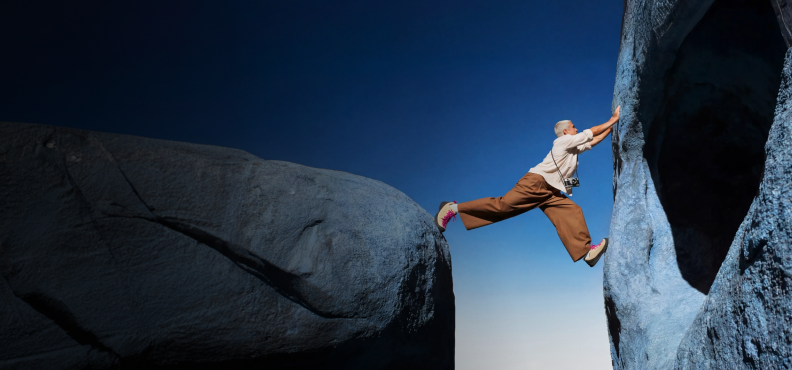
Creative teams are at a breaking point
The pressure is real, the opportunity is too.
Get insights from 300+ leaders on
beating burnout, using AI wisely
and navigating 2026’s inflection point.


The data speaks for itself
According to a Forrester Total Economic Impact™ study, Superside delivers a 94% ROI and pays for itself in six months.

Say yes to bigger campaigns
Our AI-native creative agency helps your team
take on more formats and markets with no new headcount.