



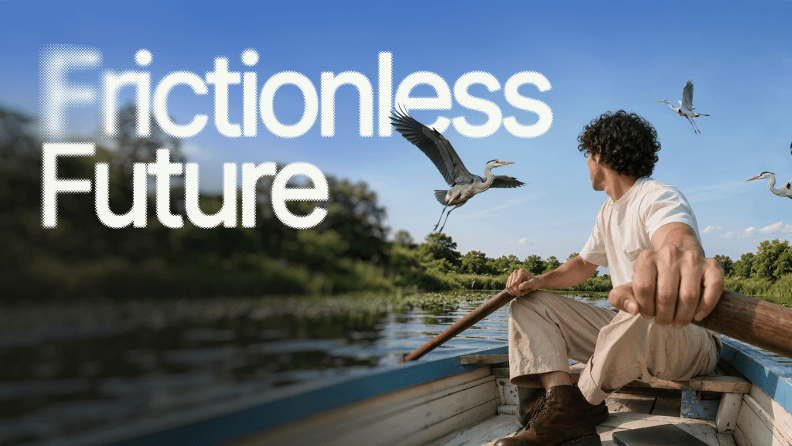


Nearly half of all creative teams are still exploring or experimenting with AI, less than a third use it regularly and only 2% have fully integrated it into their workflows. See what else creative leaders had to say about AI adoption.
Remember a few short years ago when generative AI was the shiny new buzzword?
Now the hype is settling and excitement is more tempered as creative teams shift from early experiments to deeper integration—aiming for real mastery and ROI.
The problem isn’t convincing anyone that AI is worth implementing. It’s finding the right ways to do so. When we launched our AI Adoption Guide, we included a quiz that let creative leaders assess their AI readiness and adoption journey.
To get a pulse of what’s happening on the front lines within working creative teams, we reviewed the responses we received from 190 creative leaders. Here’s what they said.
Where creative teams stand
Despite high levels of buy-in, results indicated that AI adoption is still a work in progress.
- More than half—52% of creative teams are still exploring AI or experimenting with AI tools.
- Less than a third—30% are regularly using AI.
- Only 2% have fully integrated AI into their creative workflows.
What creatives are hoping to gain
The reasons for embracing AI were loud and clear.
- Increasing efficiency was the priority for 63% of creative teams.
- Boosting creativity as a close second at 52%.

See where you stand, take the quiz inside the AI Adoption Guide.
What’s getting in the way
Starting with the where, the most challenging areas for integrating AI into creative workflows were:
- Design execution (26%)
- Idea generation (22%)
- Content creation (21%)
As it turns out, the how and why of AI adoption are making it harder.
- More than half of creatives, 60% said lack of expertise was the biggest blocker.
- Integrating AI tools into existing workflows wasn’t too far behind at 52%.
Our takeaway: Most creative teams are still early in their AI journey and lack the internal knowledge to accelerate their implementation.
How creative teams are using AI
According to our respondents, the top three AI use cases were:
- Digital and social ads (47%)
- Branding and visual identity (38%)
- Web design (32%)
Top AI creative tools included:
- ChatGPT (85%)
- Adobe Firefly (39%)
- Midjourney (36%)
Our takeaway: Creative teams are using ChatGPT for brainstorming, research and more, while the focus for Adobe Firefly and Midjourney is asset generation.
AI opportunities for creative teams
Fully introducing AI into your creative workflows takes more than casual exploration or interest. It takes investment, experience and time. You can’t just add AI tools to your stack and hope to immediately see results. Gen AI needs to be carefully integrated into how creatives really work.
Since AI has burst onto the scene so rapidly, most organizations don’t have the expertise to do this internally. But that doesn’t have to be a blocker anymore.
Your partner for creative innovation
A versatile creative partner to the world's top brands, Superside has fully embraced AI transformation. We’ve completed more than 3,000 AI-powered creative projects, saving our customers $3.5 million in the process.
We helped SecurityScorecard make what would have once been impossible possible—creating an AI-generated comic—and saving nearly 85% on design time compared to traditional methods.


Syngenta uncovered the power of AI in creative workflows, spinning up a stunning brand campaign in only 15 hours.


Boomi leveraged gen AI to triple the number of creative assets available for their lead generation campaign.

Want to see the same kind of success? No matter where you are in your AI adoption journey—whether you're just getting started, approaching expert status or somewhere in the middle—our teams of highly trained AI creative experts can help.


Be strategic with your AI integration
Our AI adoption guide gives you a human- and workflow-centric approach to empowering your team and finding the right places to start with your AI transformation.

AI adoption is a journey
The right partner makes it easier.
Discover Superside's AI-enhanced creative services.


