




In 2026, performance marketing requires testing enough creative to find what works. AI can produce ad variations at scale, but volume is only part of the story. This guide covers how to combine on-brand generation, disciplined testing and measurement into a repeatable system that consistently delivers high-performing ads.
Every performance marketer dreams of ads that shoot the lights out. But while marketing teams often have plenty of great campaign ideas, it can be tough to produce enough high-quality, on-brand creative to test properly and prevent ad fatigue.
The good news is that AI can remove this creative bottleneck and generate ad variations at a speed no manual process can match. The bad news is that a high volume of AI-generated ads won't get you very far if the ads are generic or off-brand.
The teams that get real results in 2026 pair AI generation with brand-trained AI systems, human creative direction, superb design skills and a disciplined testing loop. This guide covers what AI ad creative variants are, how to generate and test on-brand ads and how today's top enterprise teams produce hundreds of variants a month with a human-led, AI-first approach.
Along the way, Marcus Moraes, Head of Paid Social at Superside, shares how he generates, tests and scales ad variants in paid social.
Volume is the price of entry in performance marketing

In the past, a successful ad campaign could be built on a handful of strong ads that ran for a few weeks. Today, audiences tire of creative quickly, and digital platforms reward a steady stream of fresh content.
But freshness alone isn't enough. A Nielsen study commissioned by Google found that ads perform best when they draw attention, feature the brand, connect personally with audiences and direct them to take action. Campaigns that delivered ads following those principles saw a 30% higher sales lift than those that didn't.
The challenge, then, is to produce more creative without compromising quality. The more strong, on-brand ad variations you can produce and test, the better your chances of finding what performs.
That's where ad creative variants come in. Instead of betting on a few executions, you create multiple versions of a concept and use performance data to identify what works. In enterprise teams running large campaigns across channels and audiences, this creates a continuous pipeline of fresh creative to test, refine and scale.
It sounds simple, but the challenge becomes obvious in practice.
When every ad has to be briefed, designed, revised and versioned manually, production quickly becomes slow and expensive. AI creative production changes those economics. Used well, AI helps you scale production across multiple campaigns, as long as humans stay responsible for concepts, craft and creative quality.
What are AI ad creative variants?
An ad creative variant is a version of an ad designed to test a specific element or suit a particular audience, format or placement. An AI ad creative variant is one generated with AI.
Three terms get used interchangeably, so it helps to separate them.
| Term | What it is | What it's for |
|---|---|---|
| Variants | Versions of the same concept that change one or more meaningful elements, like the hook, headline, visual or CTA | Testing what drives performance |
| Adaptations | Versions of an approved asset adjusted for different formats, sizes, channels or placements | Covering every placement without rebuilding the asset |
| Iterations | New versions informed by the performance of previous variants | Building on what already won |
A healthy ad program uses all three. AI delivers the most value when it helps teams produce meaningful variants at a scale that supports rigorous testing, then automates the mechanical adaptations so nobody resizes files by hand.
For a practical walkthrough, our guide to creating ad creative with AI is a good starting point. It's also worth reviewing a few strong AI ad creative examples.
Why ad creative variants matter more than ever
Three shifts have made testing a high volume of assets essential.
1. Creative is the biggest lever on performance
If much of your ad return is determined by the creative itself, then testing more creative is the most reliable way to improve results. Variants help you identify which ideas, messages and executions actually perform.
Marcus Moraes, Head of Paid Social at Superside, pushes back on the idea that creative, targeting and reach are separate decisions.
Creative and targeting overlap so much they aren't easily separated. Creative is a major lever for targeting, and the right creative directly helps you reach the right audience.

That said, targeting still earns its own experiments alongside the creative work.
Leverage in-platform targeting—such as keywords, lookalikes, and interests—as well as external targeting partners to reach your ICP. Targeting experiments, combined with strong creative diversification, are what keep campaign metrics healthy.
2. Creative fatigue is accelerating
When audiences see the same ad repeatedly, its impact diminishes quickly. Even a strong ad won't work forever, which is why you need a pipeline of fresh variants ready to replace it. Our take on creative performance digs into why measurement and refresh cadence go hand in hand.
The defence against fatigue is a wider spread of creative, rather than one strong performer carrying the account.
Always run multiple ad formats that explore different pain points. You want several ads each delivering a small portion of your results, not one ad delivering most of them and fatiguing quickly.
3. High-performing teams are already a step ahead
The biggest ad accounts produce and test far more creative each week than smaller teams do. That gives them more chances to find the ads that work and use those insights to improve the next round.
Teams producing only a few ads each week have less data to learn from, which puts them at an immediate disadvantage. If that's your situation, AI can help you produce and test more ads without a proportional increase in time or resources.
For Marcus, the teams that pull ahead aren't only producing more. They build each new variant on top of what already works.
Every new creative needs a balance between elements with a proven track record and new angles. If you're testing a new layout for a static ad, keep the background color that has consistently performed.
How AI generates ad creative variants

AI can improve your ad programs in several ways.
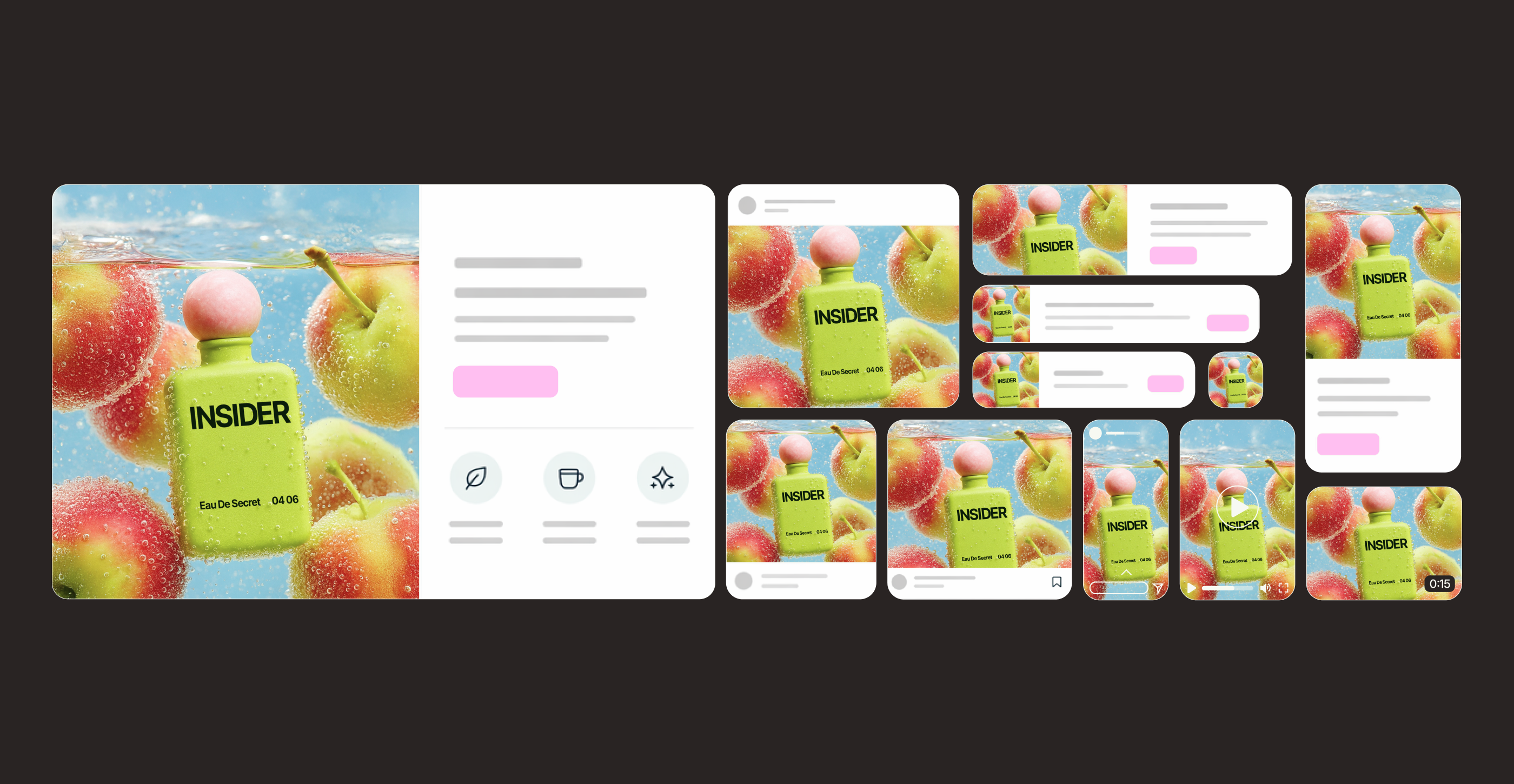
- Concept-to-variant generation. Starting from an approved master concept, AI generates alternative visuals, layouts and treatments that preserve the core idea while varying the elements you want to test.
- Ad copy variation at scale. Large language models help copywriters quickly explore multiple headlines, messaging angles, hooks and CTAs, so teams can test copy and learn what resonates.
- Format and size adaptation. AI adapts a master asset for multiple formats, sizes and placements, from paid social to programmatic display and landing pages. We cover this in our guide to automating ad creative versioning.
- Dynamic creative optimization. Ad platforms automatically combine elements like headlines, images and CTAs, then use audience and performance data to decide which combinations to show. Results still depend on the quality and variety of the components you supply.
- Custom brand models. Custom AI image models trained on your brand imagery generate consistent, on-brand variants at scale, which reduces the need for a new photoshoot every time you want fresh creative.
Video and motion graphic ads
While video and motion graphic ads now dominate paid social, they fatigue just as fast as static ads.
AI video tools help you turn one master video into different lengths, aspect ratios and regional versions, add motion to static assets and automate repeatable elements. Instead of one expensive video, you get a family of on-brand versions from the same core concept. Our article on scaling short-form video with AI covers this in detail.
How the pieces work together
In practice, these capabilities work best together. Custom AI image models create visuals that align with brand guidelines, language models develop copy variants, video tools produce new cuts and creative automation tools adapt approved assets across formats and placements. Human creative direction ties it together, from deciding what to prompt and test to reviewing what goes live.
If you're choosing tools for the generation stage, check out our tested list of AI ad creative generators.
How many ad variants should you actually test?
More isn't always better. Testing too many variants on a limited budget spreads your spend too thin, and none of them reach a fair read.
Start with your weekly ad spend and the number of conversions you can realistically generate per variant, then work backward to determine how many variants you can meaningfully test. A practical approach is to allocate roughly 70% of your creative effort to iterating on proven winners and 30% to testing new concepts. The winners maintain performance while the new concepts hunt for the next breakthrough.
As a rule of thumb, we recommend testing 5 to 10 meaningful variations with clear hypotheses. AI makes that realistic by reducing the cost and effort of producing each one.
How you spend that budget matters as much as how you split it, especially once a variant starts to win.
Test new concepts while maximizing your chance of finding new winners. Once you find one, keep exploring the concept with different approaches, like turning it into a hook for a UGC ad.
A framework for testing ad creative variants at scale

Variant generation is only half the job. The other half is testing with enough discipline to trust the results.
Step 1. Start with a hypothesis. Every test should answer a specific question. "Does a benefit-led hook outperform a curiosity-led hook?" gives you something clear to test. "Let's try something new" doesn't. A strong hypothesis tells you what you're changing, what you're measuring and what you hope to learn.
Step 2. Isolate one variable at a time. If you change the hook, visual and CTA at once, you won't know which change affected performance. Change one meaningful element per variant so you can see what makes a difference. To test multiple elements simultaneously, you can use multivariate testing, but you'll need enough traffic and budget to generate useful results. We covered the fundamentals in our guide to A/B testing your designs.
Step 3. Set your thresholds before launch. Decide upfront how much data you need before judging a variant and how long you'll let the test run, whether that's a minimum number of impressions, clicks or conversions. Without thresholds, it's easy to declare a winner based on early results that don't hold up.
Step 4. Kill losers fast, scale winners. Volume only matters if it helps you make better decisions. Cut underperforming variants without sentiment and move budget to the ones that work. Then build your next round of iterations on the winners.
Step 5. Close the loop. Feed every result back into the next brief. This is what separates a testing program from a testing habit. When data drives creative performance, each cycle starts smarter than the last and the whole operation compounds. Consider adopting a formal creative testing framework for paid social if you run ad programs at enterprise scale.
Marcus watches one number to know when a variant pipeline has fallen behind.
Track how well your most recent ads are performing. Evaluate share of spend and conversions by creative age, so you can spot any increase going to older ads.
When that share starts climbing, the read is simple: new ads can no longer outperform the old ones.
Act fast on how the team produces and launches new variants. Plan for it by bringing everyone together for an ad brainstorm session.
The catch with AI variants, staying on-brand at volume
This is where many teams run into trouble.
They give a general AI model a vague brief, then watch it produce dozens of variants that don't quite feel like the brand.
At scale, that becomes a much bigger problem. One off-brand ad is easy to catch and fix. Hundreds of inconsistent variants either create significant creative bottlenecks or weaken brand recognition and trust if they ship as is.
Two safeguards help you keep ad variants on-brand at scale.
- Custom AI models trained on your brand. With these models, image generation starts from your visual identity rather than a generic base. We explain why on-brand AI design requires custom models in detail.
- Human creative direction. AI generates the volume, but experienced creatives decide what's worth shipping. They own the concept, curate the strongest outputs and hold the quality bar across every variant, so scale never comes at the expense of brand or craft.

Tools vs. a system for ad variant production
In 2026, plenty of AI tools can help you create ad variants. AdCreative.ai and The Brief (formerly Creatopy) focus on fast generation and templated output. Smartly and Meta's Advantage+ creative tools assemble and optimize combinations.
For a design team with strong in-house creative direction and established workflows, these tools take much of the production work off their plate.
But they don't replace the human strategy, brand stewardship and creative judgment that separate superb ads from those that simply clutter feeds. And while some platforms connect creative production with performance data, many standalone generation tools leave measurement and optimization to you.
That's why many teams pair AI tools with a strong creative partner. Better still, they choose a partner that brings AI-powered production, human creative direction and creative performance together in one connected system.
How Superside produces on-brand ad variants at scale
As the world's leading AI-first creative partner, Superside helps in-house teams at brands like Intuit, Amazon, DoorDash, Figma and Reddit scale high-quality, on-brand creative that's built to deliver.
Being AI-first means AI isn't just powering individual tools. It's embedded across the entire creative model, from how teams are trained to how brand knowledge compounds over time.
When we produce ad creative, the model works like this.
- Our creative team develops the core concepts and creative direction, grounded in your brand system.
- Those concepts feed into platform-sized templates across paid social, programmatic display and landing pages.
- AI generates on-brand variants. Brand Brain, the AI layer inside our Superspace platform, supplies the context while custom AI image models generate on-brand imagery.
- A copywriter pairs with AI to explore headlines, messaging angles and CTAs at scale.
- A senior creative selects the strongest variants, and Brand Brain captures the feedback, creative decisions and performance signals.
- The system sharpens with every cycle, as both the AI workflows and the human team learn what gets approved and what doesn't.
Then, when it comes to measurement, a great alternative is Superads, our AI-powered creative analytics platform, connects to Meta, TikTok, LinkedIn and Google Ads to analyze creative performance in one place. It scores ads across hook, hold, click, engagement and conversion, using a system calibrated on more than 15,000 ad accounts and over $2.2 billion in ad spend, benchmarked against each account's own performance. New users start with a free 14-day trial.
Superads can tell you which hooks, formats and CTAs drive results, so our performance marketers can double down on what works. Instead of simply producing more variants, we use real performance data to decide what to create next.
The proof is in the results we achieve for our customers.
- D2L Brightspace produced 114 on-brand ad variations with roughly 70% less design time, holding brand consistency across every asset.
- Boomi tripled its creative output after a rebrand, generated 75+ unique images and reached a 24% engagement rate on LinkedIn, against a typical brand benchmark of 1% to 3.5%.
- SmartNews generated 150+ unique image options in about four hours, saving 67.5% of design time.
- Unigloves produced 250 on-brand product images and saved around 57% of the design hours a traditional shoot would have required.
This is what creative variation at scale looks like: more on-brand options, produced faster, with enough volume to test what works and turn those learnings into the next round of creative.
The economics hold up under outside analysis too. A Forrester Total Economic Impact study commissioned by Superside (April 2025) found a composite customer achieved 94% ROI with payback in under six months, driven in part by improved campaign performance and better work delivered faster.
Build a system to generate, test and scale ad variants
AI has made it cheaper and faster to generate ad creative variations. That's a genuine win for marketers, but it's also a trap for teams that mistake volume for strategy. A thousand off-brand variants will lose you money faster than ten good ones ever made you.
The teams that win build a system. Brand-trained AI delivers volume and scale. Human direction ensures quality, craft and consistency. And a disciplined testing loop informs what gets created next.
That's the model Superside puts into practice every day. Our top-tier creatives lead the thinking and creative direction. An AI-first approach helps us scale production. Brand Brain keeps brand context embedded throughout the work. And Superads shows us what performs, so those insights inform the next round.
The result is a repeatable system for producing, learning and improving ad creative variants at scale. Book a call to see how Superside can become your creative team's AI-native creative team.
FAQs



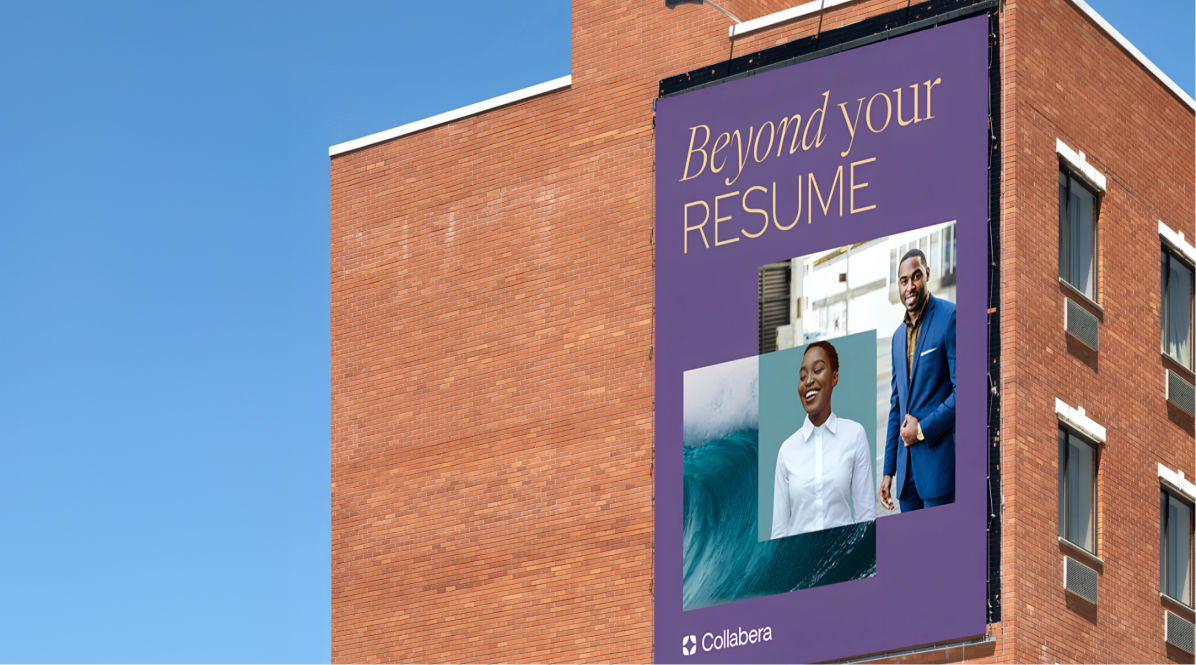
Produce ad creative that converts
Explore our ad design services
and get support to scale all from
static and motion ads to out-of-home
and social media campaigns.


Meet Customers Who’ve Experienced Exceptional ROI
Discover how Shopify got 4,375 assets in 12-24 hours or how Amazon saved 345 hours in three months.


Your creative team's creative team
Choose the world's leading AI-powered creative service
and get high-performing ads, videos, experiences and
more at scale, on your schedule and to your standards.

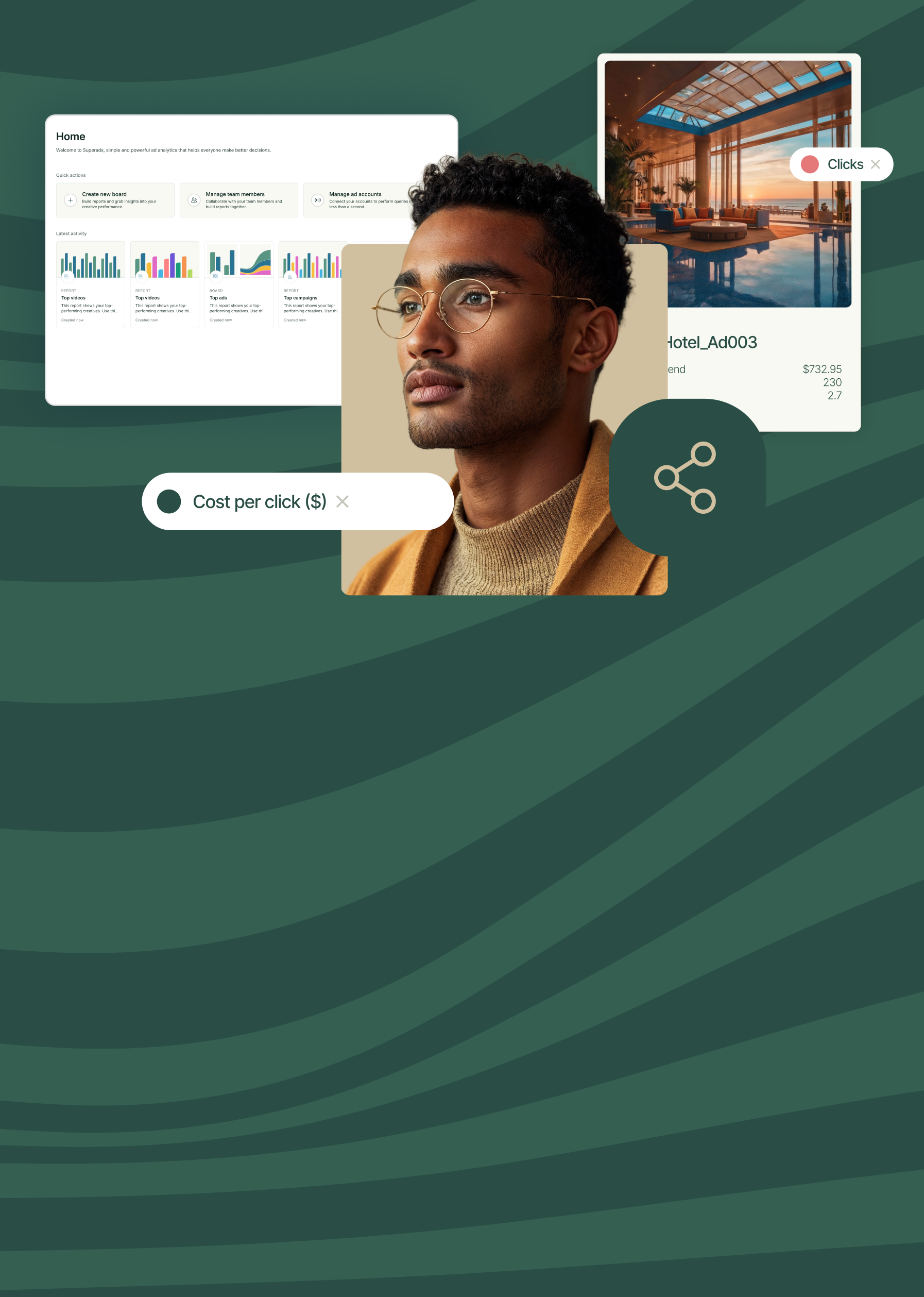
Ad Creative That Performs
Get the only AI-powered creative insights tool
built for creatives and performance marketers.

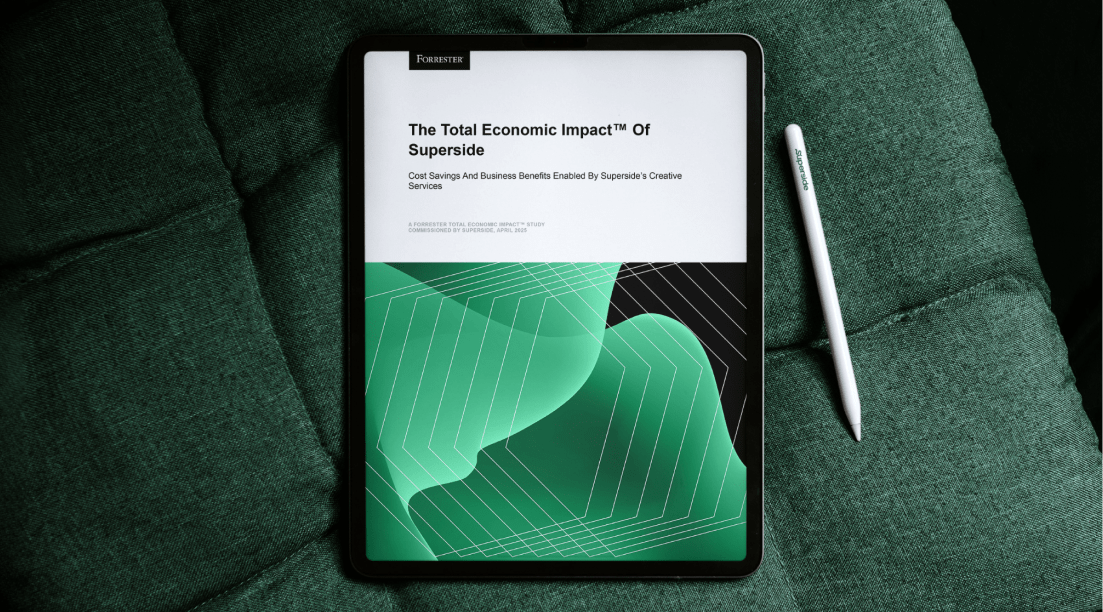
The data speaks for itself
According to a Forrester Total Economic Impact™ study, Superside delivers a 94% ROI and pays for itself in six months.


