


In creative workflows, endless rounds of revision usually point to a lack of context at the start, not weak feedback. Generic AI tools can make it worse by generating off-brand assets that draw even more review. Brand Brain captures and applies your brand's voice, visual rules, specs and feedback to every brief, keeps work on-brand from day one and cuts revision time.
Every creative leader has lived a frustrating round four, five or six.
The brief seems clear, yet the project turns into a cascade of revisions, feedback and shifting expectations. By the umpteenth round, the team is exhausted, deadlines have slipped and the budget is blown.
Every extra round also pulls senior creatives away from higher-value strategic work. 70% of creative leaders Superside interviewed said their most talented creatives spend too much time on work that does not match their skill level.
Many teams still treat excessive revisions as an execution problem and invest in better production tools. More often than not, revisions are the symptom of a problem that starts much earlier in the workflow. When brand standards, audience insights, stakeholder preferences and past feedback are not captured and shared at the start, creative teams end up reestablishing that context during every production cycle.
Generic AI tools alone are not the answer either. They can produce concepts, assets and variations in seconds, but without the right context they often create more work than they eliminate. AI is far more effective when it carries brand and project context through the entire process, from the first creative brief to campaign launch. That is the thinking behind Superside's Brand Brain, the AI-first creative memory inside Superspace that builds context into every workflow instead of leaving reviewers to explain it again each time.
This article explains why so many revision rounds happen in enterprise teams, why generic AI tools and fragmented systems can make creative output worse and how to reduce creative revision rounds with AI the Superside way.
The upstream gaps that cause most revision rounds

It’s easy to blame ongoing revisions on the creative team, assuming they worked too fast, missed details or ignored the guidelines. Usually, though, the problem starts much earlier in the process. Most revision rounds trace back to context that should have been captured upstream and was not.
Monica Romaniuc, Senior Product Marketing Manager at Superside and a Brand Brain expert, puts the diagnosis plainly.
Most teams think revision rounds are a feedback problem, but they're usually a context problem. By the time feedback shows up, it's often because something important never made it into the brief in the first place. The work isn't necessarily wrong, it's just missing context.

Five upstream gaps cause most downstream revision rounds.
1. The brief is unclear or incomplete
In enterprise organizations, briefs are often thorough in some areas and thin in others, especially when multiple reviewers are involved. The high-level details are covered, but the context is not. The core objective is one sentence, the success criteria are vague and there is nothing about what worked or did not work before. Creative teams are forced to make assumptions, which increases the risk of off-brand work and downstream revisions.
2. Brand context is not pulled in upstream
Brand context rarely lives in one place. In most enterprises it is spread across PDFs, campaign archives, stakeholder conversations and the institutional knowledge of senior creatives. Many briefs start with only a partial picture of what on-brand looks like, so gaps around tone, messaging and visual style surface during revision rounds, when stakeholders add context that was not available at the start.
3. Past decisions are not carried forward
The campaign that closed in Q1 generated decisions that should inform Q2. What converted, what did not and what feedback the Creative Director or Marketing Manager gave. Almost none of that context carries forward unless it is deliberately captured, so teams relitigate feedback and preferences that were already settled.
4. Stakeholders do not align early
Cross-functional alignment usually happens after work is sent for approval, not before. Brand, compliance, performance and the C-suite each ask for something the previous group did not flag. The work bounces between teams because the alignment that should have happened at the brief is happening at the asset.
5. QA happens too late
In many organizations, QA is the final checkpoint before launch rather than an ongoing part of the process. By that stage, even small issues trigger big changes. The wrong copy, font or color has to be fixed across every asset, and at the enterprise campaign level that can mean hundreds of assets.
Teams spend late-stage rounds fixing problems that better briefs and systems would have prevented. Each of these gaps produces feedback rounds, and none of them is actually a feedback problem.
Why generic AI tools seldom reduce design rounds
AI is regularly pitched as a low-effort way to compress revision cycles, and it can flag issues before a human reviewer sees the work. But those benefits are limited when generic tools are layered onto existing workflows. Three patterns repeat.
1. Generic AI generates output without enough information
An LLM, image generator or copy generator with no access to your brand guidelines has to infer what on-brand means from the prompt alone. The assets may look good but miss the finer nuances reviewers look for, so those reviewers end up supplying the brand guidance that should have come before production started.
2. More output does not automatically create content velocity
When teams use generic AI to generate large numbers of variations, they shift effort from production to review. Every extra concept, image or headline needs to be assessed, so reviewers have more options to compare and more assets to give feedback on. Teams create more content but do not move projects through the system any faster.
3. Reviewers spot more issues, not fewer
ChatGPT, Midjourney, DALL-E and similar tools can produce work that looks polished but lands flat against brand standards. Reviewers respond by being more vigilant, not less, so output that needed three rounds without AI now needs four.
The biggest gains do not come from adding more AI tools. They come from connecting AI to deep brand knowledge, historical learnings, feedback cycles and creative workflows, so context is applied throughout the process.
How non-specialist teams and fragmented AI stacks make revision rounds worse
The most expensive version of the revision problem is the one many enterprise teams create on their own without realizing it. Teams that lack deep brand or creative expertise and rely on a mix of standalone AI tools can fall straight into the endless-revision trap. Three forces compound.
1. Several different tools introduce more inconsistency
Many teams now run three to five standalone AI tools across the process. One for image generation, one for copy, one for briefing, one for video and one for QA. Each runs on its own model and context, and none of them remembers what was decided before. The output of one tool becomes the input for another, with brand context dropping at every handoff. By the time work reaches approval, several tools have touched it and none had a full understanding of the brand, so the result is off-brand assets and more revisions.
Monica Romaniuc, Superside, sees this pattern often.
A team might be using one tool for briefing, another for copy, and another for visuals, but none of them share the same understanding of the brand. AI works best when everyone is working from the same source of truth.
2. Teams without deep brand expertise generate output that needs more review
As AI tools get more accessible, creative execution is no longer limited to specialist teams. Marketers, sales, product managers and other business users can generate assets independently. Those outputs may look polished, but they frequently miss the subtle brand and creative considerations experienced creatives apply automatically, so more issues are caught in review and the number of rounds goes up.
3. AI sprawl produces invisible costs
Subscriptions are visible and look affordable. The hidden cost is the time spent learning multiple tools, refining prompts, correcting off-brand outputs, onboarding new team members and managing work across disconnected systems. Much of that cost shows up in the revision process.
Superside's Q1 2026 Breakpoint research found 39% of leaders flag AI quality concerns and 31% flag workflow integration as top barriers to AI adoption. The good news is that these challenges are not inherent to AI. With the right workflow integration, training and expert AI support, teams can use AI to reduce revisions and improve quality, which is exactly what Superside, the world's leading AI-first creative partner, is built to do.
How to reduce creative revision rounds with AI and a memory-based approach
Superside closes the upstream context gap with an AI-powered memory layer. Brand Brain, which lives inside our Superspace creative management platform, is unique to every brand and reduces revision rounds in five ways.
1. It captures and retains brand context
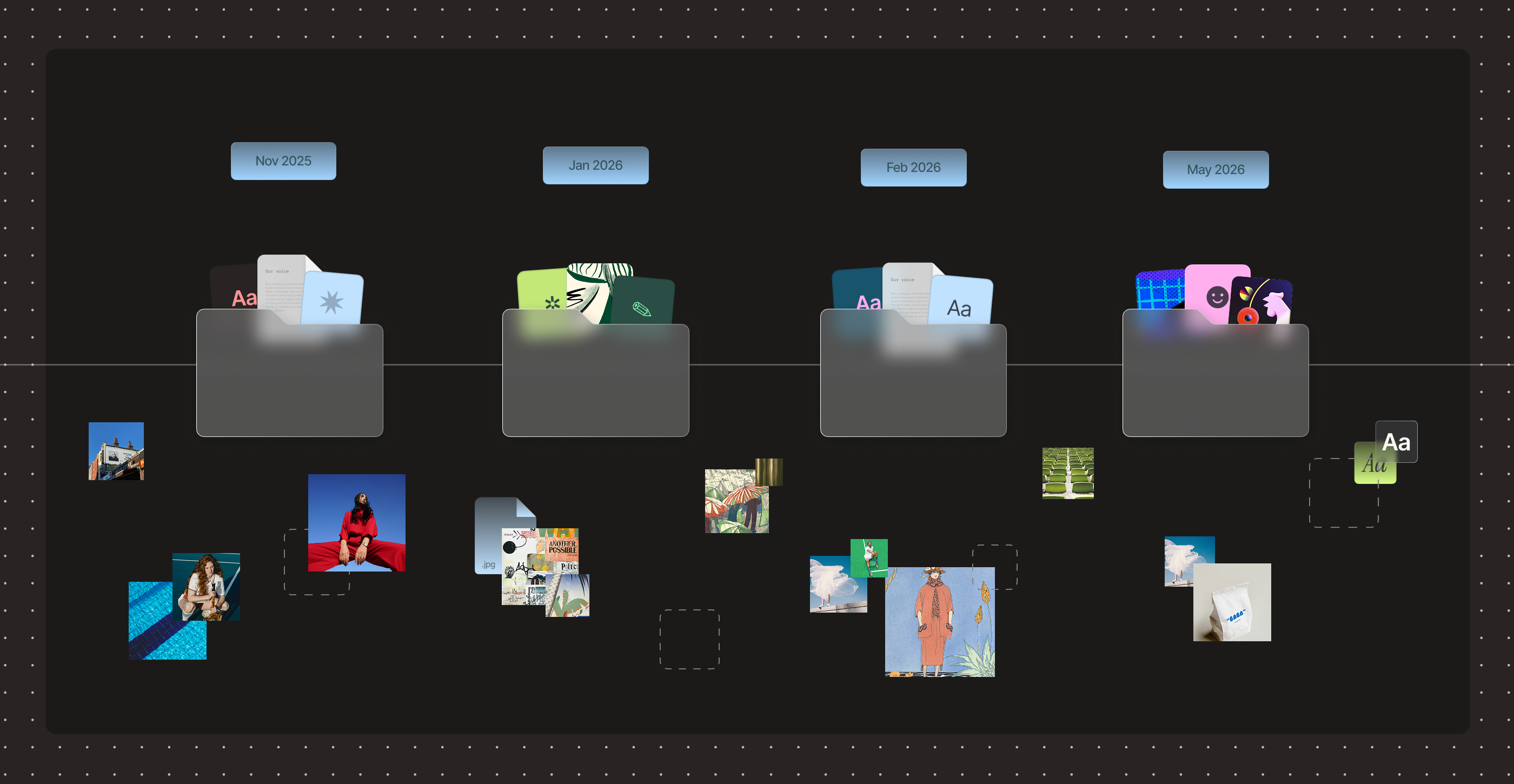
Brand Brain curates context from past projects, creative decisions, reviews and feedback sessions to inform every new project. It holds everything that makes your brand recognizable. Voice and messaging, visual rules, specs, past assets and campaigns, plus team preferences and feedback. Nothing gets lost from one brief to the next.
2. It applies context upstream at the briefing stage
The AI Briefing agent inside Brand Brain turns rough requests into structured briefs with goals, deliverables, channel and audience context, references, specs and timelines. When you create a brief, it pulls relevant context from your guidelines and past projects, so the team executing the work inherits an information-rich starting point and the first draft lands closer to the bar. The full step-by-step walkthrough lives in the help center.
Monica Romaniuc, Superside, explains why that compresses the first round of feedback.
The brief becomes much more complete. Every question you answer before the work starts is one less revision you need to make later.
3. AI agents activate memory across the workflow

Other agents inside Superspace put the memory layer to work at the moments that matter. The AI Insights Agent, a conversational interface, lets you ask your brand about itself and surfaces patterns, gaps and opportunities across stored campaign activity, content and decisions instead of making you dig through files.
Brand Models, trained on your visual style, generate on-brand imagery in seconds that you can download, save to your assets or use to start a new brief. The full set of agents lives in the Brand Brain and AI agents help center.
4. It closes the loop with feedback memories
Most feedback loops repeat the same issues because nothing captures them between projects.
With Brand Brain, the Creative Director's note from round three and the business owner's feedback from round four become feedback memories inside the system, and the next brief inherits them automatically for a better-aligned first draft. Memories are added after each project, so the system captures what on-brand means in practice.
The Manage your Brand Brain memories guide walks through the customer-side controls.
Monica gives a concrete example of how that loop compounds.
A good example might be a stakeholder who consistently asks for customer proof points to appear earlier in the story. Once that pattern is captured as a memory, future work can account for it from the start instead of revisiting the same conversation every time.
5. Smart QA catches issues earlier
Memory also informs QA. Smart QA checks for brand alignment, asset specs and past learnings before humans review, so the recurring issues stakeholders used to flag manually surface earlier, often before the asset reaches the reviewer at all. The shift moves QA upstream, where catching issues is cheaper and rounds are fewer.
Brand Brain keeps evolving, with a human touch
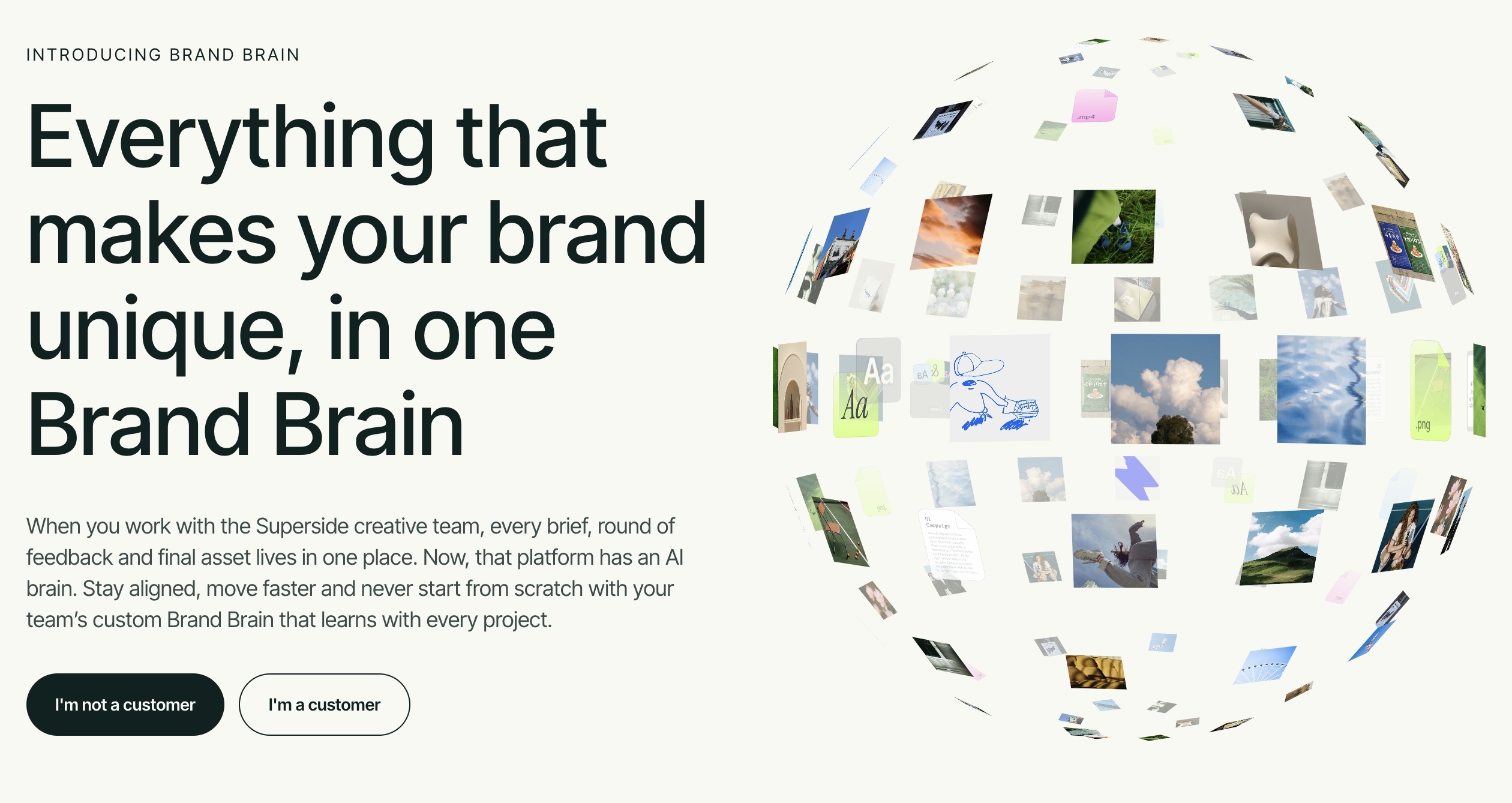
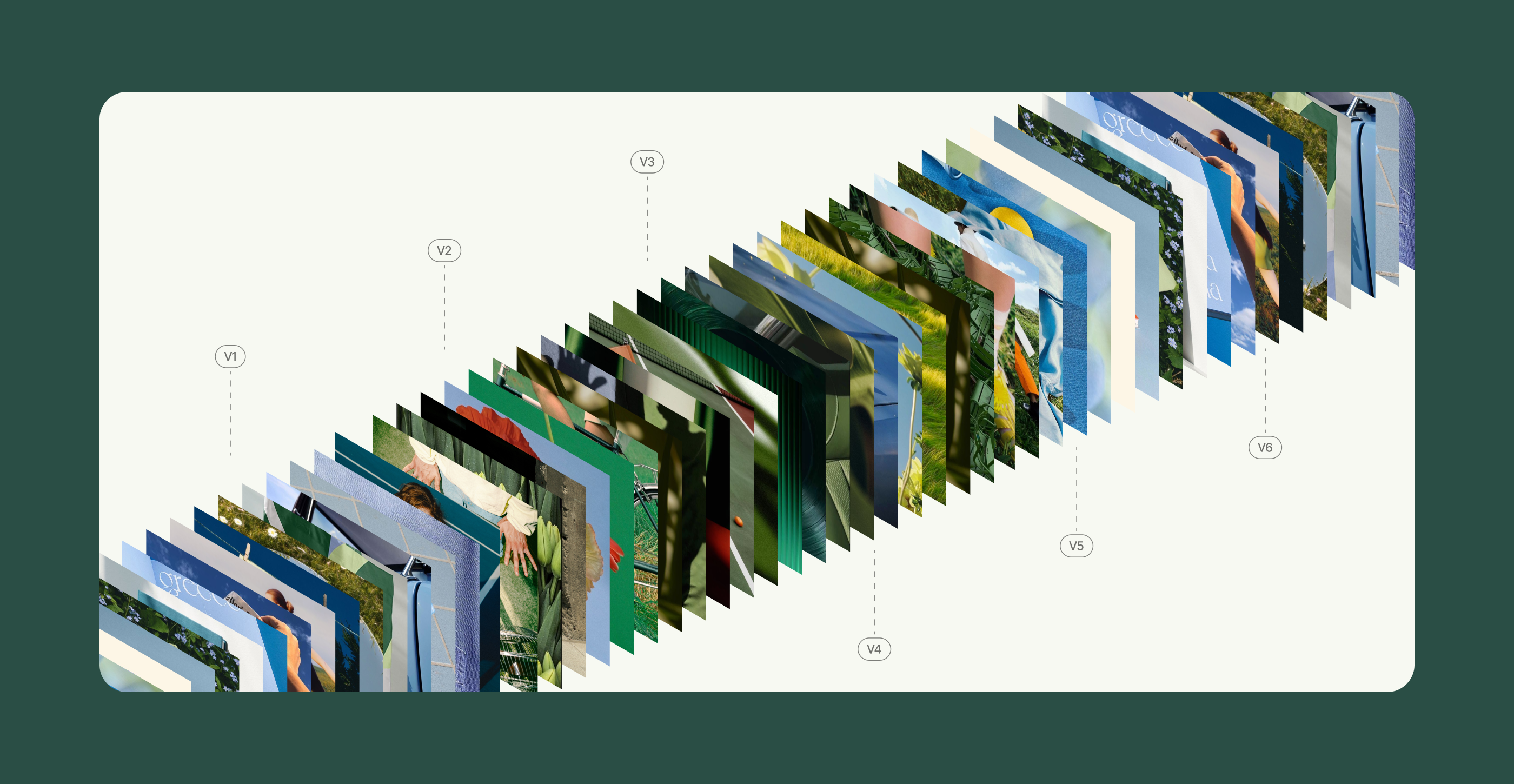
Unlike a static asset library, your Brand Brain keeps evolving. With every project it learns what works, captures nuance and feeds those learnings back into future briefs.
Without human review, though, feedback rounds tend to creep back in, so our team and a brand custodian continuously maintain the memories to keep them accurate and current. The result is that every Superside project starts with the knowledge gained from the last.
Powered by a creative team that is now almost 100% AI-certified, Brand Brain helps you move faster, hold brand consistency and ship high-quality work at scale, with customers realizing a 94% ROI over three years according to a Forrester study.
Your first steps with Brand Brain
If you already use Superspace, you can start using Brand Brain to reduce creative feedback loops right away by tapping into the system at the brief and memory-management stages.
A good place to begin is the Intro to Brand Brain guide, which explains how Brand Brain supports briefing, feedback and execution. From there, explore the Brand Brain and AI agents help center to learn more about the agents available to you.
If you do not yet have access, reach out to your Superside team. Access is being introduced in phases, and they will help you understand what is available in your account and when additional capabilities will be added.
From feedback fatigue to feedback that compounds
The four-round revision cycle is usually a symptom of a system that loses brand context between projects and pays the cost in feedback. Compress the cycle and both senior creatives and reviewers get hours back, the work that ships is sharper and the team is less burned out.
When Superside becomes your creative team's creative team, you tap into a flexible subscription model, top creative talent, industry-leading AI workflows and an operating model that dramatically reduces creative revisions. Brand Brain closes the upstream context gap by using past projects and learnings to inform what comes next.
The work we do for marketing and creative teams at brands like Intuit, Amazon, DoorDash, Figma and Reddit shows that an AI-first, human-led approach helps teams scale success.
If your team is feeling revision fatigue, the highest-leverage move you can make this quarter is a 30-minute conversation about what a memory-based creative system looks like inside your stack.
FAQs




Stuck in AI testing mode?
It’s time to move from experiments
to real impact.
Explore AI Reset—a 5-step framework
to embed AI into your creative workflows.

Creative teams are at a breaking point
The pressure is real, the opportunity is too.
Get insights from 300+ leaders on
beating burnout, using AI wisely
and navigating 2026’s inflection point.


Increase your creative capacity
Let your in-house team reach for the stars,
while Superside keeps your day-to-day creative needs
at an industry-leading level. Ready to scale?