

Enterprise ad campaigns now require hundreds of formats, messages and market variations, far more than most creative teams can realistically produce manually. This guide breaks down the four versioning dimensions (format, message, localization, audience), a six-step framework for building a scalable system and real results from top companies. Brand Brain keeps automated versioning on-brand at every step.
A single ad campaign today may need to run across 30+ placements at once, from Instagram and TikTok to display, YouTube and connected TV. Each format has different specs, contexts and pacing, before even accounting for markets, languages and audience segments.
This level of complexity is difficult to scale manually.
Teams create strong campaign concepts and polished master assets, but once versioning begins, the whole process slows and becomes difficult to manage. Quality also slips, and senior designers get pulled into repetitive production work.
The solution is scalable creative workflows powered by modular templates, AI and automation tools. This blog post explains how to automate ad creative versioning with scalable systems and how top brands use AI-powered workflows to increase speed, testing volume and brand consistency at scale.
The problem every enterprise ad team faces
Global digital ad spend has grown rapidly in recent years and is set to hit $781.17 billion in 2026. But as investment has increased, so has the complexity of the advertising ecosystem.
Enterprise brands no longer create ads for a few channels. A single campaign idea now needs to work across various channels, devices, formats and markets.
On top of that, ad fatigue sets in quickly. When audiences see the same ad more than six times, purchase intent can drop by around 16%.
To maintain performance, top brands constantly refresh campaigns with new formats, messages and multiple variations. In fact, Meta’s highest-performing accounts typically run 8-12 active creative variations per campaign and refresh assets every 2-4 weeks.
Most creative teams struggle to keep pace. Our ”Breakpoint” report revealed that 86% of in-house creative teams are at or over capacity.
Automating manual ad versioning has become essential for running the multi-format, multi-market dynamic ad campaigns modern performance marketing requires.
What automated ad creative versioning means for enterprises
Automated versioning doesn’t merely involve a few clicks and a bulk export. It involves a systematic production workflow that transforms a single ad concept into multiple variations.
In practice, creative automation works across multiple dimensions:
Format and dimension versioning
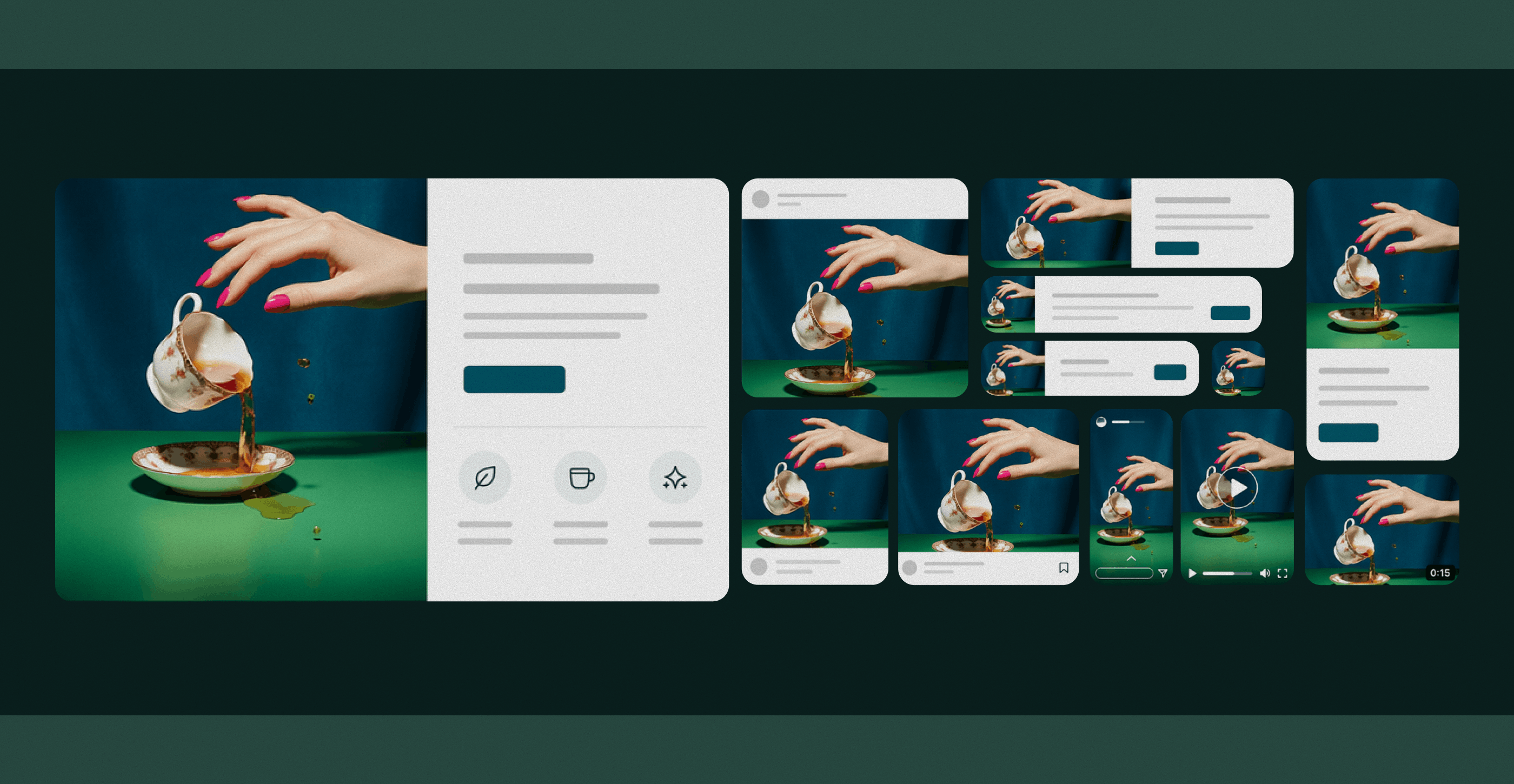
Today’s enterprise teams need to take one approved creative concept and adapt it across many platforms and formats. The challenge is to maintain the integrity of the original idea without relying on simple cropping, which can cut off focal points, break layouts or make text unreadable.
Smart template systems solve this problem by supporting multiple ad creative automation formats. Instead of simply shrinking or stretching assets, design elements are repositioned and resized intelligently for each placement.
Our team adopted Figma for high-volume versioning because its component libraries and responsive auto layout system adapt assets across formats without manual rebuilds. We now produce digital ads up to 70% faster.
Message and copy versioning
Consumers now expect personalized experiences, which means marketing teams need to tailor ad creative to different audiences, markets and sales-funnel stages.
To be successful, brands need to run multiple messaging angles in their ad campaigns simultaneously to identify what performs best. Automated versioning makes this process scalable by swapping new copy into fixed ad templates.
This approach is also closely tied to Dynamic Creative Optimization (DCO), an increasingly popular ad technology that assembles personalized ad variations in real time based on audience signals.
Localization: Market and language versioning
Global ad campaigns require more than simple translation. Copy length changes across languages, while cultural references, imagery preferences, color associations and regulatory requirements vary by market.
Without the right AI-powered systems, adapting content for each region quickly becomes difficult. Automated versioning can help teams create ads, adjust layouts for different languages, maintain brand consistency and launch market-specific campaigns at speed.
Audience and persona versioning
Performance teams that run persona-specific campaigns need creative that speaks directly to each audience segment’s specific pain point, job role or behavioral context.
Template-based versioning helps them populate a single visual system with segment-specific copy, imagery and value propositions. They can then quickly transform one approved concept into a high volume of audience-specific assets.
The modular creative system: The foundation of scalable versioning
When teams try to layer creative automation onto workflows built for one-off assets, things get messy quickly. The solution is modular systems with pre-designed, flexible templates that make it easy to scale ad creative versioning.
These templates specify which elements are fixed (e.g., logo, colors) and which are variable (e.g., headline, image). Creative automation is then used to generate brand-compliant variations fast and efficiently.
The templates aren’t simplified versions of the primary ad designs. They’re engineered systems that encode brand intelligence into the production workflow. Each defines copy limits, responsive typography, focal points, locked elements and how layouts adapt across formats.
At Superside, our high-volume ad versioning creative systems also follow a structured process. We define layouts, test template logic, configure responsive designs and validate assets before rolling out production at scale.
Where AI changes the versioning landscape
Template-based ad creative versioning helps teams to quickly scale approved creative across formats and channels. Today’s AI models take this even further, reducing the time from creative brief to launch-ready creative assets. Together, they enable automated ad production at scale.
Here’s how AI can transform ad creative versioning:
AI-assisted visual generation


Brand-trained custom AI image models eliminate one of the most time-consuming aspects of ad production: Finding or creating visuals. Superside builds custom AI image models for each customer to help us generate on-brand visuals quickly and consistently at scale.
For example, when we created AI-generated imagery for a D2L Brightspace campaign, follow-up images took roughly 15 minutes to produce, down from 90 minutes previously needed to source and edit a single stock image. This dramatically sped up the full versioning process.
AI-accelerated format adaptation
Turning horizontal ads, especially video ads, into a vertical format usually requires extensive manual resizing and redesign.
Today’s creative automation tools can handle much of that adaptation and video versioning. They can detect primary visual elements, maintain focal points and recompose layouts for different aspect ratios without manual intervention.
The impact is significant: Brands that use AI-powered mobile reformatting tools for video content versioning cut creative production costs by 41.2%.
Superside’s creative automation service pairs AI-accelerated format adaptation with human quality review: AI handles the heavy lifting, creating all the different versions, while experienced creatives review every asset to ensure it meets brand standards.
Copy variation at scale
AI is especially effective at generating headlines and CTAs that stay on-brand while testing different messaging angles, hooks and value propositions.
When given specific brand context, positioning, approved messaging frameworks, target audience segments and performance history, today’s AI tools can generate dozens of copy variants that fit character limits, match brand tone and represent genuinely different testing angles in seconds.
The key is giving AI structured brand intelligence to work from. Without that context, copy outputs quickly become generic and off-brand.
How to make automated versioning brand-safe with Brand Brain
Without a system that understands what your brand stands for, you risk producing brand-inconsistent, strategically misaligned ad creative.
This is the gap that Brand Brain, the AI intelligence layer inside Superspace, closes. It captures what works and what doesn’t with every project, becoming a competitive edge no generic AI tool can replicate.
This brand intelligence matters at every stage of the dynamic creative versioning workflow:
Brand Brain’s AI briefing agent already knows your brand
Imagine an AI Briefing Agent that generates complete, context-rich briefs from rough requests. That’s what the AI Briefing Agent in Brand Brain does. It pulls in context from previous approval workflows to write clear, actionable briefs. No need to re-explain the brand each time.
Brand standards are enforced by default.
Once Brand Brain fully understands a brand, that intelligence carries through the entire versioning workflow. Brand guidelines, tone of voice, visual identity, past assets and feedback are built into the system, helping automated ad creative stay consistent and on-brand without requiring manual checks at every step.
Performance intelligence is fed back into versioning decisions
One of Brand Brain’s most powerful capabilities is connecting campaign performance data back to creative decisions.
The AI Insights Agent is a conversational interface that allows marketing teams to take a deep dive into their Brand Brain to surface patterns, gaps and opportunities across campaigns.
Applied to a versioning workflow, this means that each production round is informed by learnings from previous rounds. Versions that performed well shape the template parameters for the next cycle, and audience responses to specific copy angles inform which messaging is prioritized in the next batch.
The result: Automated versioning that gets better with each campaign.
What automated versioning looks like in practice
Superside uses automated ad creative versioning with great success across hundreds of projects. The brands below have all embedded automation into their creative processes.
1. Shopify: Always-on experimentation


When Shopify wanted to scale creative experimentation beyond what their in-house team could realistically support, they turned to Superside. They had to adapt a single campaign concept across 25 sizes, 7 languages and 25 variations, a significant amount of assets that would have taken weeks to produce manually.
By working within our modular template system, Shopify delivered all 4,375 assets within 12 to 24 hours. Ad hoc experimentation quickly shifted to an always-on creative testing culture, allowing Shopify to run bolder experiments more often.
2. Imperfect foods: Motion versioning for multi-state campaigns
Imperfect Foods needed to expand its paid social campaigns and tailor its ads to different audiences and regions without losing its UGC-driven style. But manually localizing motion graphics and adapting creative for each market would have overwhelmed the team.
With the system Superside added to their existing tech stack, Imperfect Foods could finally create localized variations with ease. They simply had to swap in region-specific copy and motion elements while the core creative remained consistent.
The result was faster testing, quicker rollout across channels, a 10x increase in design capacity and $250,000 in cost savings.
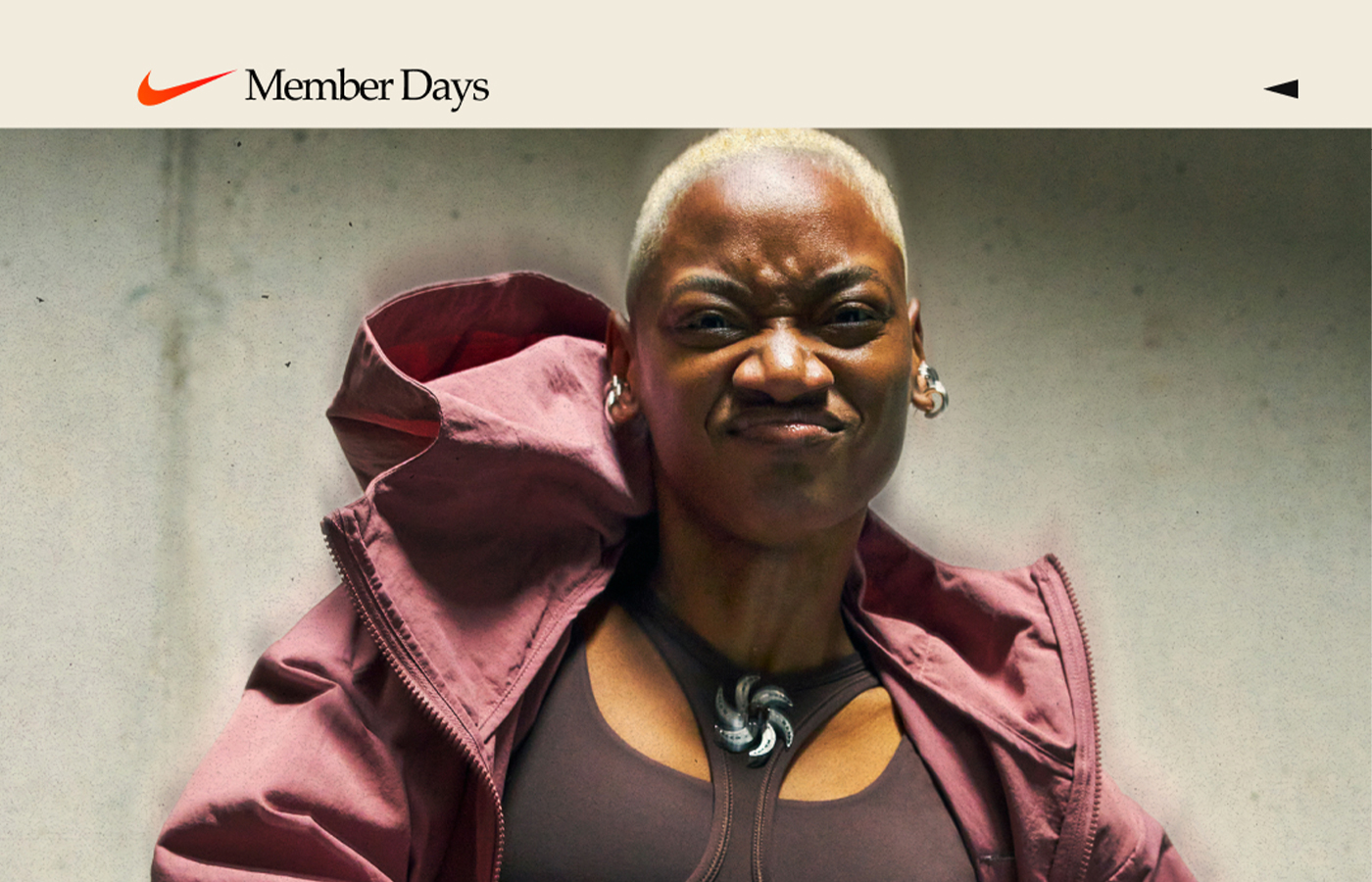
3. Nike Member Days: 19.5x production efficiency
 (Source: Thedropdate.com)
The Nike Member Days campaign required creative workflow automation that could scale localized content across global markets without compromising brand consistency.
With the help of Celtra’s creative automation platform, Nike produced over 17,000 assets in a single campaign round, achieving a 19.5x increase in production efficiency.
Template-based workflows enabled local teams to quickly customize creative for their markets while staying within Nike’s global brand standards.
4. Booking.com: Brand soul at scale
Booking.com has built a reputation for creative that stays consistently on-brand while still feeling authentic and human, something that becomes increasingly difficult at a global scale.
Their approach to creative scale is built around a simple idea: Establish strong creative principles first, then use systems, workflows and the right creative partners to scale production. Core brand elements remain tightly defined, while local teams have flexibility within those guardrails to adapt creative for different markets and channels.
The takeaway is clear: Automation works best when the brand foundation is well-defined.
Build your ad creative versioning system in 6 steps
Getting automated ad creative versioning across formats right isn’t just about tools. It’s about systems.
This step-by-step framework will help you set that system in place.
How to measure what versioning automation delivers
The value of automated versioning is measurable across four areas:
1. Production time and cost. Measure how many designer hours it takes to produce the same volume of assets before and after automation. Our AI-assisted workflows, for example, reduced design time by an average of 40% across 5,000+ projects.
2. Testing volume and velocity. The number of variations you can test depends on how much you can produce. Automated versioning lets you run more creative tests, more often, without slowing production or increasing costs.
3. Creative performance. More variations mean more chances to find winning ads. Researchers who analyzed 1.1 million video ad variations across 1,300 apps found that when brands tailored their ad creative to specific platforms, audiences and contexts, performance improved significantly.
4. Brand consistency rate. Under pressure, manual versioning inevitably leads to inconsistencies that can hurt brand trust. The real test is simple: How many assets pass brand checks the first time? Track these numbers before and after automation to measure the impact of the new workflow.
Build a versioning system that keeps up with your ambition
Traditional ad production systems can’t support the high volume of ad variations the market now requires. The enterprise marketing teams that keep up have turned ad versioning into structured systems that support speed, creative testing and stronger performance over time.
As the world’s leading AI-first creative partner, Superside can help you build and run scalable creative systems that remove the friction from ad creative versioning.
As your creative team’s creative team, you benefit from senior creative talent, AI-powered workflows, AI intelligence in the form of Brand Brain and a massive competitive advantage.
If it’s time to streamline production and develop a creative ad engine that improves with every campaign, you’ve found your perfect partner.
Book a call to learn more.
FAQs

Creative teams are at a breaking point
The pressure is real, the opportunity is too.
Get insights from 300+ leaders on
beating burnout, using AI wisely
and navigating 2026’s inflection point.




Get top creative 5x faster
Superside’s integrated human + AI workflows unlock
faster delivery, scalable output and campaign-ready
assets, without burning out your team.