


Creative automation tools help teams produce marketing assets at scale, but each platform solves only part of the workflow. As a result, many enterprise brands eventually discover that success depends less on the tool itself and more on the operating model behind it. That's why organizations hitting a tooling ceiling often complement software with managed creative services like Superside and Brand Brain.
Creative demand keeps growing. More content, faster production cycles, deeper personalization and constant pressure to perform across every channel. No wonder 4 in 5 creative teams operate at or beyond capacity, and 7 in 10 leaders report burnout.
Creative automation tools are built to help teams do more with the resources they have. But finding the right solution is not always straightforward.
The market is crowded. Some platforms excel at one specific challenge. Others claim to cover the entire creative lifecycle. The wrong choice can add complexity, create new bottlenecks and leave teams juggling yet another tool.
Chosen and integrated well, creative automation tools reduce manual work, streamline production and help teams launch faster. This article breaks down seven creative automation tools enterprise brands use today, where they excel and where they fall short.
For some teams, the right mix of tools is enough. But as creative operations get more complex and multiple campaigns ship at once, many enterprises need more. That is where an AI-first creative partner like Superside comes in.
What creative automation tools actually do
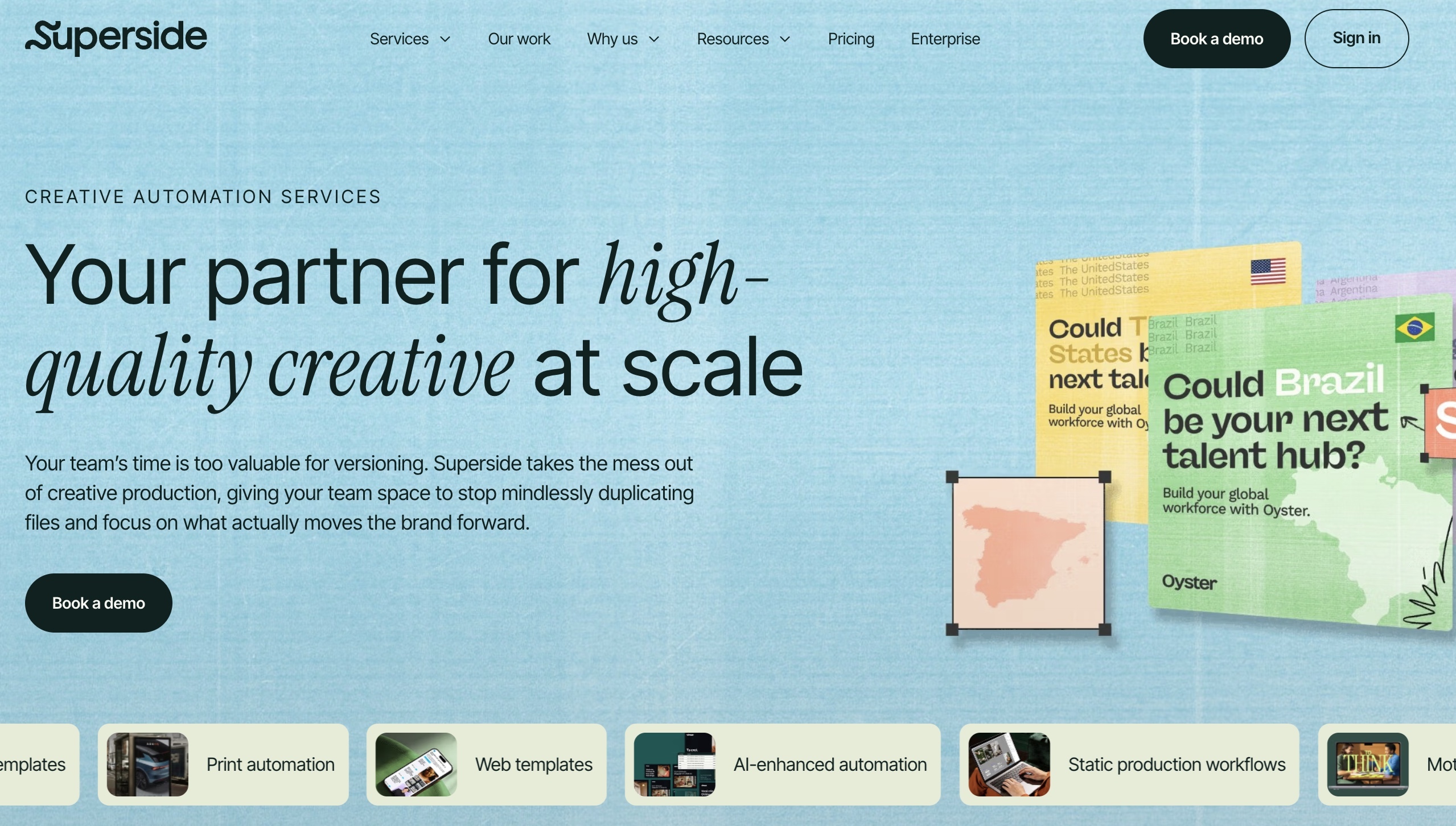
Creative automation platforms help marketing teams create more assets, more efficiently and at greater scale. Many now combine AI with templates, rules and workflow automation to cut repetitive manual work.
The category includes creative management platforms (CMPs) and overlaps with DAM systems and content ops tools, but its center of gravity is creative production, adaptation and workflow automation at scale. Most enterprise tools solve one or more of four core jobs.
- Auto-generating variants from templates. Predefined templates and rules turn one master asset into large volumes of variations across sizes, languages, products and audiences, each with its own copy, imagery, layout and CTAs.
- Dynamic creative optimization (DCO) for performance marketing. These systems assemble and serve personalized ad variations based on audience attributes, context and performance data, optimizing headlines, images, offers and CTAs for each segment at scale.
- Workflow automation. Briefing, approvals, asset routing and version control. The operational middle of production that otherwise eats hours becomes a repeatable system.
- Localization and adaptation. More than translation. Layout adjustment, copy fit, legal disclaimers, market-specific messaging and imagery swaps, without a designer touching every file.
The principle is the same. Define the rules, templates and workflows once, then let the system handle production at scale. Humans stay in the loop to oversee quality control and protect brand consistency and creative standards.
How to evaluate creative automation tools for enterprise teams
Once you are clear on your goals, use the criteria below to judge whether a platform is a good fit.
Scalability
Start with your actual monthly production volume, then project realistic 12 to 24-month growth. Too much capacity wastes budget. Too little means you hit a ceiling six months in. Look for a system that fits your operating reality and your future design-scaling needs.
Brand governance
A good platform makes it structurally hard to ship off-brand work, with locked elements, review workflows and governance built in. It should not be so rigid that exceptions are impossible. The best tools enforce brand standards while still allowing market-specific versions when teams need them.
Integrations
The best tools fit existing workflows rather than forcing you to rebuild process around them. Look closely at how each connects to your DAM, CMS, ad platforms and project management stack. Integration gaps quickly become operational headaches.
Pricing and total cost of ownership
Pricing models vary. Subscription pricing is stable but often bundles unused features. Usage-based pricing is precise but harder to budget. Enterprise pricing suits scaling teams but usually means a longer commitment. Account for implementation, training and the headcount needed to run the platform.
AI and human balance
AI handles repetitive work and speed. Human judgment is still critical. Look for a platform that supports a combined AI-human approach rather than treating automation as a replacement for creative expertise.
Operating model fit
Self-service tools suit teams with the bandwidth, technical capacity and brand systems to run them. Teams that need extra capacity, strategic support or help operationalizing AI may be better served by a managed AI-first creative partner like Superside.
Tool sprawl risk
Sprawl creeps in gradually. One platform for display, another for paid social, a few more for creative ops and brand management. Each tool solves a real problem, but together they add cost, administration and complexity. Before adding the next platform, audit what you already run and ask whether one consolidation move would deliver more than the new tool.
7 creative automation tools enterprise teams use in 2026
We assessed seven of the most-evaluated creative automation tools, with an honest read on use cases and limits. The order is not a ranking. Each could earn a place in your stack for different reasons.
1. Celtra
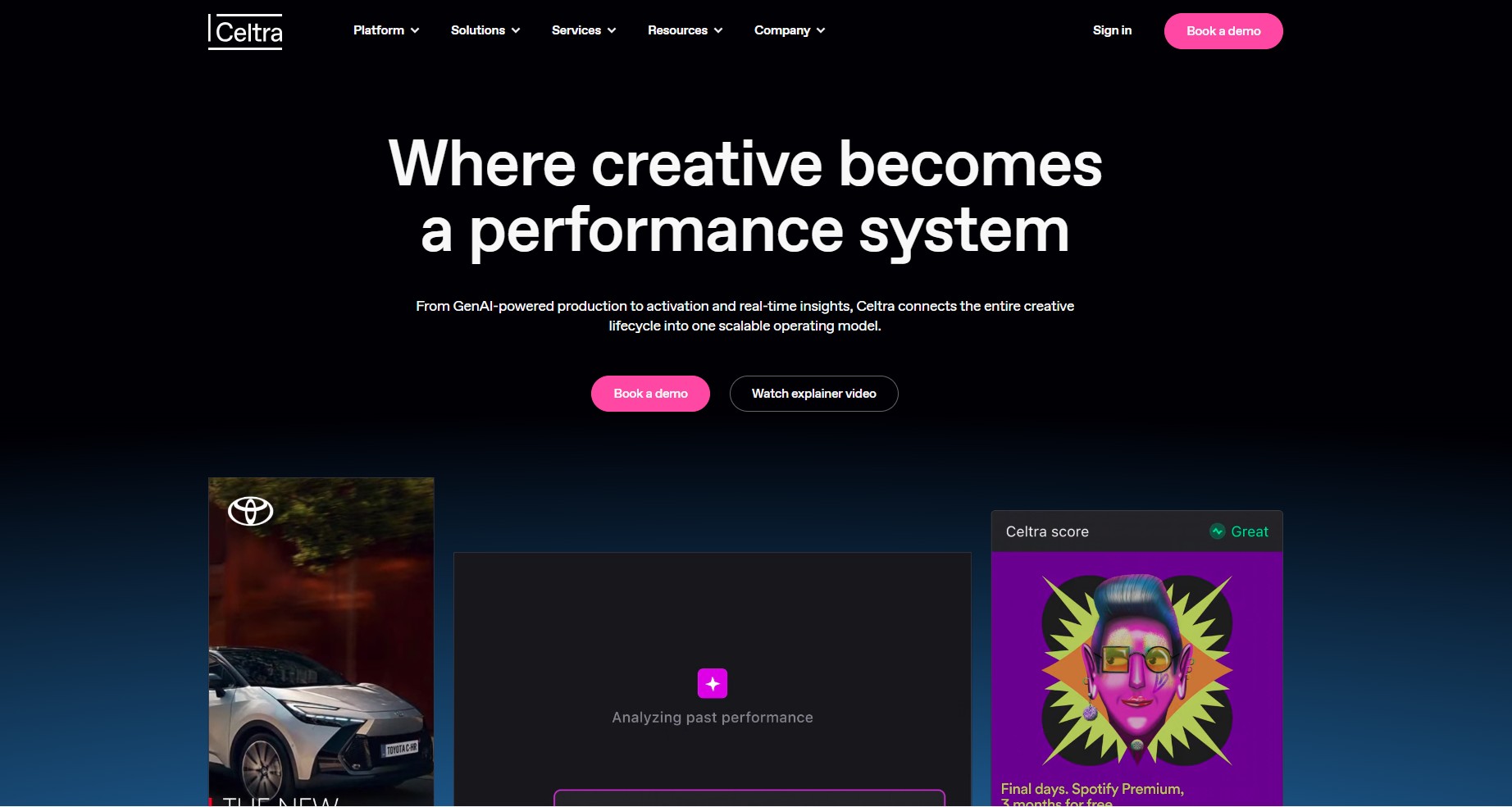
Celtra is the long-running enterprise creative management platform that helped define the category. It is still a major player for global brands with high-volume creative and strong media-governance needs. Celtra connects creative production to performance data, so teams generate variants, measure results and feed insights into the next round.
The downside is complexity. Implementation and operational overhead are high, and teams that do not need full DCO and rich media may pay for capability they rarely use.
2. Smartly
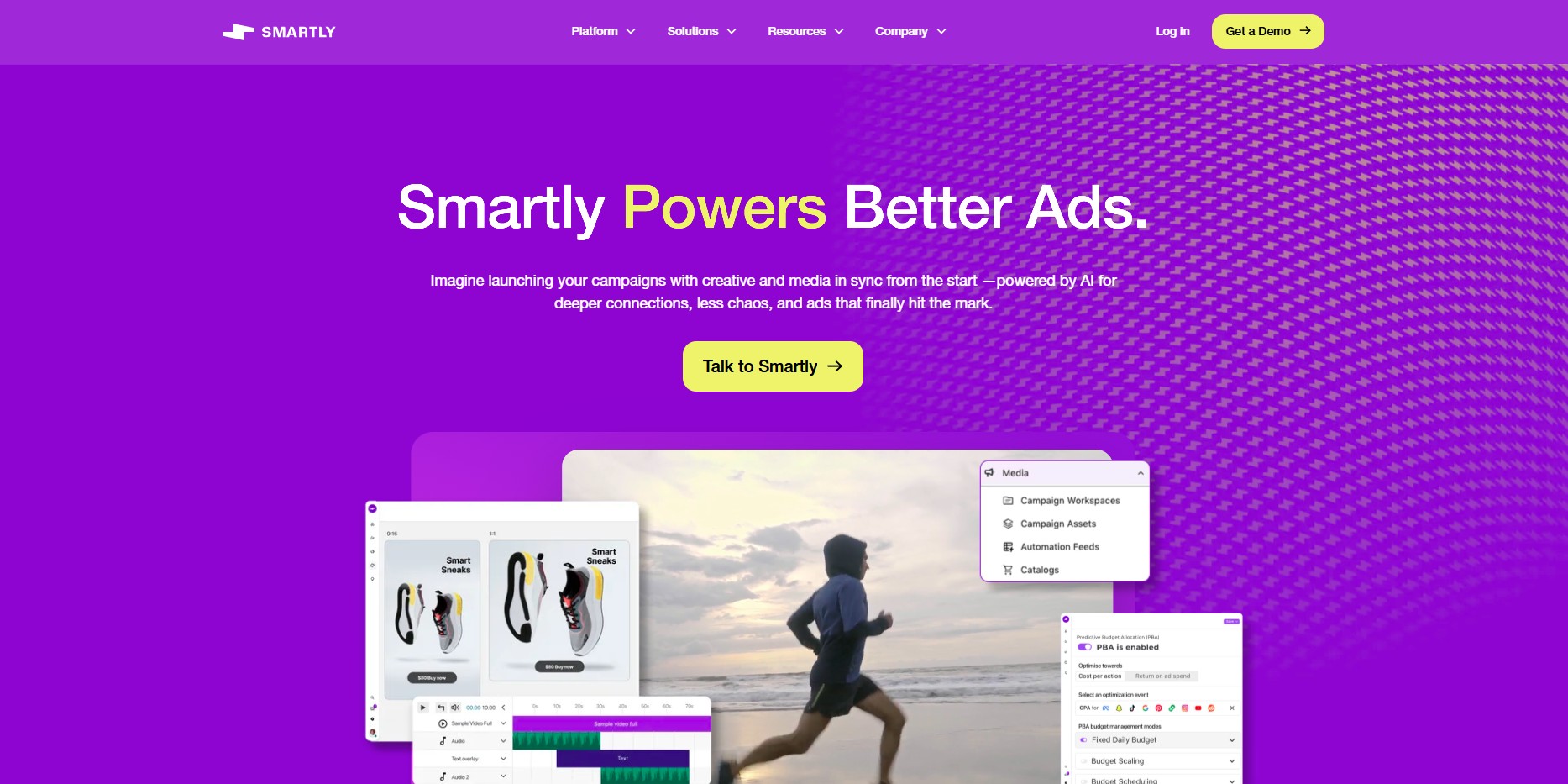
Smartly is built for performance marketers running high-volume paid social. It runs three connected suites. Smartly Creative for AI-powered creative production, Smartly Media for campaign management across platforms and Smartly Intelligence for creative and media performance analytics.
Smartly is especially strong at closing the loop between creative production and media performance. Its limitation is scope. It is optimized for paid media and less suited to broader brand operations.
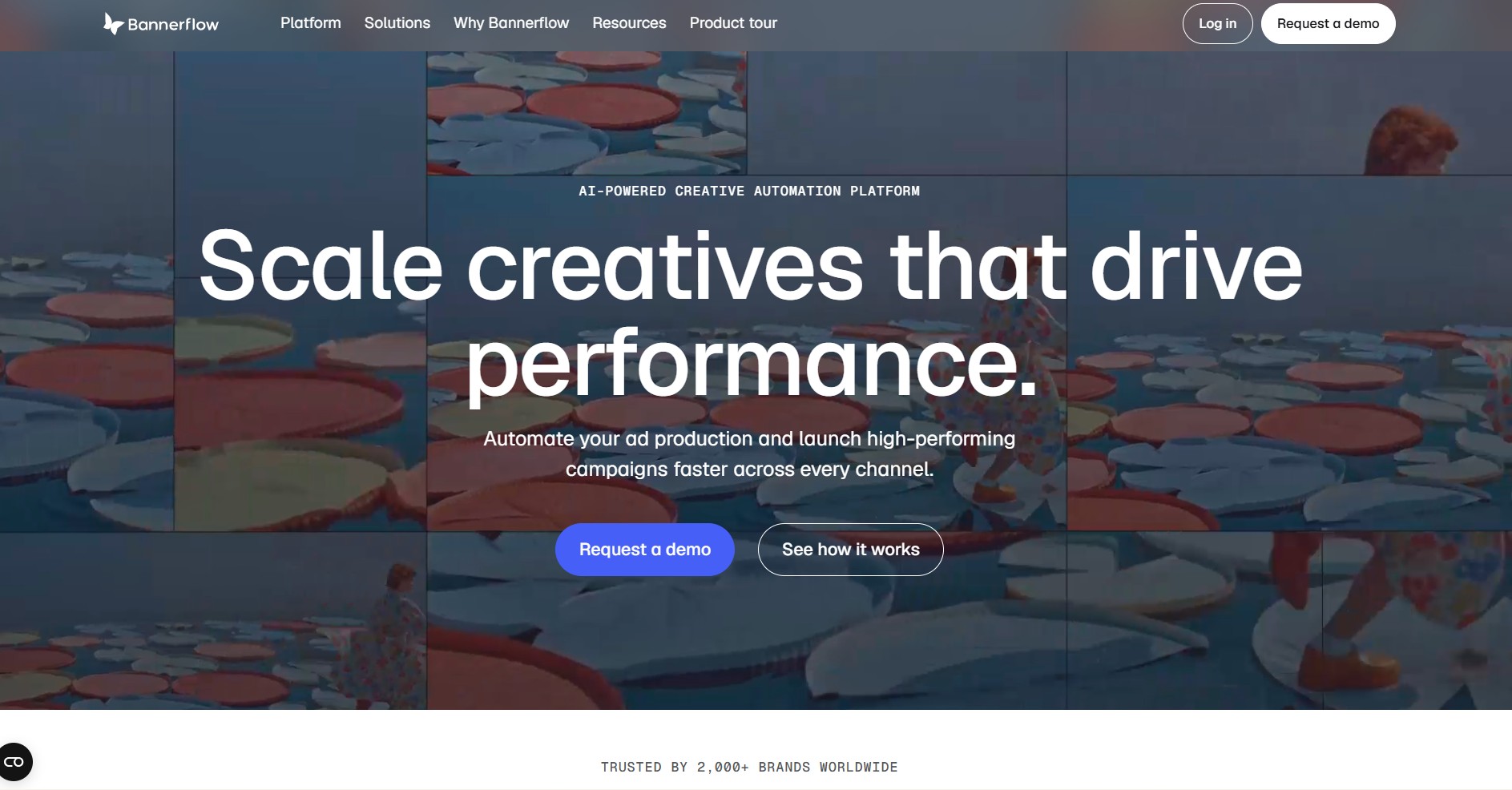
Bannerflow is a European creative management platform built around speed and usability for display creative. Its interface brings together in-platform design, animation, translation, real-time collaboration, dynamic creative optimization, automated resizing and built-in analytics, all accessible to non-designers.
It is not a full content automation suite. It lacks live video ad production, AI consulting and complex creative ops, so it works best as one element in a bigger stack.
4. Storyteq
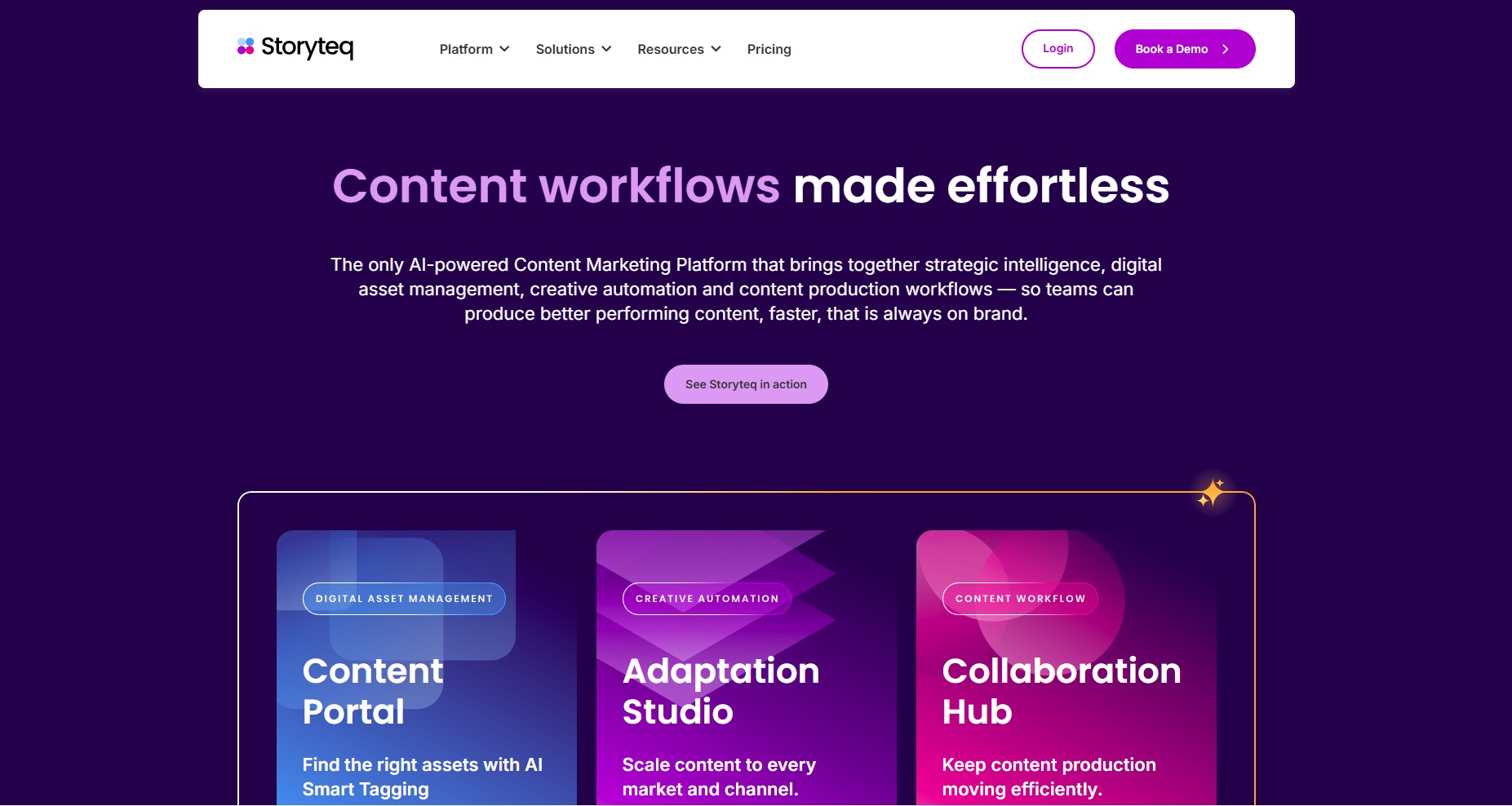
Storyteq is one of the rare tools that genuinely covers the full content lifecycle, with a Content Portal for organizing and tracking, an Adaptation Studio for versioning content and a Collaboration Hub for briefs, reviews and approvals. It works well for brands running multi-market campaigns built on high-volume video, and it is a recurring Gartner Leader in the Content Marketing Platform and DAM categories.
It’s one of the pricier options, so know exactly what you need before investing.
5. Rocketium
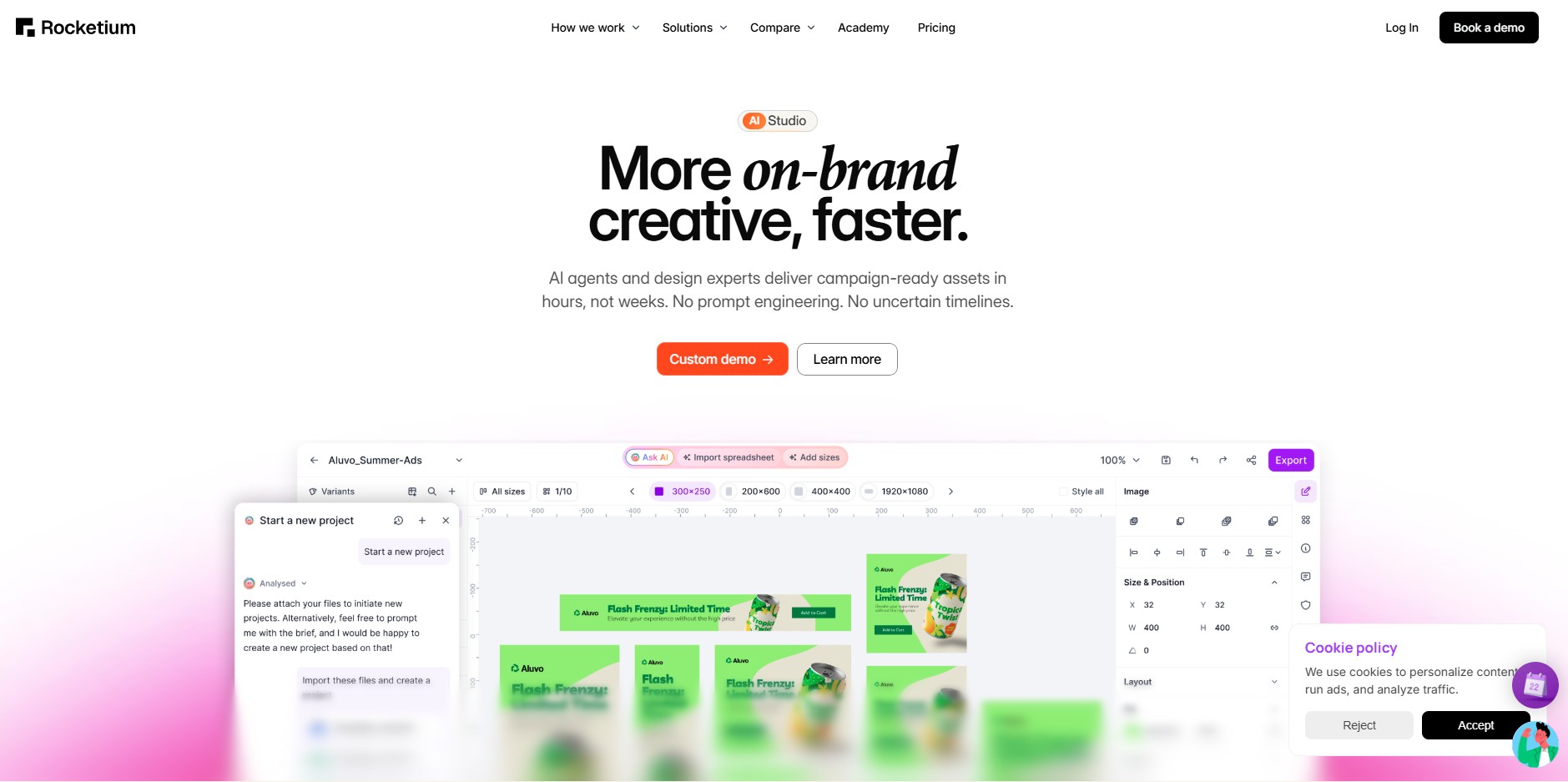
Rocketium runs a hybrid model that combines software with managed AI services. Its AI applies platform-specific ad requirements across 100+ ad platforms and marketplaces, which helps teams avoid submission errors and launch large volumes faster.
Rocketium is well-suited to retail brands and ecommerce teams managing large catalogs across markets. Its strengths sit in performance and retail media rather than brand-building creative.
6. Marq
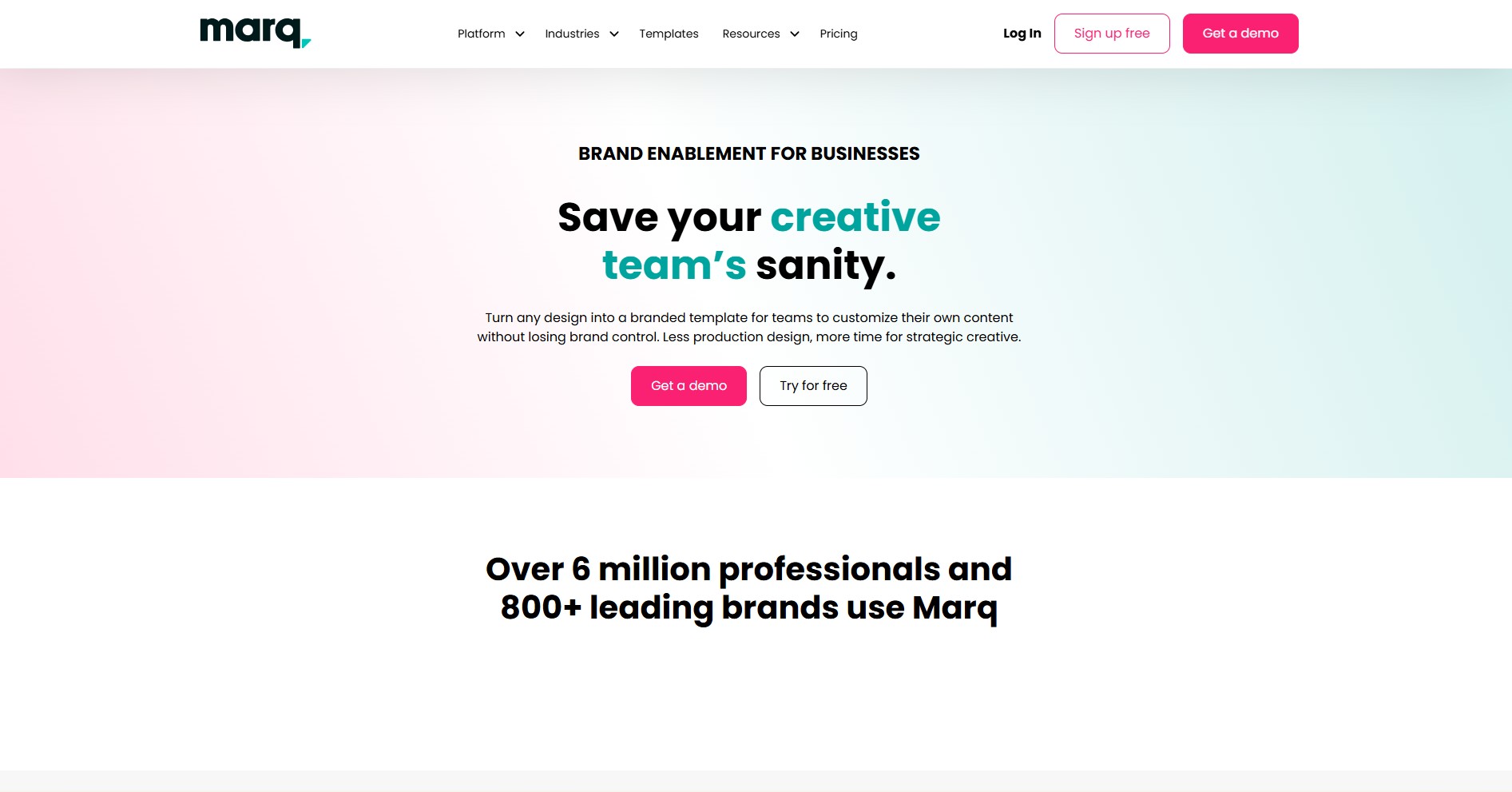
Marq (formerly Lucidpress) has grown from a brand-templating tool into a full brand-enablement system. Its core strength is enabling non-designers to work at volume, with locked brand elements, approved templates and strong guardrails that cut routine design requests.
That makes it a strong fit for distributed organizations producing large volumes of internal content, from presentations and datasheets to partner marketing. It is not built for high-volume advertising creative, so you will likely need a separate platform for ad workflows.
7. Hunch
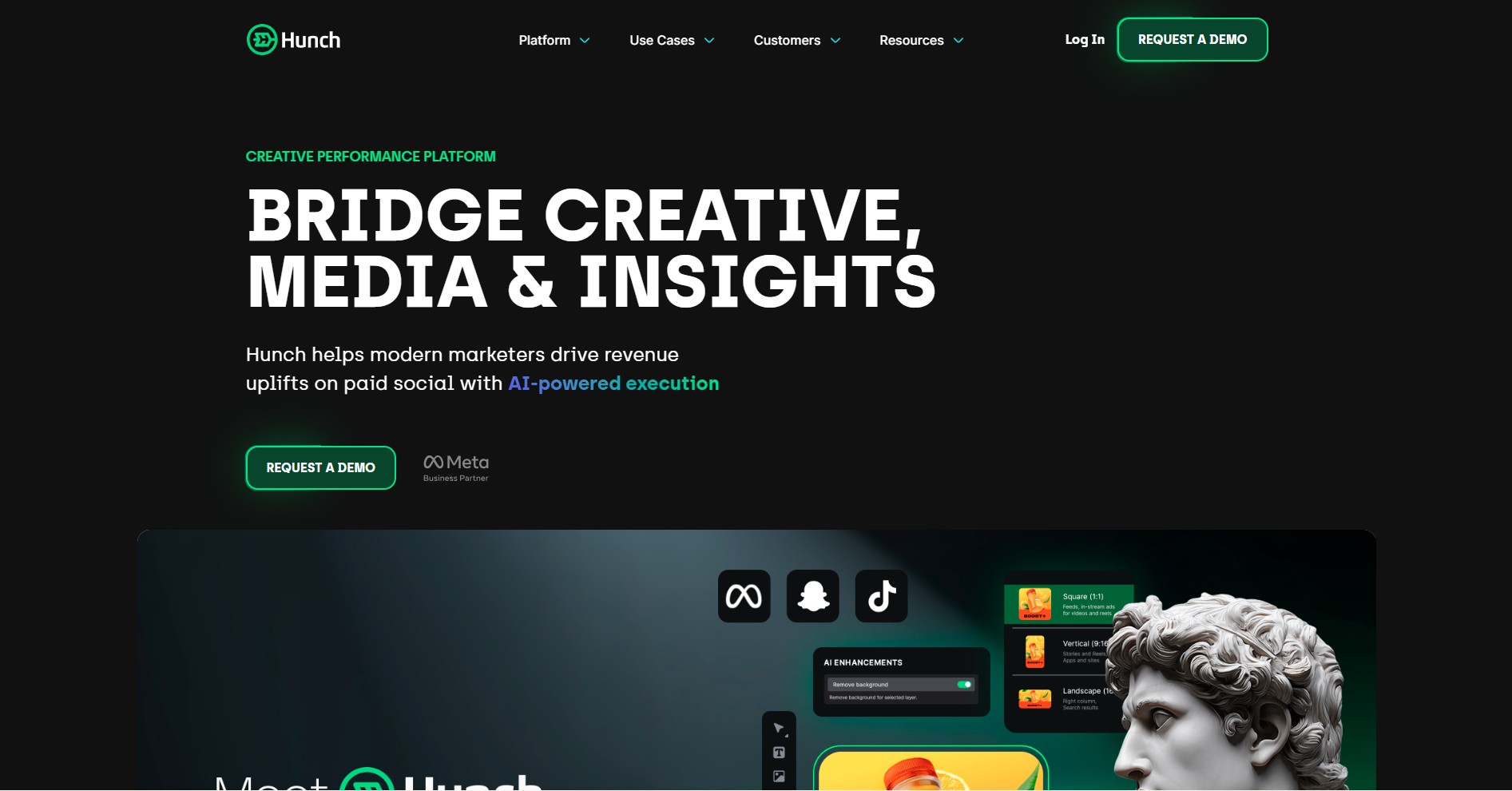
Hunch is a paid-social-first automation tool for brands running product-feed-driven creative on Meta, TikTok and Snap. It connects live product feeds to dynamic creative templates and generates personalized video and static variants at catalog scale, with usage-based pricing tied to ad spend and no seat limits.
For ecommerce teams running product-led performance creative, Hunch is one of the fastest paths to high-volume social creative. The trade-off is focus. It is not designed for brand campaigns, multi-format video, web or email, so it works best as a specialist tool inside a broader system.
Where tools stop being enough: Superside as the enterprise alternative
Every platform above has its place. Every one also has a trade-off. And while these tools streamline production, they cannot replace creative leadership. Teams still need people to shape strategy, develop concepts, interpret performance and keep work true to the brand.
With most creative teams already at or beyond capacity, asking an overloaded team to learn and manage yet another tool adds pressure rather than removing it. When the gap is a lack of creative capacity that tools alone cannot solve, an AI-first creative partner is the answer. Built for how enterprise creative actually scales, Superside combines senior creative talent and AI-first workflows to speed up delivery and expand capacity. Being AI-first means AI is not just powering individual tools. It is embedded across the entire creative model, from how teams are trained to how brand knowledge compounds over time.
An AI-first creative service for enterprise

Superside's automation service takes the mess out of creative production, giving your team space to focus on work that actually moves the brand forward. We design your custom workflows, integrate AI and automation into them, run the systems and stay accountable for every output, with senior human oversight at every step.
The results are concrete. 40% faster workflows with modular creative toolkits. 70% shorter turnaround times for large ad sets. 51% reduction in production time for video campaigns. Solutions span static workflows for ad creative and social media creative, motion and video automation, print automation, performance email templates and web templates that pair with full web design services.
Brand Brain: The layer no tool replicates
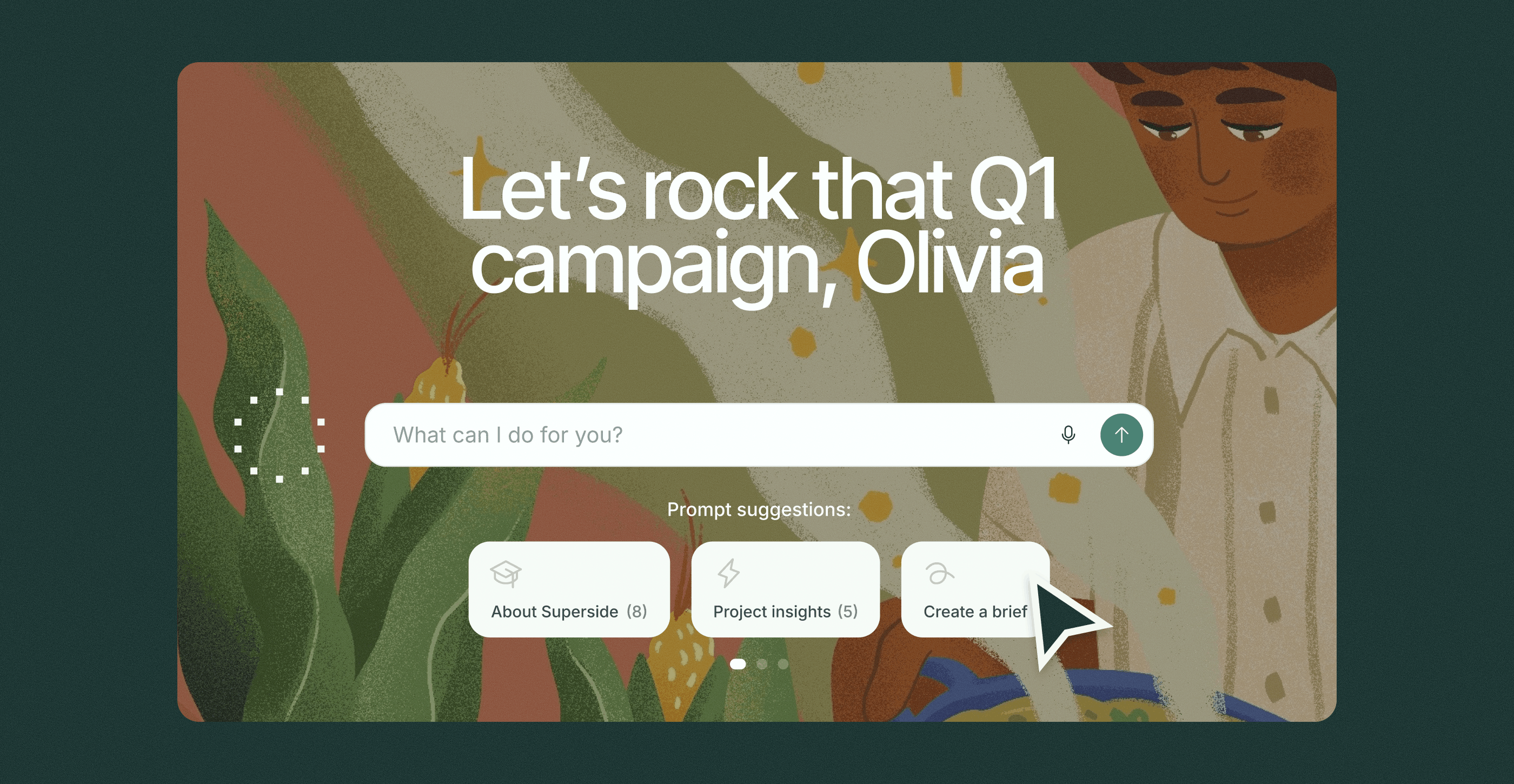
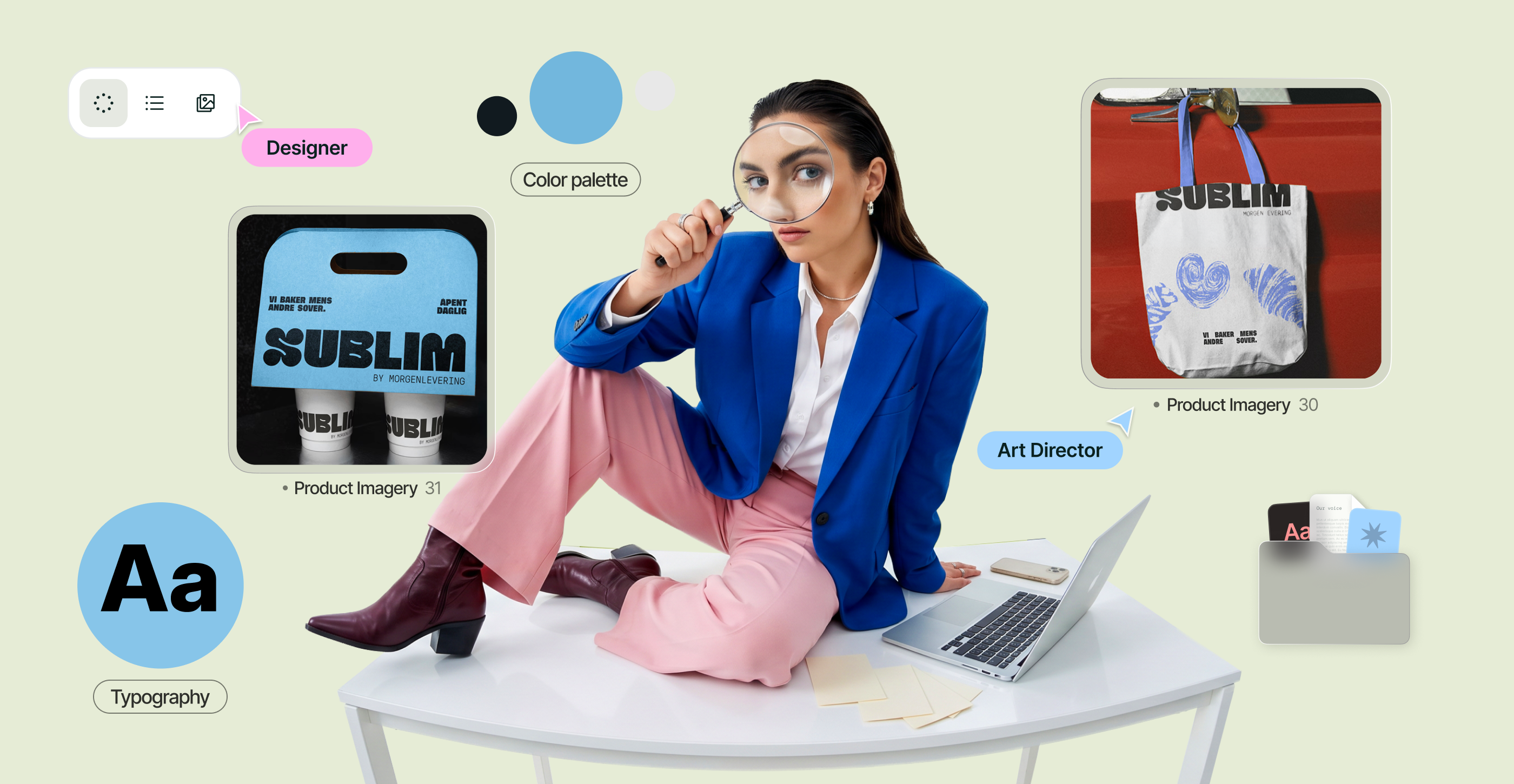
Brand Brain, the AI-first creative memory inside our Superspace platform, sets Superside apart from every tool on this list. It captures everything that makes your brand unique. Guidelines, tone, messaging, compliance, past work, feedback and performance signals. All of it lives in one place that AI agents and human creatives can query.
- AI Briefing turns rough requests into structured, on-brand briefs in minutes, drawing on your Brand Brain.
- AI Insights Agent surfaces patterns across campaigns, content and team activity so you can ask your brand about itself.
- Brand Models, trained on your visual style, generate on-brand imagery in seconds. No stock, no shoots.
- Custom Automations turn repetitive tasks like resizing, headshot editing and product shots into documented workflows your team runs on demand.
Generic AI gets sharper as the world's prompts compound. Brand Brain gets sharper as your brand's prompts compound. That is what makes it a competitive edge rather than a feature.
The four enterprise jobs Superside excels at
- Multi-market launches. A hero concept that needs to ship across 12 markets, six languages, three formats and four channels. Campaign strategy services and brand-led automation compress timelines from weeks to days.
- Performance creative refresh. Paid social and programmatic creative needs constant variation. Our systems generate and adapt variants at scale while senior creatives keep the brand voice intact, so testing speeds up without sacrificing standards.
- Rebrand rollouts. New visual systems have to slot in across legacy assets, templates and channels. Brand Brain captures and operationalizes the new standard, and automation rolls it out consistently. Pair with branding services for the strategic groundwork.
- AI workflow buildouts. Teams that want AI but are not sure where to start. Superside's AI consulting team designs the workflows, embeds the models, trains the team and supports ongoing optimization.
Creative automation should translate into real business value. The Forrester Total Economic Impact study of Superside found a composite enterprise customer realized a 94% ROI, $4.16 million in three-year benefits and a six-month payback, with $1.9 million saved in avoided agency costs and $1.2 million in internal labor savings. Those results come from combining automation, creative expertise and operational support in a single partnership. A partner that becomes your creative team's creative team.
Choose what will power your creative scale
The best creative automation tools are now core marketing infrastructure. But not every challenge can be solved with software alone. When scale, complexity and creative quality collide, most enterprises need more than tools.
If your need is confined to a single workflow or channel, the right platform will give you leverage. Celtra and Bannerflow for display. Smartly and Hunch for paid social. Storyteq for the content lifecycle. Rocketium for retail media. Marq for distributed brand enablement. Pick the one that maps to your operating reality, not the loudest demo.
When creative operations outgrow software, a managed service like Superside is the logical next step.
We are not a traditional agency, a freelance marketplace or just another AI tool. We are a human-led, AI-first creative partner that brings together top creative expertise, workflow automation and creative services in a single flexible subscription. If you have hit a tooling ceiling, the cheapest move you can make this quarter is a 30-minute conversation about what a managed alternative looks like inside your stack.
FAQs




Meet Customers Who’ve Experienced Exceptional ROI
Discover how Shopify got 4,375 assets in 12-24 hours or how Amazon saved 345 hours in three months.


Harness AI power on creative
Superside’s AI Design Services help enterprises go faster,
reduce costs and deliver high-quality assets at scale.
We'll help you get tomorrow’s possibilities on today’s deadline.