

AI plus one good designer takes you further than most people expect, and this guide is honest about exactly how far. It then maps the six places that setup breaks down at volume, from brand drift to IP risk to review becoming its own bottleneck. The tipping point is a real number, because once the work needs five specialists you're looking at roughly $605,000 a year in fully loaded salaries, which is a completely different calculation from one designer's salary.
For early-stage, low-volume or low-stakes design work, AI tools and one capable graphic designer are a smart, cost-effective setup. If you need a few social posts a month, simple product image edits or early logo concepts, there's no reason to overcomplicate it.
The math changes as your company grows. Scale up to hundreds of assets a month and it gets much harder to hold brand consistency or handle complex, multi-format work without a proper operating model behind it.
If you're deciding whether to lean on AI, hire a designer or bring in a creative partner, keep this tab open. We'll unpack where AI plus one good designer works, where that setup starts to fail and when a team makes more sense.
What AI and one graphic designer really get you
AI has made basic graphic design dramatically more accessible. Today's AI design tools create images, generate ideas, remove backgrounds, propose color palettes and produce dozens of variations in minutes.
Adobe Firefly puts generative AI directly inside familiar software like Photoshop, where features such as Generative Fill make routine image editing much faster. Canva AI lets you generate graphics from simple text or voice prompts.
Adoption is already near-universal among people who make things for a living. Adobe's 2025 Creators' Toolkit Report, which surveyed more than 16,000 creators, found that 86% use generative AI for creative work.
For a startup, founder or small marketing team, these tools can be exactly enough. You can explore AI prompts for logo design, test AI logo generators and learn how to use AI in graphic design without building a creative department.
Add one good graphic designer and the setup gets stronger. They curate the AI output, check it against the brief and the brand guidelines and catch the subtle problems a model misses.
The AI vs human debate usually gets framed as a replacement question.
Can AI replace graphic designers?
The answer is nuanced. The technology automates a lot of the work, especially repetitive production and early exploration. It can't provide strategic direction on its own, and it can't take responsibility for keeping work distinctive, culturally appropriate and on-brand.
For most enterprises, a more useful question is this. How far does AI plus one designer take the business before the setup costs more time than it saves?
Our article on the pros and cons of AI graphic design examines that balance in more detail.
What AI tools genuinely do well in graphic design
AI has earned its place because it solves real production problems.
Generative AI works best when a task is clearly defined and repeatable. It generates concepts, explores styles, creates alternative crops, builds backgrounds and automates the repetitive work that absorbs hours of a designer's week.
Canva AI speeds up image editing. Generative models like Midjourney let teams explore several compositions before a designer or creative director makes the call. The result is faster production and more room for actual thinking.
We see it firsthand. Our AI-enhanced workflows speed up production significantly, and on our own internal performance data, custom AI image models produce images around 10 times faster, with 75% less time per image and about 85% lower cost per visual than traditional methods.
Humans still own the ideas, the brand judgment and the decisions. AI works as an accelerator within the creative process, not as the process itself.
Where AI-generated designs and one designer start to struggle
As output grows, six problems surface.
1. Brand consistency becomes a system problem
Creating a handful of good images is easy. Creating 200 on-brand, high-quality assets a week across campaigns, regions and formats is a different discipline entirely.
Generic AI models don't understand your brand identity, photography style, typography, design elements or the cultural nuance behind your visual system. Even careful prompts leave room for interpretation.
You can teach AI your brand guidelines, train tools on your brand assets and build on-brand AI design systems. At enterprise scale, you also need senior human oversight, real governance and workflows that hold.
2. Strategy still needs a point of view
A prompt can specify an audience, a style and a format. It can't position a new product, decide what emotion a campaign should carry or guide how an idea evolves across the customer journey.
Experienced designers bring some of that thinking. Strategists, copywriters, art directors and creative directors bring the rest. Once decisions start shaping positioning, messaging and campaign direction, generating the asset stops being the hard part. Deciding what should be made is.
3. Multi-format campaigns expose the limits of one skill set
A strong generalist covers impressive ground, but enterprise campaigns rarely stay inside one format.
A single launch might need paid social, landing pages, motion graphics, video, presentation design, illustration, copy and localization. Those are separate disciplines, which is why there are so many different types of designers.
At that scale, one designer becomes a bottleneck fast. The usual fix is a growing patchwork of freelancers and agencies, which means more briefs, more feedback loops and more people interpreting the brand differently.
4. Originality and taste get more valuable as AI gets better
AI is very good at recognizing patterns, which is precisely why its output starts to look familiar. As the same tools and models spread across the market, competent-looking creative gets easier to make while distinctive work gets harder.
Good designers bring taste and context. They know when an idea feels obvious or simply wrong for the brand, even when it technically satisfies the brief.
Practitioners say the same thing about the output itself. In Adobe's 2026 research with creative professionals, 57% said AI outputs typically need moderate or extensive editing before they're shareable, and 81% said human judgment remains essential to creative taste.
5. IP and brand-safety risk rises
This is the one enterprises underestimate most. In the US, the Copyright Office's report on copyrightability holds that copyright doesn't extend to purely AI-generated material where there's insufficient human control over the expressive elements. Prompts alone don't confer authorship. That creates real ownership questions for commercial work.
AI can also hallucinate, reproduce protected material, introduce bias or create other brand-safety problems. Governing those risks takes human oversight and good process, which is why our Breakpoint Report found 33% of creative and marketing leaders naming legal and IP risk as a top AI concern, alongside 39% citing output quality.
6. Quality control becomes its own workflow
AI output looks finished right up until someone actually reviews it. At low volume, a designer catches those problems manually. At scale, review becomes the blocker.
Enterprise teams need an AI creative quality formula, deliberate quality control and a repeatable creative review workflow. Without a review layer, the time saved in production reappears as rework.
DIY AI looks inexpensive. The real costs don't show up in the subscription line. They show up in the hours spent prompting, fixing, reviewing and cleaning up output. In an industry where 86% of creative and marketing leaders say their team is already at or over capacity, those are exactly the hours nobody has.
Risk adds another layer. At enterprise scale, unmanaged AI triggers IP, compliance and reputational questions that pull in legal review, governance and more people.
Add it up and the DIY route at scale isn't cheap at all. The tools cost very little. The processes around them absorb time and attention, which is the expensive part.
AI vs graphic designer vs AI-first creative team
The more useful comparison is between three models, each suited to a different level of volume, complexity and risk.
| Factor | DIY AI tools | One hired graphic designer | AI-first creative team |
|---|---|---|---|
| Cost | Free or low-cost | Roughly $90,000 fully loaded at the BLS median, rising to about $128,000 for a senior hire | A Superside subscription starts at a $15,000 monthly minimum on an annual term |
| Simple production | Strong | Strong | Strong |
| Creative judgment | Limited | Strong | Strong and multi-skilled |
| Brand consistency | Needs significant setup and oversight | Strong until capacity runs out | Held by systems, human oversight and brand memory |
| Format range | Narrow, limited to what the tool offers | Generally one skill set | Design through video, motion, web and more |
| Strategy | None, you supply it | Depends on the designer | Built-in creative and brand strategy |
| Scaling | Easy to generate more, hard to govern | Capped by one person's capacity | Flexible full-service capacity |
| Quality control | Risky, you own review and governance | One human reviewer | Governed, human-led review |
For simple work, DIY AI may be all you need. If demand is steady and fairly narrow, one designer is the smarter hire. The team model starts making sense when volume, specialist needs and business stakes rise together.
Our guide to different creative models helps if you're evaluating that transition.
The cost tipping point, when one designer becomes a team
This is where the "hiring a designer is cheaper" argument falls apart.
One designer genuinely is cheaper if they cover your needs. But once the work requires a graphic designer, a digital interface designer, a motion specialist, a marketing specialist and a video editor, you're no longer comparing one designer against an external partner. You're comparing one full creative team against another.
Using the latest US median wages for those five roles, the wage bill alone is about $423,000 a year.* Load in benefits and it rises to roughly $605,000, before recruitment, management and AI tooling. Those costs stay fixed whether demand is booming or quiet.
At that point, a subscription-based creative partner is simply better business. Superside's subscription pricing starts at a $15,000 monthly minimum on an annual term, roughly $180,000 a year at the floor.
That doesn't mean every $180,000 subscription replaces five full-time employees. It does show why comparing a creative subscription to one designer's salary understates the real cost the moment you need cross-functional creative at scale.
Our guide to the true cost of design talent makes the broader point. Salary is one part of internal creative capacity. Recruitment, technology and specialist coverage are the rest.
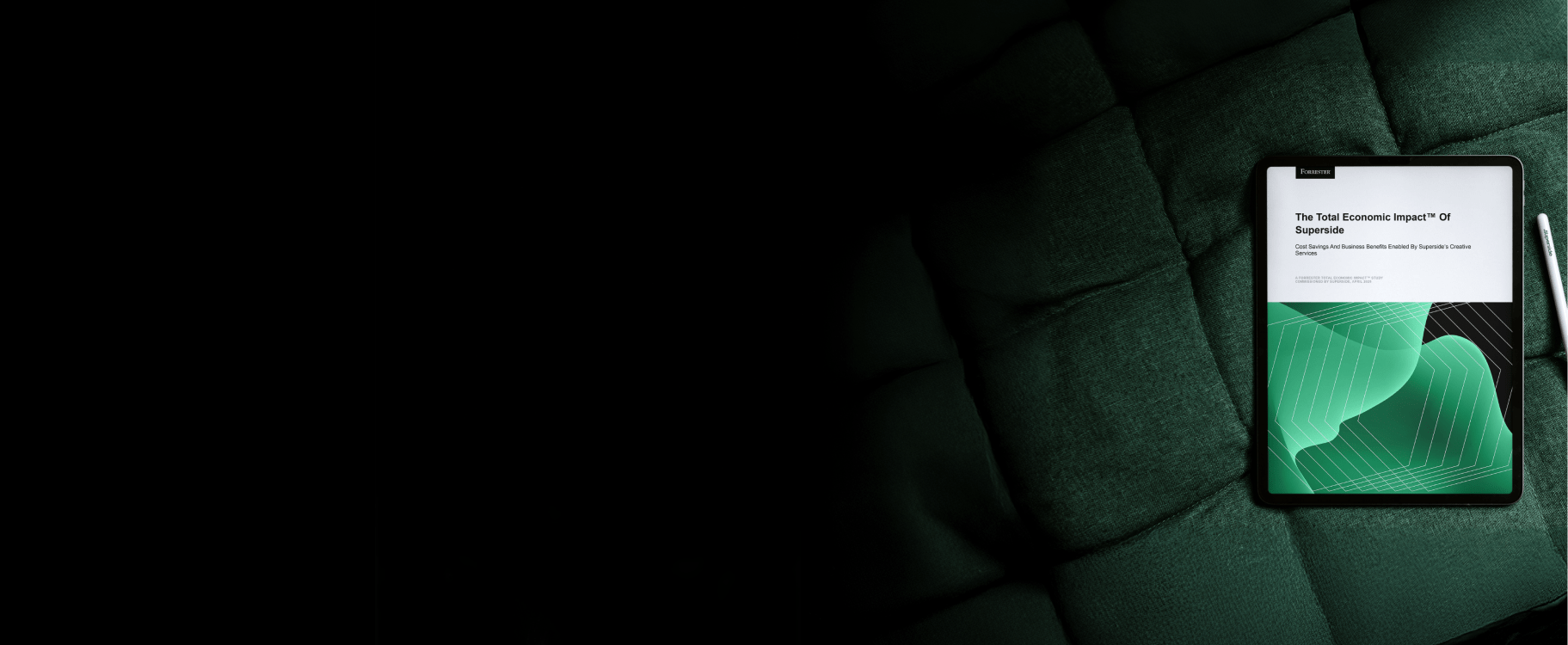
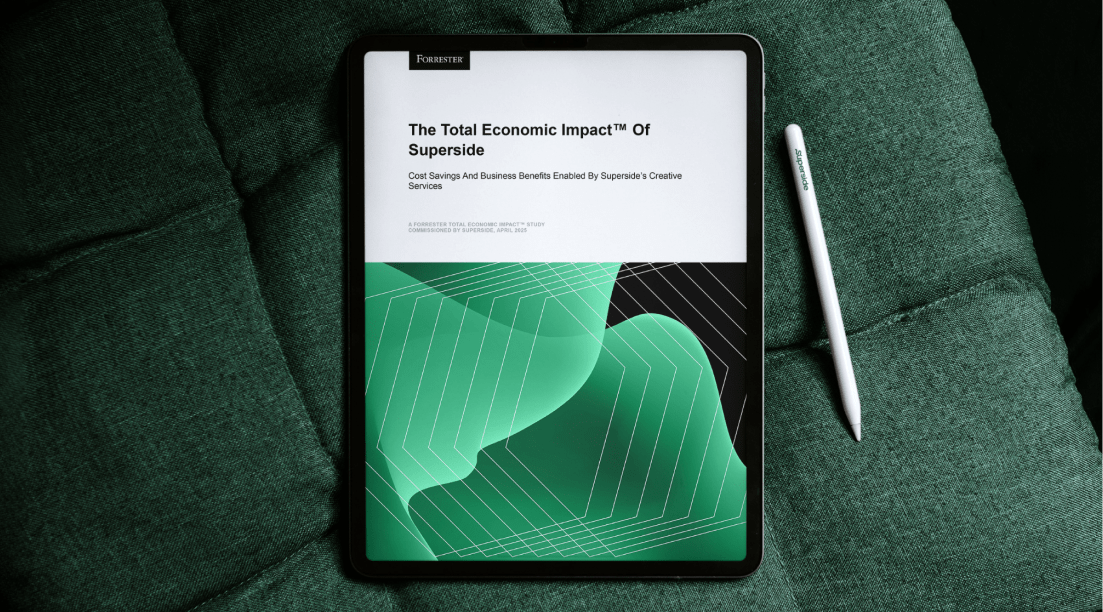
If you're weighing a partner against agencies and headcount, the independent economics matter too. A Forrester Total Economic Impact study commissioned by Superside found that a composite organization realized a 94% ROI, $4.16 million in total benefits and $1.9 million in avoided agency fees, with payback in under six months. Those are three-year, risk-adjusted present value figures.
That's the tipping point. One designer may be cheaper. A full creative capability is an entirely different calculation.
When to stop prompting and bring in a creative team
You're probably at the limits of the DIY-AI-plus-one-designer setup when you notice these:
- Volume keeps rising. A few designs a month has turned into continuous requests from multiple teams.
- Your designer has become a roadblock. Every project waits on the same person being available.
- Brand drift is showing. AI-generated work is individually acceptable but inconsistent as a group.
- You need several disciplines at once. Static design now sits alongside video, motion, web or strategic work.
- The stakes have risen. You're launching a major campaign, entering a new market or evolving the brand.
- Review is eating your productivity gains. AI produces faster, but your people spend more time reviewing, correcting and approving.
- You need repeatable systems. Prompts and manual fixes aren't a scalable design process.
If several of those are true at once, another tool or another designer won't fix the underlying issue. The operation needs more range and more capacity.
What to look for in an AI-first creative partner
Once you've decided a subscription-based partner makes sense, the next step is finding the right one.
Look for a partner that can explain exactly where humans make decisions, where automation adds value and how AI-generated work gets created and reviewed. Their workflow should include clear safeguards for quality and governance, with every decision traceable back to your brand and business goals.
Three capabilities tell you whether AI is genuinely built into operations or just bolted on. Custom AI image models. Systems that retain and apply your brand guidelines. AI-assisted briefing and quality checks. A strong graphic design RFP should include AI questions for exactly this reason.
The humans matter just as much. Access to multidisciplinary creative talent and an enterprise creative partner that can absorb stakeholder and workflow complexity is what turns a strong AI capability into usable creative capacity.
How an AI-first creative team works

The strongest operating model combines human judgment with AI systems, using each where it adds the most value. It's the model we've built at Superside.
As the world's leading AI-first creative partner, we give customers access to proven AI workflows and a bench of 800+ Supersiders, with 90%+ of our creatives AI-certified. Being AI-first means AI isn't just powering individual tools. It's embedded across the entire creative model, from how teams are trained to how brand knowledge compounds over time.
Our AI creative services combine designers, writers, strategists, motion artists, video specialists and AI experts with AI embedded across the workflow. That's what makes us your creative team's creative team rather than another vendor to manage.
Brand Brain, the custom, evolving intelligence layer inside our Superspace platform, captures every customer's brand guidelines, past work, feedback and preferences so creative context compounds with every new brief. Human creatives own the strategy, the taste and the final call. AI handles the volume. That balance is what fixes every breakdown point in this guide.
We've tested the model at scale, too. Our analysis of 500+ AI-enhanced Superside design projects shows how generative AI actually performs when it's embedded in real creative workflows.
If your design output is still fairly low, this infrastructure is more than you need. Keep using your tools and let a good designer help you get more from them.
But once design grows into a complex, multi-format operation, cost per asset stops being the most useful measure.
What matters is whether you have the capacity, specialist skills and creative judgment to meet demand without building a whole department in-house.
If design demand has outgrown your current setup, book a call to see how Superside can help you scale.
* The calculation uses May 2025 median annual wages from the US Bureau of Labor Statistics: $62,960 for graphic designers, $104,000 for web and digital interface designers, $102,030 for special effects artists and animators, $78,760 for market research analysts and $75,420 for film and video editors. Benefits accounted for 30.0% of total compensation costs for private industry workers as of June 2026, according to the BLS Employer Costs for Employee Compensation release. Summing occupational medians is illustrative of a team's cost rather than a statistical projection.
FAQs
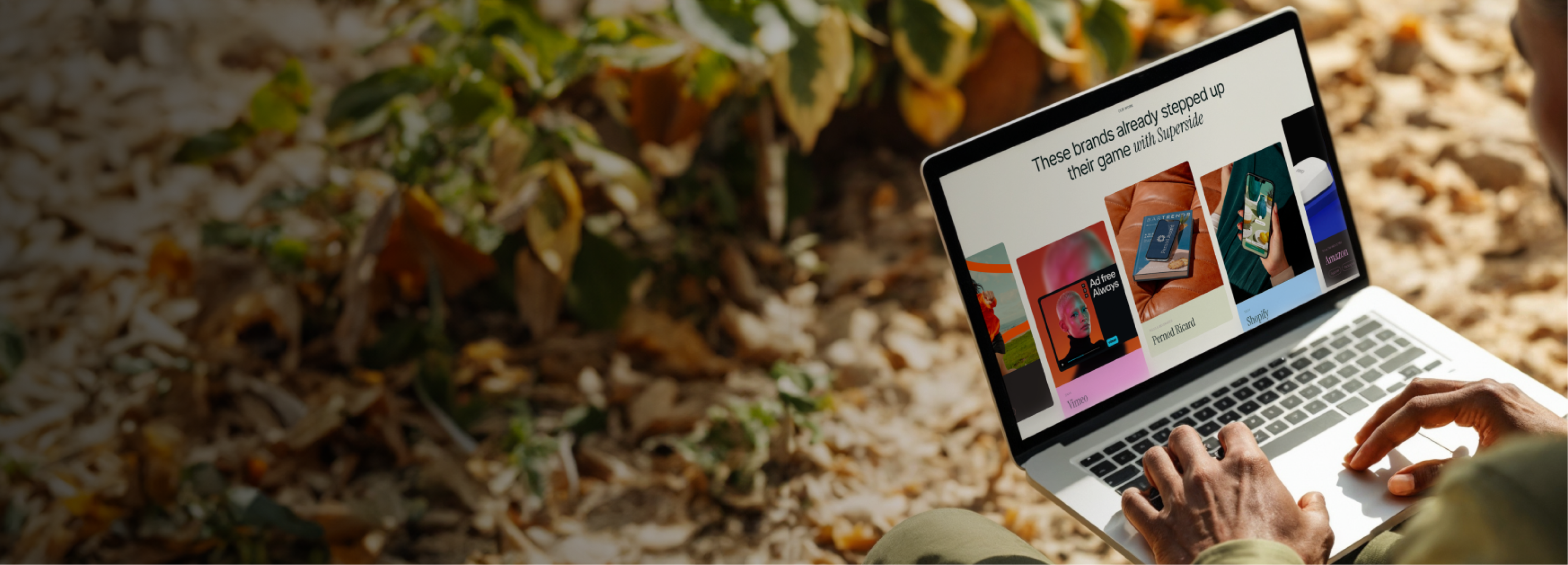
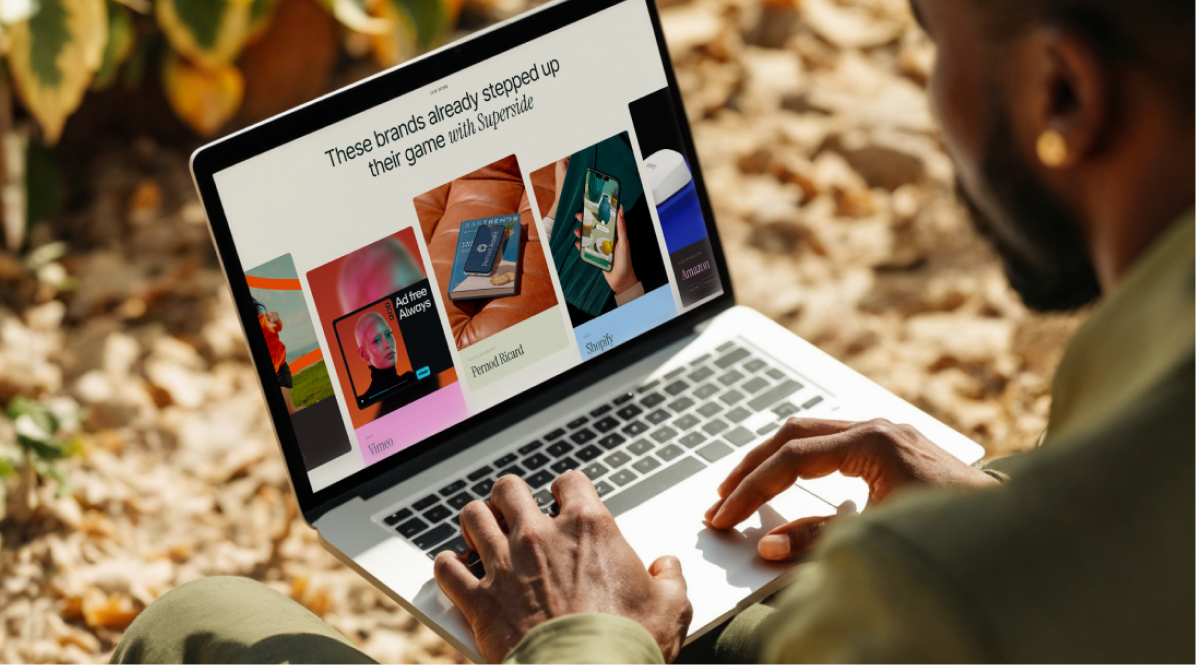
See how top brands do it
Looking for extra inspiration?
Check out more of Superside's brand projects.


The real story behind GenAI’s impact on creative
You've heard the hype. But what does the data say?
The data speaks for itself
According to a Forrester Total Economic Impact™ study, Superside delivers a 94% ROI and pays for itself in six months.
Your creative team's creative team
Choose the world's leading AI-powered creative service
and get high-performing ads, videos, experiences and
more at scale, on your schedule and to your standards.