


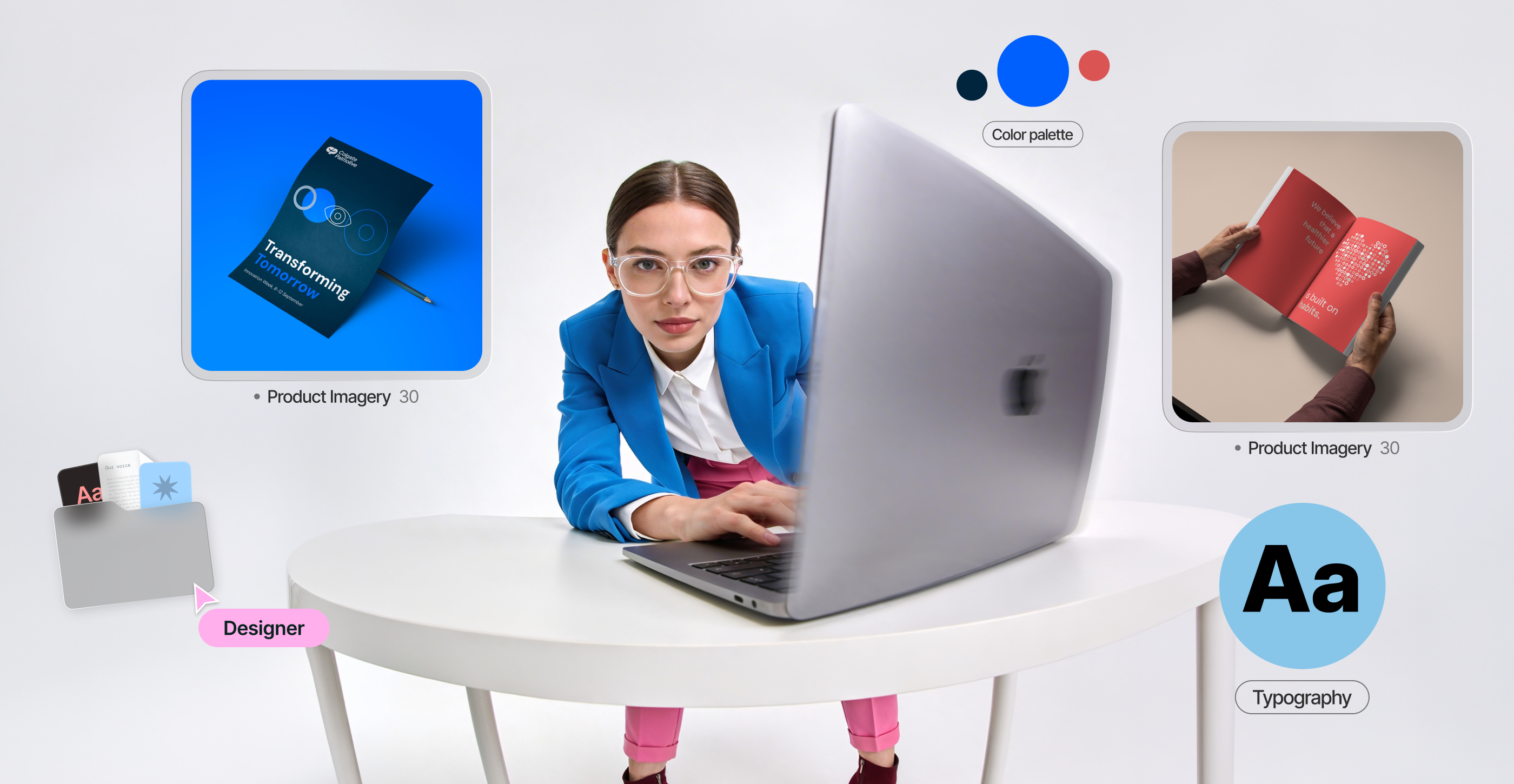
Brand architecture is how a company organizes its brands, sub-brands and products, and getting it wrong produces confusion, cannibalization and wasted spend. This guide unpacks the five models and the framework behind them. It also shows how a corporate masterbrand works at scale, using Colgate-Palmolive's Superside-built design system as the proof.
Brand architecture starts with a simple question: how should our brands relate to each other?
The answer determines whether products share the parent brand's reputation or stand alone, and whether new launches build on existing brand equity or start from scratch. Ultimately, it shapes whether audiences see a clear, connected portfolio or a collection of unrelated brands.
These decisions shouldn't be taken lightly. They determine how efficiently you market your portfolio, how easily you can expand through new products or acquisitions and how much risk stays contained when one brand runs into trouble.
Yet brand architecture is often treated as an afterthought and revisited only after an acquisition, a rebrand or years of unchecked portfolio growth.
This guide changes that. We break down five brand architecture models with real-world examples and practical frameworks, then show how a corporate brand system works at scale through the example of Colgate-Palmolive. Pair it with Superside's ultimate branding guide and brand strategy framework and you'll have the foundation to build a portfolio that's as clear as it is scalable.
What is brand architecture?

Brand architecture is the structure that holds a brand portfolio together. It defines how every brand, sub-brand and product fits into the bigger picture.
Like an architectural blueprint, it maps the relationships between a company's brands, defining what sits under the masterbrand, what stands independently and how reputation, recognition and brand equity flow across the portfolio.
Brand architecture vs brand strategy vs brand identity
These three concepts are often confused, yet all three are crucial to building a strong brand.
- Brand strategy is the overarching plan for how a brand creates value. It defines your positioning, purpose, audience and brand promise. It's the "why" and "what" behind the brand.
- Brand architecture is the organizational framework. It determines how brands within a portfolio relate to each other and how they fit together.
- Brand identity is the expression. It brings the brand to life through its logo, color palette, typography and visual system.
Each plays a distinct role. Brand strategy sets the direction, brand architecture turns that direction into a coherent portfolio and a cohesive brand identity makes what you stand for visible to audiences.
The building blocks of brand architecture
Brand architecture defines the roles brands play within a portfolio and the relationships between them. Its core components include:
- Corporate brand: the brand representing the company behind the portfolio, such as Colgate-Palmolive, Procter and Gamble or Unilever. It may be highly visible or remain in the background.
- Parent or masterbrand: the central brand that lends its name and reputation to related products, services or sub-brands.
- Product or individual brands: customer-facing brands created for specific products or services. They may carry the parent brand's name or stand on their own.
- Sub-brands: brands that combine the parent brand with a distinct name and proposition while remaining closely connected, like Gillette Mach3 and Toyota Prius.
- Endorsed brands: distinct brands visibly backed by another brand, such as Courtyard by Marriott. The endorsement adds credibility while letting the endorsed brand keep its own identity.
How you combine these components is what defines your model.
Why brand architecture matters
Understanding why brand architecture matters is just as important as knowing what it is. Here are four ways a good architecture benefits your business.
1. A clear message for audiences
When your architecture is clear, everyone understands what you offer and how it fits together. It helps audiences see how your brands relate, reduces overlapping marketing efforts and lets teams focus time and budget on the brands that matter most.
2. Stronger, better-directed brand equity
Brand architecture decides which brand earns the most recognition and trust. A branded house builds value around one main brand, while a house of brands spreads that value across several names, as seen among the world's most valuable brands. Both approaches can work, but the choice should be deliberate.
3. Less internal cannibalization
You don't want your brands competing with each other. A strong architecture keeps each brand in its lane, which becomes more important as your portfolio grows.
4. Easier growth and cleaner acquisitions
When you acquire a company or launch a brand, a clear architecture tells you exactly where the new brand belongs and whether to absorb it, endorse it or keep it independent. A 2004 McKinsey Quarterly analysis found that consumer-goods companies managing their portfolios well achieved revenue growth two to five times their historic norms while saving around 20% of overall marketing spend, largely by repositioning, consolidating or divesting brands that absorbed more resources than they contributed.
5 brand architecture models, with examples

Brand architecture sits on a spectrum. At one end, every offering shares a single masterbrand. At the other, each brand operates independently. Between them are models that balance shared equity with distinct positioning.
| Model | How it works | Examples | Main trade-off |
|---|---|---|---|
| Branded house | One masterbrand provides the portfolio's identity | Google, Virgin, Apple | Efficient and compounding, but risk is shared across everything |
| House of brands | Parent owns many largely independent brands | Procter and Gamble, Unilever | Contains risk and targets niches, but you fund equity many times over |
| Endorsed brands | Independent brands carry a visible parent endorsement | Courtyard by Marriott | Borrows trust while keeping distinct personality |
| Sub-brands | Parent brand extended with a distinct name | Gillette Mach3, Toyota Prius, Jeep Wrangler | Draws on parent equity, but adds naming complexity |
| Hybrid or mixed | Several of the above running at once | The Coca-Cola Company, Alphabet, Amazon, Salesforce | Flexible and realistic, but only if deliberate |
1. Branded house (masterbrand)
In a branded house, one masterbrand provides the portfolio's main identity. Products and services carry its name rather than operating as independent brands.
Google's core product family is a classic example, with Google Search, Google Maps and Google Drive all sitting under the Google name. Virgin is the textbook case in Aaker's original work. One clarification matters here, though. Google is a branded house at the brand level, but since the August 2015 restructure it sits under Alphabet as the top-level company, which is why Alphabet appears in the hybrid section below.
The advantage is concentrated brand equity, since every offering contributes to the masterbrand while new products inherit its recognition. The trade-off is shared risk, as a problem with one offering can touch perceptions of the whole portfolio.
2. House of brands
Here the parent owns multiple brands, each living largely independently, often with the corporate name in the background.
Procter and Gamble is the textbook case, owning distinct brands like Tide, Pampers and Gillette. Its products are sold in about 180 countries and territories, with on-the-ground operations in approximately 65 countries. Unilever operates the same way, as does Yum Brands with KFC, Taco Bell, Pizza Hut and Habit Burger and Grill across more than 155 countries and territories.
The advantage is that each brand targets a specific audience and a misstep doesn't necessarily affect the others. The cost is higher, because each brand requires separate investment and can't lean on visible parent equity.
3. Endorsed brands
Endorsed brands offer the best of both worlds. They're independent brands carrying a visible endorsement from the parent.
Courtyard by Marriott has its own identity but benefits from Marriott's credibility. The mechanism matters: it's the Marriott organizational brand doing the endorsing, which is what protects Marriott Hotels' premium positioning from being stretched downward. Nestlé endorses many products this way too, though it runs pure house-of-brands structures in some categories, making it a hybrid whose dominant mode is endorsement.
4. Sub-brands
Sub-brands extend a parent brand with a distinct name and identity while remaining clearly tied to it.
Coca-Cola Zero Sugar is a sub-brand of Coca-Cola, the masterbrand, which is itself one brand among more than 200 in The Coca-Cola Company's portfolio. That distinction matters, because separating the corporate entity from the masterbrand is the whole point of brand architecture. Jeep Wrangler is a sub-brand of Jeep, which sits under Stellantis. Gillette Mach3 and Toyota Prius work the same way.
Sub-brands let a company enter a new segment or price point while drawing on the parent brand's equity.
5. Hybrid or mixed
Not all companies fit neatly into one model. The Coca-Cola Company uses its masterbrand for Coca-Cola products while owning independent brands such as Sprite and Fanta. Amazon, Alphabet and Salesforce also use mixed approaches. Alphabet is the sharpest illustration: a branded house (Google) nested inside a house of brands (Alphabet, including Waymo and Verily).
A hybrid architecture works well, provided it's logical and intentional rather than the residue of years of unmanaged growth.
The framework behind the models, Aaker's Brand Relationship Spectrum
The models above draw on the Brand Relationship Spectrum, developed by David Aaker and Erich Joachimsthaler and introduced in Brand Leadership (2000), with a companion article in California Management Review the same year.
The spectrum places brand relationships on a continuum with four main groupings: house of brands, endorsed brands, sub-brands and branded house, each with sub-strategies running from maximum separation to maximum integration.
Its value lies in how it reframes the decision. Rather than asking "which model should we choose?" it asks how closely each brand should be connected to the masterbrand. The organizing mechanism is the driver role: how much a given brand actually drives the purchase decision.
The closer you move toward a branded house, the more you benefit from shared equity, consistency and marketing efficiency. The closer you move toward a house of brands, the easier it becomes to target distinct segments, protect individual brands and contain risk.
Aaker's own conclusion is worth keeping in mind: pure types are rare, and nearly every large organization mixes all four. That's why the hybrid model is the norm rather than the exception.
A masterbrand at scale, the Colgate-Palmolive deep dive
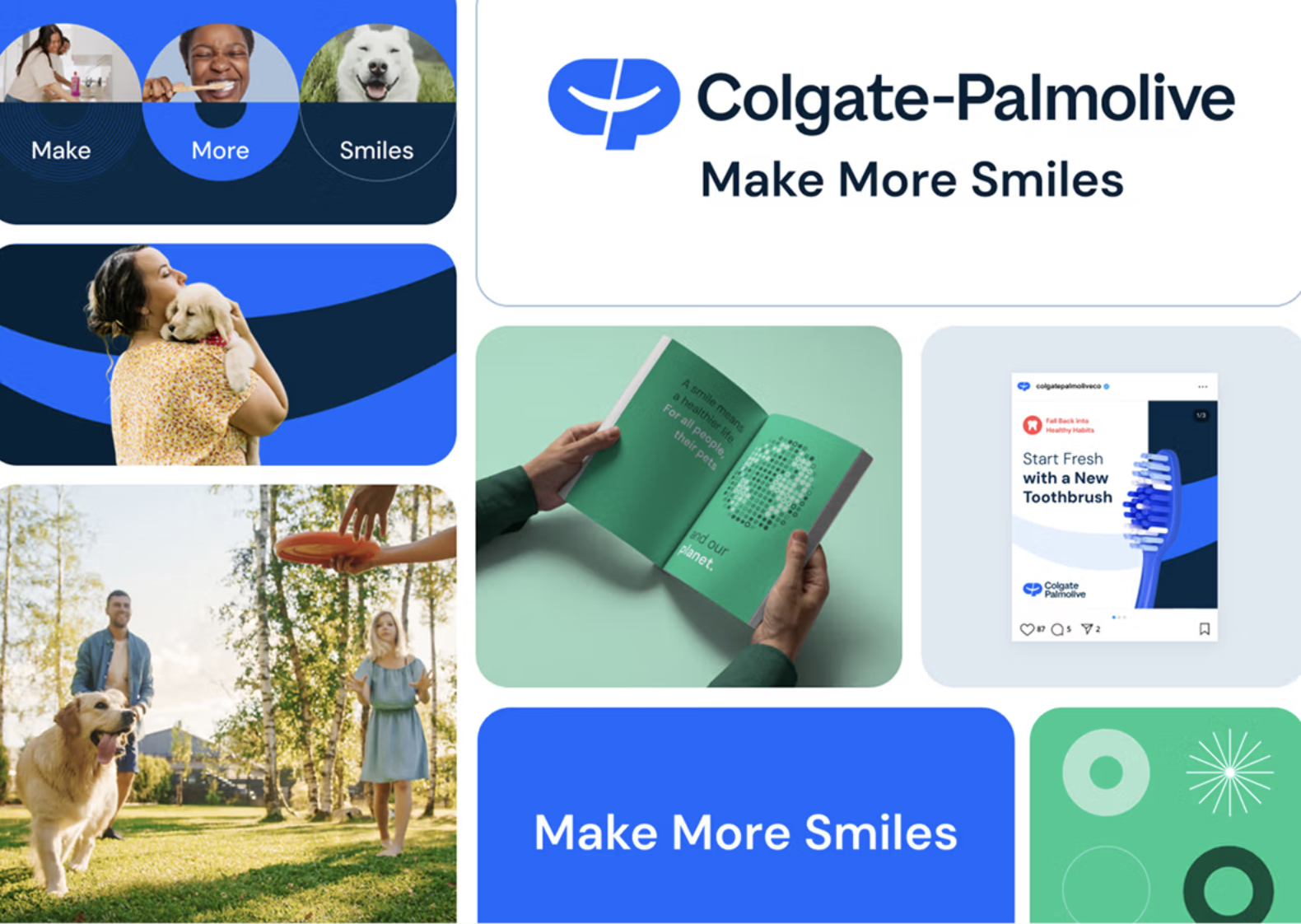
Once a company has defined its architecture, the next challenge is making that structure clear to audiences and delivering on it consistently. Colgate-Palmolive is a near-perfect illustration of a corporate masterbrand unifying a genuinely diverse portfolio.
Colgate-Palmolive marked its 220th anniversary in 2026. It employs more than 33,000 people across over 100 countries and markets its products in more than 200 countries and territories. Its portfolio spans four consumer categories, oral care, personal care, home care and pet nutrition, and sitting above all of them is the Colgate-Palmolive corporate brand, the masterbrand that ties the company together and carries its purpose: reimagining a healthier future for all people, their pets and our planet.
The architecture challenge was clear. The corporate mark had remained largely unchanged for more than 40 years, the company had been through a digital transformation and the masterbrand no longer reflected what Colgate-Palmolive had become. Refreshing it was never just a logo project.
It meant defining how the corporate brand should look, sound and behave consistently across every category, every market and tens of thousands of employees, most of whom aren't designers.
In 2024 the company launched a refreshed corporate logo and the "Make More Smiles" tagline, then partnered with Superside to co-create the visual and strategic framework that would activate the refreshed identity globally.
Most of the work we did with Superside was strategic, taking parts of the brand identity that already existed and storytelling around them to make them make sense within the cultural DNA of our company.

The work included:
- A complete design language built around the refreshed logo and tagline, translating the brand principles of Connection, Variation and Momentum into a cohesive graphic system.
- A Visual Communication Graphic Scale running from minimal to expressive, giving employees clear, practical guidance on the appropriate level of visual expression for any communication need.
- Global design toolkits covering logo and tagline usage, color, typography, iconography, photography and digital and physical application, prepared for rollout across markets.
- Employee enablement, so people across the organization could create polished, on-brand communications regardless of design experience.
Superside's global creative talent also brought diverse perspectives to a system that needed to work across cultures and geographies.
It was important to work with an agency with a global presence, as we wanted to be sure we could bring an inclusive perspective to the design systems and messages we were creating together, since Colgate-Palmolive is a company that operates in over 200 countries and territories.
The rollout delivered 1,008+ assets for global use across 2,956 hours of strategy, design and system development. It achieved roughly 98% positive sentiment at launch, five to seven times higher than industry benchmarks, and more than 500,000 organic LinkedIn impressions during launch month. It also resonated internally: roughly 99% of employees feel proud when they see the new brand.
That last number is the real proof of architecture at scale. A masterbrand only works if the people who carry it understand and believe in it.
Any employee, across any geography, regardless of design skill level, could create more on-brand, polished communications with the new design system we built with Superside.
You can read the full story in our Colgate-Palmolive case study.
How to choose the right brand architecture model

The right model depends entirely on your situation. Work through these questions.
- How much equity does your masterbrand carry, and does it transfer? A trusted masterbrand lends itself to a branded house or endorsed approach, letting new offerings inherit that trust. A weaker or category-specific parent is often better served by giving brands more independence.
- How different are your audiences and categories? Distinct audiences and category norms often call for separate brands. Shared audiences usually reward a unified masterbrand.
- How much risk do you need to isolate? If a problem in one product could damage the whole company, a house of brands contains it. If the categories are safe and complementary, unification makes sense.
- What's your growth and acquisition plan? If you acquire often, decide in advance whether you absorb, endorse or keep acquisitions independent, so the portfolio stays coherent.
- Can you afford to build equity many times? A house of brands is powerful but expensive, because you fund many brands. A branded house concentrates that investment.
Remember that every additional layer adds cost, complexity and confusion. Simplicity is easier to scale. If you're planning a rebrand or portfolio restructure, read our guides on creative branding strategies and rolling out a global rebrand.
How to operationalize your brand architecture
The model you choose means nothing until you've applied the structure consistently across every brand, market and touchpoint. Three factors turn a theoretical exercise into practical reality.
- Design systems that encode the architecture. A design system makes the relationships between your brands tangible, defining how the masterbrand and its sub-brands or endorsed brands look and behave so the structure is visible in every asset. Our roundup of design system examples shows how the best brands scale.
- Brand guidelines and governance. Clear brand guidelines and naming conventions keep the architecture intact as new markets, team members and vendors are added. Without governance, architectures drift.
- AI-powered consistency at scale. Keeping a portfolio consistent across hundreds of markets is a volume problem, and AI is now part of the solution. Critically, your AI tools have to understand your brand guidelines to maintain consistency at enterprise scale.
The Colgate-Palmolive example is exactly this. The architecture decision was the corporate masterbrand, but the design system, toolkits and enablement are what made it real across more than 200 countries and territories.
Common brand architecture mistakes to avoid
- Letting architecture happen by accident. Portfolios that grow through years of unmanaged launches and acquisitions become confusing and hard to manage. Architecture should be designed deliberately, aligned to business objectives.
- Too many brands and layers. Every separate brand and structure multiplies cost and dilutes focus. Rationalize ruthlessly.
- Copying a competitor's model. Procter and Gamble's house of brands works for Procter and Gamble. It may be wrong for you. Choose based on your equity, audiences and risk, not imitation.
- Designing the architecture but not the execution. Even the best architecture won't hold without design systems, guidelines, toolkits and governance.
- Ignoring the internal audience. If employees don't understand the architecture, they won't maintain it. Enablement is part of the job, as Colgate-Palmolive demonstrated.
How Superside helps you build and scale brand architecture
A strong brand architecture means little without consistent execution across every brand, market and customer interaction. The good news is that the right creative partner can set up the systems you need.
Superside is that partner. We help enterprise teams bring their architecture to life with capabilities spanning branding, design systems, governance and creative operations, all designed to keep complex portfolios consistent at scale. It's the approach behind Colgate-Palmolive's rollout and one trusted by brands like Intuit, Amazon, DoorDash, Figma and Reddit.
By preserving your brand identity and context across every project, Brand Brain helps the creatives who work on your brand move faster without sacrificing quality or consistency.
This AI layer brings your guidelines and brand knowledge into the creative workflow, so as production scales across formats and markets, everyone works from the same brand context. Being AI-first means AI isn't just powering individual tools. It's embedded across the entire creative model, from how teams are trained to how brand knowledge compounds over time.
The results of our AI-first, human-led approach speak for themselves. A Total Economic Impact study commissioned by Superside and conducted by Forrester Consulting (April 2025) found a 94% ROI for a composite organization, with payback in under six months.
Whether you want to unify your portfolio, launch a new sub-brand or integrate an acquisition, book a call with Superside and let us become your creative team's creative team.
FAQs





Extend Your Branding Expertise
Supercharge your brand with Superside's
bespoke design services and accelerate growth.


$4.5M+ saved in creative costs in two years
Get real-world examples, results and insights
from over 5,000 GenAI-powered projects.

Creative teams are at a breaking point
The pressure is real, the opportunity is too.
Get insights from 300+ leaders on
beating burnout, using AI wisely
and navigating 2026’s inflection point.


How 400+ brands get more work done, without doing more
They Superside it. Fast, high-quality creative from the
AI-powered creative service that handles it all.


Your creative team's creative team
Choose the world's leading AI-powered creative service
and get high-performing ads, videos, experiences and
more at scale, on your schedule and to your standards.