

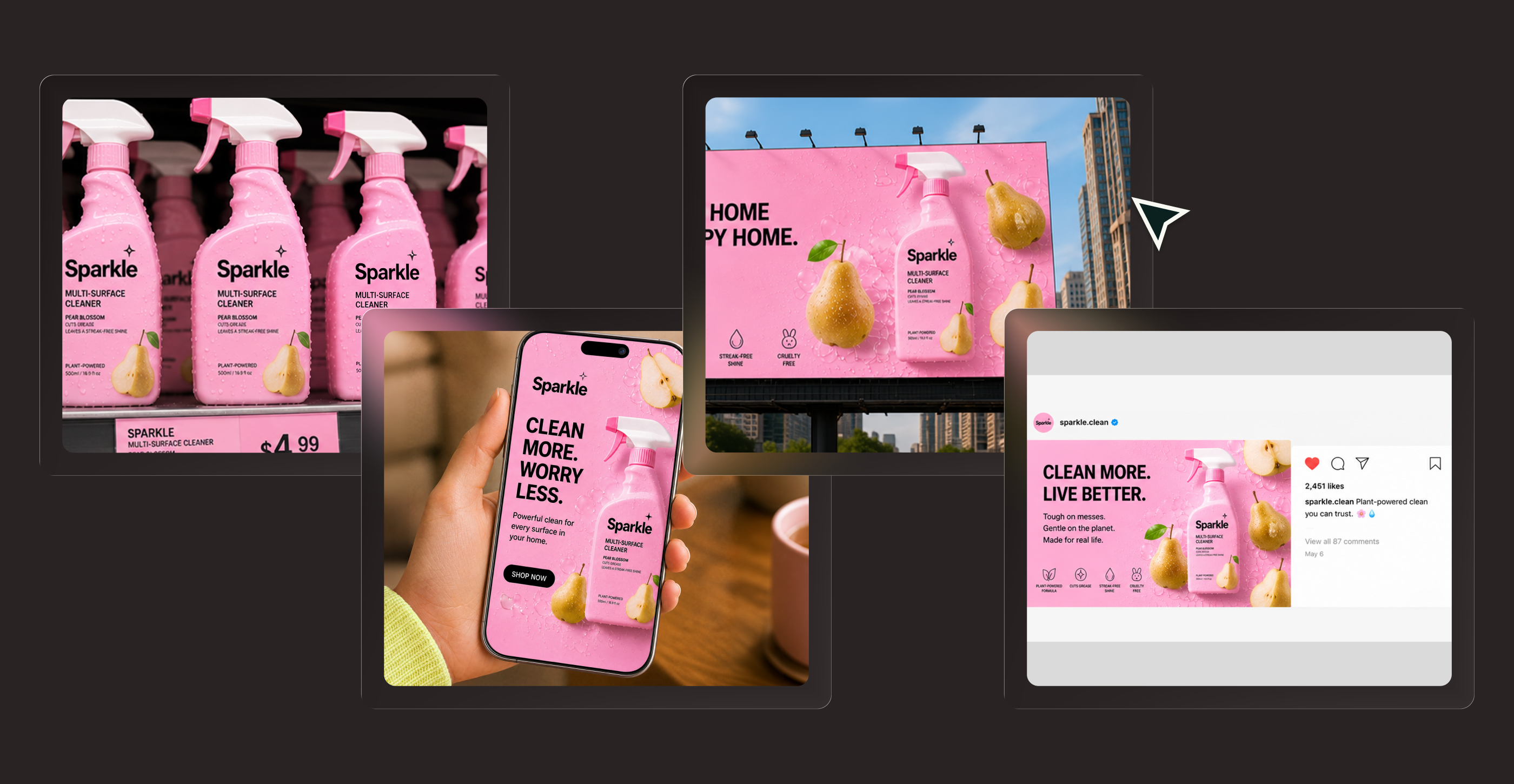
CPG branding is often reduced to packaging, but the package is only its most visible expression. As private labels surge and shoppers meet brands across shelves, screens and retail media, winning brands rely on coherent brand systems. This guide shows how to build recognition and consistency at scale, with Colgate-Palmolive's Superside-built design system as the working example.
In consumer packaged goods, branding is often treated as a packaging exercise. Yet packaging is only the jacket a product wears, its most visible expression rather than the full story.
As private-label ranges expand and shoppers encounter brands across shelves and screens, an attractive pack alone is unlikely to create lasting preference. The brands that stand out in 2026 build trust, loyalty and scale with coherent brand systems that express the same distinctive character at every touchpoint.
A strong brand system brings together CPG brand strategy, brand identity and brand architecture with the design principles, tools and governance needed to maintain consistency across markets, formats and channels.
This guide explains modern CPG branding, the forces transforming it and how Colgate-Palmolive uses a Superside-built design system to stay consistent across more than 200 countries and territories.
Why CPG branding is more than packaging

CPG branding involves building and managing a consumer packaged goods brand across the touchpoints that shape how people perceive, recognize and choose it.
It includes brand strategy, positioning, architecture, visual identity, packaging, messaging, digital presence and the retail experience. Packaging is one highly visible expression of the brand, while branding is the broader system that gives that packaging meaning and connects it to every other customer interaction.
CPG vs FMCG branding
The terms CPG (consumer packaged goods) and FMCG (fast-moving consumer goods) are often used interchangeably, but they aren't strictly identical.
- FMCG refers to the subset of consumer packaged goods that sell quickly, are purchased frequently and have high inventory turnover.
- CPG is the term more commonly used in North America and spans categories including food and beverages, beauty and personal care, household products, consumer health products and pet care.
In most branding discussions the difference doesn't matter much. The challenge is the same: build a brand people recognize, trust and repeatedly choose.
Why packaging alone no longer wins the shelf
Three industry shifts make packaging-only branding a risky strategy in 2026.
- Private label is surging. 60% of global consumers say they would buy more private label products if a larger variety were available, according to NielsenIQ research across 25 countries. With store brands competing on value, quality and choice, attractive packaging alone is a fragile advantage.
- Loyalty is harder to earn. McKinsey's State of the Consumer 2026 notes that "rapidly evolving AI models have begun to shape how people shop," and concludes that "brand equity, scale, and distribution remain important but no longer guarantee success."
- The shelf is no longer confined to the store. Consumers discover products through marketplaces, retail media, social media and direct-to-consumer channels. Packaging is only one part of the brand experience.
The state of CPG branding in 2026
Four forces are shaping how CPG brands compete.
- Value-seeking is now mainstream. Deloitte's 2026 outlook found that 47% of consumers globally now behave as value seekers, regularly sacrificing convenience to keep costs down. Familiarity and wide availability may no longer be enough, so brands must make their value unmistakable.
- Retail media now builds brands as well as sales. US retail media ad spend is on track to near $70 billion in 2026. Retailer websites, apps and in-store screens have become major touchpoints, so every product listing, sponsored result and retail campaign should reinforce the same recognizable identity.
- Launching a product is easier than sustaining demand. A Catalina study of 45 million shoppers, reported in 2015, found that up to 80% of new CPG product launches fail and only 11% of new-product buyers remained engaged after 52 weeks. Branding can't compensate for a weak product, but a strong system helps a product earn recognition and turn tentative first purchases into repeat buys.
- AI is multiplying brand touchpoints. In a 2024 McKinsey survey of CPG leaders, 71% said they had adopted AI in at least one business function, up from 42% the year before. As more brands use AI to generate, personalize and distribute content, maintaining a coherent identity becomes more important, which is why robust design systems, AI-powered workflows and strong creative teams matter.
The building blocks of a modern CPG brand
Strong CPG branding rests on five pillars that give packaging meaning, distinctiveness and consistency.
1. CPG brand strategy and positioning
CPG branding should start with a clear understanding of the consumer, the category and the brand's role within both. Who is the brand for? What need does it meet? Why should consumers choose it over a cheaper alternative?
In a crowded category, a distinctive position keeps your brand from becoming interchangeable with the product beside it. Superside's brand strategy framework and guide to brand positioning cover this pillar in more detail.
2. Strong brand architecture
CPG portfolios often span multiple brands, product lines, categories and variants. Brand architecture defines how they relate: which brand leads, what should be shared and where individual products should retain their own identities.
A clear architecture helps consumers navigate the portfolio and makes it easier for the business to launch, extend or acquire brands without creating confusion.
3. A distinctive brand identity system
A brand's visual and verbal identity makes it recognizable wherever it appears, from a crowded supermarket shelf to a fast-moving social feed.
The goal isn't simply to look good. It's to develop a distinctive set of assets that look and sound unmistakably like the brand. Used consistently, elements like logos, colors and fonts build recognition and memory. Without them, the brand becomes easier to overlook, easier to imitate and more likely to compete on price.

4. A consistent brand voice and messaging system
How a brand speaks can be as distinctive as how it looks. A clear voice gives the brand a recognizable personality, while a structured messaging system keeps its value proposition, benefits and proof points consistent across touchpoints.
Consistency doesn't mean repeating the same words everywhere. It means adapting the message to each audience and channel without losing the brand's character.
5. Purpose brought to life through storytelling
Brand strategy defines why a brand exists, while storytelling makes that purpose tangible. The strongest CPG brands show what they stand for through the products they create, the actions they take and the stories they tell.
Colgate-Palmolive offers a useful example. Its purpose, reimagining a healthier future for all people, their pets and our planet, provides a unifying idea across a diverse portfolio, and the "Make More Smiles" tagline translates that ambition into a simple, human expression that guides all communications.
When brand storytelling connects purpose with credible action, it turns an abstract promise into something consumers can understand, remember and believe.
How CPG giants stay consistent across markets

As brands grow, consistency becomes harder to maintain.
A global CPG brand may operate across dozens of languages, hundreds of markets and thousands of creative assets. Without clear systems, brand drift is inevitable.
A design system equips creative teams anywhere to produce unmistakably on-brand work. The best systems give senior designers the depth to build complex, expressive work, while offering non-designers simple, guardrailed tools to create on-brand communications without waiting on the creative team.
Consistency also has a commercial dimension. In a Marq survey of more than 400 brand management experts, respondents estimated that consistently maintaining their brand would deliver a 10 to 20% increase in overall growth. That's a self-reported expectation rather than measured revenue, but it reflects how brand owners themselves value consistency.
A 220-year-old CPG brand's global rebrand at Colgate-Palmolive
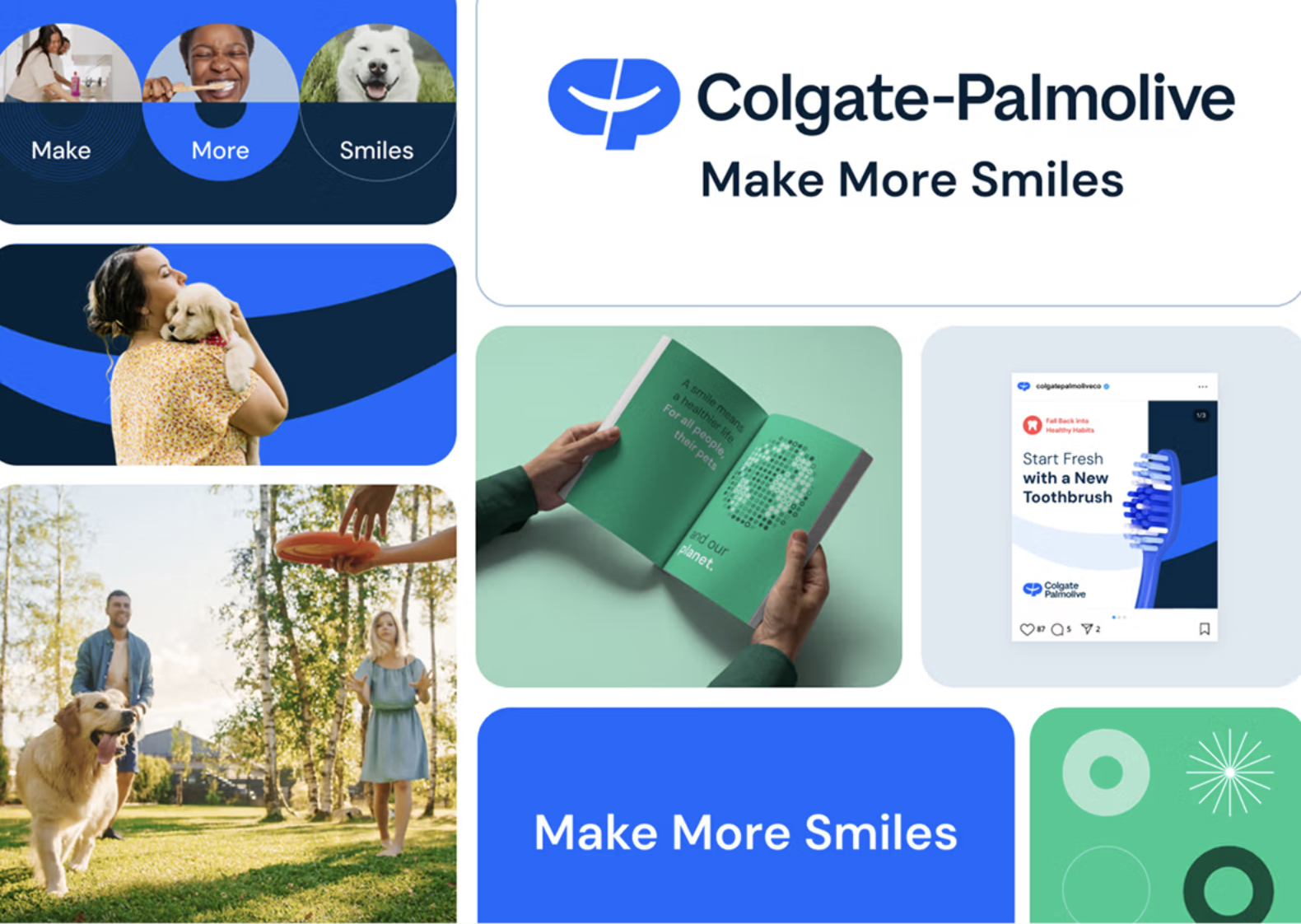
Colgate-Palmolive marked its 220th anniversary in 2026. It employs more than 33,000 people across over 100 countries and markets its products in more than 200 countries and territories. Its portfolio spans four consumer categories, oral care, personal care, home care and pet nutrition, with products used by billions of people.
That reach made the rebrand unusually complex. The identity had to honor two centuries of recognition while working across categories, cultures, channels and levels of design expertise.
The company's corporate mark had remained largely unchanged for more than 40 years, having last been revised in the 1980s, even as the business underwent a major digital transformation. The brand no longer fully reflected what the company had become: a modern, science-driven organization united by its purpose.
A lot of the magic that happens at Colgate-Palmolive is this deep human care and incredible science-driven innovation, and it's expressed literally in the logo.

In 2024 the company launched a refreshed logo and the "Make More Smiles" tagline, but tens of thousands of employees still needed to apply that identity consistently across every market and touchpoint.
Colgate-Palmolive needed more than a CPG agency producing campaign assets. It required a strategic creative partner that could translate the refreshed identity into a living, scalable design system, and it chose Superside to help build it.
We were looking for a creative, strategic partner to help us build a new design system and corporate brand that could scale across every touchpoint.
Working alongside Colgate-Palmolive's internal design and communications teams, our team expanded the refreshed identity into a system built for global use. The project included:
- A complete design language built around the refreshed logo and tagline, translating the brand principles of Connection, Variation and Momentum into a cohesive graphic system.
- A Visual Communication Graphic Scale running from minimal to expressive, helping employees determine the right level of visual expression for any communication need.
- Global design toolkits covering logo and tagline usage, color, typography, iconography, photography and digital and physical application, prepared for rollout across markets.
- Employee enablement through tools and guidance that helped people across the organization create polished, on-brand communications regardless of design experience.
| Result | Detail |
|---|---|
| 1,008+ assets delivered | Built to support global adoption and implementation |
| 2,956 hours invested | Across strategy, design and system development |
| Roughly 98% positive sentiment at launch | Five to seven times higher than industry benchmarks |
| 500,000+ organic LinkedIn impressions | During launch month alone |
| Roughly 99% employee pride | Employees feel proud when they see the new brand, per global surveys |
Any employee, across any geography, regardless of design skill level, could create more on-brand, polished communications with the new design system we built with Superside.
The system is now live across digital and physical touchpoints, including the corporate website, social channels, recruitment materials, internal communications, reports and signage.
There's an opportunity to put the corporate brand out there more now that we have a brand built with Superside that better reflects our purpose.
You can read the full story in our Colgate-Palmolive case study.
From shelf to screen, how CPG brands stay consistent
Colgate-Palmolive's story illustrates a challenge every modern CPG brand faces. The identity has to remain recognizable across channels that look, feel and function very differently. A strong brand system provides that continuity while giving teams enough flexibility to meet each touchpoint's demands.
- The physical shelf. Packaging must capture attention, communicate value and make the brand recognizable within seconds, even surrounded by similar products and cheaper alternatives.
- Owned and DTC channels. Brand websites, online stores, apps and email give CPG companies more space to explain benefits, share their story and build a direct relationship.
- Retailer and marketplace listings. On platforms like Amazon and Walmart, brands must stay recognizable within rigid templates, limited space and comparison-driven shopping.
- Retail media. Sponsored listings, display ads and in-store media reach consumers close to the point of purchase, and must drive action without reducing the brand to a price or promotion.
- Social and always-on creative. Social platforms require a continuous stream of content in different formats, so the challenge is staying timely and channel-native without losing the brand's distinctive identity.
A strong omnichannel brand system connects these experiences, helping the brand adapt to each channel while remaining unmistakably the same.
AI and creative velocity in CPG branding
Hundreds of SKUs, dozens of markets and high-stakes campaigns can overwhelm traditional creative processes. A single product may require dozens of pack variants, retail media formats, social cuts and localized versions. Multiply that across a portfolio and it becomes clear why so many creative teams are at the point of burnout.
AI can help teams absorb this workload, but with a caveat: the technology has to be grounded in clear brand systems and supported by well-designed workflows and strong human oversight.
Use generic AI and a weak system, and you scale inconsistencies. Pair an AI layer like Superside's Brand Brain with strong creative workflows and senior talent, and sustained creative velocity becomes achievable. We explore this further in our articles on creative content velocity and enterprise AI design trends.
How to choose a CPG branding partner
To meet the creative demands of the modern CPG landscape, you may need to expand your internal team, hire a specialist agency or work with a creative partner built for scale. When evaluating options, consider:
- Strategic and executional depth. Look for a partner who can help shape positioning, architecture and identity, then translate that thinking into packaging, campaigns and everyday assets.
- Relevant CPG expertise. Consumer brands operate within tight category conventions, retailer requirements and regulatory constraints. Ask whether the partner understands those realities and can design effectively within them.
- Proven global scale. Review evidence that the partner can coordinate high volumes of work across markets, languages, channels and formats without losing quality or consistency.
- A systems mindset. Strong partners build reusable design systems, templates and governance processes that create value long after the initial project ends.
- Speed without brand drift. Assess how the partner handles briefs, feedback, approvals, localization and quality control. Fast production only makes sense if the work stays accurate and on-brand.
- A collaborative operating model. The partner should complement your internal team, preserve institutional knowledge and make responsibilities clear.
For a broader comparison of partner models, explore our guides to branding agencies and corporate branding companies.
How Superside helps CPG brands stay distinctive at scale
Great CPG branding goes far beyond packaging. The challenge is keeping your brand distinctive and consistent as creative demand expands across products, campaigns, markets and channels. That's what Superside, the world's leading AI-first creative partner, was built for.
Our global team of strategists, designers, writers, motion artists and AI experts combines human creative judgment with AI-powered workflows. We help brands turn strategic direction into identity systems, campaigns and always-on creative built to perform at scale. Being AI-first means AI isn't just powering individual tools. It's embedded across the entire creative model, from how teams are trained to how brand knowledge compounds over time.
Our work with Colgate-Palmolive shows what that partnership can achieve. Superside helped expand the company's refreshed corporate identity into a living design system used by more than 33,000 employees in over 100 countries, supporting a brand whose products are marketed in more than 200 countries and territories.
Partner with us and all work runs through Superspace, where briefs, feedback, reviews and delivery come together. At its center, your unique Brand Brain captures and applies your brand's voice, visuals, specifications, feedback and past decisions. This shared creative memory grows with every project, helping you move faster without losing the nuance that makes the brand distinctive.
The business value is measurable. A Total Economic Impact study commissioned by Superside and conducted by Forrester Consulting (April 2025) found that a composite organization achieved a 94% ROI over three years, with payback in under six months.
If you're ready to build a CPG brand system that protects what makes your brand distinctive while helping your team produce more, book a call and let Superside become your creative team's creative team.
FAQs




$4.5M+ saved in creative costs in two years
Get real-world examples, results and insights
from over 5,000 GenAI-powered projects.


Solidify brand identity and fuel growth
Check out our portfolio of brand identity work to see how
Superside can help you seize opportunities and
accelerate your creative pipeline.


Your creative team's creative team
Choose the world's leading AI-powered creative service
and get high-performing ads, videos, experiences and
more at scale, on your schedule and to your standards.