



Good marketing design operations separate frustrated creative teams from high-performing ones. Those who deliver superb results have mastered creative workflows and the design tools that enable enterprise-level scale. Many turn to external partners like Superside to help them build design engines primed for speed, consistency and business growth.
As recently as 10 years ago, marketing was fairly simple. Teams worked with just a few channels, campaigns were planned months in advance, and the design process was linear and predictable. That world no longer exists.
Today’s creative teams must design for multiple channels, regions and formats at speed and scale. At the enterprise level, they also field requests from numerous other departments, all of which regularly need social media content, paid advertising assets, website creative, email designs and more.
Without clear design workflows, strong design systems and smart resource allocation, designers end up overstretched, frustrated and burned out.
Help from traditional agencies and freelancers is no longer a viable option, as these solutions don’t provide enterprise teams with enough speed or flexibility. In turn, robust design operations and enterprise-ready creative partners can help streamline work, protect design quality and build in brand consistency as creative output scales.
In fact, a creative partnership with a partner like Superside can be a lifeline. As the world’s top AI-first design service, we help teams achieve truly integrated, scalable creative production. Watch examples of our work below!
In this article, we explore why well-structured marketing design operations are non-negotiable for ambitious enterprises, what great marketing design operations look like, and how Superside can help you build processes and systems that get top-quality, brand-consistent designs to market fast.
Why solid marketing design operations matter
The term “marketing design operations” (MDO) encompasses the processes, workflows, tools and roles that help creatives to deliver consistent, high-quality design at scale.
As enterprises grow and expand across more marketing channels, consistently producing high-quality design becomes one of many challenges. Enterprise design teams must also manage increased communication, shifting priorities and timelines, ongoing feedback from multiple stakeholders and workflows that can accelerate or slow unexpectedly.
When these elements aren’t managed effectively, the same issues recur:
- Endless backlogs and bottlenecks: When too many projects hit the design studio at once, design team members can’t keep up. Bottlenecks slow things down, and campaign launches and other design projects suffer as a result.
- Fragmented handoffs: When work moves between marketing, performance, design and other teams without clear processes, ownership becomes blurred, feedback is missed and rework increases.
- Inconsistent branding: When design teams try to move faster without proper workflows, good brand governance and robust design systems, brand consistency inevitably suffers. Over time, this erodes brand recognition and trust.
- Overreliance on freelancers or traditional agencies: When overstretched teams try to patch design gaps with outside help, costs rise. Creative quality and consistency also become harder to control.
- Poor visibility and planning: When design teams lack a clear view of priorities, capacity and future plans, work becomes reactive and rushed.
- Poor campaign performance: When metrics aren’t transparent and visible to everyone, or when results aren’t communicated properly because teams are rushed, campaign assets aren’t optimized for stronger creative performance.
These problems don’t occur because designers lack skills or goals. They occur because the right structures, processes and support aren’t in place from the get-go. Strong marketing design operations create this foundation, helping teams to test creative ideas faster and tweak creative for optimal performance.
Fortunately, this isn’t a process enterprise teams have to navigate on their own. With a strong creative partnership, your design team gets a smarter, more scalable way to run creative as a system, not a scramble (but more about this later).
The enterprise marketing bottleneck
Nowadays, algorithms shift without warning, budgets tighten, priorities change overnight and new channels, formats and “must-have” trends emerge out of nowhere, all while expectations for performance keep rising.
Many enterprises invest in skilled designers but fail to prioritize a dedicated DesignOps function, along with the time, resources and tools required to truly streamline creative execution. In other words, they lack the operational infrastructure to manage rapid change and high volumes of work in a calm, consistent manner.
The resulting chaos ultimately creates bottlenecks and drives downstream business costs. Think:
| Bottlenecks | Business cost |
|---|---|
| 1000s of creative requests with no clear intake: Requests arrive through various channels, from Slack and Teams to email and WhatsApp. There’s no single source of truth for what’s been briefed in by whom, where. | Time is wasted on prioritization rather than on designing, testing and launching campaigns and other strategic creative projects. Market opportunities get missed, and brands fall behind their competitors. |
| Constantly shifting campaign timelines: Timelines change as teams test, learn and respond to the market. This is inevitable, but without good project management systems, shared communication tools and clear workflows, bottlenecks occur and deadlines get missed. | Work restarts, team morale drops and budget is wasted on unused assets. Campaign performance also suffers. |
| Limited internal design capacity: A small design team frantically tries to “do it all,” from creating assets for paid campaigns and social media to creating websites, videos, illustrations and presentations. | Team burnout, missed deadlines and opportunities, and heavy reliance on expensive outsourced talent inevitably follow. |
| Multiple stakeholders with competing priorities: Brand, growth, product, sales and content teams all need design support. Design team members are caught in the middle, responding fastest to the team or colleague who shouts the loudest. | Poor team coordination, inefficient workflows and overall frustration. |
| Brand guideline conflicts and subjective feedback: Stakeholders push ideas that fall outside brand guidelines or pre-approved frameworks. | Brand consistency flies out the window and target audiences get confused. This ultimately leads to lost brand trust. |
These scenarios most often indicate that creative production has outgrown previous processes. A new, well-structured operational framework can improve resource management, reduce bottlenecks, boost team morale and help design teams to deliver creative that not only meets briefs and brand guidelines but also performs across all channels, from display ads to enterprise SMS campaigns.
This is why many of the world’s top enterprises turn to strategic creative partners like Superside.
As the world’s leading creative service, we’ve mastered how to deliver high-quality, high-volume marketing assets faster and more cost-effectively than traditional agencies or freelancers.
Plus, we provide all the marketing design support and guidance enterprise teams need to build effective, scalable marketing design operations.
What great marketing design operations look like
While this is different for every company, strong MDO systems typically share four core pillars:
1. Centralized creative intake and workflow management
- Clear creative intake: Great marketing design ops start with structure. Every request should enter the system the same way. Briefs should be clear, and timelines should be defined to keep everyone aligned.
- Optimized workflows: Robust workflows, standardized production steps, tight feedback loops and design systems with templates and reusable components help creative teams produce creative assets fast and at scale.
- Resource allocation: With a robust creative management platform in place, requests from various departments become easier to prioritize, work gets assigned fairly and bottlenecks are visible early. For example, using Supersie, your work will live inside our Superspace platform. Via this easy-to-use, centralized collaboration hub, you can submit briefs, give feedback and track the entire creative process from start to finish.
2. Cross-functional collaboration
- Team coordination: Strong marketing design operations break down silos. Marketing leads, designers, performance teams and brand partners all work as one. This requires strong team coordination, clear roles and shared goals communicated across the entire system.
As your creative team’s creative team, our project managers will collaborate closely with relevant internal stakeholders to shorten production cycles and improve creative outcomes.
3. Consistent brand governance
- Design systems: As creative output scales, brand consistency quickly slips. A centralized, up-to-date source of truth for every aspect of your design language is critical.
- Training: A few training sessions or videos will ensure that everyone in marketing operations understands the rules and can use the design systems effectively.
Superside, for example, ensures nothing slips through the cracks with brand-trained teams, templates, shared asset libraries and custom AI image models built to follow brand rules. We also keep humans in the loop.
4. Scalable creative capacity
- Managing projects: In most organizations, creative demand isn’t consistent. It surges during product launches, events and seasonal campaign periods.
Strong MDO anticipates these peaks, supports scaling creative output and ensures workflows don’t break down when output volume increases.
- Optimal resource allocation: Delivering thousands of marketing assets across multiple channels requires strong project management and clear visibility into capacity, deadlines and dependencies. When resourcing is managed well, work is distributed evenly, teams avoid inefficiencies and companies save on outsourcing costs.
We’ve managed to get this right. Thanks to Superside’s global talent pool and flexible subscription model, our customers can dial their creative capacity up or down on demand. Our distributed creative teams work across time zones, so our design operations never truly sleep. Plus, you can choose how you want to use your budget each month and boost your subscription at any time.
This level of design-operation maturity typically takes years to build. It requires best-in-class design tools, strategic planning, robust processes, training and experience. Many enterprises simply don’t have the time or resources to build these systems in-house.
This is exactly why many of the world’s leading enterprises partner with Superside. Thanks to years of experience in marketing design operations and integrated creative production, Superside can also help you turn your marketing design processes into robust, scalable systems that drive real business value.
How Superside transforms marketing design operations
Superside has supported many leading brands transform creative chaos into scalable, dependable creative systems and strategies that work and perdure.
We don’t operate like a typical third-party vendor or standalone design team. Instead, we become a seamless extension of your in-house creative team. Along the way, we help you implement stronger marketing design processes so creative output becomes predictable, scalable and measurable.
It’s simple, really: Superside treats creative production as an entire system, not a series of disconnected design tasks.
With Superside, you get access to:
1. An embedded model built for modern marketing
You’ll be supported by a dedicated creative pod. Our designers, art directors, project managers and other skilled creatives will plug directly into your existing processes and get to know your brand intimately.
With this model, you also get a robust operational structure. Project planning, team coordination, design systems and other creative ops best practices will be handled proactively, so creative teams spend less time organizing work and more time producing standout creative.
For example, we helped major fintech brand Shopify scale its ad production during a period of rapid growth. In 2023, the brand already served over 6 million Shopify Plus businesses.

As it expanded across channels, countries and products, creative demand exploded. Superside provided the structure and bandwidth to create thousands of asset variations for use across platforms such as Facebook, YouTube and TikTok.
2. AI-first production that frees up creative time
Superside uses AI-first marketing design to automate tedious, repetitive tasks, such as image resizing and asset versioning.
This not only helps build efficient workflows but also preserves the energy and creative capacity of internal design departments.
At Amazon, for example, production tasks were pulling senior creatives away from higher-value work. With Superside’s marketing design support, Amazon eliminated its design backlog, produced more than 1,000 assets and saved hundreds of hours.
Thanks to the Superside creative partnership, Amazon’s own creatives could also shift their focus back to high-impact creative work.
3. Centralized workflows with full visibility into production
Superside’s Superspace platform centralizes the entire design process. It simplifies briefing, collaboration and feedback, and makes it easy to manage creative assets and budgets.
For Toast, our DesignOps experience was a game-changer. As demand for high-quality visuals grew, Toast needed more than execution. They needed a better system.
Thanks to our extensive experience designing for tech firms, we knew that access to work files, tutorial videos and live calls would help their designers fully grasp the new 3D workflow we implemented. The result was not just faster output, but a repeatable system that Toast could use to scale design over the long term.
4. Brand governance at enterprise scale
As creative volume grows, the risk of producing off-brand work increases.
Superside solves this problem with strong design systems, locked templates, custom AI models and shared asset libraries. This means teams stay 100% aligned on design language, brand guidelines and approved design elements.
In fact, this structured approach helped Vimeo overcome creative fragmentation. Superside built a centralized system of reusable components that supported more than 15 customer journeys, helping the video platform to achieve brand consistency, accelerate production and reduce design debt.
For Reddit’s brand creative team, OrangeRed, Superside stepped in to help them scale their creative output quickly. For their annual “Recap” project, we helped them apply their core creative and copy across 87 unique assets at lightning speed.
5. Proven impact
Superside turns marketing design operations into measurable systems.
Thanks to a global network of best-in-class creatives, your internal design team gets ongoing support that fits directly into your existing workflows. Our strategic approach also guarantees design quality and consistency, without adding headcount or operational strain.
Brands that use Superside often see a 94% return on investment over three years and a payback period of under six months. This value comes from faster delivery and fewer bottlenecks during the design process.
How to improve your marketing design operations
Improving the design process it’s what separates mediocre from excellent.
Prep, workflow and timing make quality repeatable. Without that system, you’re just hoping the chef has a good day.
Strong MDO starts with good prep and small, practical steps that create structure. Eventually, with deliberate effort, an entire design culture is built.
Read below to kickstart an effective process:
The future of marketing runs on well-integrated creative operations
Modern marketing success requires more than outstanding designs. Creative teams must deliver quickly, consistently and at scale across every channel, market and moment that matters. Without a strong design process, even the best companies find scaling creative output hard.
This is where an outstanding, outsourced creative team like Superside can truly make a difference.
We can help you set up the infrastructure to operate at the required level. With embedded creative pods, AI-first marketing design and end-to-end operational systems, we’ll turn your design processes into a reliable engine for business growth.
The best DesignOps teams build smart systems that unlock strong creative performance. Book a call to know how we can help your company achieve creative success.
FAQs


Inside Great Creative Partnerships
Tap into the minds of 22 top creative and
marketing leaders at brands like Wistia, Booking.com
and Twilio and see how they ship great work, together.
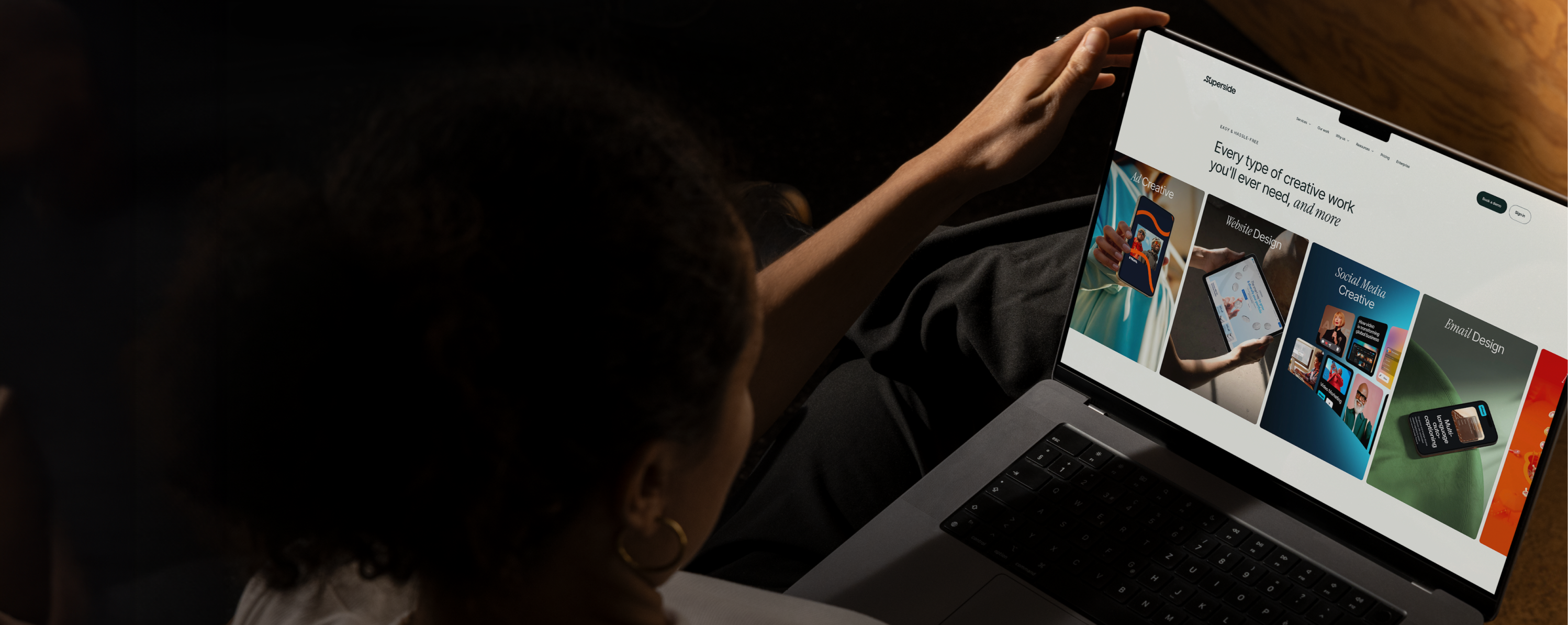
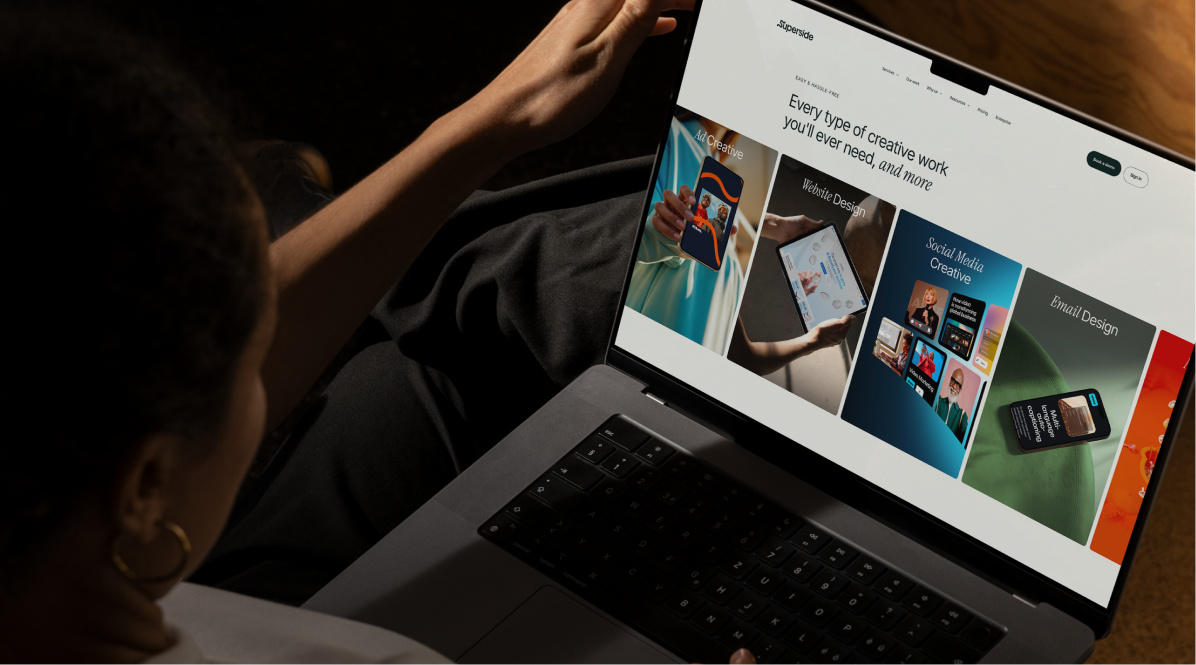
This is the quality you can create with Superside
Discover how Supersiders help global brands
launch high-impact campaigns at scale with top design.
We're your creative team's creative team.




Give your internal teams the power to boost your brand
Publish once. Deliver everywhere. Our Creative Ops platform
puts your brand in front of the right people, everywhere.
Unlock seamless content distribution. Access your audience.