

Producing more creative doesn't have to mean a weaker brand. Consistency at scale is an operations problem, and the teams that solve it run on five layers: a single source of truth, design systems and templates, real design ops, brand-trained AI and humans owning the quality bar. Add Brand Brain inside Superspace and one brand shows up everywhere, which is a big reason a commissioned Forrester study puts Superside's ROI at 94%.
You're managing more channels, formats, markets and variations than ever before. At the same time, your team is expected to keep every asset on-brand, usually without additional budget or headcount.
For a while, the team holds both volume and consistency together by sheer effort. Your best designers stay late, and you personally eyeball every asset before it's sent off. Then the workload grows, deadlines tighten, and you simply can't do all those last checks yourself anymore.
An ad goes out with the wrong brand color, and a sales deck uses a logo nobody approved. None of these small slip-ups are catastrophic on their own, but together they add up to a brand that looks a little less like itself every quarter.
The teams that escape this trap have built the infrastructure needed to stay on-brand at scale, even when shipping thousands of marketing materials every month.
Not there yet? This article explains why brand consistency breaks down as creative output scales. It also explores how today's top enterprise brands use centralized hubs, design systems, streamlined design ops, creative talent and brand-trained AI to get ahead fast.
The volume and consistency tension every enterprise team feels
Winning in today's market means your brand has to show up everywhere your customers are. More channels, markets, audiences and campaign variations all add to the production workload.
Unfortunately, this leaves enterprise creative teams with less time for the creative thinking and strategy that set their brands apart. And as the workload grows, maintaining brand consistency becomes harder.
As part of Superside's Overcommitted research, which surveyed more than 200 enterprise creative leaders, more than three-quarters said creative demand now outpaces their capacity, and 76% said they and their teams have felt burned out over the past year.
When creative teams are stretched this thin, consistency is one of the first things to suffer. And when brand consistency slips at scale, it eventually impacts the business's bottom line.
I think the question is no longer, can we create enough content? We can. But the risk is, how do we make sure that that content is maintaining the integrity of the brand that we have created.

Take Tropicana's 2009 packaging redesign. The company invested a reported $35 million in the new look. But by replacing distinctive brand assets with a radically different design, it made the product less recognizable on store shelves. Within two months, sales dropped by roughly 20%, costing the brand around $30 million.
Then there's Gap's logo redesign fail. The retailer replaced its iconic blue-box logo with a new design, only to face immediate consumer backlash and reverse the decision less than a week later.
Both case studies remind us that even a single break from recognizable brand elements can be costly. On the flip side, research from Lucidpress (now the brand template platform Marq) found that maintaining brand consistency can increase revenue by up to 33%.
Why brand consistency breaks down at scale

As creative output volume grows inside your team, every weakness in your workflows is amplified. Ultimately, these can lead to the kind of brand inconsistencies that damage your brand.
These are the four issues that show up time and time again at the enterprise level.
1. Brand guidelines go unused or aren't adapted for AI
While most brands have brand guidelines, only 30% consistently enforce them.
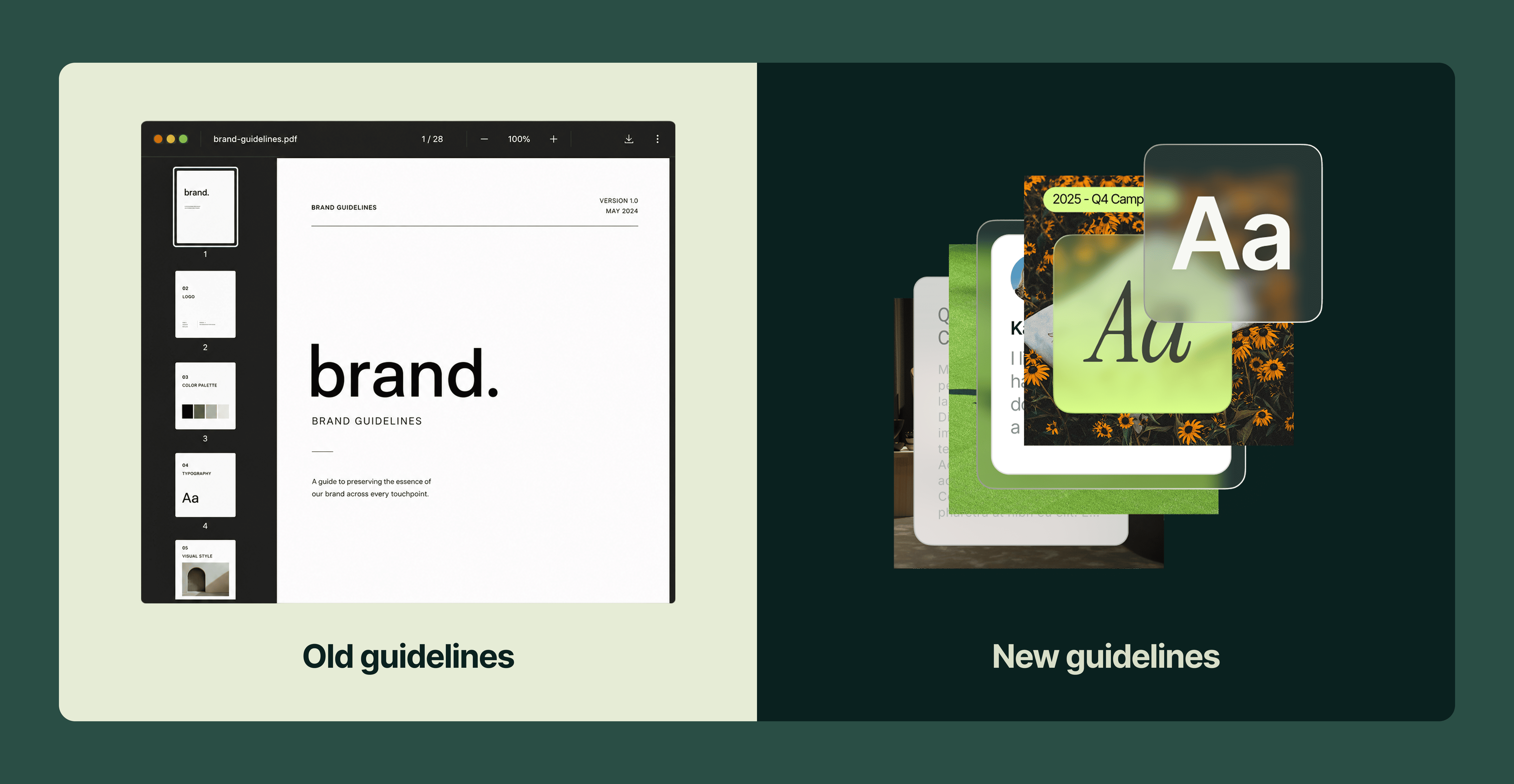
Part of the problem is that the guidelines are often left as static PDFs rather than integrated into operational systems. At ten assets a week, teams can manually refer back to the guidelines. At a thousand, it's simply too slow to consult these documents.
Most brands also still rely on guidelines designed for a pre-AI world. While traditional PDFs outline what the brand looks and sounds like, and are great for human creative interpretation, they can't provide the rich context AI needs to consistently deliver on-brand work.
Instead of relying on increasingly elaborate prompts, give it richer brand context. AI wants to know, ‘what should we stand for as a brand’? And for it to know that, you need to give it the brand strategy and the brand principles. You need to give it your positioning, the audiences, your values, your messaging hierarchy, your brand principles.

AI needs more than rules. It needs examples of how those rules have been interpreted in practice. That includes past campaigns, approved copy, channel-specific executions, dos and don'ts, legal constraints and examples of when the brand can flex.
2. Assets and knowledge are scattered
When logos, templates and approved visuals live across email threads, Slack channels and shared drives, people grab whatever they can find first. Finding the path of least resistance is human nature.
Unfortunately, what they find first is often outdated. And when creatives keep referring to outdated guidelines across regions, you eventually end up with a dozen slightly different versions of the same brand.
It's also not just assets that get scattered. Critical brand knowledge often lives in the heads of a handful of senior team members. When those brand custodians move on, much of the knowledge that helps deliver brand consistency walks out the door with them.
It lives in guidelines. It lives in live assets and campaigns and templates. But in the individual brains of these people who have the unwritten knowledge of your team that's accumulated all of this understanding of how this brand could come to life.
3. Every new channel multiplies the surface area
Scaling your marketing output across channels, markets and languages dramatically increases production complexity. Different formats, local adaptations and campaign variations could mean that a single creative concept gets turned into hundreds of assets. Every additional manually created variant increases the likelihood of inconsistencies creeping in.
4. Freelancers and agencies add capacity, not consistency
Traditional creative agencies are well-positioned to support big-budget, long-lead campaigns, but they're less equipped to manage the relentless cadence of always-on digital marketing. And while freelancers can add capacity to an overstretched team, using them means you're putting your brand assets and creative decisions into more hands.
Without good systems that centralize your brand knowledge, standardize your workflows and enforce your brand standards, high-volume creative production also increases the risk of inconsistencies. The solution is to build a scalable creative operating model rather than simply adding more resources. In the next section, we explore this further.
Top enterprise teams maintain brand consistency with 5 layers
The brands that scale high-volume creative production successfully build systems that make staying on-brand the path of least resistance. The following five layers form the foundation.
1. A single source of truth
Everything starts with one authoritative, living home for your brand. Guidelines, logos, colors, typography, tone, messaging, locked brand elements and approved assets should all be centralized and kept up to date.
Your first goal should be to replace PDF-based brand guidelines and information stored on scattered drives with a single knowledge hub that every team member, partner and AI tool can draw from.
2. Design systems and templates

Your second goal should be to "build once, scale everywhere." A design system of pre-approved, reusable components and a library of starter templates make it easy to produce on-brand work every time. Swap the headline, the product shot or the CTA, and the core identity stays firmly in check. This approach also helps your team quickly scale a single creative concept into hundreds of on-brand variations.
3. Better design operations

Design systems and templates are only part of the solution. Your team also needs workflows that ensure every request moves through the right process without creative friction.
Your third step is to relook your design operations so you start with a clear intake process, standardized creative briefs, sensible prioritization, structured reviews and approvals, QA before final delivery and consistent file management afterward.
The design operations enterprise companies that succeed use are the unglamorous machinery that creates a predictable pipeline. It's also what lets your creative team scale their output without getting stuck along the way. Superside's playbook on enterprise creative operations provides a useful map if you're ready to put this operational layer in place.
4. A brand that's encoded into AI tools and systems

AI offers big benefits for stretched marketing and creative teams. But if your AI model isn't trained on your brand, the outputs won't consistently reflect it.
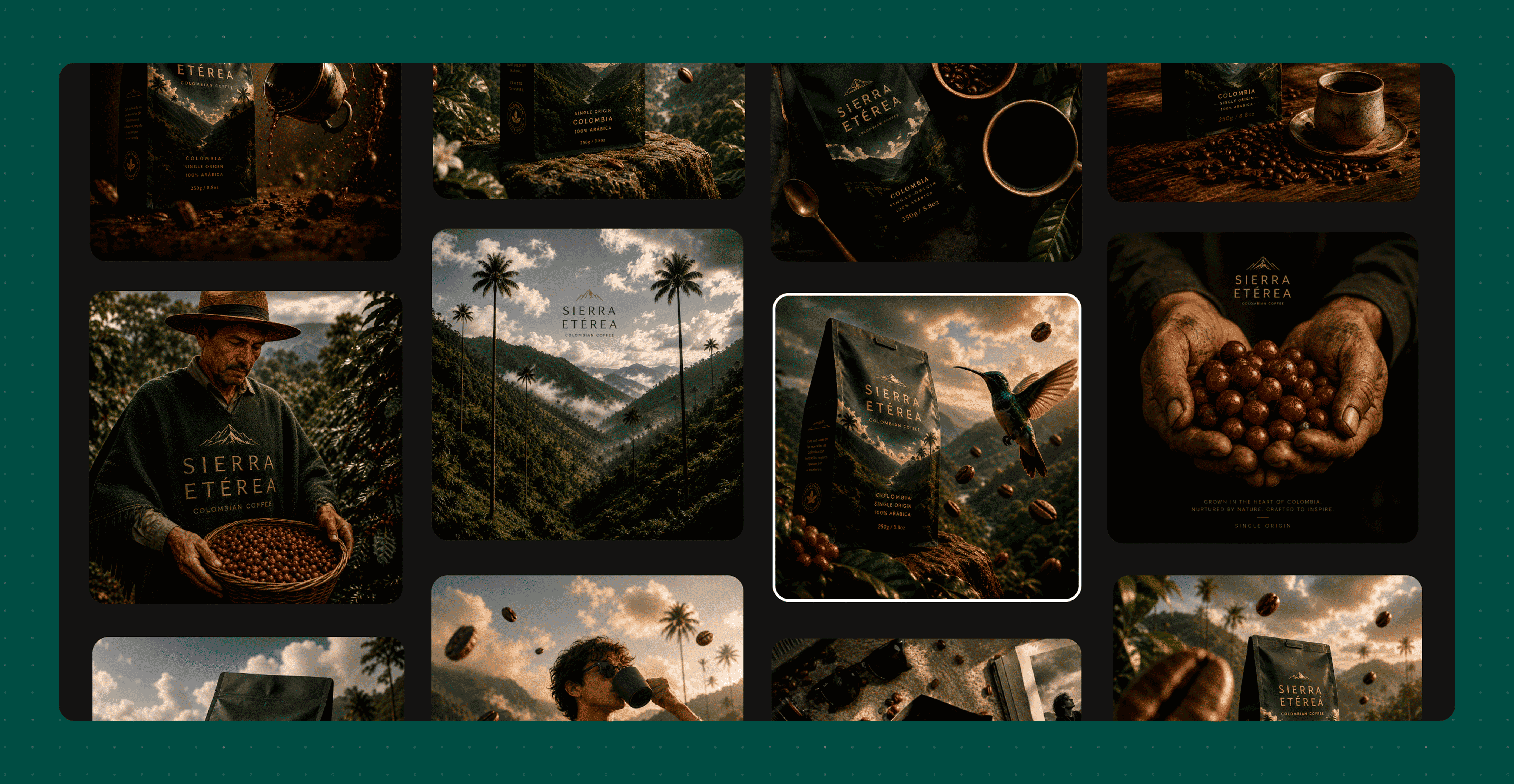
When it comes to images, best practice is to create custom AI image models trained on your guidelines and approved creative assets. Because the AI understands your brand from the start, every image it produces aligns closely with your brand standards, and lets you scale roughly 10x faster. This reduces the need for revisions and manual quality checks, the kind of creative friction that wastes time and kills team morale.
But custom image models are only part of the solution. AI also needs access to the context behind your brand. Without a system that captures and remembers past briefs, creative feedback, approvals, workflows and decisions, it can't learn from previous work or improve over time.
AI can scale content. Brand intelligence scales your brand. Without brand intelligence, AI just helps produce more. With it, AI helps produce more of what makes you distinctive.
That's where Brand Brain, the AI layer inside our Superspace creative management platform, changes the equation. Every customer's unique Brand Brain helps reduce feedback loops, maintain brand consistency across channels and surface what's worked before, so teams spend less time managing and more time making an impact.
5. Humans in the loop

Creative automation without strong human judgment is how you scale mistakes.
The point of an AI-powered system should be to free human creatives from tedious, repetitive work so they can own the things only humans can: taste, nuance, strategy and the final quality bar.
That's the human side. That's where the taste comes in. That's where the elevation of the brand comes in, and there's no way to replace that with machinery yet.
AI can learn the brand you have. People shape the brand that you become.
The strongest setups pair brand-trained AI systems with human creative experts who catch what a machine can't. In fact, this is the core philosophy behind the kind of AI-driven creative quality control Superside enforces. When experienced creatives remain part of the process, AI-powered volume and speed don't have to come at the expense of enterprise marketing consistency and quality.
What maintaining consistency at scale looks like in practice
These five layers aren't just theoretical. Many enterprise brands have already proved how they work in practice. The following Superside examples illustrate what happens when you no longer have to choose between producing more creative and a consistent brand expression.
High-volume creative

When Shopify's Growth Workshop needed to produce thousands of creative assets to support experimentation across channels and markets, its in-house design team was already at capacity. With 12-24 hour turnarounds, dedicated creative project management and production at scale, Superside helped Shopify create thousands of on-brand assets across seven languages.
We transformed a single creative concept into thousands of localized, platform-specific variations. Ultimately, we gave Shopify the creative capacity to test more ideas, launch faster and maintain a consistent global brand.
Brand-trained AI

Pixlmob, a marketplace for real estate photographers, offers a good example of what brand-trained AI can achieve that generic AI tools simply can't. By combining human creative direction with AI, Superside helped them develop a completely new brand identity, from the logo, color palette and typography to a bespoke library of 400+ on-brand visuals.
The best part? We delivered a set of high-quality brand assets 2x faster and helped the brand show up consistently across all outputs.
Creative at speed

Rapidly growing software company Toast faced a challenge many enterprise teams face: an in-house creative team struggling to keep pace with growing demand. Thanks to Superside's 3D and motion capabilities, the Toast team improved its creative turnaround time by 85% while maintaining quality and brand consistency at scale.
The common thread: In each case, the brand stopped relying on individual effort and began relying on an intelligent system that produces consistency by default, even at high volume.
Make brand intelligence a feedback loop
Brand intelligence shouldn't be static. It should learn and evolve alongside your brand, capturing what gets created, corrected and approved so every new project makes the system smarter.
This is a three-step loop: codify, operationalize and evolve. First, codify what makes your brand distinctive by capturing not just formal guidelines, but past campaigns, feedback, approval patterns, channel rules and performance data. Then, operationalize that intelligence by embedding it into the tools and workflows your team already uses, with clear guardrails for how AI should work. Finally, evolve the system by feeding new creative decisions, feedback and performance insights back into it.
Your brand intelligence should learn as fast as your team creates.
The result is a living source of brand knowledge that gets stronger with every campaign rather than a set of rules that slowly becomes outdated. As your team learns what works, your AI systems learn with them, helping you scale creative without letting the brand drift.
How Brand Brain helps enterprise teams scale without drifting
Superside, the world's leading AI-first creative partner, helps in-house marketing and creative teams at major enterprise brands scale high-quality, on-brand creative fast. We become your creative team's creative team.
Being AI-first means AI isn't just powering individual tools. It's embedded across the entire creative model, from how teams are trained to how brand knowledge compounds over time. This is how we make creative frictionless for marketing leaders who have to scale output and protect the brand at once.
All our projects are managed through an AI-powered creative management platform called Superspace. The platform keeps briefs, reviews, feedback, assets and delivery in one place, eliminating scattered information and reducing unnecessary back-and-forth.
But the real engine driving consistency at scale is Brand Brain, the AI layer that lives inside Superspace.
Every Superside customer's unique Brand Brain captures, holds and applies the three layers generic AI tools ignore:
- Your guidelines, tone, messaging and brand compliance standards.
- Past work, feedback and creative performance.
- Roles, preferences, workflows and approvals.
Many enterprise-level marketing teams have a creative memory problem. The AI tools they use simply don't remember what came before to inform what comes next. This is exactly what Brand Brain is built to solve. It powers a better way to produce creative work with:
- An AI Briefing Agent, which takes rough requests and turns them into a structured, on-brand brief, pulling specs, references and context from your Brand Brain so every request starts aligned.
- Custom Brand Models, which generate fresh, on-brand imagery in seconds, custom-built to your visual style, delivering volume and visual consistency.
- An AI Insights Agent that lets you have a conversation with your brand, surfacing patterns and gaps across your campaigns without having to manually dig through files.
- Custom Automation Workflows that handle repetitive tasks like resizing, versioning and product shots.
Humans remain in the loop. If you tap into Superspace with Brand Brain, you'll be supported by a dedicated creative pod that includes some of the world's best designers, art directors and project managers, backed by a global network of 800+ creatives for around-the-clock production.
Because Brand Brain carries your brand through every step, our creatives can focus on creative thinking and execution rather than repeatedly learning your brand or correcting inconsistencies. And because the system keeps learning only from your brand, it gives you an advantage that generic AI tools simply can't match.
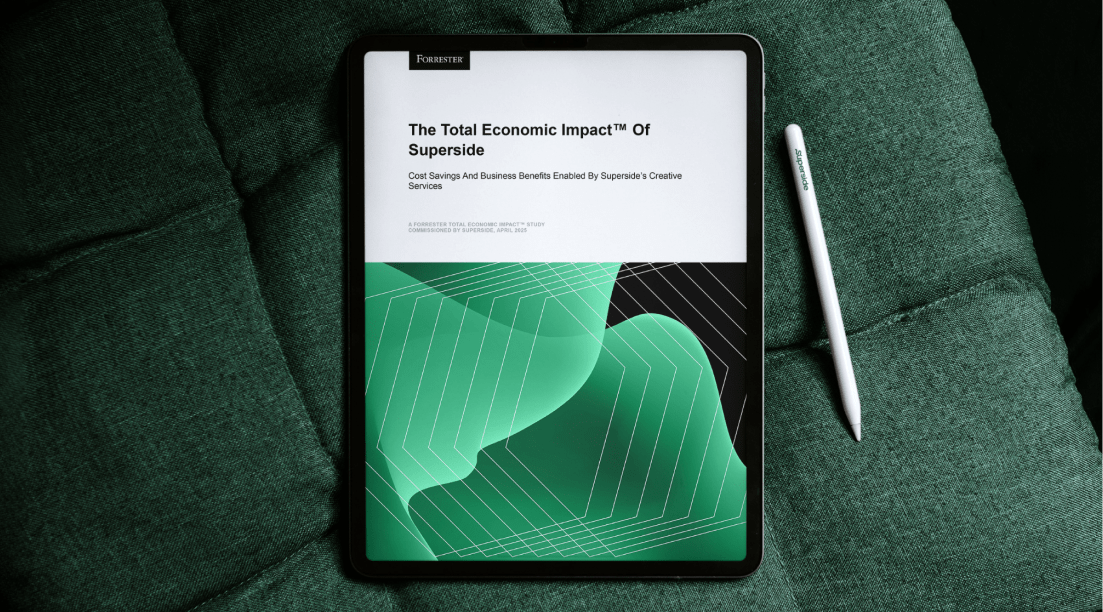
This approach also delivers real business results. A commissioned Forrester Total Economic Impact study found that a Superside subscription delivers a 94% ROI and pays for itself in under six months. For marketing leaders under constant pressure to increase output, protect brand consistency at scale and justify every dollar of budget, that's a powerful outcome.
If you're ready to produce more without losing your brand's essence, book a demo to see what consistency at scale looks like with Superside.
Consistency at scale is a system, not a sacrifice
Fast-growing enterprises often face a difficult choice: volume and scale, or quality and consistency. Increase output, and brand dilution follows. Protect consistency and quality, and creative friction and bottlenecks become inevitable.
The good news is that this trade-off only exists when teams rely on manual processes and static brand guidelines. With the right foundation, which includes a single source of truth, scalable design systems, design operations, brand-trained AI and human expertise, your team can achieve volume, scale, quality and consistency.
That's what Superside is built to deliver. At every step, from briefing to QA, we remove the hard parts and make space for better work. We don't just use AI for speed. We embed it across the entire creative process to make the work better and more consistent.
Brand Brain, the AI layer inside Superspace, learns from your briefs, feedback and past work, so each creative asset reflects what your team thinks and creates right now.
If it's time to see how your team can deliver quality creative at high volume without going off-brand, book a demo with Superside.
FAQs


What 200+ creative leaders had to say
There’s a reason we called it the Overcommitted Report.
But, is there light at the end of the carpal tunnel?

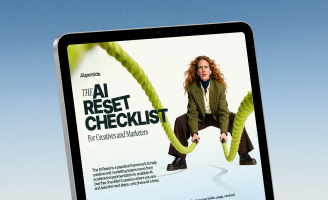
Stuck in AI testing mode?
Get a quick, practical checklist
for implementing AI across your team.



The data speaks for itself
According to a Forrester Total Economic Impact™ study, Superside delivers a 94% ROI and pays for itself in six months.


Increase your creative capacity
Let your in-house team reach for the stars,
while Superside keeps your day-to-day creative needs
at an industry-leading level. Ready to scale?