Anna is a Senior AI and SEO Content Strategist at Superside. She builds AI-powered workflows for content production and SEO, helping enterprise teams turn manual processes into scalable systems. When she's not automating something, she's probably figuring out how to make AI and human expertise work better together.
AI adoption has moved faster than the rules that govern it. Creative teams are already using AI to ideate, generate and scale work, but many are still figuring out how to do that without weakening brand consistency, exposing valuable IP or compromising the creative judgment that makes their work distinctive.
Traditional AI governance frameworks help organizations manage technical, legal and data risk. Creative teams need another layer: practical guardrails for how AI is used in the work itself, from the tools teams choose and the brand context they provide to where human review and accountability sit.
Finding a design partner can look deceptively simple. Find a team whose work you like, check that you can afford them and make sure they can meet your deadlines. But if you're looking for a partner who'll support your creative team for years to come, there's much more at stake.
The right partner plugs into how you work and gives you access to specialist skills and capacity when you need them most.
Hiring adds capacity, but it doesn't remove the friction. Below you'll find how to spot creative operations debt in your team, what to check on your own side and how to get better output from the creative partnerships you already have.
Most marketing leaders facing creative production burnout assume the answer is hiring. Add another designer, bring on a contractor, expand the team.
Building creative operations in-house works. Many enterprise teams scale their creative output successfully with the right frameworks, tools and phased approach.
But it means hiring the ops team, buying and configuring platforms, building brand intelligence infrastructure and spending multiple quarters reaching operational maturity.
The creative bottlenecks in your workflow keep growing. Leadership expects you to support more channels, more formats and faster campaign cycles, yet your team hasn't grown in years.
You're far from alone. Our research shows that 4 in 5 marketing and creative teams are at or over capacity, and seven in ten creative leaders say their internal teams are burning out. At the same time, there's little sign the pace of marketing is slowing. If anything, the demand for more creative output is only speeding up.
If your creative team is producing more work than ever but missing more deadlines than ever, the issue isn't talent; it's infrastructure. You're running a growing creative operation on ad hoc processes, scattered briefs and tribal knowledge.
At some point, that breaks.
You're managing more channels, formats, markets and variations than ever before. At the same time, your team is expected to keep every asset on-brand, usually without additional budget or headcount.
For a while, the team holds both volume and consistency together by sheer effort. Your best designers stay late, and you personally eyeball every asset before it's sent off. Then the workload grows, deadlines tighten, and you simply can't do all those last checks yourself anymore.
Think about who, or what, now develops your brand's creative assets. Your in-house creatives, a trusted agency or perhaps a few freelancers might still be involved. But if you're like most enterprise teams, a growing share of your content now comes from an AI model.
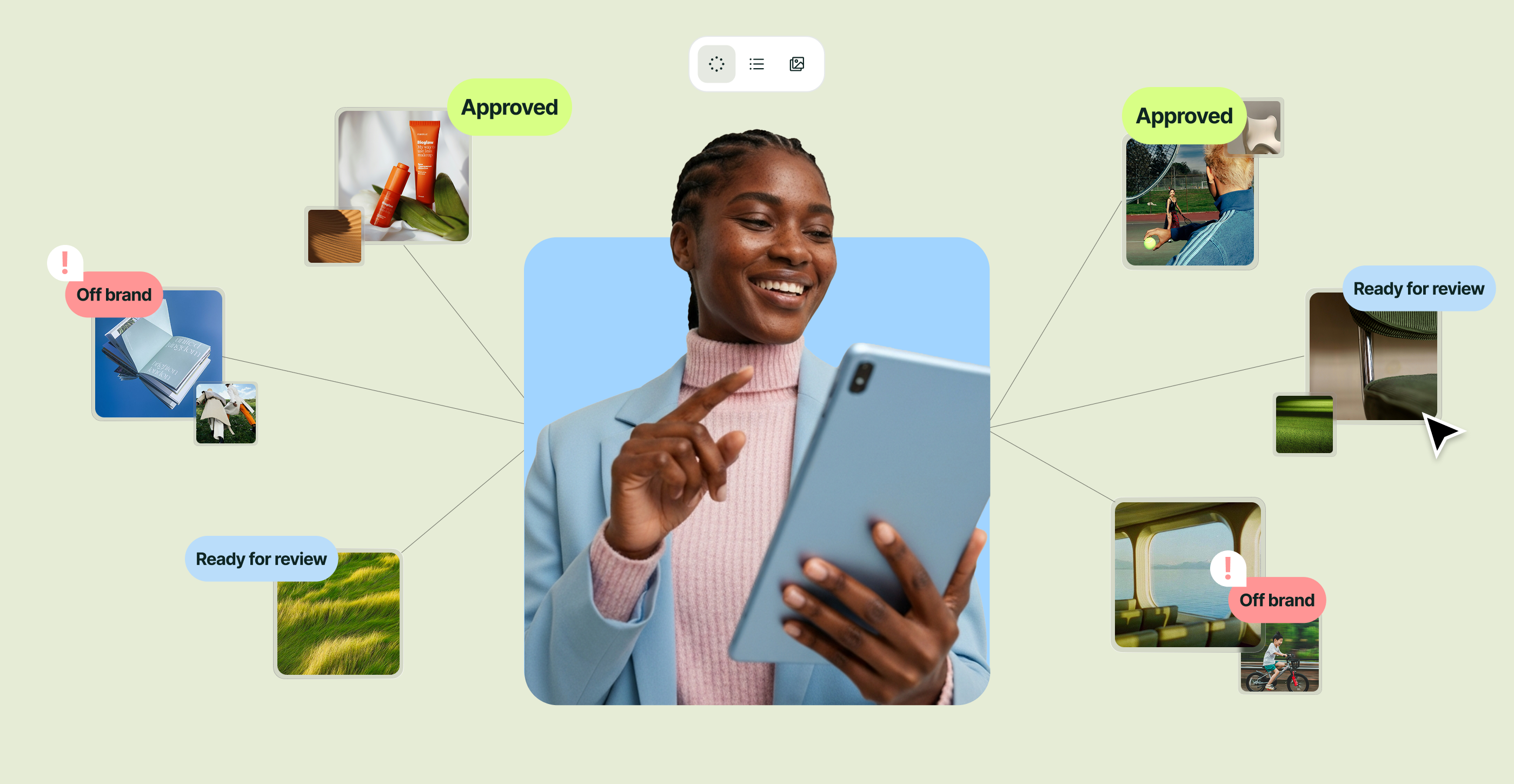
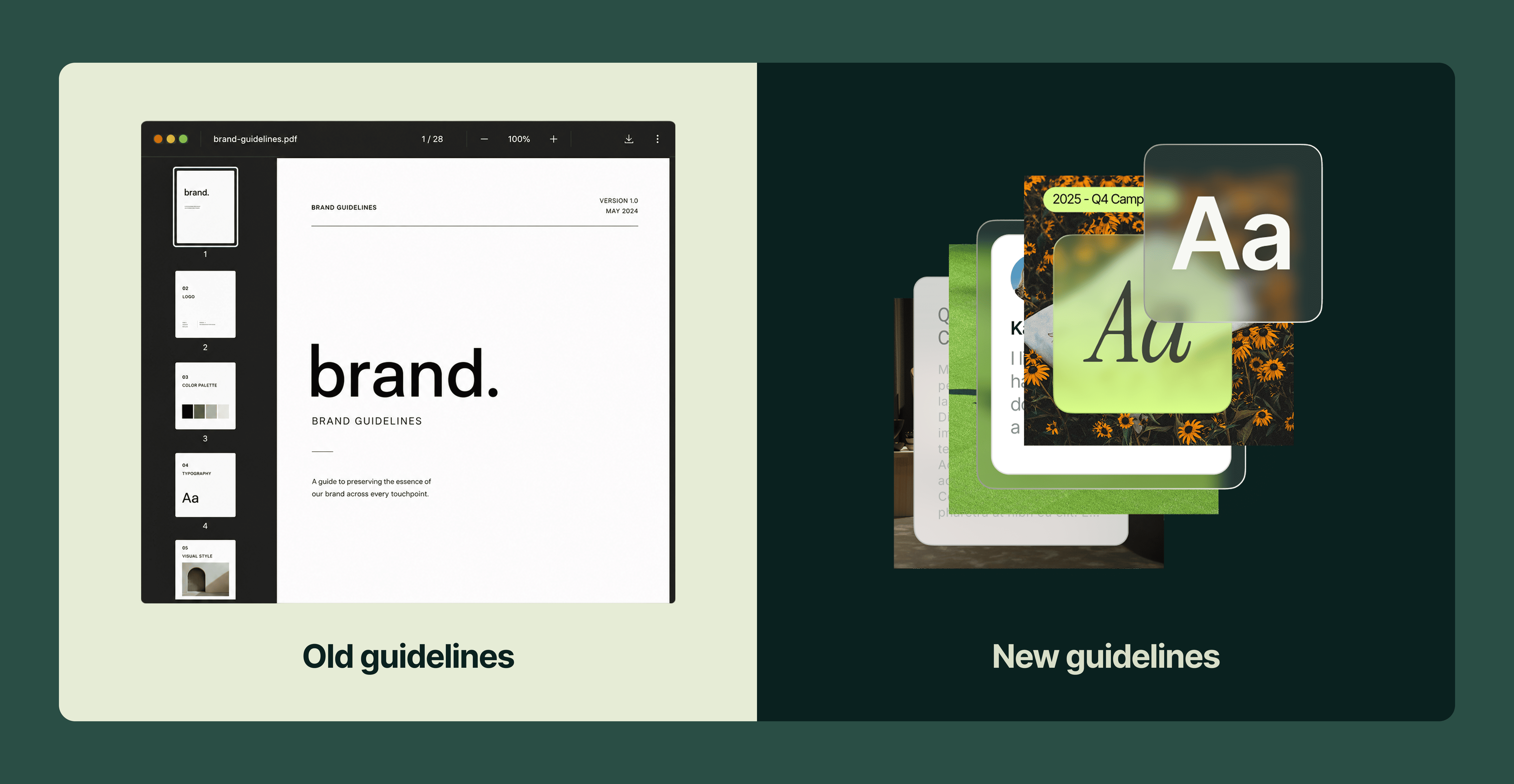
The problem? People are no longer the only ones who need to understand and apply these style guides, and machines interpret things very differently from humans. A line of text that reads "our blue is warm and optimistic" means something to a designer, but very little to an AI model that thinks in hex values.