

A product design consulting partner helps you answer what digital product to build, for whom, how it should work and how to scale. This guide covers the service types, costs and engagement models, then ranks 11 top design partners for 2026. Superside takes the top spot, thanks to our AI-native experts and AI systems working together on product design.
Design used to be the pretty bow added at the end of a product project. Over the last few years, that has changed.
Digital products are now one of the main ways companies deliver value, and the quality of the experience directly influences adoption, retention and revenue. A confusing signup flow or messy dashboard doesn't just annoy users. It quickly eats into profits.
The business case is strong. McKinsey's 2018 research on the business value of design found that top-quartile design performers achieved 32 percentage points higher revenue growth and 56 percentage points higher shareholder-return growth than their industry counterparts over five years, roughly twice the rate. And in PwC's 2025 Customer Experience Survey, 52% of consumers said they'd stopped using or buying from a brand because of a bad experience with its products or services.
If you're developing a new product, the right design consultants can help you connect product design to performance. The best partners look beyond good-looking screens to help you make strong strategic decisions.
In this guide, we explain what product design consultants do, when external help makes sense, how the main engagement models compare and what you can expect to pay. We also rank 11 product design consulting firms for 2026 and take a closer look at why Superside leads the list.
What is product design consulting?

A product design consulting partner provides specialized knowledge on how to build or improve digital products to make them genuinely useful, intuitive, on-brand and scalable. The discipline combines strategic direction with practical design expertise.
The word "consulting" is important. While a production-only team works from a defined brief and delivers the relevant screens, a consulting partner helps you work out what to build, who it's for, how it should work and what will create the most value before the design process kicks in.
A strong product design consultancy supports research, user experience (UX), user interface (UI) design, prototyping and design systems, and ties its output to a clear product and business rationale.
Note: in this guide we focus on software, apps and web-based products rather than physical products or hardware design.
The partners listed here create user flows, components, patterns, prototypes and implementation-ready documentation. They don't all turn those deliverables into code, so they're not all product development companies. We flag which is which below.
What product design consultants do
The level of consulting you can expect will depend on your product's maturity and the problem you're trying to solve. That said, a good partner should be able to work closely with you on the following.
- Product and design strategy. Connecting user needs, commercial goals and technical constraints. The consultant challenges assumptions, defines priorities and helps your team agree on direction.
- Product design audits. A structured review identifying friction, inconsistencies, accessibility gaps and opportunities in an existing product. The outcome should be an action plan with clear priorities.
- Research and discovery. Interviews, usability testing, behavioral data and market research, so the product answers real user needs.
- UX design and user flows. Following UX design best practices to map user journeys, information architecture and interactions.
- UI design. The product's visual and interactive layer, from layout and hierarchy to states, components and motion.
- Prototyping and concept validation. Clickable prototypes so you can explore and test ideas before investing in full-scale development.
- MVP design. Defining and designing the smallest credible version of your product or feature, so you can validate the idea and gather real feedback.
- Design system creation and evolution. Reusable components, patterns, tokens and documentation to help internal and external partners maintain consistency as the product scales.
- Developer handoff. Specifications, component states, user flows, accessibility guidance and implementation-ready files for your engineering team.
For a fuller view of the skills involved, see our guide to the different types of designers and our overview of design strategy.
What a product design consulting process looks like
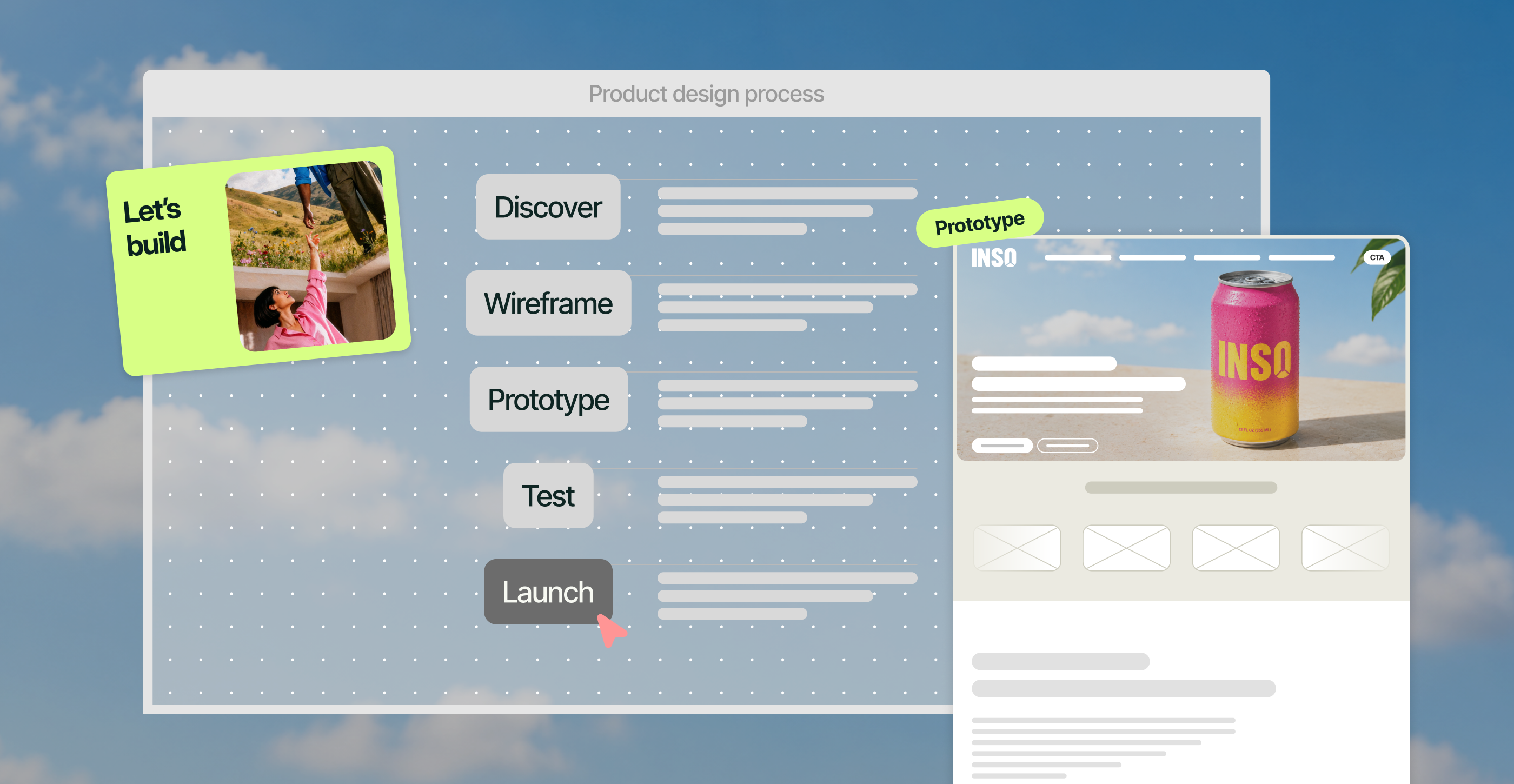
Every consultancy has a slightly different approach, but the best processes include these five steps.
| Step | What happens | What you get |
|---|---|---|
| Discover the context | Review of your product, concept and brand, plus research into users, business goals, analytics and technical constraints | A UX or product design audit for existing products, or an opportunity map for new ones |
| Define the problem and priorities | Research translated into a problem statement and success criteria | A prioritized roadmap that says which problems are worth solving now |
| Explore and prototype | User flows mapped, concepts developed, multiple directions tested | Prototypes and a chosen direction |
| Validate and refine | User feedback, stakeholder input and performance data applied | A refined, evidence-backed design |
| Document and hand off | Design files, specifications and system documentation prepared | Enough context for your engineers to build accurately |
Step two is where a consultant should earn the title. They should help you decide which problems are worth solving, which can wait and what would make for a genuinely better product.
And a good partner doesn't disappear at handoff. Expect them to make time for questions, support iteration and work closely with your team as the product nears launch.
Why product design consulting matters: the business case
Strong design doesn't guarantee a successful product. It does make it easier for users to understand your product's value, complete key tasks and come back.
Beyond McKinsey's finding that design leaders outgrow their peers, more recent research helps explain the advantage. In Maze's 2025 survey of 800 product professionals, organizations that embedded user research into product development and decision-making reported improved usability (83%), higher customer satisfaction (63%), better product-market fit (35%) and increased customer retention (34%).
In practice, strong product design delivers value in four areas:
- Less rework. Good research and validation catch weak assumptions before the expensive design and development work starts.
- Faster alignment. A structured roadmap gives product, design, marketing and engineering a shared direction and clearer decisions.
- Better user outcomes. Stronger flows and interfaces improve usability, satisfaction and product-market fit, as the Maze research shows.
- More scalable design. Strong design systems help teams maintain consistency as the product grows across features, platforms and markets.
When to hire a product design consultant
Some companies don't need outside help. If your in-house team has the strategy, research capability, specialist skills and capacity, it may be simplest to keep things in-house.
External support becomes genuinely valuable when one or more of these applies:
- You're launching a new product or major feature and want to confirm there's a real opportunity before committing a large budget.
- You want to redesign an existing product and need an objective audit and a clear roadmap.
- Important metrics are moving the wrong way. Drop-off, low adoption, a string of support tickets or poor conversion suggests the user experience needs re-evaluating.
- Your team lacks a specialist skill. You don't have a senior UX strategist, researcher, accessibility specialist or design system expert, and you need one for a specific project.
- Demand has outgrown capacity. The roadmap keeps expanding but you don't have time to hire.
- The product has become inconsistent. Interfaces behave differently across platforms, or nobody's sure which design system components are current.
- Stakeholders can't agree on the problem. You need a neutral partner to bring structure and evidence.
If the problem is purely production volume, you may need extra design capacity rather than a fully fledged consultant.
Choose your model, in-house, consultancy or creative subscription
You can choose between three operating models. In practice, the best answer is usually a mix.
- In-house teams are closest to the product and the day-to-day decisions that make it a success. They're usually the right owners for the long-term roadmap. But hiring every specialist skill you'll need along the way is slow and expensive.
- Traditional consultancies and product design agencies bring senior expertise and a fresh perspective. They're excellent for discovery, audits and major redesigns, though they can be expensive, slow to start and disconnected from your day-to-day workflows.
- Creative subscription partners provide ongoing access to design capacity and specialist expertise. Superside, an AI-native creative agency that helped pioneer this model, can support product design alongside branding, web design, motion and other creative needs. This works well when demand changes month to month, or when the product experience needs to stay connected to the broader brand.
Many organizations keep a product design lead in-house and use an external partner for audits, design systems, specialized projects and capacity surges. Our article on choosing a design company can help you weigh the options.
How to choose a product design consulting firm

A strong portfolio can get a firm onto your longlist, but it shouldn't be the only factor. Remember, this isn't just about creating designs. Use these questions to narrow your options.
1. Do they understand our problem?
Look for a partner that asks about your market, product vision, business goals, constraints and success measures before talking outputs. If they jump straight to deliverables, they may be selling production capacity rather than consulting.
2. Can they show relevant outcomes?
Review work for similar companies, products, audiences or levels of complexity. Ask what changed because of it. A beautiful case study is useful, but evidence of better usability, adoption, conversion or speed is stronger.
3. Is their process clear?
Make sure you understand the stages, decision points, deliverables and roles on both sides. Ask who'll do the work, how often you'll meet and how they handle scope changes.
4. Can they work with our engineers?
Check where their responsibility ends. If you need designs only, ask how they document behavior, edge cases, accessibility and component states for handoff. If you also need development, confirm they provide it.
5. Can they support consistency at scale?
Ask how they'll use your existing brand guidelines and design system. If you don't have these yet, ask whether they can build them.
6. Does the engagement model fit the work?
Fixed projects suit clear, bounded outcomes. Retainers and subscriptions work better for ongoing demand and roadmaps that shift. Hourly arrangements offer flexibility but require close management. Choose a model that supports both current needs and future growth.
7. Who owns the files and IP?
Confirm who'll own the source files, research, prototypes and design tokens. Also check which third-party fonts, images, plugins or tools carry separate licenses, since these add to the cost.
8. Will the relationship work in practice?
Meet the people you'll actually work with. Strong collaboration, clear communication, thoughtful pushback and shared quality standards matter more than a polished pitch.
Last note: before signing a contract, consider a paid pilot project such as an audit, a prototype or early testing of one feature. That gives you a realistic view of the process, the team and whether they're right for the job.
How much does product design consulting cost?
This is hard to answer, because a product audit, a redesign, an MVP and enterprise product development are all very different jobs.
Public directories confirm the range is wide. Clutch's 2026 product design pricing guide puts typical projects at $10,000 to $49,999 and US agency rates at $100 to $149 per hour, while complex, senior-led enterprise work sits well outside that range.
Consultants typically price through one of four models.
| Model | Best for | Watch out for |
|---|---|---|
| Hourly or day rates | Consulting, workshops and evolving scopes | Hard to forecast the final project cost |
| Fixed project fees | Clearly defined audits, prototypes, MVPs or redesigns | Check what's included, how many research and testing rounds are planned, and what happens when scope changes |
| Retainers | Continuous product work with a senior consultant or team | You may pay for time you don't use |
| Subscriptions | Ongoing access to a broader creative team, especially when product design sits alongside other creative needs | Confirm how capacity flexes up and down |
The biggest cost drivers are research depth, the number of user groups and platforms, product complexity, design system requirements, accessibility needs, timeline, stakeholder load and whether development is included. Ask about these as you decide which model and partner to use.
The best product design consulting firms in 2026
Once you know which model could work, it's time to build a shortlist. We assessed the companies below on digital product strategy, product design experience, relevant work, enterprise fit and the types of projects they suit best.
| Firm | Best for | Scope |
|---|---|---|
| Superside | Enterprise and scaling teams wanting senior expertise plus flexible capacity and broader creative support | Design and handoff |
| IDEO | Large organizations with ambiguous, human-centered design challenges | Design and innovation |
| frog | Enterprises connecting product design to broader transformation | Design plus technology via Capgemini |
| Work & Co | Major brands needing a flagship product with design and engineering from one partner | Design plus build |
| ustwo | Teams wanting a collaborative studio with strong discovery credentials | Design plus build |
| Fantasy | Enterprise brands building flagship consumer products and AI experiences | Design plus engineering |
| Clay | Technology companies refreshing a product and its brand identity together | Design plus build |
| Ramotion | Growth-stage and established tech needing product UX, UI and branding together | Design plus build |
| Blink UX | Complex products with high research requirements and many stakeholders | Research-led design |
| AJ&Smart | Focused discovery, strategy workshops and rapid validation | Design sprints and facilitation |
| Fuego UX | B2B SaaS, complex software and emerging AI products | Design plus front-end build |
1. Superside

Superside is the world's largest AI-native creative agency. We pair AI-native experts with AI systems, so ambitious brands get standout product design that stays consistent at scale and measurably performs, at a scale traditional agencies struggle to match.
Our digital product design services cover product consulting, design audits, UX and UI, prototyping and concept validation, MVP design and design system creation and evolution, delivered through flexible Flex team, Dedicated team or Custom plans rather than a slow, one-off engagement.
What sets us apart: our integrated approach is what puts us at the top of this list. At Superside, product design sits alongside many other creative services. That breadth helps enterprise customers create coherent experiences across their products and every other customer touchpoint.
Our AI-native experts and AI systems mean routine tasks such as layout and component variations happen at speed, while our AI-native product designers and other world-class creative minds oversee every deliverable.
When you make Superside your AI-native creative agency, you'll also own the product design source files, design tokens, research materials and other deliverables.
Best for: enterprise and scaling teams that want AI-native product design expertise, flexible plans and broader creative support from one full-service AI-native creative agency.
2. IDEO

IDEO is a global design and innovation company known for helping popularize human-centered design over nearly 50 years.
Its work combines design, systems thinking and creative experimentation across strategies, products and services. It has worked in just about every product category and counts many of the world's most innovative companies as customers.
What sets it apart: IDEO is strongest at the front of innovation, where the problem is ambiguous and the organization needs research, facilitation and multidisciplinary thinking to work out what to create. Worth knowing: the firm restructured significantly in 2023, cutting around a third of its headcount and closing its Munich and Tokyo studios, and now operates from five locations.
Best for: large organizations that want a human-centered approach to complex product design challenges.
3. frog

frog, part of Capgemini Invent, is a global design and innovation consultancy working across products, services, brands and large-scale transformation. Its wider network adds technology, data and business transformation capabilities to the design offer.
What sets it apart: frog can connect product and service design to broader enterprise reinvention. Its scale and multidisciplinary bench suit programs spanning multiple markets, channels or business units.
Best for: enterprises that want an established consultancy with a human-centered approach and technology muscle behind it.
4. Work & Co

Work & Co, part of Accenture Song since early 2024, is a digital product company combining strategy, design and technology.
It works on high-profile web, mobile, commerce and platform experiences, with teams that include UX designers, product developers and other specialists.
What sets it apart: Work & Co is known for putting senior, hands-on product and technical talent in the same room.
Best for: major brands that want a flagship digital product and need both design and engineering from the same partner.
5. ustwo

ustwo is an employee-owned digital product studio, founded in 2004 and held by an employee ownership trust since 2022, with more than 20 years of experience taking products from discovery to launch.
Its cross-functional teams cover research, strategy, design and engineering, with a strong focus on consumer products and financial services.
What sets it apart: ustwo combines a people-first design culture with full delivery. Its make-test-learn approach helps teams validate ideas, refine them through research and turn them into working products.
Best for: organizations that want a collaborative design and development studio with strong discovery credentials.
6. Fantasy

Fantasy positions itself as an AI-native digital product design agency and an innovation partner to major global brands, developing enterprise-scale digital products, AI experiences and flagship consumer platforms.
What sets it apart: Fantasy pairs high-end interface design with product strategy and engineering. It's particularly strong when the brief calls for an ambitious, future-facing experience meant to stand out in a crowded market.
Best for: enterprise brands building flagship consumer products, AI experiences or category-defining platforms.
7. Clay

Clay is a San Francisco branding and UX design agency. Its services span strategic planning, research, UX and UI, prototyping, design systems, branding, web design and development.
What sets it apart: Clay treats brand and UX as connected disciplines, which makes it a strong option for companies refreshing a digital product and its brand identity at the same time.
Best for: technology companies that need a product design firm with real brand and visual identity experience. It's one of the best UX design agencies around.
8. Ramotion

Ramotion is a product and brand design agency with more than 15 years of work across brand identity, marketing websites and UI and UX for web and mobile products, often for SaaS, enterprise platforms and growth-stage technology companies.
What sets it apart: Ramotion works at the intersection of product and brand, which is useful for teams that need a consistent identity across the interface, the marketing site and everything else.
Best for: growth-stage and established technology companies that need product UX, UI and branding from one agency.
9. Blink UX

Blink UX, an Mphasis company since 2021, is a product design firm combining strategy, research and design for organizations in technology, financial services, healthcare and other complex sectors, with AI acceleration now front and center in its pitch.
What sets it apart: Blink's evidence-driven approach puts research at the center of product decisions, moving quickly from concepts and customer research into experience design and validation.
Best for: enterprises with complex products, high research requirements or multiple stakeholder groups.
10. AJ&Smart

AJ&Smart Studio is an independent product design and strategy studio in Berlin. The wider AJ&Smart business is best known for Design Sprints, facilitation training and structured decision-making methods.
What sets it apart: AJ&Smart is a strong facilitator for teams that need to align quickly, test an idea or move a stalled product decision forward. Note that the studio works by appointment and takes on client product work selectively, so treat it as a specialist engagement rather than an always-available agency.
Best for: focused discovery, product strategy workshops, rapid validation and teams that want to build their own facilitation capability.
11. Fuego UX

Fuego UX is a research and design agency focused on digital products, based in Colorado with a presence in Brooklyn.
Its services include UX research, product strategy, AI design, UI design, branding, audits, prototyping, design systems, embedded talent and front-end development. It often works with B2B SaaS customers.
What sets it apart: Fuego combines research-led consulting with flexible embedded support, and focuses on AI-augmented experiences and complex professional workflows.
Best for: B2B SaaS, complex software and emerging AI products that need strong research and UX expertise.
Superside for product design consulting, a closer look
If you've landed on this page, chances are you need more than strategic guidance and extra product design capacity. You likely need a creative partner that can connect product design to the rest of your brand, marketing website, lifecycle communications and every other customer touchpoint.
That's where Superside has an edge over the other product design companies on this list.
Our product design services sit within a broader AI-native creative agency and DesignOps function, and the offering includes product consulting, audits, UX enhancements, prototyping and concept validation, MVP design and design system creation and evolution. Because our Creative Leads provide strategic input across the product design lifecycle, we can help you challenge assumptions and surface opportunities.
The collaborative approach pays off. Our customers see an average 35% reduction in turnaround time through component-based design, 98% on-time delivery and conversion-rate increases of more than 30% after UX and UI optimization.
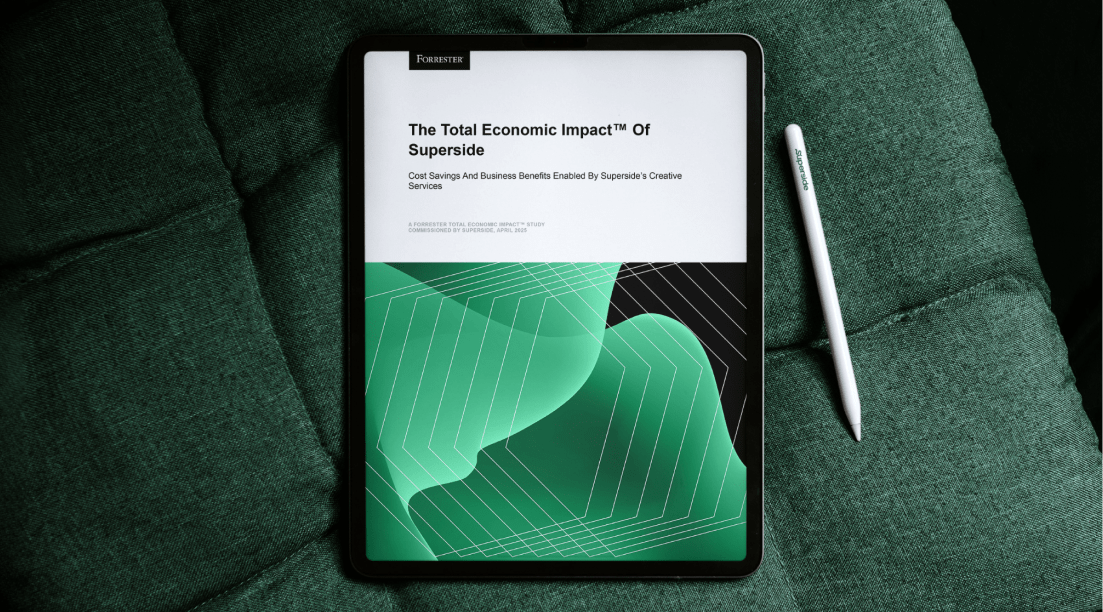
A Total Economic Impact study commissioned by Superside and conducted by Forrester Consulting (April 2025) also found that a composite organization achieved a 94% ROI over three years and $4.16 million in total benefits, with the subscription paying for itself in six months.
Three qualities make our model especially useful for enterprise teams.
- Integrated creative expertise. We connect product design outputs directly to your branding, web design, landing page design, motion and ad campaign work. The result is a more consistent brand experience and fewer vendors for your team to coordinate.
- AI-native experts and AI systems. AI accelerates routine tasks such as layout variants, UI component variations and content assistance, while our AI-native experts remains responsible for strategy, craft and quality. Being AI-native means AI isn't just powering individual tools. It's embedded across the entire creative model, from how teams are trained to how brand knowledge compounds over time. That's why there are real creatives behind every output approach: great creative still needs great creatives.
- Flexible ways to work. We offer Flex team, Dedicated team and Custom plans that match how you work. That fits the hybrid model most teams want: an in-house lead plus an external partner for extra support and specialized work.
When you partner with us, you also own the product design files and IP, including Figma source files, design tokens and research materials, with no ongoing license fee.
One distinction is important: we're an AI-native creative agency, not a product engineering shop. We deliver design-side systems and implementation-ready handoff rather than shipping front-end code. Our design systems are design deliverables: components, patterns, tokens, documentation and clear specifications for your engineers to build from.
Scale your product design with Superside
The right product design partner should help you make better decisions, give your team the capacity to act on them and make the product experience better and more consistent as design scales.
Superside brings those pieces together as one AI-native creative agency.
You get AI-native product design experts plus access to our 500+ creatives in 67 countries, so your product connects to every other customer touchpoint. Crucially, you own the files and IP, while your team owns the engineering roadmap.
If that sounds like what you're after, book a call to discuss how Superside can add strategy, specialist expertise or flexible product design support to your team.
FAQs


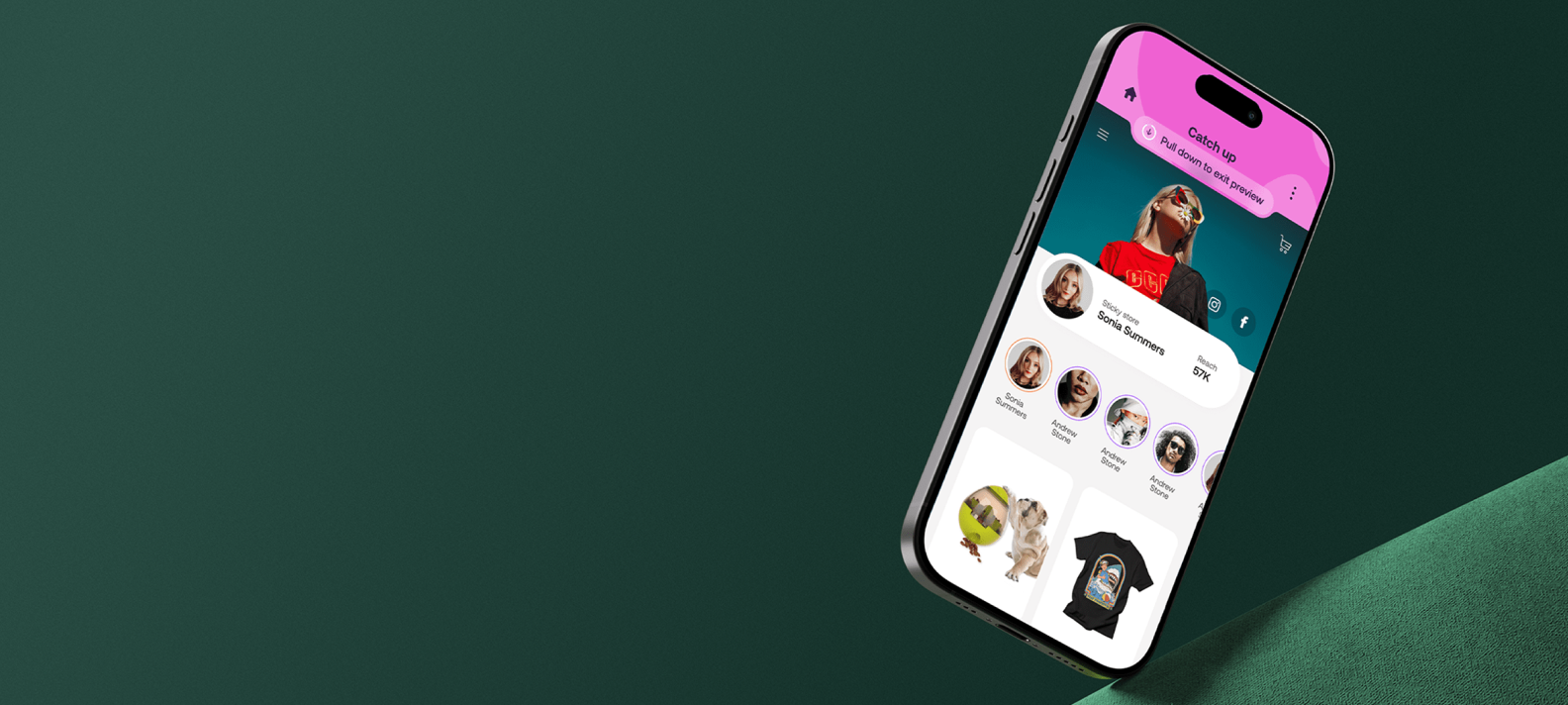
Design products people love
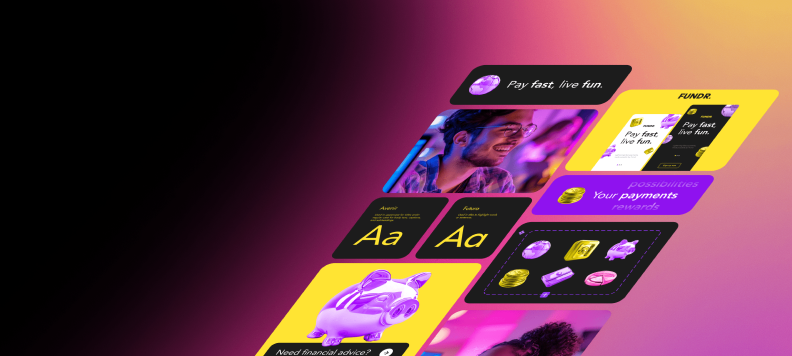
From UX flows to final UI, our Product Design
experts craft seamless experiences that drive
engagement and retention.
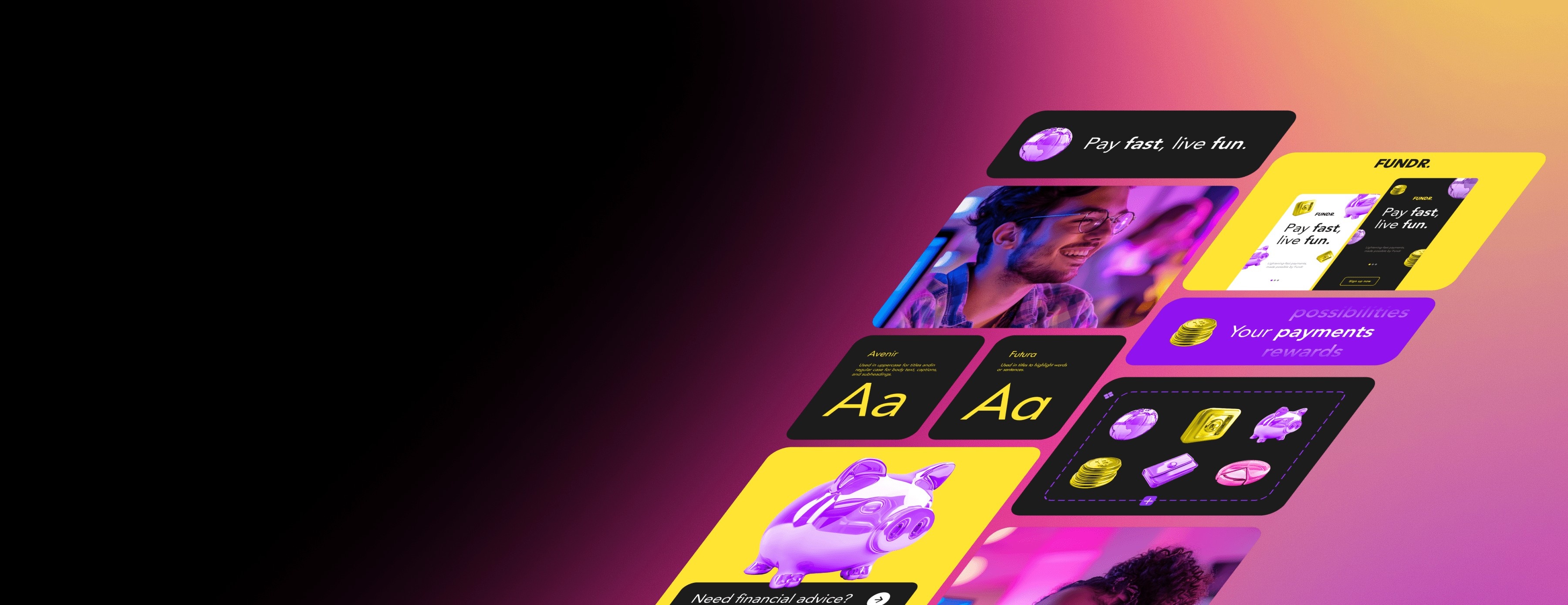
Build once. Scale everywhere.
Launch faster, cut rework and double
design-to-dev alignment with
smart systems built for scale.


Elevate design with AI and human creativity
At Superside, our top-notch creatives work with AI.
We use the latest tech to your brand stand out,
scale faster and optimize conversion rates.
Want to learn more?
The data speaks for itself
According to a Forrester Total Economic Impact™ study, Superside delivers a 94% ROI and pays for itself in six months.
Your creative team's creative team
Choose the world's leading AI-powered creative service
and get high-performing ads, videos, experiences and
more at scale, on your schedule and to your standards.