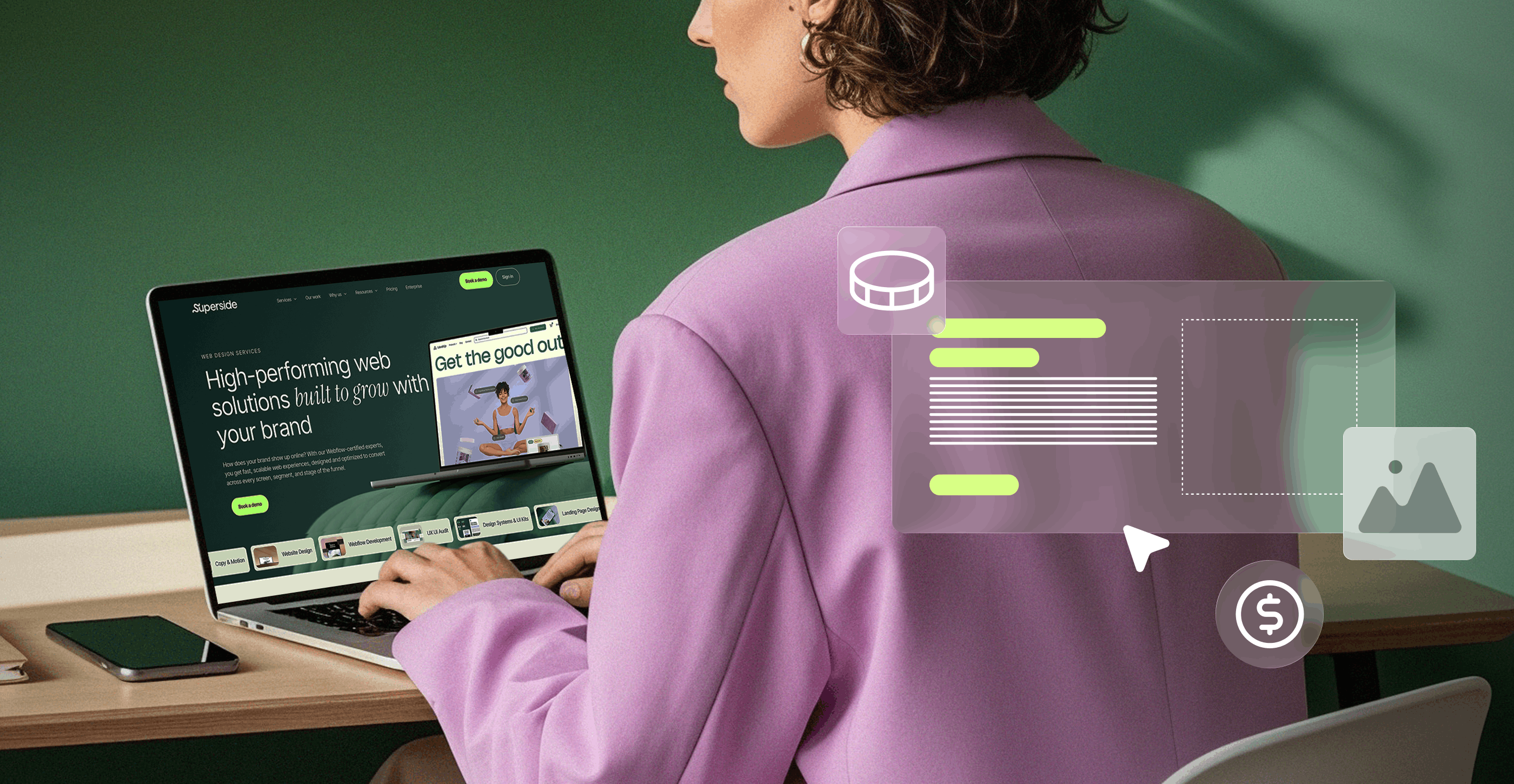



SaaS products constantly change. New features and updates roll out regularly, which makes good design systems critical. This article covers what design systems for SaaS look like and how they help drive consistency, scalability and speed. Get stuck into a list of top enterprise partners, and learn why Superside should be your go-to choice.
SaaS companies evolve faster than almost any other category. New features roll out regularly, user feedback drives frequent updates and UIs tend to grow across a constantly shifting ecosystem of surfaces.
Without a unified design system, chaos is inevitable. Product, brand and marketing teams work from different asset libraries, and small mismatches accumulate across websites, apps, campaigns and in-product experiences. The result is a fragmented brand presence that chips away at the trust SaaS buyers expect.
A design system custom-built for the speed and scale SaaS companies require is the only way to win. Think unified design rules, reusable component libraries, aligned design tokens that sync product and marketing outputs, and scalable patterns that work across every surface. These systems speed up production cycles and help brands to deliver strong, consistent experiences.
Research confirms the efficiency gains: Design systems deliver 34-50% better efficiency for design teams and 25-47% improved efficiency for development teams. When teams build from a shared component library, they save hundreds of hours annually, time better spent on innovation than on reinventing buttons.
Today, we break down how design systems save time and make life easier for SaaS teams. We also profile the world’s best partners, all of which already help high-growth and enterprise SaaS teams scale design the right way.
Why design systems matter for SaaS
The SaaS industry is like no other. It’s complex, fast-paced and exhilarating, but it also comes with a unique set of challenges. When product design teams work at breakneck speed, everyone must be on exactly the same page to ensure the design and development process stays aligned with user needs and business goals.
Here’s a closer look at what the SaaS industry requires and why design systems matter:
1. SaaS products evolve constantly
SaaS companies with strong DevOps practices update their products far more frequently than traditional software companies. In fact, big tech leaders such as Amazon and Airbnb perform hundreds of thousands of deployments per day, helping them deliver new products and achieve shorter development cycles.
But the SaaS industry’s fast pace creates a fundamental problem. Products tend to change so fast that their interfacesquickly become messy and inconsistent, especially when there aren’t standardized elements and UI components to keep everything (and everyone) aligned.
Think about it: If your product team delivers 50 new features every year and each feature introduces 3-5 new design patterns, you’re creating 150-250 potential points of visual inconsistency every year.
Without a robust design system, updating these elements manually becomes a tough ask. Small inconsistencies (a missed button style here, a mismatched color there) start to add up, until your interface becomes a patchwork of conflicting elements that users notice.
2. SaaS teams are cross-functional and fast-moving
Modern SaaS products are built by cross-functional teams. Designers, researchers, marketers and engineers collaborate on visual, experiential and product-related assets.
While this approach is necessary, it’s complex and fraught with challenges. Research shows that nearly 75% of cross-functional teams are dysfunctional, with each team creating designs in isolation.
A design system directly addresses the inconsistencies that typically result. How? By acting as a single source of truth.
When every team member references the same component library, uses design tokens for aspects like color, spacing and typography, and follows the same design patterns, seamless collaboration and visual consistency become much easier to achieve.
3. Marketing must align with product, not compete with it
In SaaS, the product interface is the primary place customers experience your brand. Your marketing materials must echo this interface and use the same visual language to create a unified customer experience.
Marketing visuals should reflect real interface patterns, ads should use the product’s color palette and typography, and demo videos should showcase genuine UI components, not Photoshopped approximations.
Leading SaaS development companies and brands recognize this reality and build design systems that ensure brand and product consistency across every touchpoint.
4. Global SaaS needs global consistency
Enterprise SaaS companies operate across dozens of markets, languages and regions simultaneously.
Design teams don’t just manage the visual assets on a single website. They manage an ecosystem of localized interfaces, A/B test variants, product surfaces, marketing campaigns and more ,including region-specific adaptations such as video dubbing to support multilingual audiences. Without unified design governance, this complexity quickly spirals out of control.
Localization, in particular, introduces unique design challenges. A carefully crafted design system anticipates these variables and provides visual elements and components that gracefully adapt, rather than dilute the brand.
5. Design systems drive measurable UX and performance improvements
Beyond organizational benefits, design systems can also deliver concrete improvements to the SaaS product’s UX and technical performance. Design systems can, for example, reduce page weight, load times and bounce rates through optimized component libraries.
When users encounter consistent interaction patterns (e.g., buttons that always behave the same way), they also understand how the product and its features work more quickly and get things done more easily.
A well-structured enterprise UX design system also ensures a clear visual hierarchy through consistent typography scales, spacing systems and color contrast ratios. Users can instantly distinguish primary actions from secondary information, which results in a more intuitive, efficient and low-friction experience.
What a SaaS-focused design system requires
A true SaaS-grade design system isn’t a 20-page brand guideline PDF on Google Drive. It’s a living, breathing system with code, documented patterns, component libraries and governance processes that help teams to create consistent UI/UX at scale.
Here’s what separates truly useful design systems for SaaS companies from surface-level documentation:
Tokenized visual foundations
Design tokens are named style values (like “primary blue” or “small spacing”) that keep a product’s look consistent across design and development. When a token’s value is updated in the design system, the change can be easily rolled out across all platforms where that token is used.
For example, when your CMO decides to refresh the brand palette, you can update all relevant tokens in a single pass and apply the changes across 50+ product surfaces simultaneously. Without tokens, that same update requires manually searching through thousands of style declarations, which costs you valuable time and resources.
Modular UI component libraries
Modular component libraries provide team members with ready-made UI components so they don’t have to build them from scratch.
Instead of recreating buttons, inputs, cards, modals, navigation and forms for every new feature or interface, they can build components once and configure them for specific contexts. This, of course, saves time. In fact, pre-built components can reduce development time by up to 50%.
Well-structured, comprehensive libraries include atomic elements (e.g., buttons, inputs, toggles), molecular patterns (e.g., cards, form groups, navigation bars) and product-specific UI modules (e.g., dashboard widgets, onboarding flows, billing interfaces).
Clear engineering handoff matters too. Components should include solid documentation, code samples and technical details so developers can use them without additional clarification from designers.
3. Documentation designed for adoption
Documentation is where most design systems for SaaS companies fail. Teams build sophisticated components, then create documentation that’s either too sparse to be useful or too dense for anyone to read.
Effective documentation makes it easy for all team members to use the design system. This means:
- Clear rules explaining when and how to use components.
- Do/don’t examples that show proper vs. improper use.
- Practical usage guidance for common scenarios.
- Code references with copy-paste snippets.
- Figma files with production-ready components that match the coded versions exactly.
- Shared libraries that are accessible to all relevant teams.
The goal is to make things easier, not harder. If using the design system helps teams build new features faster than doing things from scratch or working around it, people will naturally choose to use it.
4. Governance models
A design system without governance is like a library where no one puts books back in the right place. It might start organized, but soon it becomes hard to find what you’re looking for.
Strong governance defines how changes to the system are:
- Proposed, e.g., through intake forms or team channels.
- Approved, e.g., through product, engineering and design team meetings.
- Tested, e.g., by validating components in real use cases.
- Rolled out, e.g., with clear guides for teams adopting the updates.
DesignOps leaders are the backbone of this process. They should manage requests, guide decision-making, keep documentation up to date, track how teams use the system and ensure it grows alongside the product.
5. Multi-surface systems (product and marketing)
Many design systems fail when they only focus on product UI and ignore marketing.
You might have seen this movie before: The product team builds a polished component library and sticks to using this. Then, marketing launches a new landing page that bears no resemblance to the product, their social campaigns use off-brand colors and their newsletters have a completely different visual design.
This disconnect ultimately damages trust. If your SaaS product doesn’t align with all your other touchpoints, prospects are likely to lose confidence before the trial ends.
To prevent this scenario, a unified multi-surface design system should cover:
- Product UI (e.g., dashboards, forms and settings).
- Elements for marketing assets (e.g., emails, ads and social media posts).
- Website design elements (think corporate site, product pages and blog).
- Sales assets (e.g., pitch decks, one-pagers and demo environments).
- Multi-market design (e.g., assets for localized sites and regional campaigns).
- Customer experience visuals (e.g., elements for help centers, onboarding processes and support interfaces).
While most design partners specialize in either product or marketing design, Superside is an expert in both. We also recognize that SaaS brands need true consistency across every touchpoint, which requires a foolproof design system that spans both product and marketing teams.
6. Scalability and future-proofing
Design systems aren’t one-and-done projects. They’re evolving products that must grow with your SaaS product. These systems must handle product and feature updates without breaking what’s already there, support different teams in their various pursuits, and work across the web, mobile app and wherever else your product lives.
As your user base, feature set and team count expand, the complexity of maintaining your product experience increases fast. Without a system that’s built to grow, teams end up redoing the same work, and things start looking and working differently across the product.
One way to overcome this challenge is to use AI, just like Superside does. We use the technology to quickly create component variations, generate variations for different regions and ensure consistency across hundreds of designs.
But the real differentiator is the people behind the tools. Highly experienced designers guide every decision, applying product thinking, brand judgment and craft to ensure the design system truly performs in practice. This is where a professional AI creative partner, like Superside, can be a lifeline.
Superside: The #1 partner for SaaS design systems
When SaaS companies need AI-powered design systems that unify their teams’ creative outputs, help them scale with ease and evolve as quickly as their businesses, they turn to Superside. Here’s why.
1. The Superside model: AI creative excellence at enterprise scale
As the world’s leading AI-first creative service, we combine top global talent with advanced AI workflows and consulting to deliver high-quality work fast and cost-effectively.
Unlike many traditional agencies that rotate teams based on project needs, Superside pairs our customers with dedicated pods of design system specialists, designers and project managers. These team members then integrate with your creative teams. This means no knowledge loss, no repeated onboarding and no misaligned deliverables.
Our cross-disciplinary teams are guided by Brad Frost’s “Atomic Design” methodology. This means they break product interfaces into foundational building blocks to make each component scalable, consistent and easy to use.
2. Why Superside is perfect for SaaS design systems
As your creative team’s creative team, we’ll deliver:
Real impact: The Vimeo story
If the value we bring still feels abstract, our Vimeo case study will help you understand what Superside offers.
The video platform approached us when their growing portfolio led to creative fragmentation across teams. This resulted in inconsistent visuals, design debt and a lack of shared standards, which slowed down production. With over 15 customer communication tracks, including onboarding, win-back and account action, Vimeo needed a design system that could handle complexity.
To address the challenge, Superside built a flexible, modular design system using the Atomic Design methodology. We created reusable components such as buttons, cards, footers and images that could be quickly assembled into various assets.
The design system provided built-in customization, such as adjusting card counts in emails, resizing images and switching between light and dark modes, so designers no longer had to start their designs from scratch.
The custom-built design system enabled Vimeo’s marketing and production teams to deliver faster. Elements used for an email template could be recycled into a website the next day, providing built-in scalability without sacrificing brand consistency.
- Best for: SaaS companies at any design system maturity level, from full-scale creation for startups and modernization of existing design systems to continuous evolution for mature platforms.
5 additional design system agencies for SaaS brands
1. Metalab

(Source: Metalab)
Founded in 2006, Metalab is a 160-person global design agency based in Victoria, Canada.
The agency believes in close partnerships with customers and typically collaborates on strategy, design and product development to deliver user-centered, scalable solutions. Its team combines design and engineering expertise to create design systems that work in practice.
Past customers include Headspace, Calvin Klein and Upwork.
Core strengths:
- Metalab specializes in creating modular, reusable components for web and mobile applications and in building scalable frameworks that support established products.
- Its approach emphasizes consistent branding and visual identity across all platforms.
- The agency is known for high-quality execution, meticulous attention to detail and UX refinements.
Best for: Companies with established products that need design and engineering expertise to scale, refine or rebuild user experiences.
2. Funsize

(Source: Funsize)
Founded in 2013, Funsize is an experience design agency based in Austin, Texas.
With a medium-sized team of designers, researchers and technologists, the agency partners with companies of all sizes to build modern digital experiences.
Funsize believes in collaborative, cross-functional partnerships that blend product strategy, UX, visual design and design technology.
Past customers include Volvo Cars, Dell and Adobe.
Core strengths:
- Funsize designs and operationalizes design language systems that unify visual identity, interaction patterns and component behaviors across web, mobile and other platforms.
- The agency combines service design, UX strategy, interaction design and design technology to create design systems that reflect real business needs and support full product ecosystems.
- It offers end-to-end design system creation and an approach that allows their designers to work directly with in-house teams to implement, refine and scale designs efficiently.
Best for: Companies in high-complexity sectors such as fintech, healthtech, automotive and AI.
3. BlinkUX

(Source: BlinkUX)
BlinkUX is a mid-market design agency with offices in Seattle, San Francisco, Boston, New York City and San Diego. The company follows an evidence-driven design process that combines strategy, user research and design.
Customers work with a dedicated creative team, supported by project managers, to ensure projects stay on track under expert oversight.
Past customers include NASA, Cisco and Cesa Credit Union.
Core strengths:
- BlinkUX specializes in scalable design systems for enterprise and complex platforms.
- It’s also known for delivering cohesive design systems for web, enterprise and streaming platforms.
Best for: SaaS companies that operate in regulated industries, handle sensitive data or serve sophisticated enterprise users who require research-backed design decisions.
4. Clay

(Source: Clay)
Founded in 2010, Clay is a 78-person design agency with offices in San Francisco, New York, Austin, Denver, Lisbon and Belgrade.
The agency offers flexible engagement models, including time-and-materials, fixed-fee or retainer arrangements.
Past customers include Nuant, Slack and Discover.
Core strengths:
- Clay specializes in scalable design systems for both consumer and enterprise software, with expertise in customizable components and robust data visualizations.
- It’s known for ensuring visual consistency across light and dark modes, a critical feature for many SaaS products.
- This team also provides comprehensive documentation and guidelines to support long-term product growth.
Best for: SaaS companies that handle complex data, require sophisticated visualizations or need systems that will work across different themes and platforms.
5. Ramotion

(Source: Ramotion)
Founded in 2009, Ramotion is a mid-sized design studio with offices in San Francisco, Los Angeles and New York.
The agency offers a flexible engagement model, from one-off projects or monthly subscriptions for longer-term collaborations. This makes them accessible to companies at different stages of growth.
Past customers include Oppo, Firefox and Truebill.
Core strengths:
- Ramotion specializes in scalable, well-documented systems that teams can use and maintain over time.
- The team guarantees multi-brand consistency across digital products, which makes them valuable to companies that manage multiple product lines or white-label solutions.
- Design-development alignment is central to their process.
Best for: Enterprise or fast-growing brands that need robust, scalable design systems and consistent digital experiences across teams, regions and platforms.
How to choose the right design system partner for SaaS
Selecting the right design system partner can define your product’s trajectory for years to come. Here’s how to evaluate potential service providers:
- Start with cross-functional alignment: Your design system needs to serve product, marketing and brand teams simultaneously. The right partner understands how these functions intersect and designs for all three from day one.
- Evaluate operational maturity: Ask pointed questions to determine whether the service provider has the experience you seek. For example, how do they approach documentation? What governance models do they recommend? Do they use AI to accelerate certain workflows? SaaS design system services that can’t articulate clear answers likely haven’t built design systems that scale in real-world enterprise environments.
- Assess scalability and capacity: Your needs will evolve, and your design system needs to keep pace. Can the service provider support ongoing updates? Do they have the capacity to serve multiple product lines or cross-functional teams simultaneously? Ask these questions to determine if they can grow with you.
- Prioritize system architects over UI designers: Many studios can design beautiful user interfaces. Far fewer can create the underlying design systems, component logic and documentation structures that make those interfaces reusable and maintainable. Look for partners who think in systems, not just screens.
- Look for integrated technology capabilities: Modern design system partners should go beyond design and bring strong technical integration. AI can help accelerate workflows like component generation, documentation and iteration, but it’s just one piece. The right partner also connects design, code, tooling and automation to ensure the system is scalable, maintainable and built for long-term product evolution.
- Verify enterprise SaaS experience: Enterprise SaaS environments come with added complexity: Multiple stakeholders, compliance constraints, varied user roles and large organizational structures. Choose a partner with proven experience handling these dynamics at scale.
Worth noting: Design system partners like Superside combine strategic thinking, system architecture, expertise, design excellence and technology-enabled scalability under one roof. Our integrated approach means less time managing vendors and more time building exceptional products.
Design systems are the backbone of scalable SaaS
SaaS products move too fast for disconnected design practices. When teams don’t use the same playbook, the result is slower time-to-market, confusing inconsistencies and lower ROI.
Enterprise UX design systems, on the other hand, deliver speed, team alignment and brand-aligned experiences across your entire product ecosystem.
But it’s critical to build a design system that can adapt and scale as your product changes and your digital footprint grows. Superside brings this level of scalability with AI-enabled workflows and the enterprise expertise you need to build and maintain efficient, modern design systems.
Great SaaS products scale fast. Great product design systems make that scale sustainable. With Superside as your design system partner, your SaaS company gains the speed, brand consistency and creative momentum you need to build world-class digital experiences across every product surface.
Ready to transform your SaaS design operations? Let Superside power your growth.
FAQs
Build once. Scale everywhere.
Launch faster, cut rework and double
design-to-dev alignment with
smart systems built for scale.


How 400+ brands get more work done, without doing more
They Superside it. Fast, high-quality creative from the
AI-powered creative service that handles it all.


Give your internal teams the power to boost your brand
Publish once. Deliver everywhere. Our Creative Ops platform
puts your brand in front of the right people, everywhere.
Unlock seamless content distribution. Access your audience.
Design that drives growth
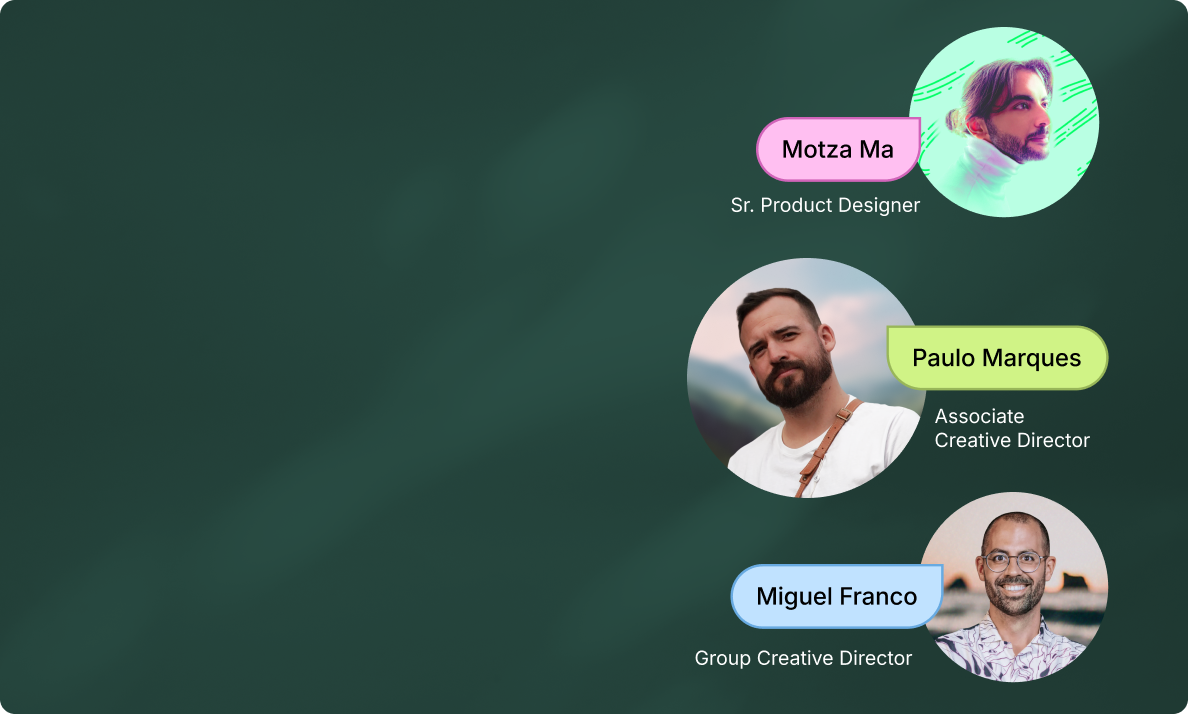
Meet the Superside Product Design Team.
Research-led UX, scalable UI & systems
built for growth.
“Great design is invisible, letting your
product stand out.” - Paulo Marques.
The data speaks for itself
According to a Forrester Total Economic Impact™ study, Superside delivers a 94% ROI and pays for itself in six months.


Harness AI power on creative
Superside’s AI Design Services help enterprises go faster,
reduce costs and deliver high-quality assets at scale.
We'll help you get tomorrow’s possibilities on today’s deadline.