

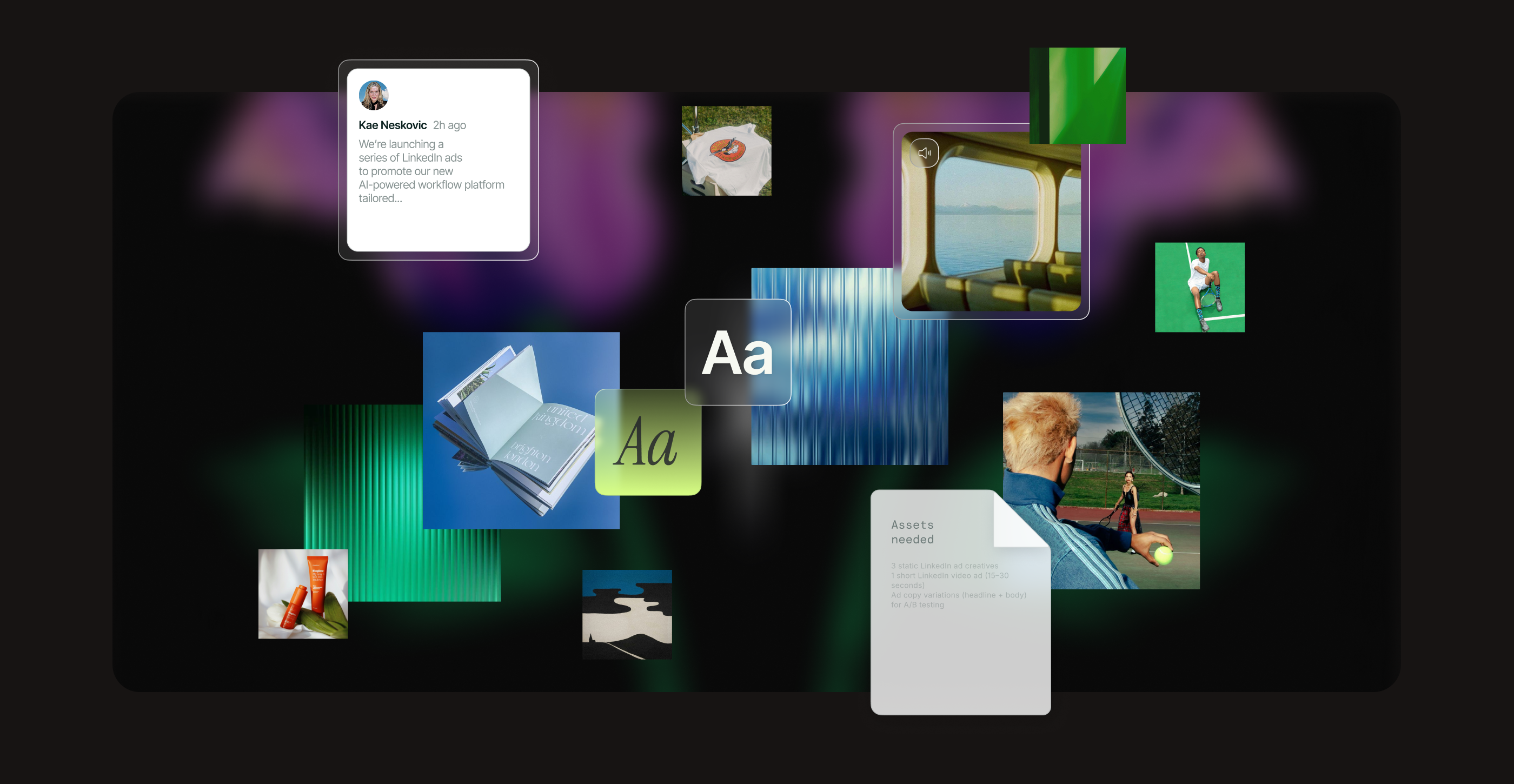
The creative brief is often the first bottleneck in a project. While AI can turn rough requests into structured briefs, generic tools lack brand context. Brand Brain, the AI-powered creative memory inside Superspace, uses your brand guidelines, voice and past decisions to generate briefs that start aligned and need fewer revisions.
The average creative brief might be a page or two, but it sets the direction for everything that follows. A polished brief leads to sharper output, fewer revisions and more time for strategy. A weak one does the opposite. It withholds context, drags out review cycles, slows teams down and invites avoidable mistakes.
Bit by bit, weak briefing also leads to creative memory loss, delaying sign-off and launch. AI can now turn rough requests into structured briefs in minutes, and the right tools surface relevant context, brand knowledge and past decisions to improve alignment from the start. This is exactly what Superside's Brand Brain does.
Whether you are a Superside customer using AI briefing or a marketing leader evaluating an AI brief generator for your stack, this guide covers how AI improves briefing, why generic tools fall short at enterprise scale and how Brand Brain works in practice, with a step-by-step walkthrough of submitting a brief inside Superspace.
Why briefing is the first point of friction in creative work

Creative requests often land with missing information and limited context. Before any work can begin, someone has to chase stakeholders to fill the gaps.
Meanwhile, designers make assumptions, off-brand work moves forward, revisions pile up and bottlenecks crop up every week. If that friction sounds familiar, you are likely among the 85% of creative leaders who told us they frequently get pulled into day-to-day coordination work.
The pressure behind this pattern is not going away. Superside's Breakpoint research found around 80% of leaders say creative request volume is higher than last year, 4 in 5 teams already operate at or beyond capacity and half of all projects are flagged high priority. With demand and stress both compounding, teams have little choice but to juggle competing requests and move fast.
That is what makes briefing such a high-leverage opportunity for AI. Most enterprises aim their AI investments at content creation and repetitive production. But many of the delays, revisions and coordination headaches start much earlier, at the brief. Used well, AI helps teams create clear, context-rich briefs from the outset, which means earlier alignment, fewer revisions and on-point work that saves time and money.
What AI actually improves in creative briefs
The best AI brief generators bridge the gap between rough requests and clear, structured briefs, capturing knowledge that would otherwise live in people's heads and applying it to the workflow. Inside a real enterprise creative operating model, AI briefing delivers four benefits.
1. Faster briefing
Speed matters as much as creativity, and AI briefing delivers both. The process starts with a short description of what is needed. A draft is then populated with campaign goals, deliverables, audiences, messaging, channel requirements, references, success metrics and timelines, pulled from a shared knowledge base. The focus shifts from 'we need to write a brief' to 'the brief is already 90% there, let's refine it.'
2. Better context
Most missing context is not actually missing. It is scattered across brand guidelines, project folders, campaign assets, email threads, Slack messages and people's heads. A Fast Search API retrieves and AI briefing surfaces and consolidates that information automatically, giving teams a richer starting point.
3. More consistent outputs
Most briefs capture deliverables, specs and deadlines. Fewer capture the nuance that keeps work on-brand. When the AI is connected to a system that understands the brand, visual guidelines, tone of voice, key messages, stakeholder preferences and approval requirements become part of the brief by default, so brand consistency stops being something checked at the end.
4. Higher-quality creative, better outcomes
Less time untangling confusing briefs means more time for creativity, strategy and craft. The result is higher-quality work, fewer revision rounds and faster delivery. Teams using Brand Brain, the AI-first creative memory inside Superspace, see this directly. Superside's AI projects run about 35% more efficiently and saved customers more than 31,000 hours in a single year, with better briefing among the biggest drivers.
Monica Romaniuc, Senior Product Marketing Manager at Superside and a Brand Brain expert, sees the shift first-hand.
The thing customers notice first is how little input they actually have to give. Someone can type a simple request like 'we need LinkedIn ads for this campaign' and Brand Brain builds out a structured, on-brand brief using all the context it already knows.

Why generic AI briefing tools stop short at enterprise scale
Plenty of tools promise no-nonsense AI briefing. Most handle the first few briefs well. When teams need to produce hundreds, they start to struggle. Here is how the tools built for small teams differ from those adopted successfully at enterprise scale.
They do not know your brand
Most AI platforms are trained on broad datasets, so they miss the nuances that make a brand unique, and teams still have to add that context by hand. Brand Brain turns brand guidelines, briefs, feedback and other inputs into structured brand memories instead.
They do not carry past decisions forward
At enterprise scale, every brief should build on prior work: what succeeded, what did not, which formats performed and how different markets responded. Generic tools do not retain that, so creative memory loss becomes the norm.
They do not close the loop with execution
Most tools generate a brief and stop. They rarely carry context through the rest of the process, from execution and QA to performance insights and future briefs. Brand Brain connects those dots across the full creative workflow.
The capability is real. The system around it is missing.
Generic AI is not fundamentally flawed. Tools like ChatGPT and Claude work well for small teams with stable brands and a few channels. At enterprise scale, they fall short. Teams need a system that knows the brand, carries decisions forward, connects departments and improves with every project. That is what Brand Brain is built to do.
As Monica Romaniuc, Superside, frames the origin of the product:
Most AI briefing tools can generate a decent starting point, that's true, but they don't actually build an understanding of your brand over time. We designed Brand Brain to solve that problem.
How Brand Brain's AI briefing works
Brand Brain is the AI-first creative memory inside Superspace. It is a living system that captures and applies your brand's tone of voice, visual rules, specs and feedback to every brief and project, and it gets sharper the more you use it. Briefing with Brand Brain means every project starts with the benefit of brand memory, context and guidance.
Without Brand Brain, briefs at enterprise scale tend to ramble, mixing objectives, references and caveats the receiving team has to untangle. With Brand Brain, the same request can start as a single sentence.
| Without Brand Brain |
|---|
| We need support creating a new set of digital ads for the next phase of the campaign. This should follow the same personas and deliverables as the previous project, since that setup was already approved. That said, it should now align with the Q2 campaign, so messaging and imagery need to reflect the Q2 direction. Some assets from the last project might still apply, but others may need to be updated depending on fit. Please review the attached Q2 materials and the previous project's reference files, and use best judgment on what to reuse versus refresh. |
| With Brand Brain |
|---|
| I need digital ads for our Q2 campaign using the same personas and deliverables as the previous project. |
Brand Brain takes the one-sentence prompt and uses what it already knows about the previous project, the personas, the brand's visual standards and the Q2 direction to build a structured first draft. When a Superside customer creates a brief through Brand Brain, four things happen automatically.
- Improve briefing clarity. Rough ideas become structured briefs with goals, deliverables, specs, channels, audience context, references and timelines, surfaced from prior work.
- Reduce repetitive feedback. Brand Brain carries creative memory, so past feedback is baked into the next brief and nobody repeats themselves.
- Maintain brand consistency. Visual standards, locked elements, tone of voice and messaging frameworks flow into the brief, so output is on-brand from the first draft.
- Surface what has worked before. Past projects, performance signals and approved campaigns become referenceable, so teams build on what worked.
Generic AI gets sharper as the world's prompts compound. Brand Brain gets sharper as your team's prompts compound. That is what makes briefing with Brand Brain different in kind, not just degree.
Monica describes how that intelligence deepens over the first few months.
By 90 days, it's gathered even more of the nuance that usually never makes it into a formal brand doc. If your team consistently prefers bolder headlines or simpler social copy, the system starts recognizing those patterns too.
Your company's Brand Brain is continuously maintained by Superside's creative talent, private to your brand and never repurposed, so your team gets the benefits without the operational burden.
How to submit a brief with Brand Brain (a step-by-step walkthrough)
A solid project brief helps the team understand your vision, why it matters and how to deliver. Inside Superspace, it is the first step to kicking off a project.
The full walkthrough lives in the Submit a brief with Brand Brain help center article, which is the source of truth as the platform evolves. Access is rolling out gradually, so if you are not on this version yet, the standard submit-a-brief flow still applies.

- Open the prompt box on the home page to start your brief. You can also start from any page using the sidebar, with + Create then Project brief.
- Describe what you need. Plain language is fine. Brand Brain handles the structure and fills the gaps from your accumulated brand intelligence.
- Add context. Use + Context to attach brand assets, past projects or reference files. The more context you give, the sharper the brief.
- Add team members. Type @ and the name of the teammates who are part of the project.
- Let Brand Brain build the draft. It pulls in relevant context from your guidelines, past projects and saved brand memories to generate a first draft, which opens in front of you.
- Share for collaborative editing. Select Share to invite teammates and edit the brief together in real time, useful when the brief touches multiple stakeholders.
- Fill any gaps and confirm requirements. Most of the brief is already there. Adjust the details that matter and set the timeline, including final deadline and AI usage.
- Submit the project brief. Select Submit project brief. You are redirected to the Project plan page, where you can track project status.
From there, your project manager reviews the request, confirms details and follows up with any questions so the team is fully aligned. The Superside team then prepares a project plan with scope, creative direction, estimated cost and timeline based on your requested delivery date.
How detailed should the brief be?
Brand Brain supports two modes, set in Settings then Personal settings then Brief verbosity level. Most teams default to detailed for new project types and concise for repeating workflows once the pattern is established.
How AI briefing closes the loop with the rest of the creative process
The real value of AI briefing is the loop it sits inside. Brand Brain connects the brief to the team that executes it, the QA that reviews it and the performance signals that come back from market, so each brief makes the next one better. Three loops compound.
- Brief to production. Better briefs land directly with Superside's production teams. AI Excellence powers more than 40 AI workflows for variation, resizing, localization, motion, video and brand-aware production.
- Production to QA. More aligned work goes through QA, where AI checks for brand and brief alignment before humans review, so AI creative quality control becomes structural rather than aspirational.
- QA back to Brand Brain. What worked, what did not, what was revised and what was approved feeds back in, so the next brief starts smarter than the last.
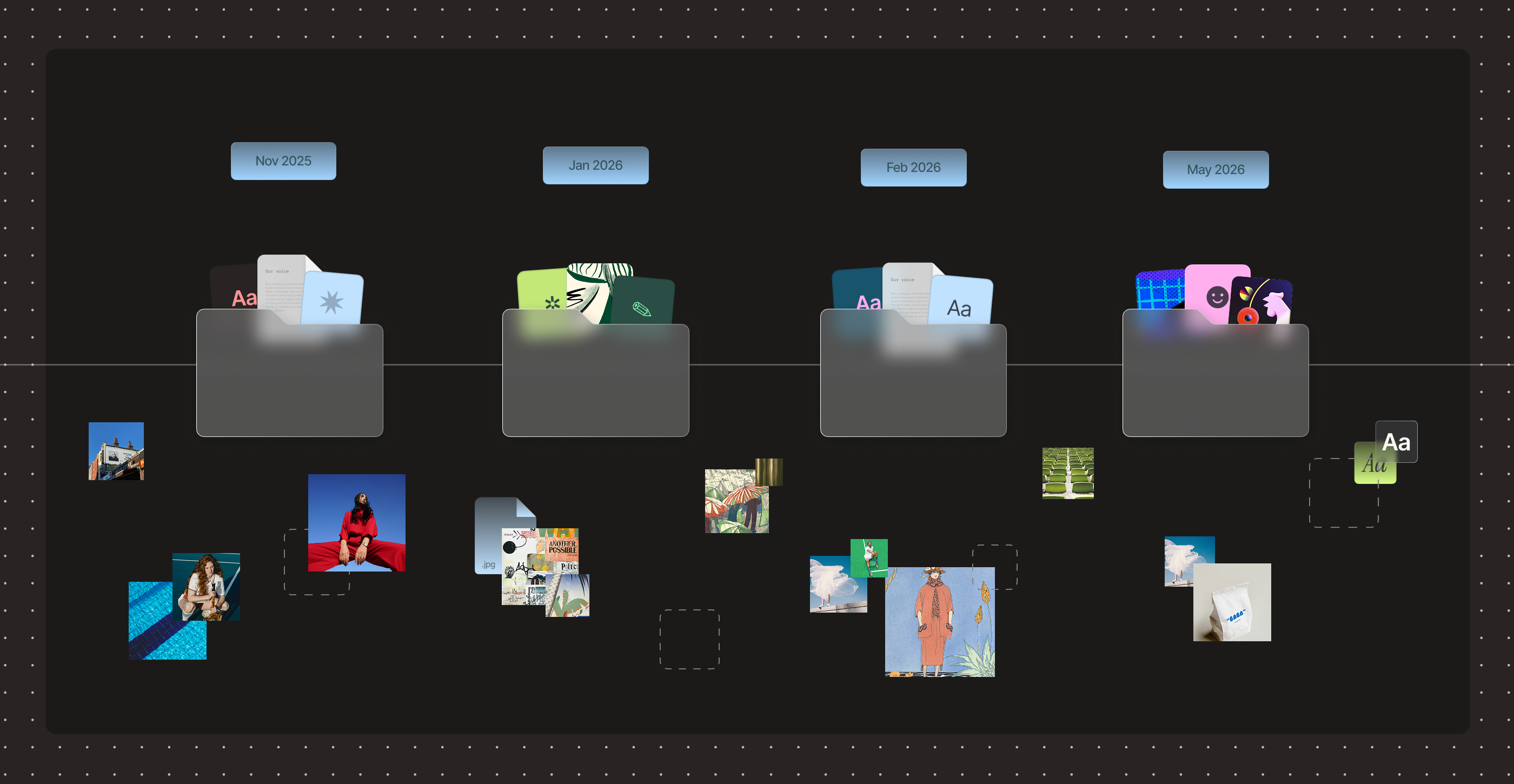
Brand Brain doesn't stop learning once the brief is done. Every project adds more context, whether that's feedback from stakeholders, QA notes, or things that came up during delivery.
Where briefing actually starts to compound
Briefing is the easiest place to introduce AI into the creative process, and the highest-leverage place to do it well. Generic tools handle the surface, which is enough for a small team with a stable brand and a few channels.
For enterprise teams running across markets, formats, languages and a brand system that evolves every quarter, the surface is the easy part. The compounding intelligence underneath is what moves the needle.
That is what Brand Brain is built to do. The AI-first creative memory inside Superspace, embedded across briefing, production, QA and performance, so teams start every project with the brand context and proven approaches they have already accumulated. As the world's leading AI-first creative partner, Superside brings together AI-first workflows, brand intelligence and senior creative talent through a single formula for creative quality.
Finally, Monica Romaniuc, Superside, sums up the payoff over time.
Even brief #1 is already structured and on-brand because Brand Brain starts with your existing guidelines, positioning, and tone of voice. But by brief #100, it's learned the nuance around how your team actually works.
If you are tired of slow, siloed briefing, it is time to make Superside your creative team's creative team. Pricing and Superside vs alternatives are good next reads if you are mapping the field, and our work shows the model in production.
FAQs


Stuck in AI testing mode?
Get a quick, practical checklist
for implementing AI across your team.


Ready to see it in action?
The best way to understand it is to experience it.
Because once your creative system has memory,
you won’t want to go back to starting from scratch.


Increase your creative capacity
Let your in-house team reach for the stars,
while Superside keeps your day-to-day creative needs
at an industry-leading level. Ready to scale?