


Customer storytelling works best as a system, not a one-off. You capture one hero story, then atomize it into channel-native cuts for web, social, paid, email, sales and events. Inside, you'll see how Thomson Reuters, Mojave Color, GoPro, Spotify and Salesforce do it, plus a five-step framework and how Superside helps you scale it without burning out your team.
You land a customer story with real emotional weight and compelling proof. Then it becomes a single video, post or testimonial page that disappears from the homepage or your social feed a few days later.
If this sounds familiar, you're in good company. Many marketing teams still treat customer stories as one-off deliverables rather than the valuable, reusable assets they are. The story is strong, but the team simply doesn't "sweat" the asset and create lasting value.
In fact, most customer testimonials never reach their full potential for a simple reason. Creative friction gets in the way. Among many other competing priorities, overstretched teams don't get time to create multiple channel-specific versions, manage review cycles and coordinate production.
The best enterprise brands, however, have learned to scale customer storytelling across channels, gaining more value and visibility from their strongest stories.
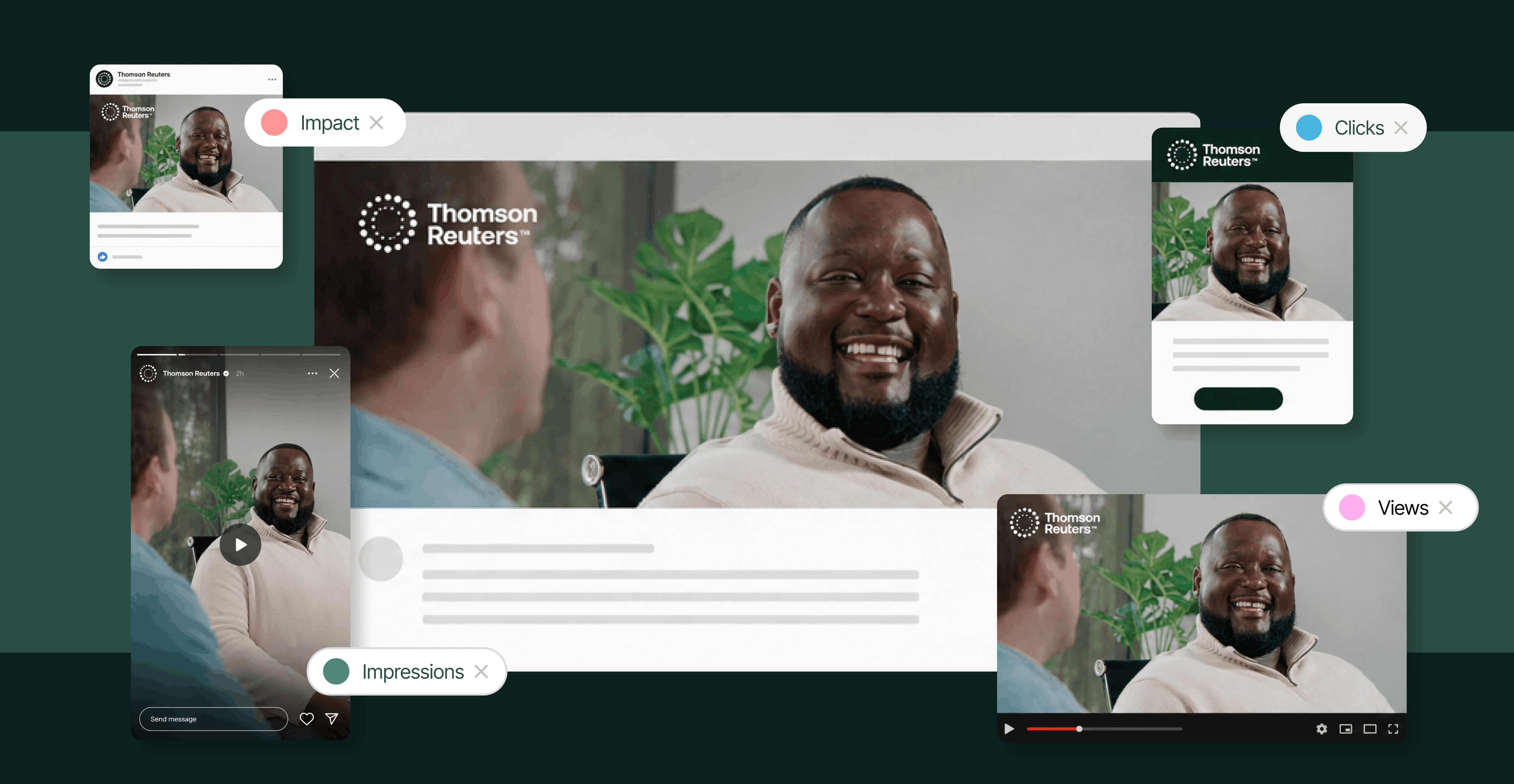
Thomson Reuters, for example, worked with Superside to turn a documentary-style customer story into a hero video and many cutdowns for a highly successful omnichannel marketing campaign. Mojave Color, in turn, used our AI-enhanced workflow to ship a polished teaser in a month.
GoPro, Spotify and Salesforce show the same principle at larger scale. Capture the story once, then build a content engine around it.
This guide explores why customer storytelling so often stalls, how leading brands successfully scale their customer stories and what enterprise teams need to make the model repeatable. We'll also show you how Superside helps turn customer proof into a full system of high-quality, channel-ready creative.
Why customer storytelling can't stay siloed
Buyers have grown allergic to brand-speak. They scroll past polished claims in corporate videos and look for proof from real people who faced similar challenges, made a decision and can speak to what changed.
As a form of content marketing, customer storytelling works because it shifts the value proposition from the brand's mouth to the customer's. And while these stories can live in various formats, video remains one of the best places to start any customer storytelling strategy.
91% of businesses now use video as a marketing tool, according to Wyzowl's 2026 State of Video Marketing research. These numbers help explain why: 85% of consumers have been convinced to buy a product after watching a video, and 89% say video quality influences how much they trust a brand.
In the B2B context, this trust carries even more weight. Buying decisions typically involve multiple stakeholders, larger budgets and greater risk, so decision-makers need proof that a solution delivers results. A strong customer story, delivered through video, gives them credible evidence they can share internally to move a purchase forward.
While buyers need different types of proof at different stages of the journey, a single video story can support them all. A short clip on social media can spark interest during the awareness stage, a detailed documentary-style video on your homepage can answer questions as the customer evaluates your product, and a customer testimonial can reinforce confidence during late-stage sales conversations.
One hero story, many channel-native cuts

There's a reason "facts tell, stories sell" has survived as a cliché. A list of product benefits is forgettable, while a narrative with a character, a tension and a resolution sticks. Brand storytelling works because it makes the target audience feel something.
Customer storytelling takes this one step further. Instead of the brand being the hero, the customer is the hero and your product or service is the tool that helps them overcome their challenge.
This framing is relatable and, therefore, highly effective.
Unfortunately, many brands don't use their strongest customer stories to maximum effect. The first problem is that they don't properly plan how to use them across the buyer's journey.
Instead of briefing on "a video," the smarter move is to define the full campaign strategy upfront. Where does the story need to appear? Who is the target audience? What emotional connection should it create? Which channels need short-form cuts, vertical edits, stills, quotes or localized versions?
This leads you to the hero and cutdown video model, in which you create one rich hero asset (often a documentary-style film or long-form brand story) and then slice it into channel-native assets. The same production, for example, becomes:
- a website video
- short-form clips for LinkedIn
- 30-second paid ads for third-party websites
- vertical social media clips
- a sales deck slide
- an event opener
The key is to capture a compelling story with reuse in mind. A 16:9 hero video won't automatically work on TikTok, while a 15-second social clip won't carry enough depth for a sales conversation. Each asset should, therefore, be created for a specific audience, channel and stage of the buyer journey.
Once the hero asset exists, many stretched in-house teams struggle with creative execution and content atomization. This involves systematically breaking one primary customer story into many smaller assets, each mapped to a specific channel.
In the rush to produce assets, work often becomes sloppy and drifts off course. Specific details that made the original story compelling or the brand recognizable get lost along the way. And with every cutdown, crop, caption, localization and approval cycle, creative friction adds up. Soon, frustrating creative bottlenecks occur, and the customer story doesn't get the airtime it deserves.
Superside's AI-first, human-crafted model tackles this creative capacity challenge head-on. We let AI handle the repetitive production tasks, while our senior creative experts focus on the creative and strategic decisions that set the work apart. Thanks to AI, versioning, resizing, localization and quality checks happen faster, while the emotive customer story, the brand and the creative intent stay firmly in check.
5 customer storytelling examples from enterprise brands
The brands that successfully scale customer storytelling don't all follow the same playbook. They do, however, share one habit. They create each story once and design it to travel.
Below are five examples that show how this works in action.
1. Thomson Reuters gives customer stories emotional weight
When Thomson Reuters wanted to tell the story of its AI for Justice Legal Aid initiative, the brief was unusually human. The video couldn't feel like a product ad. Instead, it had to center on the people using its AI assistant, CoCounsel, and the people it serves. This included The Innocence Center, a nonprofit working to overturn wrongful convictions.
The challenge was capacity. The brand needed customer story video production that felt human, documentary-style and emotionally grounded, without carrying the production burden alone. They made Superside their creative partner.
Our team managed the project end-to-end, from pre-production and local crew sourcing in San Diego through filming, editing, sound design, color and motion graphics. The result was a suite of four videos designed to work across Thomson Reuters' content ecosystem, extending the story beyond a single campaign.
Superside cut production time by approximately 90%. In the end, the project cost roughly 10% of the internal time and resources it would have required if Thomson Reuters had used a traditional approach.
The lesson is simple. A single, well-produced customer story, planned as a hero plus cutdowns, can become a valuable cross-channel asset library. It's also a textbook example of exceptional enterprise video storytelling executed at scale.
2. Mojave Color builds a brand story fast with AI
Not every customer story calls for a full production. Sometimes there simply isn't enough time or budget. When this happens, AI-enhanced workflows can help teams create high-quality, story-driven content faster and more efficiently.
For example, when Mojave Color needed a polished teaser video to showcase its ecommerce photography capabilities, connect with its target market and support sales conversations, it faced a tight timeline and a limited production budget.
Superside stepped in and used an AI-enhanced workflow to create close-ups, color shifts and on-brand messaging at speed.
AI did the heavy lifting, from visual exploration to creative execution. Craft still sat with the human team, who shaped the pacing, core message, quality and final brand feel of the teaser. The complete video was delivered in one month, 84% faster than traditional production methods would have allowed, saving Mojave Color $8,560 in production costs.
3. GoPro turns user-generated content into a storytelling engine
GoPro's customer storytelling strategy is built around participation.
The product lends itself to capturing memorable experiences, which makes customers the natural creators of the brand's most authentic stories. GoPro then curates and amplifies the strongest submissions, turning individual moments into content that inspires a much wider audience.
Its Million Dollar Challenge shows how powerful that system can be. Its fifth challenge drew 42,446 video clip submissions from creators in 126 countries, and GoPro has awarded $5 million to winning creators over five years.
The mechanics for driving UGC are useful well beyond consumer tech. Give customers a reason to participate, make submissions simple and recognize the community behind the best contributions. The result is a continuous stream of authentic stories that can be reused across social media, paid campaigns and owned channels.
4. Spotify Wrapped scales a personal brand story globally
The annual Spotify Wrapped campaign proves that customer storytelling can scale when the customer becomes the main character. Wrapped turns listening behavior into a personal brand story, then makes each customer's story instantly shareable across social media.
Spotify's 2025 Wrapped campaign reached 200 million engaged users in roughly 24 hours, a 19% year-over-year increase. Shares rose 41% to around 500 million.
The lesson for other enterprise marketers: Spotify creates an emotional connection by making customers feel seen on a personal level, then uses interactive elements to make the experience easy to share. The brand's purpose, product data and customer experiences all reinforce one another.
5. Salesforce turns B2B customer stories into a content hub
Salesforce's Salesblazer shows how B2B brands can turn customer success into an ongoing content engine. Rather than treating customer stories as isolated proof points, Salesforce built a content hub around the professional development, challenges and wins of sales teams.
The performance was substantial. The Content Marketing Institute reported that Salesblazer generated more than 5 million unique page views in its first year and drove a 250% lift in referrals to Salesforce product pages.
That's the value of connecting customer stories to the wider buyer's journey. A previous customer example can become a web article, event session, newsletter item, social post, sales asset and internal enablement tool. The story keeps working because it keeps meeting customers where they are.
How to build a customer storytelling engine
The examples above come from different industries, but the key elements are consistent. The brands all first defined the target audience, the narrative structure and a compelling story arc. Then they created a robust distribution plan before production kicked off.
Here's how to build the same enterprise video storytelling engine.
Capture once, with reuse in mind
A good creative brief is the first step to avoiding creative friction. The more clearly you define channels, the target audience, formats and success metrics upfront, the fewer review loops and last-minute changes later. In your brief, map the formats, crops, channels and markets the story must serve before the shoot or edit starts. Then capture clean customer quotes, testimonials, b-roll, vertical framing, stills and moments that can become standalone social assets.
Atomize the hero asset into channel-native cuts
A hero film, a 60-second LinkedIn cut, a 30-second paid ad and a 15-second teaser all serve different purposes. The key is to adapt the original story so it feels native to every channel. AI-powered workflows help you move faster without making every new format feel like a new project.
Localize for every market
If you're part of a global enterprise brand, localization matters. Your customer stories may need subtitles, voiceover, market-specific references or culturally relevant edits to resonate in local markets. Fortunately, these are all elements AI can quickly deliver on.
Keep humans in the loop
AI can speed up editing, versioning and reframing, but trust is earned through authentic storytelling. Keep humans accountable for quality, taste, brand alignment and emotional nuance. The best approach is to use AI to remove repetitive work, not creative judgment.
Measure what travels
Track creative performance. Explore which hooks, formats and channels create meaningful connections, move potential customers down the funnel and support customer loyalty. Then apply these learnings to future campaigns.
This is how storytelling effectiveness improves over time, and how marketing efforts become a learning system rather than a production treadmill.
Ultimately, a smarter, AI-powered creative system also saves time and effort, and helps creative teams keep pace with market demands.
A good example is Superside's Brand Brain, the AI layer that lives inside our Superspace creative management platform. Each customer's unique Brand Brain builds with every project, captures what works and what doesn't, and becomes a competitive edge no generic AI tool can replicate.
How Superside helps brands scale customer storytelling
Most enterprise teams already understand the value of customer stories. The hard part is scaling them. Every new asset requires another crop, cut, caption, format, approval loop and stakeholder opinion. Each introduces potential creative friction.
Superside has built a system that removes this friction. As the world's leading AI-first creative partner, we plug into enterprise teams with world-class creative talent, AI-native workflows and video production services that help brands scale high-quality, on-brand customer storytelling without adding headcount or sacrificing craft.
Being AI-first means AI isn't just powering individual tools. It's embedded across the entire creative model, from how teams are trained to how brand knowledge compounds over time.
Across Superside's AI-first creative work, this operating model is already delivering measurable gains. Our projects are 35% more efficient, customers saved 31,000 hours in a single year, 12,000 AI-powered projects have been delivered and almost 100% of Superside's creative team is now AI-certified.
Here's what that looks like in practice for customer storytelling.
- End-to-end production. Superside handles everything from discovery and production to editing, sound, color and motion graphics. We then deliver a hero film and channel-ready cutdowns as one connected creative system from day one. For jeweler Suzanne Kalan's #DoubleTheLove TikTok campaign, that meant moving from concept to an L.A. studio shoot and delivering teaser, hero and product-focused videos in under a month.
- Your creative team's creative team. Our team becomes a seamless extension of yours, giving you the extra creative firepower and specialized skills you need to produce truly standout assets. When Bolt needed an ambitious animated brand video in just one month, Superside brought in 18 dedicated creatives across illustration, 2D animation and 3D motion design, helping increase creative output by 600%.
- AI-enhanced speed. As with Mojave Color, our AI-powered creative workflows dramatically cut production time. In fact, we've saved our customers over 40% on video costs without sacrificing craft or great storytelling.
- Atomization and versioning at scale. This is a process we've nailed. We know exactly how to turn one master asset into the full spread of platform-specific cuts. For a single customer, we produced 450+ personalized videos in a week.
- Localization for global reach. Our global creative team and AI workflows can help you scale a single good story across markets and languages, eliminating the need for separate shoots in every region.
- One connected creative partner. Beyond video, you get 20+ creative services under a single flexible subscription, all coordinated via our Superspace platform. This means one story can quickly become a complete cross-channel campaign.
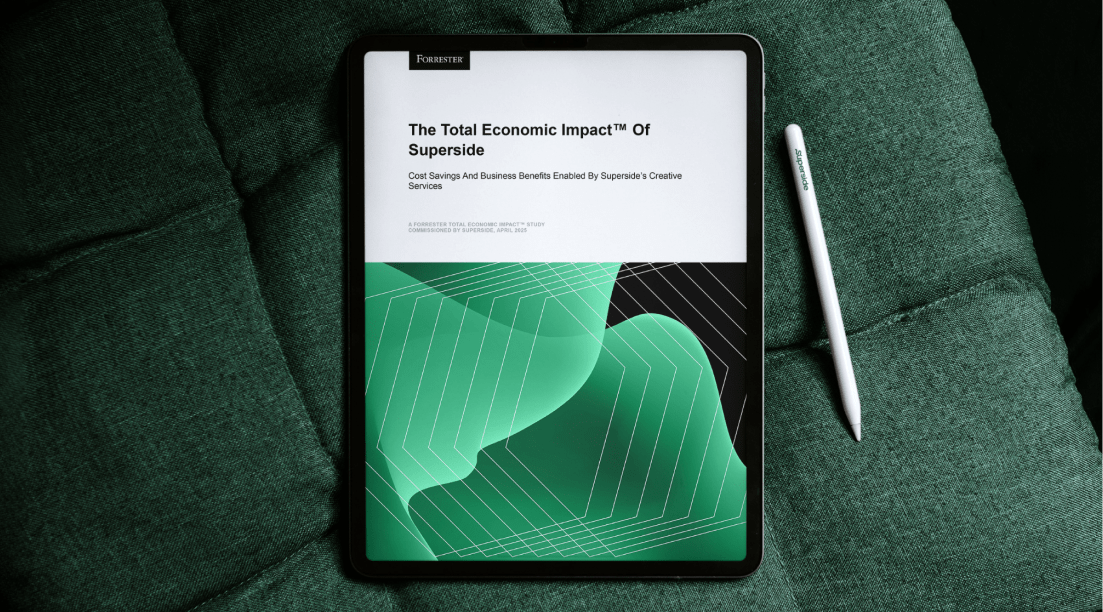
The business case for partnering with Superside is measurable too. A commissioned Forrester Total Economic Impact study found that Superside delivers a 94% ROI, a net present value of $2.01 million and a payback period of under six months.
The brands that win treat every customer story as a system
Customer storytelling makes your brand relatable through real customers, genuine challenges and authentic proof that your product or service works. But a great story only creates value if it reaches the right audience in the right format.
The brands that win don't let great customer stories disappear after a single post. Thomson Reuters turned a justice initiative into a flexible set of video assets. Mojave Color used an AI-enhanced workflow to create a striking teaser fast without losing craft. GoPro built a UGC engine. Spotify made customer data emotional and shareable. Salesforce turned customer success into an always-on content trail.
That's the model enterprise teams need in 2026 and beyond. One strong hero story, many channel-native cuts, human-led quality and a system built to scale.
If you're ready to turn one customer story into a full cross-channel content system, Superside is your creative team's creative team. Our AI-first, human-led model helps enterprise teams like yours remove creative friction, protect craft and scale customer proof across every channel.
Book a demo to turn your best customer stories into content that works everywhere.
FAQs



Creative teams are at a breaking point
The pressure is real, the opportunity is too.
Get insights from 300+ leaders on
beating burnout, using AI wisely
and navigating 2026’s inflection point.


Make your creative team future-proof
97% of creative leaders say the role of the creative
professional will look fundamentally different in 5 years.
This report is our prediction for what’s coming
and how to be ready for it.


Ready to see it in action?
The best way to understand it is to experience it.
Because once your creative system has memory,
you won’t want to go back to starting from scratch.

The data speaks for itself
According to a Forrester Total Economic Impact™ study, Superside delivers a 94% ROI and pays for itself in six months.


How 400+ brands get more work done, without doing more
They Superside it. Fast, high-quality creative from the
AI-powered creative service that handles it all.