

The best brand awareness campaigns pair one simple idea with emotion, distinctive creative and a reason to share, from Spotify Wrapped's 630 million social shares to the 17 million people who joined the Ice Bucket Challenge. This guide breaks down 15 of them with verified results, plus Superside's own OOH campaign that lifted California call requests by 140%. Awareness matters even more now that buyers ask AI which brands to consider, so we also cover how to measure it and scale the creative behind it.
The best brand awareness campaigns tap into a feeling, a behavior or a cultural insight.
Nike made motivation feel like a three-word personal challenge. Coca-Cola turned packaging into an invitation. Each brand took a different route, but both gave people a reason to remember the brand behind the feeling.
As the way people discover brands changes, recognition matters even more. People still search, scroll and ask friends for recommendations. But now they also ask AI. In Bain's 2026 research, 44% of online buyers said they mostly start their journey in an AI tool or split their search between AI and traditional search engines.
The 15 brand awareness campaign examples below show how brands earn their audience's attention and spark conversations people remember. Every one carries lessons you can bring into your own campaigns.
What is a brand awareness campaign?
A brand awareness campaign is a coordinated marketing effort designed to help more people recognize, remember and understand your brand.
It works at three levels:
- Brand recognition. People know your brand when they see the name, logo, colors or other distinctive elements.
- Brand recall. People can name your brand without a visual prompt when they think about the category.
- Top-of-mind awareness. Your brand is one of the first, or the first, that comes to mind when people think about a product or service.
For enterprises, brand awareness isn't optional. It's the foundation that makes every other marketing dollar work harder, and a core part of any strong brand strategy.
Why brand awareness matters more than ever
In today's crowded feeds, people are far more likely to notice an ad, engage with a post or consider a product when they already know the brand. Awareness also makes your brand easier to remember when people are finally ready to buy.
In the last few years, AI has added another layer to discovery. Back in 2024, Gartner predicted that traditional search engine volume would drop 25% by 2026 as people turned to AI chatbots and virtual agents. Adobe has since reported that 39% of consumers have already used AI for online shopping.
Awareness alone won't guarantee a recommendation from ChatGPT or Claude. But the credible third-party coverage and buzz that strong awareness campaigns generate help your brand show up in the information these tools draw on. If you're not part of the conversation, you're unlikely to be part of the answer.
15 brand awareness campaign examples to learn from
The best way to understand great brand awareness work is to unpack what top brands have done to make themselves memorable. Here are 15 campaigns that caught our attention over the years.
1. Spotify's "Wrapped" campaign
Every year, Spotify Wrapped turns each listener's streaming data into a personalized story. Users see their top artists, songs, genres and listening habits in brightly designed slides they can share.
The campaign generates major buzz because the data feels personal enough to spark interest and public enough to invite comparison. Every shared slide also carries Spotify's distinctive visual system into someone else's feed.
The scale is formidable. Spotify's 2025 Wrapped campaign ended with more than 300 million engaged users and more than 630 million social media shares worldwide, in 56 languages.
The lesson: First-party data becomes powerful awareness creative when it tells people something interesting about themselves and gives them a reason to share.
2. Nike's "Just Do It" campaign
Launched in 1988, "Just Do It" gave Nike a unifying campaign that could stretch across sports, products and generations. The very first ad featured 80-year-old runner Walt Stack jogging across the Golden Gate Bridge.
The line didn't describe a shoe. It challenged the viewer to act. That simplicity made the campaign unusually durable, because Nike could tell a thousand different stories while returning to the same emotional promise: you're capable of more than you think.
The brand remains powerful decades later. In its 2026 apparel ranking, Brand Finance valued Nike at $27.3 billion.
The lesson: A short, emotionally expansive idea can outlive any individual campaign.
3. Dove's "Campaign for Real Beauty"
Dove's "Campaign for Real Beauty" challenged narrow beauty standards by featuring women with different body types and backgrounds. Over time, work like "Real Beauty Sketches," the Dove Self-Esteem Project and "The Code" kept the concept relevant.
Dove built a long-term position around real beauty, backed it with research and kept creating work that invited conversation. That consistency gave the brand a recognizable point of view in a crowded personal-care category.
More than two decades after launch, Dove is still expanding that work. As of June 2026, the Dove Self-Esteem Project had reached more than 160 million young people across 150+ countries.
The lesson: Values-led awareness works best when the commitment continues long after launch and keeps showing up in future creative.
4. Apple's "Shot on iPhone" campaign
"Shot on iPhone" made an Apple product feature visible through real users' work. As part of the ongoing campaign, Apple selects striking customer photos and videos, then shares them across billboards, social and other platforms.
The format works because it combines aspiration with proof. Apple doesn't need to say the iPhone camera is excellent when the image demonstrates it. Featuring customer work also creates a renewable creative system, since every new device, place and contributor adds another layer to the story.
The campaign marked its 10th anniversary in 2025, the same year it won the Cannes Lions Grand Prix for Creative Effectiveness.
The lesson: When customers can demonstrate the product better than a claim can, make their proof the campaign.
5. Coca-Cola's "Share a Coke" campaign
"Share a Coke" replaced Coca-Cola's famous logo with popular first names and an invitation to find, give or share a bottle. The idea made one of the world's most familiar products feel personal.
The package did several jobs at once. It acted as media, a collectible and a social prompt. People hunted for their names, bought bottles for friends and posted photos online.
In the first run in Australia in 2011, Coca-Cola sold more than 250 million named bottles and cans in a country of just under 23 million people.
The lesson: Personalization works best when it changes behavior. Give people something they'll want to find, share and photograph.
6. Old Spice's "The Man Your Man Could Smell Like" campaign
Old Spice used a fast, funny commercial and Isaiah Mustafa's deadpan delivery to make an established brand feel fresh. It then extended the idea with 186 personalized response videos that answered comments from online communities in near real time.
The response phase turned a popular ad into a live cultural event. The same character and humor held every execution together, while the speed made people feel they could influence what happened next.
The response videos drew more than 40 million views within a week and passed 52 million within 30 days.
The lesson: Responsive participation can turn a campaign into a conversation people actively follow.
7. Red Bull's "Stratos" campaign
Red Bull Stratos sent Felix Baumgartner to the stratosphere for a record-setting free fall. It wasn't a conventional campaign with a stunt attached. The mission itself was the content.
The concept worked because it embodied Red Bull's brand promise of energy, risk, performance and human possibility. The live format created tension no edited spot could reproduce, while the scientific preparation gave the spectacle credibility.
At its peak, the official livestream drew more than 8 million concurrent livestreams on YouTube.
The lesson: The most powerful stunt is one only your brand would plausibly create.
8. Always' "#LikeAGirl" campaign
Always took a familiar insult and exposed how its meaning changes around puberty. In the #LikeAGirl film, adults and older children acted out "being like a girl" as weak or silly, while younger girls performed the same actions with confidence.
The emotional turn made the idea easy to understand and hard to dismiss. It connected a cultural issue with the brand's audience at a relevant moment, then gave people a phrase they could help redefine.
In its first three months, the campaign earned 4.4 billion global impressions and more than 1,100 media placements.
The lesson: A strong awareness campaign can reframe a familiar behavior.
9. The ALS Association's "Ice Bucket Challenge"
The ALS Ice Bucket Challenge asked participants to pour ice water over themselves, post the video to raise awareness of amyotrophic lateral sclerosis (ALS) and nominate others.
The format spread rapidly because the action was simple, visible and slightly uncomfortable. The nomination also created a clear social obligation to keep the chain going.
In the summer of 2014, the challenge inspired 17 million people to upload videos and raised $115 million for the ALS Association.
The lesson: Participation scales when the action is easy to copy, public enough to be interesting and tied to a clear next step.
10. Airbnb's "Belong Anywhere" campaign
Airbnb's 2014 rebrand moved the company's story beyond accommodation. "Belong Anywhere" positioned travel as a way to feel connected to people and places, supported by a new visual identity and the Bélo symbol.
That emotional territory gave the brand a bigger role than a booking platform could claim. Hosts, guests, neighborhoods and individual travel stories could all express the same idea.
Airbnb has since grown to more than 5.5 million hosts who've welcomed over 2.5 billion guest arrivals worldwide.
The lesson: A strong brand idea expresses the human outcome of the product.
11. The Barbie 2023 movie campaign
Mattel and Warner Bros. turned the Barbie release into an immersive brand world. A flood of partnerships, a selfie generator, a real-life Malibu DreamHouse, pink OOH installations and a tightly controlled visual identity made the film visible far beyond cinema advertising.
Its strength was coherence at enormous scale. Partners could make the idea their own, but the distinctive brand elements made every execution feel unmistakably Barbie.
Barbie became the highest-grossing film of 2023 worldwide, earning more than $1.44 billion.
The lesson: Omnipresence works when every touchpoint contributes to one recognizable world.
12. Burger King's "Whopper Detour" campaign
Burger King offered app users a one-cent Whopper if they ordered within 600 feet of a McDonald's. The promotion used geofencing to turn a competitor's bigger store footprint into Burger King's own media network.
The idea worked because the technology served a joke people could explain in one sentence. It was useful enough to drive downloads, mischievous enough to earn coverage and perfectly aligned with Burger King's challenger personality.
The Whopper Detour drove more than 1.5 million app downloads in nine days.
The lesson: Use technology to make a simple, brand-right behavior possible, then let the story generate the attention.
13. Dollar Shave Club's "Our Blades Are F***ing Great"
Dollar Shave Club introduced itself with a low-budget founder video that combined a blunt value proposition with deadpan humor. Michael Dubin walked through a warehouse explaining the subscription while visual gags kept popping up behind him.
The campaign succeeded because the entertainment and the sales argument were inseparable. Viewers understood the product, the price and the personality in about 90 seconds.
Some 12,000 people signed up within 48 hours, and the video racked up 4.75 million views in its first three months.
The lesson: A small budget can build serious awareness when the point of view is sharp and the message sounds like no one else in the category.
14. Mailchimp's "Did You Mean Mailchimp?"
Mailchimp turned a mispronunciation of its name on the Serial podcast into nine strange, highly produced campaign moments with names like MailShrimp, JailBlimp and KaleLimp. Films, songs, snacks and websites left a trail of curiosity that led audiences back to Mailchimp.
Mailchimp paid for 500 million impressions and earned one billion. The campaign, created with Droga5, also won a 2017 Cannes Lions Cyber Grand Prix.
The lesson: A distinctive creative device can make an unfamiliar name easier to remember and more fun to discover.
15. GoPro's "Million Dollar Challenge"
GoPro's Million Dollar Challenge invites customers to submit footage shot on its latest cameras. The brand turns the best clips into product highlight films and splits a $1 million prize among the featured creators.
The idea turns customers into brand storytellers. Their varied locations, activities and perspectives show what the cameras can do more vividly than any feature list.
In 2023, the fifth challenge attracted a record 42,446 video submissions, up 66% year over year.
The lesson: A repeatable UGC campaign can serve brand awareness, product marketing and community building at the same time, and build trust along the way.
For more inspiration, see our roundups of brand video examples, social media campaigns and AI advertising campaign examples.
A Superside brand awareness campaign, from start to finish

Famous campaigns can make brand building look like a luxury reserved for global consumer brands. Superside's own out-of-home campaign shows that B2B brands can pull it off too.
The challenge
In 2023, Superside set out to reach marketing and creative leaders, our target customers, in San Francisco during SaaStr and Dreamforce. Digital channels in our category were crowded, so we chose a medium competitors largely ignored: the physical spaces around those two events.
From September 4 to 17, our messaging ran across billboards, bus stop ads, rideshare vehicles, coffee trucks outside the event centers and airport banners. OOH was the visible center of a broader integrated campaign that also included an event, paid ads, direct mail and email.
The creative and production model

The concept needed a distinctive office-world aesthetic that stock photography couldn't deliver, so a dedicated Superside creative team planned and produced custom photography from scratch. That meant securing a studio and talent, building the treatment, planning styling and props, running the shoot and delivering final images. The brief landed on July 26, 2023, and the photography was delivered by August 14.
Real-time collaboration kept the schedule moving. The marketing team watched the shoot through a live link, while a producer consolidated feedback so approvals could happen while the cameras rolled.
The results
OOH campaigns can take a while to move the needle, but we saw results quickly. Call requests from California jumped 140% year over year, well ahead of the next-best control state, Texas, at 92%. Organic search in the state grew 47% and direct traffic rose 77%, two sources that depend heavily on brand awareness. One prospect even booked a call after seeing the airport banner.
The campaign showed what's possible when timing, local relevance, distinctive creative and an integrated follow-up plan work together. We applied the same speed to an AI campaign launched in 21 days, and you'll find more work like it in our customer stories.
What the best brand awareness campaigns have in common
Underneath every example in this article sit a handful of shared principles. Creating brand awareness takes:
1. One simple, ownable idea
"Just Do It," "Belong Anywhere" and "Share a Coke" were easy to repeat. The best campaign ideas distill a bigger concept into something the audience grasps instantly.
2. An emotional core
People share campaigns that make them laugh, feel seen, feel proud or hold their breath. Emotion makes the message easier to remember, which is why brand storytelling sits at the heart of most of these campaigns.
3. A reason to participate
Some of the best awareness campaigns turn the audience into the medium. Spotify gives people a personal story to share, while Coca-Cola gives them names to find.
Participation needs a clear reward, though, whether that's status, self-expression, entertainment or belonging.
4. Distinctive brand assets
Attention only helps your brand if people remember whose ad or post they saw. Barbie's pink, Nike's Swoosh and Spotify's bold graphics make these brands easy to recognize everywhere, from social feeds to OOH billboards.
5. Multi-channel continuity
The strongest integrated campaigns don't paste one asset into every placement. They translate the same idea for each context. A social video needs an early hook, a landing page should explain the campaign in more depth and PR needs a story others will want to tell. Our guide to omnichannel marketing examples shows how leading brands do it.
6. A system that can keep going
One-off fame is useful, but a campaign idea you can build on is worth far more over time. Before launch, picture what a second edition could look like, then create reusable assets and processes as you develop the first.
How to measure brand awareness in 2026
No single metric captures brand awareness. The best approach combines several to gauge a campaign's success:
- Brand lift. Use surveys or platform studies to measure changes in awareness, recall and consideration.
- Branded search. Track searches for your brand and campaign terms, plus your share of search against competitors, allowing for seasonality and news.
- Website traffic. Monitor direct visits and branded organic traffic for signs of growing interest, as our own OOH campaign did.
- Social and earned media. Track mentions, reach, engagement, sentiment and coverage quality across channels.
- Brand asset recognition. Test whether people associate your colors, characters, sounds and slogans with your brand.
- Your brand's visibility in AI tools. Regularly run the same prompts across AI platforms, and track brand mentions, recommendations, cited sources and accuracy across repeated samples.
Define your outcomes before you launch, and connect these metrics to inquiries, pipeline, acquisition costs and sales. Our guide to how cutting-edge creative lowers CAC shows why that link matters.
How to run a brand awareness campaign at scale
Every brand awareness campaign needs a strong idea and the capacity to bring it to life. For enterprises, that usually means hero video, social cutdowns, OOH and paid ads adapted for different markets. For already stretched creative teams, the work adds up fast.
Superside, the world's leading AI-first creative partner, is built to help you bring your next awareness campaign to life. We help enterprise teams develop and scale campaigns through branding, campaign concepting, campaign strategy, video production, social media and ad creative. Top-tier creatives lead the work, while AI speeds up production.
Brand Brain, the custom, evolving intelligence layer inside our Superspace creative management platform, captures and applies your brand guidelines, past decisions and feedback to every brief and review, keeping a campaign consistent across dozens of executions and markets.
Being AI-first means AI isn't just powering individual tools. It's embedded across the entire creative model, from how teams are trained to how brand knowledge compounds over time. It's the thinking behind our human-led, AI-powered approach, and what makes us your creative team's creative team.
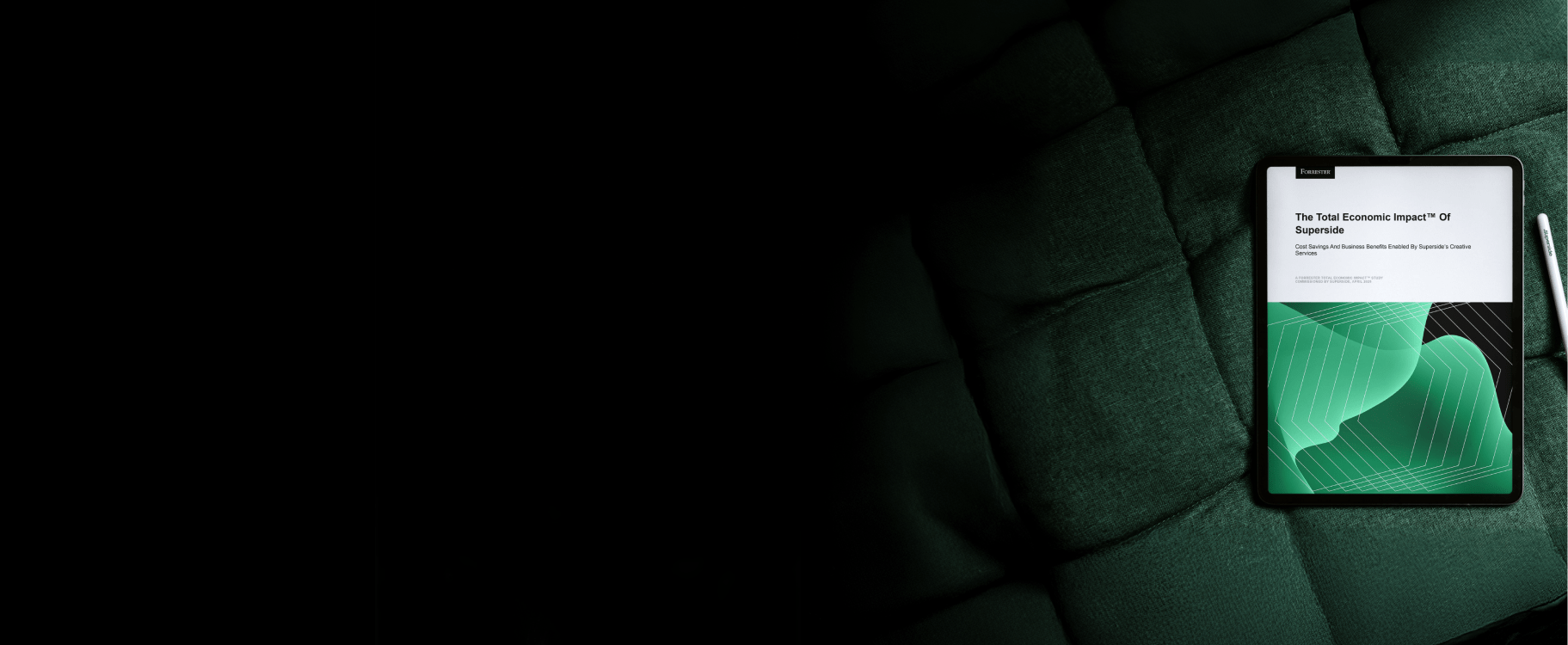
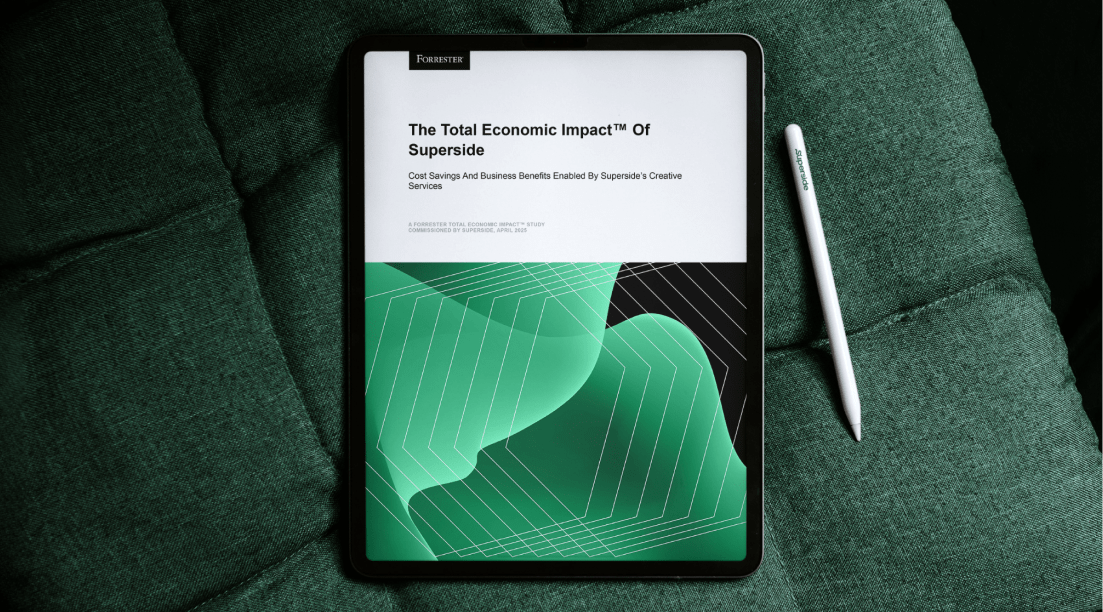
There's independent proof that it works, too. A Forrester Total Economic Impact study commissioned by Superside found that a composite organization achieved a 94% ROI over three years, with payback on its Superside subscription in under six months.
Ready to build a campaign your audience will remember? Book a call to see how Superside can help.
FAQs



Meet Customers Who’ve Experienced Exceptional ROI
Discover how Shopify got 4,375 assets in 12-24 hours or how Amazon saved 345 hours in three months.


45% more efficient creative
Our expert AI designers help you create, test
and launch multiple, impactful concepts at scale.
We'll get you to market sooner.

Ready to see it in action?
The best way to understand it is to experience it.
Because once your creative system has memory,
you won’t want to go back to starting from scratch.

The real story behind GenAI’s impact on creative
You've heard the hype. But what does the data say?
The data speaks for itself
According to a Forrester Total Economic Impact™ study, Superside delivers a 94% ROI and pays for itself in six months.


Increase your creative capacity
Let your in-house team reach for the stars,
while Superside keeps your day-to-day creative needs
at an industry-leading level. Ready to scale?