




OLIVER agency builds and runs marketing teams inside client organizations, while Superside pairs AI-native experts with AI systems through a flexible subscription. The embedded model wins on daily immersion and institutional knowledge, and Superside wins on variable demand, specialist range and brand knowledge held in a system. Many enterprises end up using both, so match each model to the work it does best.
OLIVER, part of The Brandtech Group, and Superside both help enterprise marketing teams keep pace with relentless demand for creative. But they do it in very different ways. OLIVER takes an embedded approach. It designs, builds and runs marketing organizations inside the brands it works with.
Superside, the world's largest AI-native creative agency, pairs AI-native experts with AI systems through a single platform. You choose a Flex plan that scales with your workload or a Dedicated team that stays the same every month.
So your choice depends on how you want to organize creative support: a team embedded inside your organization or one you access through a subscription.
This article compares the two models across creative services, flexibility, pricing, AI and brand knowledge, and is open about where each one wins. Throughout, we label claims about OLIVER as either verified (press releases and trade coverage) or OLIVER's own description of itself.
How in-housing is changing creative production
In-house agencies have moved from the exception to the rule. The Association of National Advertisers' May 2023 in-house agency study found that 82% of members have an in-house agency, up from 78% in 2018.
That doesn't always mean a fully staffed creative department. The ANA's definition covers any department, group or even a single person handling work an external agency would typically do.
And here's the telling part: 92% of those organizations still work with external agencies too. Even strong internal teams need extra skills or support.
AI is accelerating the shift. In a November 2025 study by the WFA and MediaSense, based on a survey and interviews with 30 global in-house agency leaders, 93% said they plan to invest further in AI in the next 12 to 24 months. Yet only 12% were already fully integrating it.
Brands also expect to bring more work inside. Survey data fielded by NewtonX for Adweek found that 32% of brands expect to handle nearly all creative in-house within 12 months, and another 23% expect to bring at least half in-house. The full article is paywalled, so treat those figures as directional.
Together, these findings point to a clear pattern. Many top brands keep brand knowledge close through internal teams, then bring in outside partners for specialist skills and busy periods. OLIVER and Superside are two very different ways to fill that outside role.
Who OLIVER agency is
OLIVER is part of The Brandtech Group. Its old address (oliver.agency) now redirects to oliverinside.ai, so some third-party listings may be out of date.
Here's what's on the public record, and what OLIVER says about itself:
| Claim | Status | Source |
|---|---|---|
| OLIVER launched in 2004, and You and Mr Jones (now The Brandtech Group) acquired a majority stake in January 2019 | Verified | Brandtech press release, January 2019 |
| The Brandtech Group was founded in 2015 by David Jones as You and Mr Jones and renamed in January 2022 | Verified | Brandtech press releases and Campaign |
| The Brandtech Group acquired generative AI platform Pencil in June 2023 | Verified | Brandtech press release, June 2023 |
| The Brandtech Group raised a $115 million Series C in March 2024 | Verified | Brandtech press release, March 2024 |
| Angela Tangas became OLIVER's Global CEO on September 1, 2025, with founder Simon Martin moving to Chair | Verified | Brandtech press release, July 2025 |
| OLIVER "pioneered in-housing more than 20 years ago" | Company self-description | oliverinside.ai |
| OLIVER supports 300+ clients and 1,500+ brands across 50+ markets, with 5,000+ people inside client brands | Company self-description | oliverinside.ai/about |
| OLIVER designs, builds and runs AI-powered marketing organizations inside the brands it serves | Company self-description | oliverinside.ai |
OLIVER's model page says its approach combines talent, training and technology to keep learning, improving and creating more value over time. The company also says clients retain control of their IP, data and models.
OLIVER vs Superside: Two models side by side
The biggest difference is how the work gets done. OLIVER builds a marketing team inside your business. Superside gives you flexible access to AI-native experts and AI systems through a subscription.
The second difference is transparency. OLIVER doesn't publish pricing or standard terms, so its engagements are set case by case. Superside's pricing is public: subscriptions start at a $15,000 monthly minimum on an annual term, plus a $1,000 monthly software fee, and unused Flex budget rolls over for up to three months.
This table compares the two models. Where OLIVER doesn't publish a term, we say so rather than guess:
| OLIVER | Superside | |
|---|---|---|
| Model | Marketing organization designed, built and run inside your business (company description) | AI-native creative agency, accessed through one platform |
| Team | Embedded inside your organization | Global team of AI-native experts and specialists, with project management included |
| Commercial structure | Bespoke engagement, terms not published | Subscription on an annual term |
| Scope changes | Not published, so ask how changes are handled | Flex budget can shift month to month across formats and scope |
| Time to start | Depends on building and staffing the team | Onboarding included, with the first project landing within the first few weeks |
| AI proposition | AI Inside: talent, training and technology inside your business (company description) | AI systems in every plan, with 50+ AI workflows in active use |
| Brand knowledge | Held by the embedded team | Held in Brand Brain, Superside's AI context engine |
| Pricing | Not published | Published, from $15,000 a month on an annual term |
| Best for | Steady, ongoing work that needs daily immersion | Variable or high-volume work across many formats |
Where OLIVER's embedded model wins
Some of the world's biggest brands choose embedded teams for good reason. For the right kind of work, having people inside your business is hard to beat.
Daily immersion
An embedded team is part of the business. It hears the conversations, joins the meetings and picks up the context that even a good creative brief can miss.
Single-brand focus
An embedded team built around your brand goes deeper on it over time, which can lead to more consistent work.
Institutional knowledge
Over time, the team learns which decisions were made and why. That context is especially valuable on complex, long-running work.
On-site collaboration
Being there means picking up feedback that never makes it into a formal brief. A passing comment that a landing page feels off can reach the team straight away.
The nutshell: If deep brand immersion and daily collaboration are your top priorities, an embedded model like OLIVER's makes sense. The trade-off is flexibility, because you're committing to a team sized for today's needs.
Where Superside's flexible model wins
Superside's model brings a different set of strengths. It's the better fit when:
Demand is variable
If your creative volume spikes for launches and drops afterward, a fixed team can leave you over- or under-resourced. Superside's Flex plan scales with your workload, and unused budget rolls over for up to three months.
Our guide to creative bandwidth explains why that matters more than you might expect.
You need specialist range
A single team can only cover so many skills, and enterprise creative needs now go well beyond static graphics.
With Superside, you work with specialists across motion and video, web and landing page design, ad creative, branding, presentations and more, with project management included. All of our creative services sit with one partner.
You want a faster, structured start
Onboarding is included in every Superside plan, with your first project landing within the first few weeks. Teams that want a faster ramp-up can add Quick Start, a three-week engagement that configures Brand Brain, trains stakeholders and hands off a working playbook.
You'd rather not lock budget into a fixed team
Enterprise priorities change. Superside plans run on an annual term, but within it you can shift your Flex budget across formats and scope month to month, without rebuilding a team.
AI needs to be part of the work
AI is no longer a novelty. The difference is between partners that add AI on top and those that build it into how creative gets made.
Superside pairs AI-native experts with AI systems that connect brand context, briefing and creative quality control. The result is standout, on-brand creative that measurably performs, with real creatives behind every output.
The costs neither proposal shows
Whatever the model, creative support costs more than the monthly fee.
Look closely at these costs and risks as you compare proposals:
| Cost or risk | Embedded agency | Creative subscription |
|---|---|---|
| Getting started | Building and staffing a team takes time | An existing team and platform can shorten setup |
| Quiet periods | Committed staffing costs can leave the team underused | Budget rollover can absorb fluctuations |
| Scope changes | May require changes to staffing, fees or the contract | Budget can move across types of work within the plan |
| Key-person turnover | Continuity depends on documentation and handover | Shared brand systems help preserve knowledge across team changes |
| Specialist skills | May require extra hires or outside support | A broader specialist pool reduces the need for more vendors |
| Ending the relationship | Contract obligations and an operational handover | Contract terms, notice periods and transition still apply |
Notice how an embedded team's biggest strength can also be its biggest risk. Its core asset is people who know your brand deeply, and when they leave, much of that knowledge can leave with them.
So whichever provider you consider, ask: What happens to everything your team has learned about our brand when people leave?
The other cost is structural. A team sized for your busiest quarter is over-resourced for the other three, and a team sized for an average quarter is stretched at peak. A flexible partner can cover the peaks without carrying a larger team year-round.
What to ask both partners
Put the same questions to every provider on your shortlist:
- What if our volume doubles for a quarter? Ask how they'd scale up, how quickly and at what cost.
- What if demand halves? Check which costs stay fixed and whether unused budget rolls over.
- How do you preserve brand knowledge? Ask how guidelines, feedback and past decisions are captured when people change. Superside uses Brand Brain to retain and build on that context.
- When can work start, and what does setup cost? Separate kickoff, your first brief and your first finished creative.
- How does AI improve the work? Ask to see workflows, quality controls and evidence of better efficiency or creative performance.
- What does a scope change involve? Check fees, approval steps and effects on timelines.
- Can we see full pricing and contract terms? Compare minimum commitments, what's included, extra charges and exit terms.
Our articles on choosing enterprise creative vendors, in-house versus agency support and enterprise creative outsourcing go deeper.
Our Superside comparison hub also covers other partners and delivery models.
How to run the evaluation
Structure the comparison around your own demand rather than the pitches. Follow these steps:
1. Map your demand before you meet anyone
Separate ongoing work from seasonal peaks and occasional specialist projects. Which tasks need daily collaboration and deep business knowledge? Where do you mainly need extra hands or skills?
Steady work that needs close involvement in daily decisions may favor an embedded team. Fluctuating volume and varied specialist needs may favor a flexible subscription.
2. Test the AI claim specifically
Most agencies now use AI in some form. Ask which workflows use it, who's trained to direct it and how outputs are checked. Then ask for evidence of gains in speed, brand consistency and creative performance.
3. Model the full three years
Compare the total cost over three years: setup, ongoing fees, unused budget in quiet periods, a couple of scope changes and ending the contract.
Two options that cost about the same in year one can look very different once your needs change.
4. Check what happens when people change
For an embedded team, ask how it keeps brand knowledge and quality when someone leaves. For a flexible partner, ask how specialists learn your brand and stay consistent when different people pick up projects.
In both cases, look for clear documentation, handover processes and quality checks that don't depend on any one person.
Side note: Embedded and flexible agencies aren't your only options. You can also compare Superside vs. freelancers, Superside vs. a traditional agency or Superside vs. in-house hiring.
Why many enterprises use more than one model
Remember the ANA finding: 92% of organizations with an in-house agency still work with external agencies. Even the biggest brands rarely choose one creative model for everything.
Different work calls for different support. An embedded team makes sense where daily collaboration matters most. A flexible partner becomes crucial when you need more output, new formats or specialist skills fast.
Getting the right mix isn't just an enterprise creative challenge, either. Many growth-stage companies face the same pressure as demand climbs.
What Superside brings
Superside is built around four things a flexible model does best:
- Flexible scale: Scale up for a launch and down afterward, without hiring, renegotiating or managing separate vendors. Our creative team extension model addresses the creative bottlenecks fixed teams hit, and you can tap art directors, motion designers or brand strategists project by project.
- Brand knowledge as a system: Brand Brain, our AI context engine inside our Superspace creative management platform, captures your brand knowledge and builds on it with every project. That knowledge stays with your account, even when the people doing the work change.
- AI expertise built into delivery: We bring 50+ AI workflows in active use, a creative team that's over 90% AI-certified and 21,000+ AI projects delivered. Our engineers can also build AI systems tailored to your workflows.
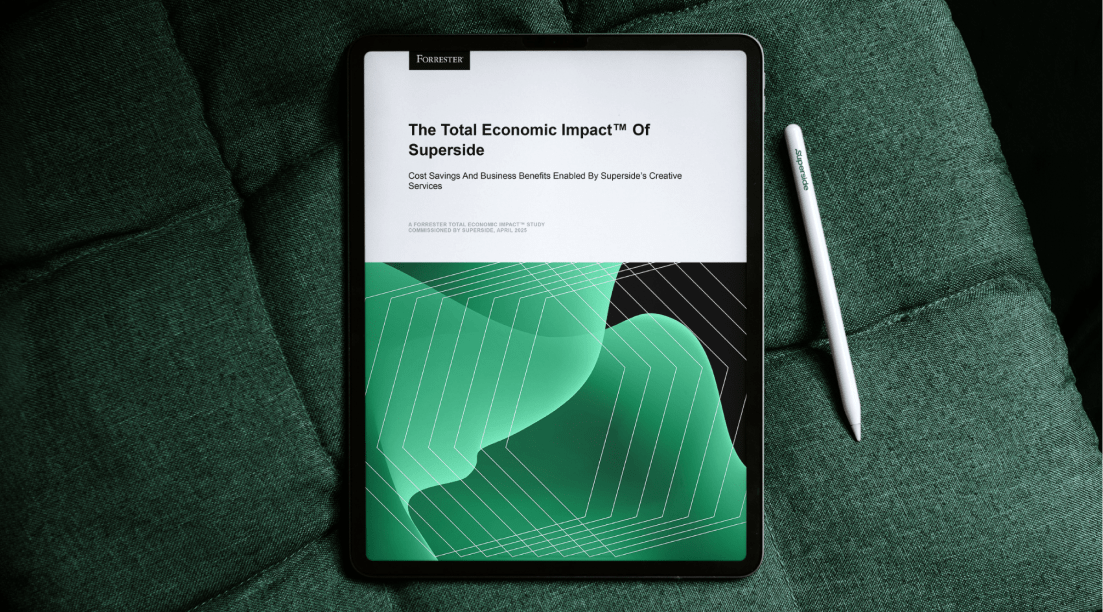
- A modeled financial case: In a Total Economic Impact study commissioned by Superside (April 2025), Forrester interviewed Superside customers and modeled a composite organization. It found a 94% ROI over three years and payback in under six months, including $1.9 million in avoided agency fees and more than 60% of feedback rounds avoided, all as three-year present value.
We've delivered 200,000+ projects for 400+ top global brands, including Amazon, Reddit and Figma. Superside also holds a 4.5 out of 5 rating on G2 from 115 reviews.
For a view of OLIVER from the inside, its employee reviews on Glassdoor average 3.2 out of 5 from 920 reviews (as of November 2026), with 57% saying they'd recommend it to a friend.
Superside vs. OLIVER: Which model suits your team?
If your creative demand is steady and your brand needs daily attention from people inside the business, OLIVER's embedded model makes sense. You get a team that knows your business and works alongside you every day.
If your demand changes often, Superside gives you more flexibility. You can bring in specialists for everything from social and ad creative to brand strategy, video and presentation design, without building those skills into a fixed team. Our pricing is public, so it's easier to understand the investment upfront.
For many enterprise and growth-stage teams, the answer is both. Use embedded talent where daily collaboration matters and flexible support where you need extra skills or scale. The key is to match the model to the work.
See how Superside supports enterprise creative teams and review our current plans on our pricing page. For other OLIVER agency alternatives, read our comparisons of Superside vs. Designity and Design Pickle.
Ready to see how a flexible model could work for your team? Book a call with Superside.
FAQs



The data speaks for itself
According to a Forrester Total Economic Impact™ study, Superside delivers a 94% ROI and pays for itself in six months.


Creative support that works
Work with an AI-native creative agency that
understands your brand and your process.