


At the enterprise level, a design system is far more than a well-organized component library. It aligns thousands of people and hundreds of markets around a single source of truth. This eight-step playbook outlines how today's top brands build, govern and scale their design systems with AI while maintaining brand consistency.
The story is familiar. An enterprise spends months building a design system, celebrates its launch and then watches it slowly unravel.
Six months later, regional teams are back to building their own decks, and the product team has drifted from the color palette. Then comes the inevitable game of "which version is the latest?"
Part of the problem is that many enterprises underestimate the difference between a design system for one team and one that has to support multiple teams, hundreds of markets and dozens of products. Building the reusable components is the easy part. Adoption, governance, localization and ongoing maintenance are where enterprise design systems succeed or fail.
This guide explores what a cohesive design system looks like, why the right design system approach pays off at scale and where these systems typically fall apart. It then walks through an eight-step playbook for scaling a design system across a large organization. Lastly, it explores how leading brands such as Colgate-Palmolive have put this playbook into practice.
What a design system is and why it pays to have one
The term "design system" is often used loosely. At Superside, we define it as a centralized source of truth for your organization's design language. The standards, principles and reusable assets that help designers and developers create consistent brand experiences at scale.
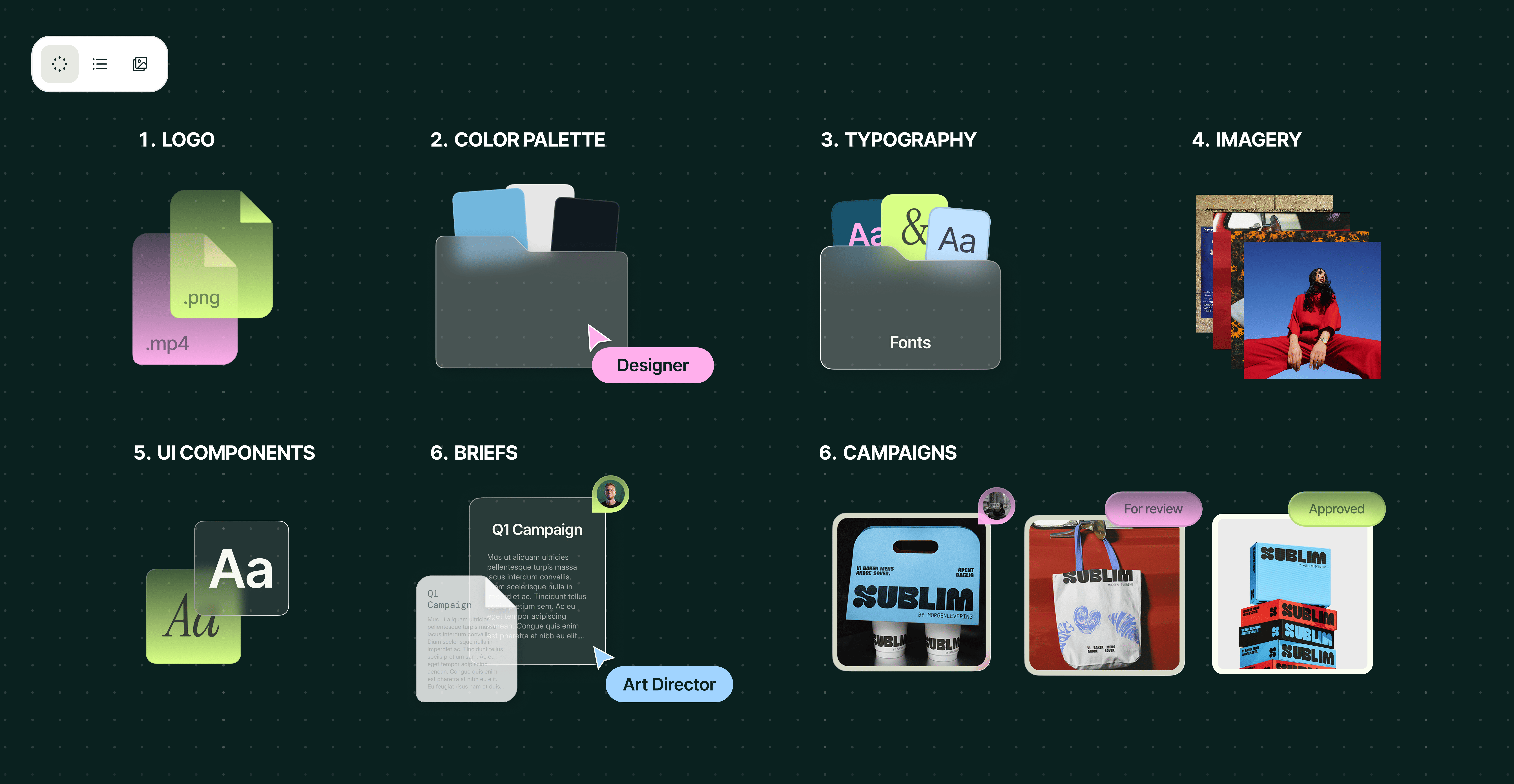
Many design systems are influenced by methodologies like Atomic Design, which organizes interfaces into foundational building blocks such as design tokens, color, typography, spacing, components and reusable patterns.
Together, these elements create a cohesive system that team members can apply consistently across products, campaigns and digital experiences.
A well-designed system is adaptable and makes it easy for global teams to collaborate efficiently, maintain visual consistency and deliver high-quality work faster.
While setting up these systems can be hard work, their impact is significant. Teams that use design systems complete tasks 34% faster than those that don't. At enterprise scale, that's the equivalent of hiring several additional full-time designers.
Enterprises with design systems can also achieve a 135% ROI over five years by reducing design and engineering costs, according to one widely cited Smashing Magazine model.
Companies investing in design systems or dedicating teams to them aim to be future-proof. It's always a heavier lift in the beginning, but when a company has a long-term strategy and cares about its brand, product and digital ecosystem, they understand the value of a design system.

Adoption continues to grow. In 2020, 65% of companies reported using design systems, a number that has continued to rise.
In turn, the costs can add up quickly for those who don't implement these systems successfully. Some Superside's customers produce up to 10,000 assets a quarter. Without design systems, as much as 40% of that work ends up duplicated or off-brand. Multiply that waste across a global organization, and the case for building a design system quickly writes itself.
Why design systems often fall apart at enterprise scale
Despite their value, many enterprises struggle to build, maintain and scale their design systems.
The first challenge is organizational complexity. Most large companies now run hybrid design and development teams, often spread across locations and time zones. As teams become more distributed, design decisions are made by more people with different priorities. This can create a chaotic environment in which systems exist but aren't maintained or used consistently.
The second challenge is cadence. Product teams release updates far more frequently than brand or design standards change. These teams also quickly adapt products for various markets, languages and platforms. Without clear governance and shared ownership, the company's design systems quickly become outdated.
Adoption is the third hurdle. If designers and developers can't easily find the right components, don't trust them to be up to date or feel they don't meet their needs, they're unlikely to adopt the system and use it consistently. The solution is to prioritize ongoing maintenance, dedicated ownership and continuous communication to keep teams aligned as the business shifts.
[Design systems] aren't just repositories; they're living products that need maintenance, buy-in and consistent communication to thrive. You can't just launch your design system and hope for the best.
How to scale design system enterprise programs
If you're researching how to build a design system enterprise teams can use, these eight steps provide a practical framework.
1. Establish a single source of truth
To scale your design system enterprise program, you need one authoritative, living home for your design language. The tokens, reusable components, patterns, brand rules and documentation that make up your brand, all centralized and up to date.
With a centralized source of truth, designers, developers and other team members no longer have to search for, rebuild or debate your brand standards. They can simply produce brand-consistent work from the get-go.
2. Build atomic and modular
Small, reusable components should serve as the foundation for larger patterns and interfaces. Design tokens are one of the most powerful building blocks. Instead of defining values such as colors, typography and spacing repeatedly, define them once and reuse them throughout the system. When a token changes, every product or asset that references it becomes easy to update.
Modular components build on those design tokens, packaging reusable UI elements like buttons into consistent, flexible building blocks that can be assembled into different experiences. Together, modular components and design tokens allow the same design system to scale across websites, apps, email and marketing campaigns.
Superside uses this approach to help build design systems for major brands. For Vimeo, we created reusable components that support more than 15 customer journeys.
3. Prioritize documentation and usage guidelines
Comprehensive documentation is what makes design systems usable, especially when hundreds of people work on a brand. Any documentation should be clear, visual and searchable, with code snippets, design examples and component usage guidelines that show exactly how to use reusable design elements.
4. Design for team members who don't have technical expertise
The people who create your brand assets include far more than designers and development teams. For example, your sales teams create presentations, and your regional marketers adapt assets for local markets. The most effective enterprise design systems are designed for every type of user. They provide robust, flexible components that enable designers and developers to work fast, but they also offer intuitive, guardrailed templates that help non-designers create on-brand materials with confidence.
Note that creative operations only scale successfully when adoption does. Training sessions and practical resources, such as cheat sheets and usage guidelines, can encourage the use of your custom design system.
5. Govern with clear ownership
Every design system needs a dedicated owner to uphold its principles. Make one person or team responsible for maintaining the system, evolving it and ensuring it's implemented. Design system governance is how the system stays trustworthy as it scales.
6. Localize without killing creativity
Your design system should be flexible enough to support different regions and languages, and ensure every asset still feels like it's part of the same brand narrative. The best approach is to create a strong foundation that everyone can build on.
At the same time, the design system should empower local teams to adapt content for their markets where appropriate. For example, they should be able to easily swap in local imagery and still maintain a consistent user experience.
7. Treat the system as a living product and maintain it
A good design system is never complete and should evolve through continuous improvement. Plan for maintenance, versioning, new design components and accessibility reviews from day one.
8. Maintain brand assets at scale with AI
The newest lever is AI, used to keep the system alive and on-brand at a volume humans can't match. AI can, for example, help keep documentation up to date, surface inconsistencies and identify outdated components. When AI learns your brand and becomes part of your team's everyday workflow and design tools, it's also much easier for everyone to stay on the same page. That's the idea behind Superside's Brand Brain, which we'll explore in more detail shortly.
What scaling a design system looks like in practice
The best way to understand what a great design system at scale looks like is to see some of these systems in action. The following examples, several of which were built with Superside, show how enterprise design systems deliver major benefits.
Colgate-Palmolive builds one brand system for 34,000 employees
For the first time since the 1980s, Colgate-Palmolive set out to create a new corporate brand identity to better reflect the company it has become and where it's headed.
As one of Colgate-Palmolive's creative partners, Superside helped create a design system that could scale across 34,000 employees and more than 200 markets while remaining intuitive enough for anyone to use. The brief was bigger than a refresh. When the Colgate-Palmolive team reached out to Superside, they were looking for a strong creative strategic partner to help them truly scale across every customer touchpoint.
The project results were striking. The launch included more than 1,000 brand assets and achieved 98% positive employee sentiment. 99% of employees also said they were proud of the new logo. On LinkedIn, the launch drove more than 500,000 impressions during launch month.
Two factors made the partnership successful. The first was our global network of creatives, spread across the globe, who could bring diverse perspectives to the design systems and assets Colgate-Palmolive was building.
The second was designing for adoption. Our design system team is well-versed in creating both complex components for senior creatives and simple-to-use tools for junior designers and non-designers, which meant we were perfectly positioned to create a design system engineered for adoption.
It's a textbook example of a design system that scales across an enormous, global organization without losing the brand or the people along the way.
TransACT unifies 13 sub-brands for 70x the output

After an investment boost in 2020, edtech company TransACT experienced rapid growth, and by 2022 it had 13 sub-brands under its parent brand. With a two-person brand team supporting around 70 team members and no shared guidelines, this presented a major hurdle.
That's when Superside stepped in to create a scalable design system that clearly connected the parent brand to its sub-brands. The system included unified typography, color, layout and governance, as well as a new brand architecture. The outcome was a 70x increase in scalable output, one centralized system across brands and 100% stakeholder satisfaction.
Having a unified and easily executed design system escalated our look and feel by the power of 70. Every internal stakeholder at TransACT can now use these guidelines as a source of truth. Our team can focus on driving new leads and revenue.

Vimeo and a few major benchmarks

Superside adopted the principles of Atomic Design when we built Vimeo's design system, a centralized library of design tokens and reusable components that spans more than 15 customer journeys. By giving marketing and product teams a shared set of flexible building blocks, the system helped the team maintain consistency, reduce duplication, speed up delivery and scale new customer experiences.
We helped Vimeo's team build a set of components that suited over 15 different communication tracks, like onboarding, win-back and account actions. Overall, it was a very smooth ride.
The following major brands prove the same principles on an even larger scale:
- IBM's open-source Carbon Design System powers products and digital experiences across the company.
- Shopify's Polaris is the design system behind the Shopify admin, the shared language its teams use to build consistent merchant experiences.
- The Atlassian design system is maintained by a dedicated team across Jira, Confluence and Trello.
These digital design systems all offer the same lesson. Atomic foundations, strong documentation, clear governance and a relentless focus on adoption are key to building and maintaining successful design systems. Our article on design system examples dives deeper into each of these layers.
How Superside helps enterprise brands scale their design systems
As the world's leading AI-first creative partner, Superside creates design systems for major enterprises like Colgate-Palmolive and TransACT. We're a human-led, AI-native creative partner, or as our customers put it, your creative team's creative team.
Being AI-first means AI isn't just powering individual tools. It's embedded across the entire creative model, from how teams are trained to how brand knowledge compounds over time.
As part of our design system service, our specialists create and maintain design systems that grow with our customers. Across the board, these systems drive visual and functional consistency without the overhead of hiring more team members. This service spans the full lifecycle. Whether you need to build a design system from scratch, audit an existing one, maintain and evolve it, enhance components or develop an email design system, we're here to help.
We'll pair you with a dedicated team that includes a design system creative lead, a designer and a project manager. And the project runs through Superspace, where briefs, feedback, documentation and delivery live in one place and hand off cleanly into Figma, Storybook or your own tools.
The results of working with Superside speak for themselves:
- 94% of our clients rate their deliverables as exceeding expectations.
- 98% of our design projects are delivered on time.
- Teams cut roughly 70% of admin work because we handle the entire project end to end.
Then there's the AI layer that keeps your design system alive at scale. At the heart of Superspace is your Brand Brain, a living system that captures the nuance of your brand and gets smarter with every project. It holds your brand guidelines, tone, past work, feedback and approvals, then puts them to work through AI briefing, custom brand-trained image models and automation.
This is the difference between a static library of components and a powerful engine that helps drive design consistency at scale. Every new asset starts on-brand, and because Brand Brain learns only from your work, it becomes a competitive edge no generic AI tool can replicate. Plus, it's automatically part of your Superside subscription.
Ready to turn design chaos into a system that scales? Book a demo and see what a Superside design system can do for your brand.
A design system is an investment that compounds
Companies like TransACT and Vimeo prove that it's possible to build consistent brand experiences across thousands of employees, multiple brands and global markets.
The key is to treat your design system as living infrastructure. A single source of truth that's atomic and modular, well documented, genuinely adopted, clearly governed, localized with care and maintained like a product. Get this right, and you benefit from less rework, faster production, stronger brand consistency and more time for teams to focus on creative ideas that move your brand forward.
As the world's leading AI-first creative partner, Superside is perfectly positioned to build enterprise-level design systems, backed by AI-powered workflows and a dedicated team of specialists. Make Superside your creative team's creative team when it's time to build your own design system.
Book a demo to build a design system that scales with you.
FAQs


Brand systems that scale with you
From one-off email assets to AI-powered workflows,
we make sure your brand grows with no compromise.
Schedule a chat to learn more.




Your creative team's creative team
Choose the world's leading AI-powered creative service
and get high-performing ads, videos, experiences and
more at scale, on your schedule and to your standards.


Increase your creative capacity
Let your in-house team reach for the stars,
while Superside keeps your day-to-day creative needs
at an industry-leading level. Ready to scale?