




Ever wonder how to build and manage a team of creatives when it feels like the walls are closing in around you? If the answer is yes, then we’ve got some insights to help you set boundaries, inspire confidence and get your team’s creative juices flowing.
Sometimes, it can feel like burnout is the only constant for creatives. We’ve heard it from creative teams over and over again, from small brands to global powerhouses. There is a seemingly never-ending list of assets that need to be built and campaign deadline after campaign deadline.
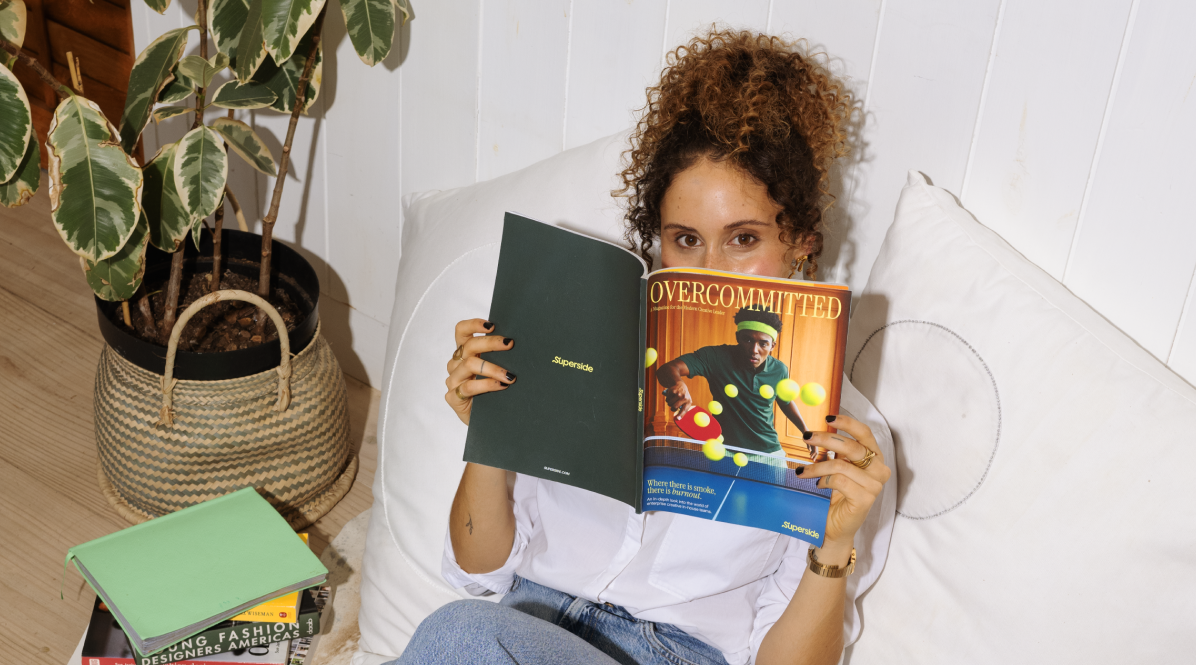
Not only that, but almost every project is critical. When we spoke to 200+ creative leaders about the issues affecting their teams for Overcommitted: The State of In-house Creative Teams in 2025 report, they shared that 55% of their projects were marked “high priority”.
When everything is important, how do you manage business demands while helping your team maintain their creative integrity (and not burnout)?
We went to one of the experts to find out. James Hurst, former creative director at Tinder, joined us for our Overcommitted Virtual Summit to share his experience in prioritizing what matters, culture-building, risk-taking and his thoughts on the role of artificial intelligence (AI) in creativity.
1. Stop creative burnout
Here’s a stat that you’re probably feeling yourself. Nearly 80% of teams we spoke to say they’ve experienced burnout in the last year.
What’s driving this? Heavy workloads, tight deadlines and an insatiable demand for content are draining creatives and increasing burnout. The simplest answer to addressing this challenge also happens to be the most difficult—saying no.
Hurst’s advice: “Your boldest statement is saying no.”
This is a whole conference about being over-committed, so let's all commit to no.

Saying no isn’t about doing less—it’s about doing what matters. It’s a creative strategy that builds stronger teams and stronger brands. Patagonia got this right in 2011 when they ran a full-page ad in The New York Times with the tagline “Don’t buy this jacket.”
A paradox? Maybe. But, it aligned their brand with their mission and values.
That campaign really shows how you can use the power of saying no to really deepen commitments.
Creative leaders who set clear priorities—and say no—show their teams that focus beats frenzy.
2. Focus on what matters
Before leading creative at Tinder and Google, James Hurst built and scaled agencies in the UK and US. That experience gave him an insider’s view of two worlds:
- Agencies? They’re like therapists—listening, diagnosing and advising.
- In-house teams? They’re inside the patient’s head—navigating the chaos while solving the problem.
You're just always trying to get everyone to understand that there's a problem and that you're trying to move towards some sort of solution. You just have to have real persistence. You've got to have real resilience.
Hurst’s advice: “Build what matters and leave the rest.”
For Hurst, creative leadership means giving his team direction on what matters and what can be ignored. He used the famed architect Zaha Hadid as an example. Known for her bold, innovative designs, Hadid broke conventions by eliminating the unnecessary to reveal powerful, elegant spaces.
[Hadid] was ruthless at prioritizing what mattered and she just cut out the distractions.
Creating this creative environment takes leaders who can set clear priorities for their teams so they understand the impact of their work—and their talent.
3. Craft stories, not campaigns
To paraphrase the Wu-Tang Clan, running an in-house team can feel like C.R.E.A.M.—campaigns rule everything around me.
The constant demand to launch new campaigns can sometimes lead to your message getting lost. Focusing on campaigns over long-term brand storytelling is like not seeing the forest for the trees. Consumers want to connect with experiences, not slogans.
Hurst’s advice: “Create stories people can live in.”
They know how to invite you in and then just tell you what their brand is. They let you live the brand. They let you be the brand. I think there's a lot that we could all learn from that.
Creative leaders guide their teams from beyond one-off marketing campaigns to building engaging brand narratives that connect with audiences.
4. Make an environment where creativity flourishes
Today’s economic uncertainties are leading to fears of job insecurity across virtually every industry, including for creatives. This sense of fear can cause some creatives to play it safe rather than take the necessary bold risks to create their best work.
Hurst says that fear of failure is even more pronounced in the US versus his native England. The reason why? In the UK, college and university tuition are free. When he moved to the US eight years ago, he quickly realized that the fear of getting fired held people back from creating great work. Solving this meant creating an environment where risk was rewarded. When he started working at DesignStudio in San Francisco, one of the first things he did was to let his team know they wouldn’t be fired for presenting an idea that felt bold or brash. He says that kind of culture is harder to build and maintain with in-house teams in today’s layoff culture.
Creating the sense of psychological safety is incumbent on anyone that's a creative leader right now. You have to say, ‘look, if anyone's going to get fired, it should be me,’ because my job is to look after them.
Hurst’s advice: “Culture outlasts campaigns.”
Creating an environment where risk is encouraged can lead to truly culture-shifting work. Hurst says Ben and Jerry’s is a perfect example of this—standing up for what they believe in and building a deep connection with their customers.
According to Hurst, "branding is about building a longer culture. A campaign is an expression of that culture, not the whole thing." He explained how, with Ben and Jerry’s, activism is not just something they say in their ads. They truly live their brand by being real activists and standing up for what they believe in. Hurst explained how "holding onto those values really matters so much more than short-term marketing goals.”
Hurst’s advice: “Turn rebellion into relevance.”
The same risk-taking that Hurst encourages his team to take can apply to brands, too. Another example Hurst shared was Nike’s approach to the 2016 controversy surrounding Colin Kaepernick, one of its star athletes. Kaepernick’s kneeling during the US anthem caused an uproar. Instead of dropping Kaepernick, Nike stood behind him and launched a campaign to change the conversation.
In today's current climate, that’s more important than ever. I think taking a stand can really deepen the authenticity, the relationship and the role that people hope that a brand will play in their lives.
5. Use AI to simplify, not overcommit
It wouldn’t be a discussion about the future of creative leadership if we didn’t talk about AI. There’s a lot of talk about AI taking over jobs from people, but Hursts sees the technology as more of a valuable tool than a replacement for human creativity. He says AI is great at deductive thinking—generating the mean average of what it is trained on, whether creating a photorealistic car image or writing a poem.
On the other hand, humans are great at inductive thinking—connecting seemingly disparate ideas to create something new. AI can’t replicate those intuitive leaps that allow us to connect ideas in unexpected ways.
For me the really interesting bit about creativity is actually inductive thinking. It's when people give me a bunch of input and sometimes I'll use AI to stress test my input, but then I'll give myself the breathing room and give myself the time to say, all right, what's a new idea?
Hurst says AI can play a role in helping reduce the things that cause burnout in creative teams. As workloads increase and timelines shrink, creative teams can use AI to get the “busy work” done that blocks them from getting to the creative work that truly inspires them.
Used well, AI frees teams to do what they do best—think, create and innovate. There is a risk, though.
The danger [with AI] is that other people who might not be in the creative team are saying, ‘oh, so now you can do all of this, and you can do all of this and you can do all of this.’ You need to manage expectations about what your team can do.
Hurst’s advice: “Simplicity is revolutionary.”
Using Google’s original home page as an example, Hurst says creative leaders need to refocus their teams on what the purpose and intent of their work. Hurst teaches a course on aesthetic intelligence at ELVTR that explores using AI to enhance aesthetic intelligence.
So, what is aesthetic intelligence? According to Hurst, “aesthetic intelligence is being really clear on the values, the intent you've got and the declaration you're making with a piece of design." For Hurst, design is not about making something pretty. It's about making a really clear declarative statement about what something is.
Leading the future of creative teams
The best creative leaders don’t just manage projects—they inspire and protect their teams. Hurst says the role of a creative leader is to create the right conditions for creativity to thrive.
There are so many people with so many opinions that can drive creative people wild. So how do I give them air cover? I'm human. I mess it up all the time. But I'm always intentionally trying to make sure I understand the team and the culture to try to create a safe space.
Hurst’s leadership principles are an amazing roadmap for creative leaders navigating today’s challenges:
- Big ideas need breathing room—cut the clutter and focus on what matters.
- Creativity thrives when you clear the noise. Shield teams from distractions that don’t drive impact.
- Forget campaigns—build stories people actually want to be part of.
- Creativity isn’t fearless—it’s supported. Make safety a standard.
- Great work starts with a leap. Create space for meaningful risks.
- AI tackles the to-do list. Humans bring the big ideas.
What’s your next step as a creative leader? Start by making one small change today.

What 200+ creative leaders had to say
There’s a reason we called it the Overcommitted Report.
But, is there light at the end of the carpal tunnel?

The Art of Doing Less
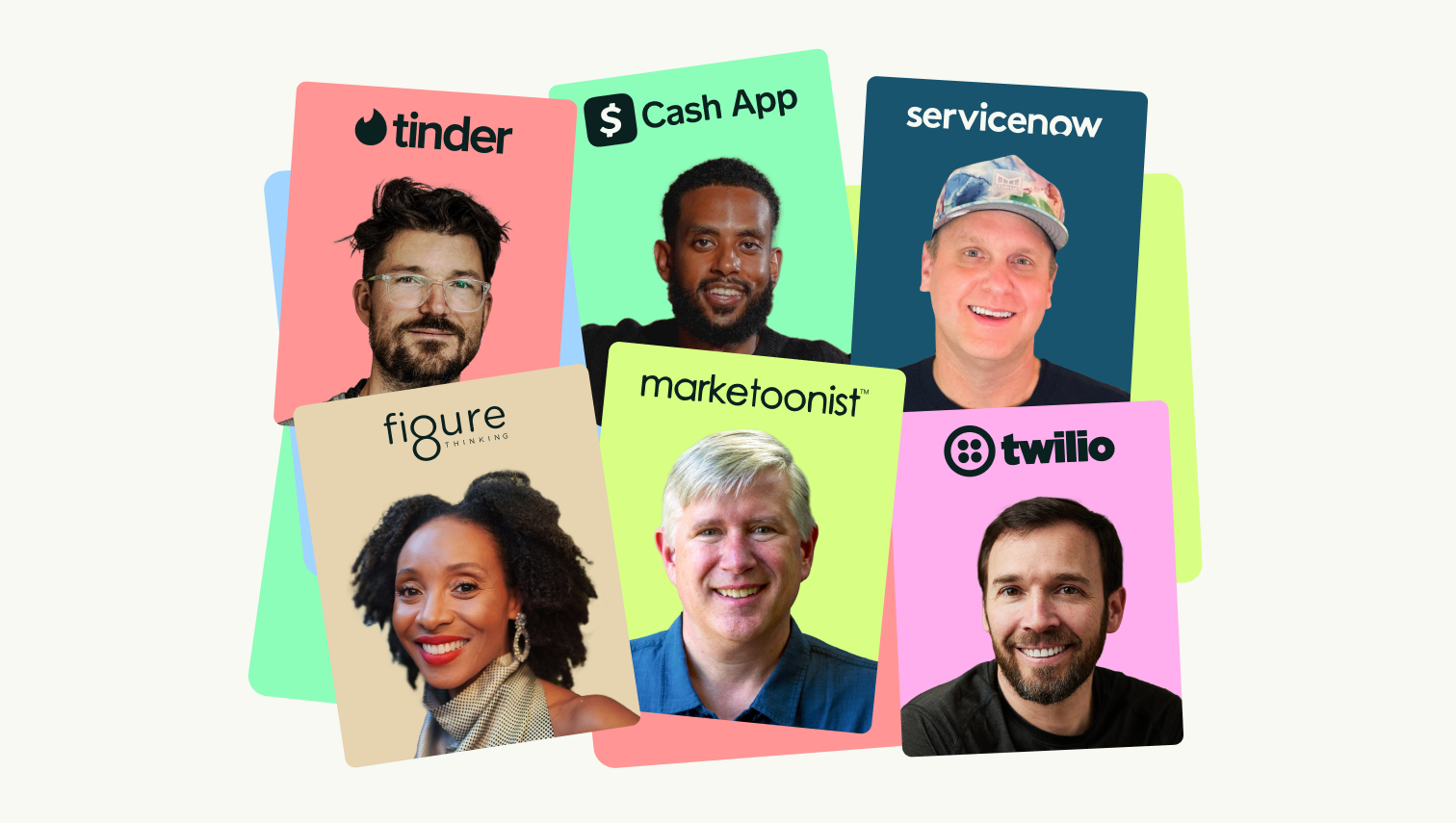
Learn how brands like Cash App, ServiceNow,
Tinder and Twilio do more of the work that matters,
and less of what doesn’t.


Overwhelmed?
You're not alone. Meet the only creative partner built to be an extension of in-house teams.


