






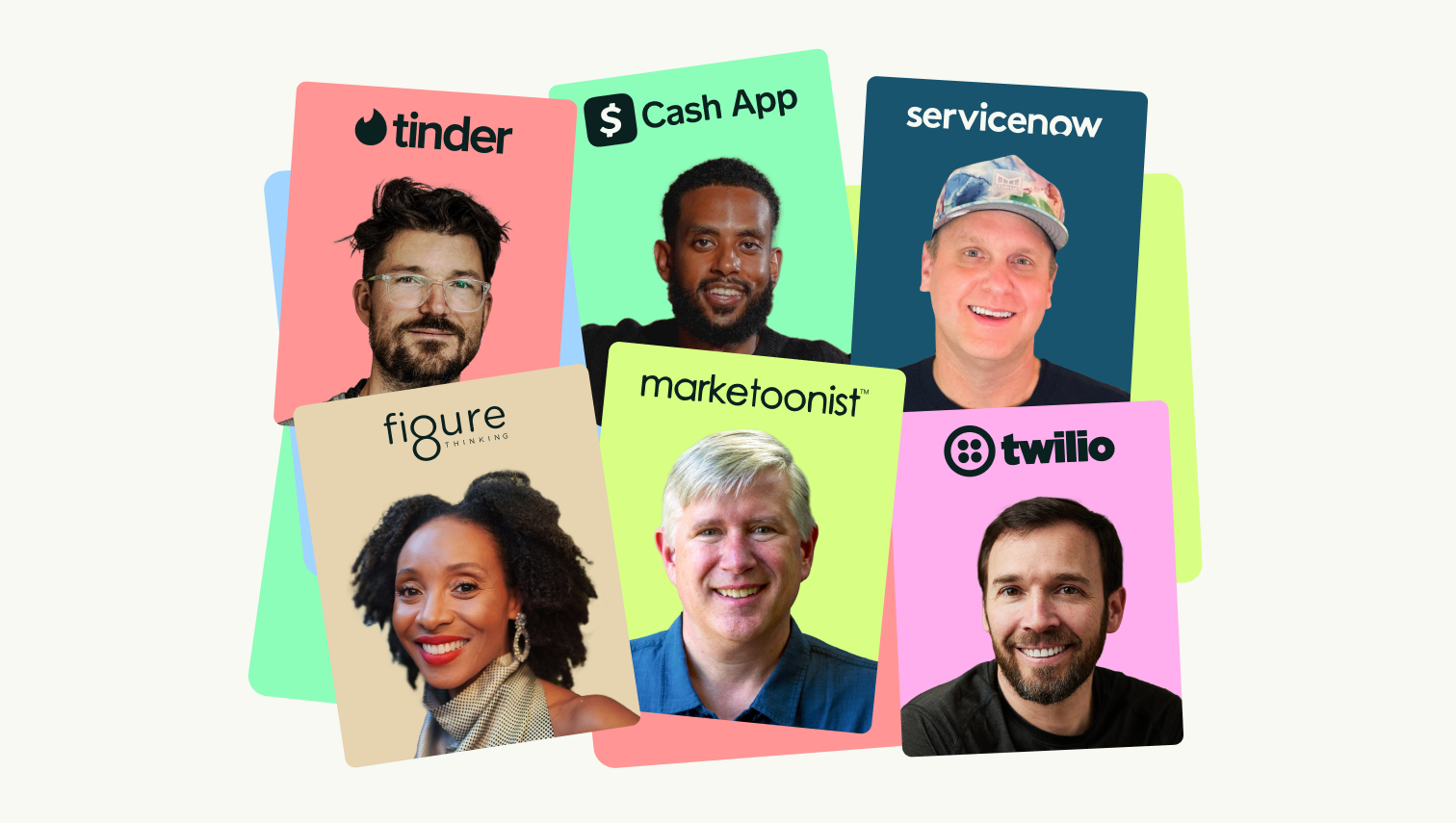
Feeling stretched too thin? Superside’s Overcommitted summit brought together top creative leaders to share how to break free from the noise, reclaim focus and make space for the work that actually moves the needle.
If your to-do list is longer than your patience levels and your Slack is a never-ending fire drill, welcome—you’re exactly who Overcommitted: The Art of Doing Less was for.
This Superside virtual summit brought together top creative leaders to tackle a problem nearly every team faces: How do we break free from the chaos and focus on the work that actually moves the needle?
Turns out, the answer is to do what matters. Here’s what we learned.
1. Your boldest statement is saying no
James Hurst, Creative Director at Tinder, put it bluntly: Your ability to say no is what defines your ability to lead.
Every “yes” you give out—every extra meeting, every last-minute request—chips away at your time, your focus and your ability to produce great work.
Hurst takes Zaha Hadid’s, world-renowned architect, key guiding principles to heart. She was ruthless about prioritizing what mattered—and unapologetic about cutting everything else.
Build what matters, leave the rest.

Saying no, doesn’t mean saying no to everything, but really understanding the task at hand and the value it might bring.
- Before saying yes to anything, ask: Does this serve our larger goal?
- If not, push back—with a solution. (“I can’t take this on, but here’s another way to get it done.”)
- Protect creative time like it’s money—because it is.
The lesson: When you master the art of saying no, you create space for your best work.
2. Great leaders don’t just manage—they protect
Creative leadership isn’t just about managing deadlines and output. It’s about creating an environment where great ideas—and the people behind them—can thrive.
My job as the leader or as a manager of someone is to do two things: 1. To give people the foundation and the support for them to do the best work of their career. 2. How do I give people the air cover?
Too often, creatives are stuck battling competing opinions, endless feedback loops and workplace cultures that make risk-taking feel dangerous and add to growing burnout. But the best leaders act as a shield—giving their teams the space, support and protection they need to do bold, meaningful work.
- Give your team air cover: Hurst shared that leadership means protecting creatives from unnecessary noise.
- Help them find their path: Leadership isn’t just about guiding projects—it’s about guiding careers. “Taking the time to sit down with them to understand what they want to get out of their career and making sure that I can support that, that I can evangelize and that I can steward that in whatever way.”
- Create psychological safety: If people are too afraid to take risks, you’ll never get breakthrough work. “No one's going to fire you for presenting an idea that feels bold or brash… It’ll reflect badly on you if everything you've ever presented is the expected thing.”
- Take responsibility: In today’s culture of layoffs and instability, leaders need to step up.
The lesson: Creative teams do their best work when they feel supported, not just directed. The best leaders aren’t just project managers—they’re protectors.
3. Make time for wonder and rigor
Dr. Natalie Nixon, CEO at Figure 8 Thinking, introduced a game-changing concept: The best creative work happens at the intersection of wonder and rigor.
Too much structure? You kill innovation. Too much chaos? Nothing gets done.
What’s the fix? Stop chasing rigid roadmaps and start using a compass instead.
It’s really hard to wonder when we’re going 80 miles an hour. We’ve got to be able to carve out that time and space to pause.

Now more than ever, creativity is key to standing out in saturated and overly complex environments. According to Nixon, “Creativity is an essential dimension of everyone's work. Especially because we live in a world where we have to connect the dots between productivity, tech and meaningful human experiences. But also because we have unprecedented burnout.”
This is what makes practices like the WonderRigor™ framework so important. It provides the steps to bring back creativity into different aspects of work and even life. “I often say to doubters, wonder is not woo, woo. If you want to become smarter, wiser, more knowledgeable—commit to building dimensions and space and time for wonder in your life and in your work with your teams,” explained Nixon.
While wonder focuses on taking the time to explore and find inspiration in life, rigor brings structure and discipline to work. Nixon adds that “Rigor is the dimension of creativity that's essential, but we often forsake. And people who, maybe being creative comes easily to them, know this, or maybe sometimes they might forget this. But rigor is the counterpart to wonder in all creative practices. Rigor is about discipline, focus, skill, mastery and time on task. “
The lesson: A compass sets your direction—giving you flexibility without losing focus. Wonder and rigor are copacetic and they're enmeshed in creativity. Define your north star and make space for these two concepts to coexist and let creativity to lead the way.
4. Trust your gut—not just the data
When you’re overcommitted, it’s tempting to let data make your decisions for you. After all, why not follow the numbers? Why not optimize every campaign based on what’s worked before?
Because that’s how you end up looking like everyone else.
Ryan Hamill, Creative Director at ServiceNow, put it best: Data should inform decisions—not dictate them.
If attention is fractured and you’re going to provide something that’s completely undifferentiated—when the data points you in that direction, that’s data that you need to ignore.

Over-relying on data can lead to incremental optimization—constant tweaking instead of bold moves. It’s a fast track to burnout and creative work that blends in, not stands out. Assessing creative performance means using both data and instinct to define what works and what doesn't.
Some of the most successful campaigns ignored conventional wisdom:
- Old Spice: Once they realized that it was women and not men who were doing the shopping for personal hygiene products, they shifted their marketing to women instead of men and reinvented the brand.
- Amazon Web Services: AWS was told TV wasn’t for B2B. They did it anyway—with an F1 partnership that drove massive engagement.
The same goes for AI—a powerful tool, but one that can lead to efficient yet forgettable creative work if used without strategy.
How to use data (and AI) without losing your edge:
- Prioritize what truly matters—don’t let only testing and tweaks dictate your roadmap.
- Differentiate before optimizing—if you’re using the same data as competitors, how are you standing out?
- Look for the human truth—data tells you what’s happening, but not why it matters.
The lesson: If you’re feeling stretched thin, the answer isn’t to automate every decision—it’s to make fewer, smarter choices. Data is a tool, but instinct helps make work exceptional.
5. Prioritization is also about the right branding and messaging
One of the biggest challenges teams face today is overcommitment—being pulled in multiple directions, chasing urgent (but non-strategic) tasks and struggling to focus on meaningful work. According to Superside’s Overcommitted report, about 76% of creative leaders say that they and their teams have felt burned out by their workload over the past year.

Source: The Overcommitted Report
Adam Morgan’s (VP of Brand at Twilio) insights on branding align closely with this common pain point:
Teams, especially in creative and marketing functions, are often reactive instead of proactive. They get caught up in:
- Endless requests from different stakeholders.
- Constant shifts in priorities.
- A lack of clarity on what truly matters.
This results in burnout, scattered efforts and diluted impact—leading to branding inconsistencies, weak messaging and stalled strategic projects.
You have to just stop and say: Okay, what is it that we stand for? Truly? If we were to put a stake in the ground, what is it that we’re all about?

Morgan’s branding framework provides a roadmap for escaping this chaos:
- Clarify your "Why": Just as a brand must have a strong purpose, teams must define their core mission and prioritize accordingly.
- Focus on the audience: Know who truly benefits from your work (customers, internal teams) and align priorities to their biggest needs.
- Create the right environment: If leadership doesn’t value focused work, advocate for structural changes that support deep work rather than constant context-switching.
- Emotion over execution: Work that makes an emotional impact (brand storytelling, strategic campaigns) drives long-term success, unlike short-term tactics that provide only incremental gains.
Once you know what the customer wants and what they stand for—that's the why. Then, you have to go back and think—what’s the emotion that they’re going to feel so that you can connect all of those things together?
Morgan’s branding philosophy highlights a deeper truth: The most successful teams and brands are the ones that stay focused, align leadership and cut through the noise to create something truly meaningful.
This can also be applied to campaign messaging campaigns. If your campaign is trying to say everything, it’s actually saying nothing.
Malik Suleiman, Creative Director at Cash App, shared that one of the biggest mistakes creative teams make is trying to do too much in one moment.
Instead of cramming every feature, every selling point and every CTA into a single piece, he suggests stacking messaging over time:
- Each campaign should focus on one clear, memorable message.
- Build on that story over time, instead of stuffing it into one ad.
- Let attention span shape the strategy—your audience can’t absorb it all at once.
The lesson: Think of your marketing like a steady drumbeat—not a one-time information dump.
6. Humor isn’t just nice—it’s a productivity hack
Tom Fishburne (creator of The Marketoonist) reminded us that sometimes, the best way to tackle creative burnout is to inject humor into what you do.
We take our work so seriously that we forget:
- Humor cuts through the noise.
- Humor makes ideas stick.
- Humor actually makes teams better—it builds resilience and helps navigate uncertainty.
Fishburne emphasized the power of authentic leadership in building a creative culture. “Fear kills creativity, and humor is our most powerful tool to drive fear out of the system,” he explained.
We hold back our true selves at work—and it can get in the way of doing our best work.

Fishburne highlighted four common "myopias" that hinder effective marketing and drive this type of creativity-killing fear:
- Technology myopia: The obsession with chasing trends (e.g., AI, metaverse) without a clear strategy.
- Creative myopia: The “great sameness” where brands conform instead of standing out.
- Customer myopia: Focusing too much on marketing funnels rather than real customer experiences.
- Silo myopia: Internal structures and politics that prevent seamless brand experiences.
Organizations move at the pace of organizations, not at the pace of technology. There's friction trying to make sense of how we work with it. We're at awkward adolescent stage with AI. Like a teenager who suddenly has all these new tools. They're tripping over their feet because they haven't figured out the right way to use them effectively.
Try this:
- Add playfulness to brainstorming sessions—no “bad” ideas, just fun ones.
- Use humor to challenge outdated processes (nothing disarms resistance like a joke).
- If the creative process isn’t fun at all… that’s probably why the work isn’t hitting.
The lesson: When we stop treating creative work like a never-ending grind, we create better, too.
Final thoughts: Doing less, but better
The biggest takeaways from the Overcommitted Summit?
- Great creative teams don’t do more—they do what matters.
- The best leaders don’t manage projects—they manage people.
- The most impactful work isn’t always the most optimized—it’s the most human.
If you’re feeling stretched too thin, the answer isn’t another productivity hack. It’s doing less—but better.

The Art of Doing Less
Learn how brands like Cash App, ServiceNow,
Tinder and Twilio do more of the work that matters,
and less of what doesn’t.


What 200+ creative leaders had to say
There’s a reason we called it the Overcommitted Report.
But, is there light at the end of the carpal tunnel?


Overwhelmed?
You're not alone. Meet the only creative partner built to be an extension of in-house teams.


