





Don’t quite know how to create brand experiences that drive real ROI? When Superside transformed a 30,000 sq ft Manhattan venue into an immersive New York City experience for tech leader Forter, we followed a tight seven-step framework. Copy-paste our methodology and get ready for a few jaw drops.
In a city that overflows with tech events, Forter’s annual IMPACT 2024 conference stood out by capturing New York’s pulse inside four walls.
The Forter Superside campaign collaboration has since become one of the strongest brand activation examples in enterprise tech. Why? Because it showed how creative brand experiences can shape perception, deepen trust and take an enterprise brand marketing strategy to an entirely new level.
As a global digital commerce platform trusted by top brands to prevent fraud and power seamless transactions, Forter naturally puts trust and innovation at the heart of every campaign and experience it creates.
That mindset shaped IMPACT 2024 at Center415, an ultra-modern Fifth Avenue venue with 30,000 square feet of space, expansive white walls and 18-foot ceilings. The location offered both a blank canvas and a creative challenge: How do you design an exceptional brand experience that captures the city’s rhythm and still closely reflects your brand identity?
Billed as “an annual can’t-miss event” for digital commerce decision makers, IMPACT draws senior leaders from across global retail, payments and tech. In other words, a crowd that’s seen every slick demo and branded pop-up imaginable.
For the 2024 event, Forter wanted to make a lasting impression with something a little different. Headquartered in New York City, the team set out to create an experience that reflected both their home city and their brand’s essence: Smart, bold and full of character.
But Forter soon faced the same challenge many enterprise brands do: Its ambitious goals didn’t quite align with its deadline and available budget. Superside stepped in to assist.
With our help, Forter transformed Center415 into a living, breathing New York microcosm in just three weeks. Think equal parts art installation, cityscape and brand playground. It was a masterclass in brand experience design and a case study every enterprise marketer can learn from.
If you’re not quite sure how to create brand experiences fast, at scale and unmistakably human, read on. This seven-step guide unpacks how any brand can create its own truly remarkable immersive experience that drives business growth.
Why immersive brand experiences matter
Immersive brand experiences create “memory anchors,” or sensory cues, that can help trigger specific memories about a brand’s messages, values, ambitions and energy. Being immersed in a story rather than just listening to one also connects with people on an emotional level, which is incredibly powerful.
The value of immersive brand experience design is undeniable. At events, for example, people remember how an experience of “stepping inside a brand” made them feel long after they’ve forgotten what was said in a keynote address.
For many enterprise-level companies, events have become full-scale immersive brand campaigns designed to make an unforgettable impact. This has become especially critical in the B2B world. The reality is that brand storytelling for B2B audiences must work harder to humanize complex products and inspire long-term trust.
Research also confirms why many of the world’s top brands now prioritize creating these experiences:
- Experiential activations boast recall rates of up to 80%, compared to the fleeting glances traditional ads receive.
- 71% of brands report positive ROI from immersive marketing initiatives.
- 38% report returns at least 20% higher than those from traditional marketing campaigns.
For enterprise brands, immersive experiences can be the ultimate differentiator. A cohesive brand experience strategy, when executed well, can drive deep engagement and turn events into catalysts for long-term business impact.
The link between experience and trust is even stronger for B2B enterprises. Immersive environments can humanize complex technologies, translate abstract value into tangible terms, and create the kind of emotional resonance and trust that accelerate decision-making. In fact, 75% of B2B event attendees say these experiences help them engage more deeply with brands.
For companies like Forter, whose entire business revolves around trust in digital commerce, immersive design is a strategic tool that builds confidence, understanding and connection with every interaction.
Why creating immersive brand experiences is harder than it looks (but it’s worth it)
Immersive brand experiences can have a massive positive impact on your brand, but most enterprises run into a few obstacles long before the first wall wrap goes up.
Let’s take a closer look at what these challenges typically are:
1. Limited in-house creative capacity

Enterprise teams simply don’t always have the in-house bandwidth to dream up and execute immersive brand experiences. According to Superside’s “Overcommitted report,” two in five creative leaders say their teams are understaffed, and over three-quarters say demand exceeds their capacity to deliver.
These teams juggle creative tasks across numerous multichannel campaigns and projects, which leaves little room for anything else. When an immersive event demands dozens of unique assets across illustration, motion and environmental design, they get stuck. Unfortunately, this can lead to lost opportunities.
Forter’s team faced this exact challenge. They had bold ideas for their annual conference, but not enough time or people to execute them at scale.
2. Tight timelines and budget pressure
Enterprise events run on immovable dates. Venues are booked, speakers confirmed and leadership expects delivery on time and on budget.
Marketing leaders want conferences that look ambitious without runaway costs. For IMPACT 2024, Forter had less than three weeks to turn a massive venue into a fully branded environment. The combination of limited time and financial constraints made the challenge even sharper.
3. The need for multidisciplinary execution
Immersive experiences rely on more than traditional graphic design. Illustration, motion, video and environmental graphics should all work together in harmony. On the enterprise level, these experiences also typically require scale.
It takes time, skill and creative energy to create exceptional experiences. And while 78% of the creative professionals we interviewed for our “Overcommitted” report said they wanted to generate bolder work, they just didn’t have the time to do so. What’s more, few in-house teams can cover the full range of required skills.
Without the right external partner, many brands are forced to scale back their vision or settle for partial execution. These are precisely the hurdles Superside was built to solve. In fact, we’ve mastered scaling creative power to take the pressure off stretched enterprise teams.
A step-by-step guide to creating immersive brand experiences (the Forter way)

For IMPACT 2024, Forter and Superside used a practical brand experience strategy that any enterprise can adapt. It starts with your target audience and narrative, then turns the story into space, motion and content.
Superside’s approach combines storytelling, creative strategy, brand consistency and production at scale, a framework designed for enterprise teams with complex customer journeys and high creative demand.
Follow the steps below to apply the same process to your flagship event or digital brand experience, from concept right through to launch and measurement of key metrics.
Step 1: Know your audience
The foundation of any brand experience design is understanding who it’s for.
Forter’s audience isn’t easily dazzled. These are analytical digital commerce experts and fraud prevention specialists who value intelligence, precision and creativity with substance.
Superside helped Forter approach the design with that mindset. Every visual element carried wit and intention, and nothing was purely decorative. Instead, every asset had meaning. Even small moments, like clever copy on signage, menu descriptions and playful pins on merchandise, reflected Forter’s smart, approachable and fun personality.
Great brand experience strategies start here. When you know what your audience values, you can design an environment that speaks their language, both intellectually and emotionally.
(Also explore how Superside helps other enterprise tech brands craft cohesive brand experience strategies that align creative storytelling with business outcomes.)
Step 2: Build your narrative
Every immersive brand experience starts with a story. For Forter, the story was right outside its front door: New York City.
As the company’s headquarters and the global epicenter of commerce, NYC became both inspiration and metaphor. The concept was simple but powerful: Bring the city indoors. The event would echo the Big Apple’s energy and turn attendees into characters in Forter’s brand world.
We turned the entire space into a microcosm of NYC. Superside created murals, 2D cutouts and even illustrations I still wear on my sweatshirt. It looked incredible—and was executed super fast and on budget.

It’s a perfect example of brand storytelling for B2B done right: Simple, human and instantly recognizable.
The lesson for enterprises from the Superside Forter campaign? Anchor your creative brand experiences in a clear, relatable story. A strong narrative gives your designers, partners and teams a shared language and ensures every element connects back to purpose.
Watch the transformation in this Instagram reel or browse the photo gallery.
Step 3: Translate story to space
First impressions count. Even from the street, IMPACT 2024 stood out.
The entrance at Center415 was wrapped in Forter’s illustrated skyline, and two cartoon characters peeked out from top-floor windows. Pedestrians on Fifth Avenue stopped to look, which meant the brand started working its magic before anyone walked in.
Inside, Superside’s transformation was total. We applied a multidisciplinary, strategic approach that merged illustration, motion and environmental design into one seamless story world. The minimalist venue became a layered cityscape filled with humor, detail and heart.
For example:
- Forter’s signature blue ran through everything from coffee cups to signage and café cutouts. These design elements created instant cohesion.
- The fingerprint logo, a symbol of Forter’s identity, appeared subtly across surfaces and screens.
- Everything from the event program to attendee name tags featured the distinctive cityscape artwork.
- Animated intro screens opened each presentation with skyline motion graphics that echoed the city’s energy.
Superside designed every inch of the 4,000 sq ft of graphics that covered floors, windows, walls and kiosks. Even the coffee bars looked like New York storefronts, complete with illustrated façades and playful 2D print cutouts that added a fun look to the space.
Every zone also told a strong story:
- In the speaker gallery, guests could browse presenters’ portraits and bios like a trendy NYC art exhibition.
- The food stalls featured witty neighborhood names and local favorites. “Head Downtown” served dim sum, “A Taste of Greenpoint” offered dumplings and placki, “At the Game” dished out hot dogs and pretzels, and “On the Street” served up halal flatbreads.
- Merch stations allowed attendees to personalize tote bags, T-shirts and caps that featured Superside’s NYC artwork and lines like “Live from New York.” Quirky enamel pins with pizza slices, skylines and taxis added humor and collectability.
- A Broadway-inspired hallway lined with posters from classic shows like The Lion King, Phantom of the Opera and Jersey Boys was reimagined with Forter’s trademark humor. Titles were cleverly rewritten to nod to fraud and identity tech.
- A dog-friendly policy perfectly matched Forter’s easygoing nature and New York’s canine-mad culture.
Even Forter’s own team, who wore distinctive blue baseball jackets that matched the event’s color palette, became part of the visual story. It made them instantly recognizable in the crowd and added another layer of brand personality to the space.
Key takeaway: Design to spark connection
As vibrant as the visuals were, the true success of the experience was how it made people feel.
Ozge Ozcan, Forter’s Chief Customer Officer, captured it perfectly afterward:
“Walking through the IMPACT lunchroom between sessions, I was struck by the energy in the room. The space buzzed with people deeply engaged in conversations, from catching up with old friends to making new connections. As I spoke with attendees, many shared that this sense of community and connection was one of their favorite parts of the day.”
That moment (the buzz, the laughter, the shared energy) is what immersive brand experiences are built for.
The design doesn’t just surround people.
It truly connects them.
Step 4: Balance speed, scale and budget
Immersive environments often carry a reputation for being expensive and slow to deliver. Forter’s IMPACT 2024 conference proved otherwise. The entire transformation was completed in under three weeks.
Superside prioritized design approaches and materials that delivered maximum visual impact without long lead times or high costs. Large-format murals and cardboard cutouts replaced heavy scenic builds. Reusable illustrations were repurposed for merchandise, social media and beyond.
Thanks to artificial-intelligence-powered design workflows within Superspace (Superside’s creative operations platform), the team delivered high-quality motion and video assets at speed. Our workflows and platform also reduced review cycles and kept production costs predictable.
The result was an event that looked like it had taken months and a massive budget to produce.
In reality, however, it was executed quickly and efficiently. It shows that enterprise brand marketing teams, when paired with a partner like Superside, can deliver high-impact design on tight timelines.
Step 5: Execute with multidisciplinary creative
Static installations alone aren’t enough to immerse an audience.
For Forter, motion is also central to how the brand expresses itself. Its corporate identity is built around dynamic particles that move in harmony to form intricate, constellation-like patterns.
Superside carried this fluid aesthetic into the event with reusable motion templates and demo animations. These were displayed across venue screens to seamlessly connect the brand’s physical and digital expressions.
As Kayla Parker explained, “Our entire brand revolves around moving particles like a constellation. So everything we do has to be set in motion. That can be super time-consuming. Superside has been huge in scaling our video production.”
The multidisciplinary approach meant Forter could present a complete ecosystem of brand expression across illustration, environmental and motion graphics, and video.
Step 6: Extend the experience beyond the event
An immersive experience shouldn’t end when the lights go down.
Superside designed Forter’s creative assets as a reusable ecosystem, built to scale across social, internal and campaign channels, pre, during and post-event:
- Motion templates became short social clips and animated recaps.
- Illustrations were turned into digital banners and email headers.
- Photography doubled as content for post-event audience engagement.
Even internally, Forter repurposed the artwork for presentations, onboarding decks and office visuals. The creative became part of the company’s DNA, a living system that continued to drive brand visibility and employee pride.
This is where brand experience strategy can deliver sky-high ROI. When assets are designed to live beyond the moment, they drive value long after the applause.
Step 7: Measure the impact
The best brand experiences look good and deliver impressive results, from high social engagement to glowing post-event customer feedback.
But the real success of an immersive experience goes beyond likes or press mentions. Forter’s IMPACT 2024 showed how immersive marketing campaigns can drive both tangible and emotional impact:
- 30,000 sq ft were transformed into a fully branded environment in just three weeks.
- Creative assets were repurposed across social, internal and campaign channels.
- The subsequent buzz extended long after the event. Hundreds of organic shares turned into meaningful new customer conversations.
And just as important were the intangibles: Stronger customer trust, proud employees and a renewed sense of community around the brand.
When an event becomes part of your industry’s conversation, it’s done its job.
Superside allows us to say yes to more things. It makes our marketing team look amazing. It makes our creative team look amazing. The entire Forter company gets so much more out of us.
Brand experience strategy: What enterprises can learn from Forter x Superside
For brand, creative and marketing leaders who want to build immersive experiences at scale, the Forter x Superside collaboration distils seven essential lessons.
From the outside, Forter IMPACT looked effortless. Behind the scenes, it was a masterclass in coordination, storytelling and scalable creativity.
Key takeaways for enterprise teams:
- Start with the audience. You can’t craft resonance without relevance.
- Anchor everything in narrative. A single standout story unites diverse creative disciplines.
- Design for speed. Smart design systems beat sprawling production lines.
- Think modular. Reusable creative equals sustained value.
- Measure meaning. Track emotional impact as much as engagement metrics.
Forter’s event is a case study in brand experience design done right. It was strategic, scalable, profoundly human and highly impactful.
Immersive brand experiences at scale: Compare your options

Our “Overcommitted” report showed that most enterprise teams still stretch their internal resources to the limit. 61% of creative professionals rely primarily on in-house teams for web, graphic and brand design, while 52% turn to freelancers or contractors, especially for motion, video and emerging media.
Yet traditional agency partnerships don’t fare much better. Among the 41% of teams that work with agencies, only 13% report being satisfied, citing slow turnaround times and inconsistent quality.
The decision on how to execute matters as much as the decision on what to execute.
You can see how standard creative delivery models compare to Superside in our Compare Page.
For leaders looking to create experiences at scale, the Forter case shows that creativity and efficiency can coexist when you have the right partner.
Why Superside is built for immersive brand experiences
The Forter x Superside collaboration proves that immersive brand experiences can be bold, imaginative and executed seamlessly within budget and ambitious timelines.
This type of success isn’t an exception at Superside. It’s the rule. Partner with us, and we’ll become your creative team’s creative team to help you execute knockout campaigns and memorable event transformations at scale.
With in-house expertise across event branding, illustration, video production, motion design and more, Superside brings every creative discipline you require together under one roof. Transparent processes and a commitment to work within your timeline and budget also ensure you achieve excellent outcomes without compromise.
Superside is my creative team’s creative team—and one of the best creative teams I’ve ever worked with.
If your enterprise plans to participate in a conference, event or employee summit in 2026, take note: Immersive experiences are no longer a nice-to-have; they’re the standard for impact.
As the world’s top AI-powered creative service, we combine a global team of superb creatives, advanced AI tools and workflows, and a robust project management platform to deliver high-quality immersive brand experiences faster and more cost-effectively than traditional agencies.
Whether you’re marketing to consumers or trying to ace brand storytelling for B2B audiences, it isn’t just about what you say. It’s about what people feel when they step into your brand world. Superside can help you create these moments and turn your conferences, campaigns and creative into long-term emotional connections.
Ready to collaborate on an unforgettable brand experience that connects emotionally, scales globally and strengthens customer loyalty? Just Superside it.
FAQs
AI-powered Creative Services for Enterprises
Discover why the world’s biggest brands choose us





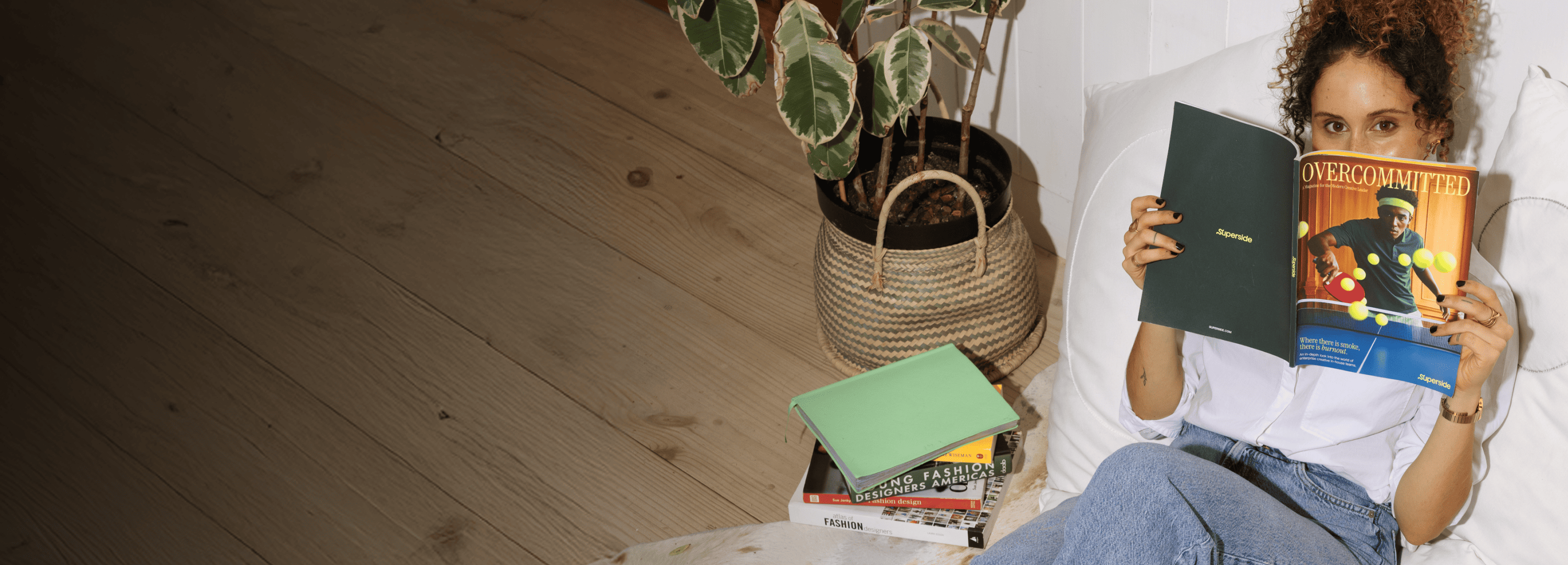
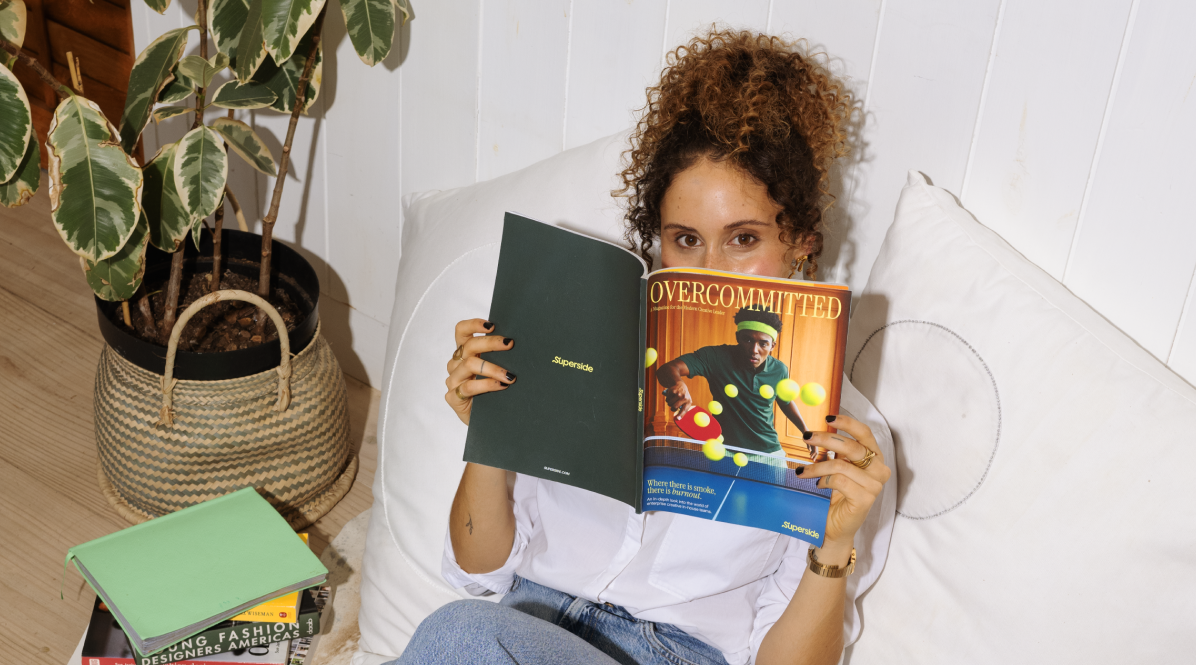
What 200+ creative leaders had to say
There’s a reason we called it the Overcommitted Report.
But, is there light at the end of the carpal tunnel?


Increase your creative capacity
Let your in-house team reach for the stars,
while Superside keeps your day-to-day creative needs
at an industry-leading level. Ready to scale?


How 400+ brands get more work done, without doing more
They Superside it. Fast, high-quality creative from the
AI-powered creative service that handles it all.


