



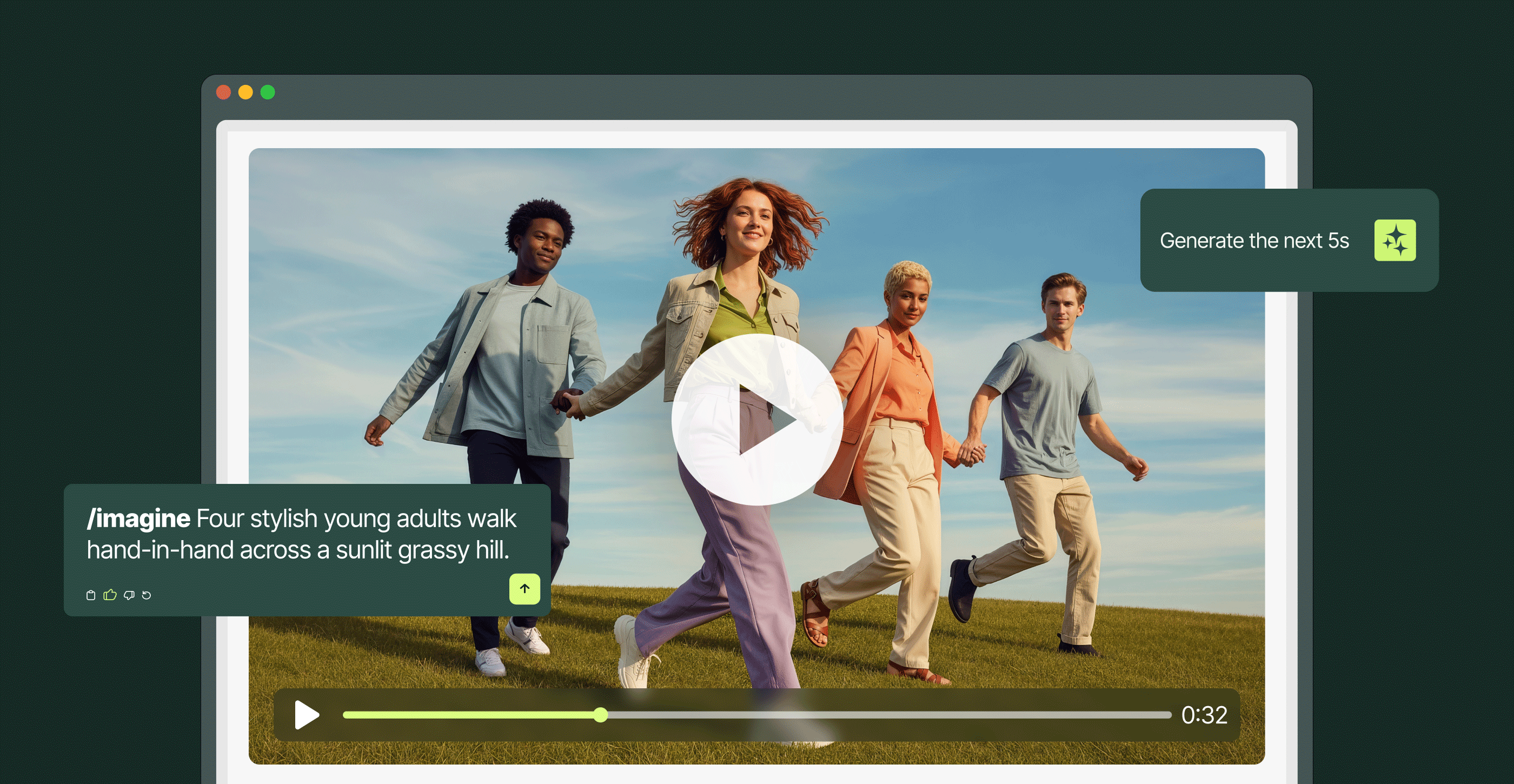
Most enterprise teams run video production like it’s 2010. Slow cycles that can’t keep pace with current demand. This article unpacks why workflows break down, where AI actually helps (and where it doesn’t) and how Vimeo used a structured diagnostic with Superside to uncover 20%+ efficiency potential across creative workflows.
Imagine running a modern Formula 1 team with a 1990s pit crew strategy. The mechanics are talented, and the car is powerful. But every tire change takes ages because the process itself is outdated.
That’s the situation many enterprise teams face with video production today. The talent is strong, and the creative vision is there. Yet the workflows still reflect how video production worked before AI tools came along.
Yesterday’s playbook no longer applies. 91% of businesses now use video as a marketing tool, the highest level ever recorded. And short-form video has been found to deliver the highest ROI among content formats.
Creative teams now produce content across every channel imaginable:
- Explainer videos
- Product launches
- Ad variations
- Social clips
- Event highlights
- Internal communications videos
All of it for global audiences across multiple platforms and aspect ratios. For many teams, video production has become a constant engine of content creation.
The mismatch between demand and workflow design is why video production is frequently described as resource-intensive. Teams spend enormous amounts of time moving raw footage through complex production pipelines instead of focusing on strategy, creativity and storytelling.
AI has dramatically changed what’s possible. But the technology doesn’t magically create polished, on-brand videos. Its primary role is more practical. AI, when applied correctly, reduces friction throughout the workflow, giving creative teams the chance to focus their energy where it matters most.
This article names the structural reasons video workflows tend to be inefficient, and explains where in the process AI has a real impact versus where it doesn’t. It also examines how Vimeo and Superside achieved 20% gains in video production efficiency with AI.
Why video production workflows break down

Most video production bottlenecks aren’t caused by a lack of talent or creative capability. Usually, there are structural problems inside the workflow.
1. A brief-to-production gap in pre-production
The first stumbling block typically appears during pre-production, where strategic ideas are translated into a video concept. This is the stage where small misalignments quietly take root and later become costly problems.
In traditional workflows, this stage involves brainstorming sessions, script drafts, mood boards and reference gathering. These tasks require collaboration among marketing and creative teams, and often span multiple tools and documents.
If there isn’t a single, unified source of truth, misalignment quickly follows. When creative teams begin production without strong direction, the gaps surface later during editing and post-production. Fixing them at that stage is expensive and time-consuming.
Today’s generative AI models can accelerate early concept development and deliver story outlines, shot lists and visual references from text prompts. This means creative teams can quickly explore multiple directions, compare them and converge on a clear concept before production begins.
In this way, AI shifts pre-production from a fragmented, assumption-driven phase into a fast, collaborative and aligned process.
2. Fragmented AI tools across creative teams
Many in-house teams and AI video production companies already experiment with AI tools, but adoption is rarely coordinated. One designer might use AI to generate visuals, an editor might rely on automated captions, and another team member might experiment with AI voice-overs.
When these efforts aren’t connected or standardized across the workflow, team members produce assets that vary in style, quality and even licensing status. What appears to be increased speed at the individual level can slow things down later as teams attempt to reconcile mismatched elements.
This siloed approach can also introduce governance and risk concerns. When AI usage lacks clear standards, copyright, data security and licensing issues tend to surface.
I use AI tools the way I'd use a creative partner — as a riffing board. They help me pressure-test ideas, bounce concepts around, and get to clarity faster than I would on my own.

3. The post-production bottleneck
The biggest delays in video production almost always occur during post-production. These stages can consume more hours than filming itself:
- Editing
- Color grading
- Sound design
- Visual effects
- Captions
- Voice-overs
- Versioning for different platforms
- Exporting final assets for distribution
Post-production also absorbs the consequences of earlier workflow issues. A vague brief or incomplete feedback often leads to extra editing rounds, new rough cuts and additional revisions.
This stage also includes many repetitive tasks such as resizing clips, adjusting aspect ratios, formatting captions and preparing multilingual content. These tasks require specialized software but little creative decision-making, which makes them ideal candidates for video production workflow automation.
4. Capacity vs. demand for video content
The final issue is simple math. Marketing teams must now produce video content for websites, ads, email campaigns, social platforms, internal communication channels and more each month. Each platform requires different aspect ratios, lengths and styles.
Traditional workflows can’t scale easily. Hiring more editors helps temporarily but doesn’t solve the underlying issue.
The reality is this. If you don’t overhaul your workflow, your creative team will simply try to process more work through the same system, which inevitably fails.
That’s where AI video production becomes invaluable.
Turning ideas into compelling video takes more than technology—if fancy tools were enough, anyone with a smartphone would be a world-class filmmaker. It requires experience and a deep understanding of audiovisual storytelling, honed through years of production and editing. At Superside, we blend the creative possibilities of technology with the proven strength of craft and fundamentals.

Where AI tools actually improve video production

The biggest misconception about AI video production is that it replaces human creativity. The truth is that the strongest results appear when AI supports specific stages of the workflow.
Understanding where AI fits into video production can help your creative teams adopt tools effectively.
Pre-production ideation and story development
The earliest stage of the workflow offers some of the largest efficiency gains.
Generative AI tools can assist with ideation, help draft scripts and explore different narrative structures for long-form content and short-form campaigns alike. Creative teams can quickly generate story concepts, outline scenes or explore different voice and tone variations before committing resources to filming.
Ultimately, this saves time and effort, and helps teams refine ideas and align on creative direction before production begins.
AI video and visual reference generation
To visually plan videos, creative teams traditionally search through stock libraries, review other video examples and build design mockups manually.
AI image tools can generate reference images and mood boards that illustrate scenes or camera styles instantly. For example, teams can create rough storyboards or scene compositions based on text prompts, which helps stakeholders understand the vision earlier in the process.
The result is stronger collaboration and fewer revisions later.
AI video tools for motion and visual effects
AI tools are also transforming motion design workflows, with top AI video studios rapidly improving their ability to generate animations, backgrounds and visual effects.
Many brands now experiment with motion graphics before committing to hours of manual production. For some projects, this means generating prototype scenes quickly before building final assets with traditional production methods.
The human creative vision still drives the process, but AI reduces the technical barriers that previously limited experimentation.
Post-production automation
The most mature applications of AI video tools appear during post-production. Today’s automated editing tools can help with:
- Caption generation
- Scene detection
- Rough cuts
- Audio cleanup
- Voice-overs
- Multilingual content generation
AI can also adapt the same video content for various platforms and automatically adjust aspect ratios or produce shorter clips for social. These improvements reduce repetitive tasks that previously required hours of manual editing.
Where AI doesn’t help (and why it matters)
AI can definitely speed up video production workflows, but it doesn’t replace the parts of the process that rely on human judgment. These include:
- Final creative judgment. AI can generate options, but it can’t decide what works. Editors and creative directors need to make the final call on pacing and narrative impact.
- Brand nuance. AI struggles with subtle brand voice, tone and positioning. Without human oversight, outputs can feel generic or off-brand.
- Strategic messaging. AI can help draft scripts, but it doesn’t automatically understand business context, audience pain points or campaign goals the way marketing teams do.
- High-end production polish. Craft-level details like cinematic editing, sound design and storytelling precision still depend on experienced creatives.
This distinction matters because teams that expect AI to replace these elements often end up with faster output but weaker creative.
The real value comes from using AI to handle repetitive work, so human teams can focus on the decisions that actually make a video unique and effective.
The real question isn’t whether to use AI—it’s figuring out how and where it can make the biggest impact on your video project. That’s the space where Superside thrives, combining AI acceleration with creative expertise to deliver standout results.
How Vimeo realized 20% efficiency gains in video production with AI

To see what video production workflows with AI look like in practice, let’s take a look at how Superside approached AI adoption across Vimeo’s creative and production teams.
Four key video production challenges
Vimeo is one of the world’s most recognized video platforms, with more than 300 million users globally. Given its role in the video ecosystem, Vimeo’s internal creative teams operate under extremely high expectations for production quality and speed.
The brand faced four core challenges that slowed AI adoption and limited workflow efficiency:
- Fragmented experimentation. Individual AI exploration existed, but Vimeo needed a structured approach to scale capabilities across teams.
- Legal and compliance uncertainty. They needed clearer guidance on how AI governance, IP policies and enterprise standards applied to creative work.
- Designer hesitation. Some creatives were unsure how AI aligned with company standards and the quality of their craft.
- Workflow inefficiencies. It proved difficult to integrate AI into existing workflows, which highlighted the need for more structured processes.
The company saw the need for a unified strategy to accelerate AI adoption and support its creatives across the organization. They partnered with Superside to help define that approach.
The engagement focused on a structured four-stage AI diagnostic across Vimeo’s Creative and Production teams.
Stage 1. Organizational readiness
The first step was understanding how the team currently used AI tools.
Superside conducted surveys and interviews across the creative teams to assess current AI adoption, technical expertise and governance concerns.
Legal and IT teams were involved early to address compliance and copyright considerations. This step ensured that future AI adoption would remain aligned with company policy.
Stage 2. Workflow impact analysis
Superside then analyzed how the team distributed their creative resources across the production workflow. The diagnostic examined how much time teams spent on ideation, pre-production, editing and post-production tasks.
The results revealed more than 20% efficiency potential across selected workflows and surfaced 10+ prioritized AI use cases to help Vimeo accelerate adoption. The largest opportunities appeared in ideation and concept generation, image sourcing and image generation.
By analyzing Vimeo’s workflows alongside practical examples and guidelines from Superside (such as how to use LLMs to accelerate ideation and apply AI in post-production), Vimeo identified clear opportunities to improve speed, quality and creative confidence across teams.
Stage 3. AI tool selection
Superside didn’t just recommend dozens of experimental tools. Instead, we curated a shortlist of AI tools aligned with Vimeo’s legal standards and the needs of its AI video production workflow.
The list included several platforms designed for generative AI content, image generation and audio production. This step meant that creative teams could confidently adopt approved platforms across their new AI creative workflows.
Stage 4. Implementation roadmap
The final stage translated insights into a concrete roadmap. Recommendations included:
- Structured AI training programs.
- Creative and governance guidelines for AI usage.
- Monthly AI learning sessions for the team.
- Change-management recommendations to support AI adoption.
The result was a sustainable strategy for integrating AI into the production workflow. It’s a structure for an AI diagnostic creative teams in other enterprises can also easily adopt and implement.
How Superside helps marketing teams streamline video production with AI
The Vimeo engagement reflects a broader challenge. Many enterprise marketing teams already have talented creatives and access to AI tools, but they lack a structured way to integrate AI in video production workflows.
Superside helps teams to overcome this problem.
As an AI-first creative partner, we become your creative team’s creative team. We combine global creative talent, AI excellence and scalable workflows designed for enterprise teams. The goal is simple. Remove friction across the enterprise video production AI process so creative teams can focus on storytelling and creative vision.
Superside supports organizations across the full video production lifecycle, from ideation in pre-production to editing and post-production tasks (like captions, voice-overs and rough cuts).
AI-powered tools help automate repetitive tasks such as formatting adaptation, caption generation and platform-specific exports. This gives teams the chance to produce high-quality videos faster without sacrificing quality or brand consistency.
Beyond production, Superside also helps teams redesign their workflows through structured AI assessments that identify inefficiencies, recommend approved AI tools and create practical roadmaps for integrating AI into everyday creative operations.
The result is a production workflow that successfully scales across campaigns, social platforms and global audiences.
Interested to see where your 20% efficiency is hiding?
How marketing teams use AI video without sacrificing quality
The Vimeo case study highlights a key lesson. AI works best when integrated thoughtfully into the production workflow.
For enterprise teams that produce video content at scale, the biggest benefits include:
- Faster concept development.
- Reduced editing time.
- Automated captions and voice-overs.
- Improved collaboration across teams.
- Scalable production across global audiences.
The goal is never to replace human creativity or judgment. Instead, AI allows teams to redirect their energy toward creative storytelling, strategy and creative experimentation. When repetitive work disappears, creative capabilities expand.
The AI Diagnostic Process that we went through with Superside allowed us to take all of the different disparate interests and get everyone in the same room and have the conversations about what we can and can’t do.

Production workflows are fixable (but not the way most teams try to fix them)
Video will continue to dominate digital marketing strategies. As social platforms evolve and audiences demand more engaging formats, production volume will only increase.
AI will reshape the future of creative teams and ultimately help them stay ahead of these demands. But tools alone aren’t enough. Organizations that succeed with AI video production will also focus on workflow transformation. They’ll closely examine how work moves from idea to final assets and redesign the process to prioritize efficiency, collaboration and quality control.
Being AI-first means AI isn’t just powering individual tools. It’s embedded across the entire creative model, from how teams are trained to how brand knowledge compounds over time. That’s the thinking behind our Human-Led, AI-Powered approach.
This approach allows creative teams to achieve more with the same resources and protect the creativity and storytelling that make great video possible. The teams that redesign their workflows will be the ones producing more video, faster and more consistently, without burning out their creative teams.
If a solid AI video production workflow sounds like the solution you need right now, Superside can help you identify bottlenecks and integrate the right AI tools into your workflow.
FAQs

Stuck in AI testing mode?
Get a quick, practical checklist
for implementing AI across your team.


Make your creative team future-proof
97% of creative leaders say the role of the creative
professional will look fundamentally different in 5 years.
This report is our prediction for what’s coming
and how to be ready for it.


Scalable video production
Customize the exact video services you need
and get it all on time, on budget and on brand.


Let’s get rolling!
Book a free 20-minute demo to see exactly
how Superside can help launch or scale
your video marketing strategy.