



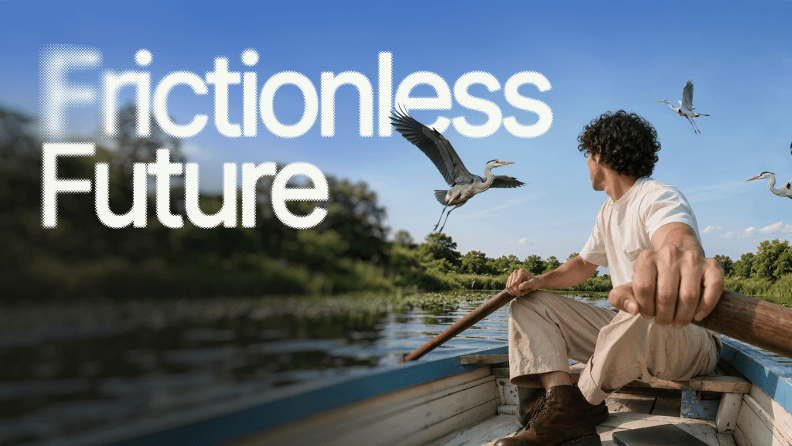



A high-performing cross-channel campaign isn't a pile of assets across platforms. It's six interconnected systems working as one: a strategic spine, a creative heart, a brand skeleton, channel-native distribution, production muscle and an AI brain. Remove one and performance drops, which is why we dissect each part and prove the model with Reddit, Mitto, Heinz and Coca-Cola.
Behind every successful cross-channel marketing campaign is the same foundation. Every asset and activation fits together so seamlessly that the audience never notices the joins. The social ad, landing page, follow-up email and event booth all feel like one continuous conversation with a single, recognizable brand.
Cross-channel campaigns that miss the mark tell a different story. The ads looked good, the landing page ticked the right boxes, and the social posts generated decent engagement. But each asset was built in isolation, so the campaign never felt like a cohesive whole.
In a world where people see up to 10,000 ads a day, disconnected creative rarely sticks. Memorable campaigns are built through repetition and reinforcement, with every touchpoint strengthening the last.
This article dissects cross-channel marketing campaigns that work. We lay the campaign structure on the table and take it apart system by system to see what each part does and why the campaign fails without it.
Then we look at several cross-channel campaigns that show the anatomy working in practice, and how an AI-first approach keeps the whole organism healthy at enterprise scale.
Multichannel, cross-channel, omnichannel and integrated marketing defined
First, let's pause to define "multichannel," "cross-channel," "omnichannel" and "integrated marketing." These terms often get thrown around and used interchangeably, but they're not quite the same thing.
- Multichannel means you show up on every platform. That's it. Each channel runs on its own.
- Cross-channel means you have one holistic strategy that carries your message across multiple platforms. The key difference is that you don't simply have a presence on every channel. Your marketing efforts all work together. As Superside's guide to cross-channel marketing explains, success comes from brand consistency, clear messaging and coordinated touchpoints across multiple channels.
- Omnichannel takes cross-channel a step further. These campaigns deliver a consistent brand experience as customers move between channels, often in real time, like browsing on mobile before completing a purchase in-store.
- Integrated marketing is the layer above all three. Built on Gini Dietrich's original PESO Model (Paid, Owned, Shared, Earned), it's the strategic glue that pulls everything into a single system, with a strong creative idea at its core.
Why so many cross-channel marketing campaigns flatline
Integrated marketing campaigns are 31% more effective at building brands. Yet 70% of marketing teams still don't have an integrated strategy in place, and even fewer execute one well.
Three common issues tend to recur.
1. Siloed teams create fragmented output
Different teams naturally optimize for different channels. Without a shared design system and integrated workflows, the social team, email team and events team all tell slightly different versions of the same story. They may all produce good work, but the campaign never functions as one unified whole.
2. Every channel gets the same asset
Too many teams mistake consistency for duplication. They take one hero asset and push it across every channel with only minor tweaks. But people don't consume content the same way everywhere.
For example, a long documentary-style video that works on YouTube could fall flat on TikTok, while a billboard headline won't hold up as a subject line in an overcrowded inbox.
3. Too little creative capacity
Executing a high-performance marketing campaign across multiple channels often means producing dozens, sometimes hundreds, of on-brand asset variations at speed. Most in-house creative and marketing teams struggle to keep up without introducing creative bottlenecks, inconsistencies or compromises in quality.
According to our "Breakpoint" report, 4 in 5 creative and marketing teams are at or over capacity, while 7 in 10 leaders are burned out. So even if the marketing strategy is solid, the teams simply can't execute all the assets the campaign requires.
Managing marketing across many channels isn’t just a coordination task—it’s a creative and strategic challenge. It’s crucial to have the right systems and partnerships in place, to be able to scale without losing impact.

The anatomy of a high-performing cross-channel campaign
How do leading enterprise teams get it right? At Superside, we've found that every high-performing cross-channel campaign relies on the same six interconnected systems. Like any living organism, it only thrives when every part works together.
Here's what these six systems look like.
1. The spine is one single-minded idea
Everything else hangs off the spine: one sharp strategic message that the entire campaign is built to deliver. This is what makes a cross-channel effort "a single campaign" instead of a scattering of disjointed marketing activities. Get this core idea in place before you create anything else, and make sure you can articulate the idea in a single sentence. If you can't, your target audience will have trouble remembering it.
2. The heart is a core creative concept that moves your audience
If the spine is the core strategic idea, the heart is what makes people feel something. It's the emotional connection that drives lasting recall. High-emotion ads drive profit gains at twice the rate of low-emotion ads, while creative that triggers a genuine emotional response boosts brand recall by 27%.
In integrated marketing campaigns, creative is the thread that ties everything together. From paid ads to organic content, virtual events to in-person conferences—creative is what helps people recognize your brand, connect with your values, and really consider your business
3. The skeleton is brand consistency across channels
The skeleton keeps your campaign recognizably itself across channels. It includes everything from your brand logo, colors and typography to your tone of voice, spacing and motion rules. It also includes the brand guidelines, design systems, templates and asset libraries that make these elements easy to apply across assets.
Delivering a consistent, recognizable brand experience matters. 73% of consumers trust a brand more when it maintains a cohesive visual identity across channels and campaigns, while consistent presentation can lift revenue by up to 20%. Without the skeleton, your brand identity becomes a mess. With it, every new asset slots perfectly into the bigger brand story.
4. The circulatory system is channel-native distribution
The circulatory system moves your campaign message across your website, social media platforms, ad campaigns, mobile apps, ecommerce platforms and beyond. It brings the PESO Model to life and ensures the same message lands well in each channel's ideal format.
A high-performing cross-channel marketing campaign doesn't use identical creative everywhere. It re-expresses the core idea in ways that fit each channel: for example, a thumb-stopping cut for social media and mobile apps, a longer video for the landing page and a punchy line for OOH ad placements. Each asset feels native to its environment, yet all remain part of the same cohesive campaign.
The assets that form part of the best multichannel campaign examples all feel native to their respective channels yet unmistakably part of the same brand.
5. The muscle is volume and speed of production
The muscle is raw production capacity: an operational system that can churn out dozens or hundreds of high-quality, on-brand variations quickly enough to meet the campaign window. Unfortunately, many in-house teams reach capacity more often than anyone likes to admit. As a result, many cross-channel marketing campaigns never quite take off.
6. The brain is AI that actually knows your brand
The newest system is the brain: brand-trained AI systems that remember how every other part works. This system is the difference between a generic AI tool that forgets your brand after every prompt and an operational system that carries your campaign's spine, heart, skeleton and circulatory system, plus past decisions and feedback, into every new creative asset.
This is also where performance data, cross-channel measurement and insights close the loop. The AI brain automatically feeds these insights straight back into what gets made for future campaigns. And the brain gets smarter and more accustomed to your brand the longer it runs. This gives you a competitive edge no brand using generic AI tools can match.
4 cross-channel campaign examples that show the anatomy in action
Theory helps, but real cross-channel marketing examples teach better. The four examples below demonstrate how the anatomy of a high-performing cross-channel campaign works in practice.
1. Reddit and OrangeRed deliver speed without breaking the spine

When Reddit set out to scale its annual "Recap" campaign after another standout year, it partnered with Superside to work alongside its in-house brand team, OrangeRed.
As documented in Superside's piece on motion design at scale, the campaign came to life through playful animation. Bananas, tiles and magnifying glasses appeared across Reddit's on- and off-platform channels, creating a campaign that felt unmistakably on-brand at every touchpoint.
The cross-channel anatomy is easy to spot:
- The spine was a single, clear idea: "Recap."
- The heart was a playful creative concept rooted in Reddit's personality.
- The skeleton was a brand system strong enough to produce 87 unique assets that all felt connected.
- The muscle was the production capacity to deliver many of those assets in just 36 hours.
The result was speed without compromise. Reddit launched its campaign on time, delighted users and reinforced its identity as the heart of the internet. That's what happens when a strong brand system is backed by the production muscle to execute at enterprise scale.
2. Mitto rebuilds a unified skeleton across every channel

Mitto shows the anatomy from the repair side. As detailed in Superside's integrated marketing campaigns breakdown, rapid growth fragmented the brand. Mitto's digital ads no longer matched its landing pages, and its event booths looked like they were designed for a different company.
The fix was to enforce brand consistency across its marketing channels using a brand-new skeleton. Superside built a complete visual system with bold colors, clean typography and a unified tone. Thanks to templates, our creatives could produce new assets quickly while maintaining a consistent identity and messaging across various marketing channels. Finally, every channel reinforced the exact same brand identity.
This is the skeleton and circulatory system in action: one brand, expressed natively from digital ads to a tradeshow floor, with the operational muscle to keep producing creative at scale.
3. Heinz turns user drawings into a global campaign
Heinz asked a simple question: when people think "ketchup," does Heinz come to mind?
Instead of commissioning a traditional survey, the brand ran a social experiment. People around the world, across five continents, were asked to draw ketchup without any brand names or prompts. The results revealed just how closely many people associate the sauce with Heinz.
Roughly 250 drawings came back, and nearly all of them showed Heinz: the iconic bottle, the keystone label and the deep red. These drawings then became the entire campaign. Social media engagement grew by 1,495%, and ketchup sales increased by 10% during the campaign. In the end, the campaign generated $5.8 million in earned media, 127 times the initial investment.
The campaign worked because its anatomy was already in place:
- The spine was a simple idea: get real people to draw ketchup.
- The heart came from real people, who made the campaign feel authentic rather than self-promotional.
- The skeleton was so deeply embedded that people instinctively recreated Heinz's visual identity without being prompted.
- The circulatory system carried the campaign idea across every channel, with the same consumer drawings appearing everywhere.
4. Coca-Cola Share a Coke scales one name across every channel
In 2011, Coca-Cola Australia launched the "Share a Coke" campaign, replacing its iconic logo on bottles with popular first names. A single idea extended seamlessly across packaging, social media, influencer marketing, retail activations and experiential marketing, which made it a textbook example of a cross-channel campaign.
The campaign succeeded because it made a global brand feel personal. The idea was simple enough to fit on a bottle yet flexible enough to come to life across multiple channels. Seeing your own name on a Coke bottle created an immediate emotional connection, which gave the campaign's heart its enduring appeal.
The skeleton never changed. Coca-Cola's signature red, Spencerian script and other core brand elements remained instantly recognizable, regardless of which name appeared on the label.
Meanwhile, the campaign's muscle showed in the sheer volume of personalized variations produced. Consumers became active participants in the campaign's circulatory system. They shared bottles, posted photos and spread the core idea through their own social networks. The result was a campaign that reached well beyond Coca-Cola's own channels and proved so successful that the brand relaunched it globally in 2025.
How an AI-first partner keeps the whole organism healthy
Most marketing teams can build the spine and the heart. The muscle and the brain are where their cross-channel campaigns succeed or stall.
That's where Superside, the world's leading AI-first creative partner, comes in as your creative team's creative team. Being AI-first means AI isn't just powering individual tools. It's embedded across the entire creative model, from how teams are trained to how brand knowledge compounds over time. That's how we remove the creative friction that stalls most cross-channel ambitions.
Thanks to years of experience helping in-house marketing teams at brands like Amazon, DoorDash, Figma and Reddit scale their campaigns, we know cross-channel marketing needs three elements to succeed:
- Consistency, so every asset from social media posts to live events feels part of one story.
- Speed, through an AI-driven production model built for rapid turnaround.
- Scale, to manage complex campaigns across many markets and stakeholders at once.
At Superside, the intelligence behind this system is Brand Brain, the AI memory layer inside Superspace, our creative management platform. Brand Brain remembers everything a cross-channel or integrated marketing campaign depends on to stay aligned: your brand guidelines, messaging, compliance standards, past work, feedback and performance insights.
This system includes:
- An AI Briefing Agent that turns rough requests into structured, on-brand briefs.
- Custom Brand Models that generate on-brand imagery in seconds rather than from stock or scratch.
- Custom Automation Workflows that handle the resizing and versioning cross-channel volume demands.
- An AI Insights Agent that surfaces patterns, gaps and opportunities across all campaign activity, content and decisions stored in Superspace.
Because your unique Brand Brain learns only from your work, it becomes a competitive edge no generic AI can replicate. Plus, it's included for every Superside customer.
This is how we delivered 87 assets in 36 hours for Reddit without drifting off-brand. AI did the heavy lifting in terms of production, while our senior creative experts owned the ideas and quality that set the campaign apart.
From a business perspective, a Superside subscription is an easy decision. A commissioned Forrester Total Economic Impact study found that Superside delivers a 94% ROI and pays for itself in under six months. That means more cross-channel output, held consistently on-brand, at a return that nearly doubles its cost inside the first year.
Ready to give your next cross-channel campaign a Brand Brain and the creative muscle to match? Book a demo to see how Superside helps enterprise teams scale on-brand creative across every channel.
The whole campaign is only as strong as the connections
A high-performing cross-channel campaign is a living system, and its health depends on the connections between the parts as much as the parts themselves.
A brilliant idea with no production muscle never ships. Volume with no creative heart never moves anyone. And consistency with no single, strong idea is just "tidy" noise.
Most in-house teams can build the spine, the heart and the skeleton. The muscle and the brain are where they fall short. That's where the difference between a campaign that looks good on paper and one that launches on time, performs across every channel and stays unmistakably on-brand is made.
That's the anatomy of a high-performing cross-channel campaign. Does your next campaign have every part it needs? If not, book a demo to see how Superside can help you build the muscle and Brand Brain to match your team's best ideas.
FAQs





Stuck in AI testing mode?
Get a quick, practical checklist
for implementing AI across your team.

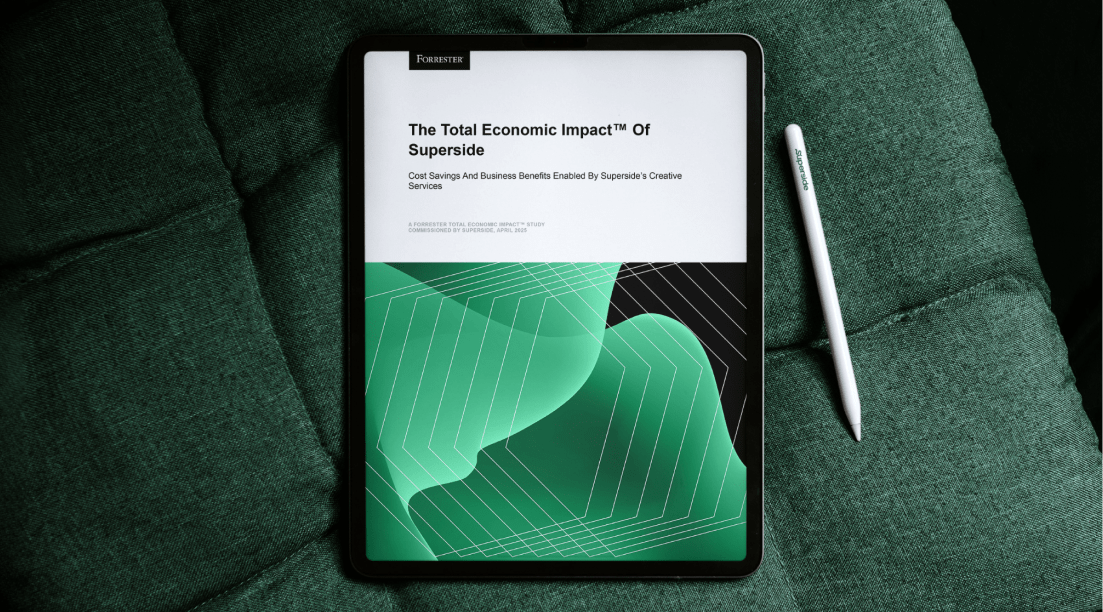
The data speaks for itself
According to a Forrester Total Economic Impact™ study, Superside delivers a 94% ROI and pays for itself in six months.


Increase your creative capacity
Let your in-house team reach for the stars,
while Superside keeps your day-to-day creative needs
at an industry-leading level. Ready to scale?


